
Feeling overwhelmed by daily stress is common for many California adults dealing with anxiety or depression. Taking the first step toward emotional well-being means pinpointing your specific needs and setting clear goals for therapy. Whether you are considering trauma-informed care or EMDR, understanding how professional mental health treatment addresses challenges and personal growth can guide your journey toward meaningful change. Discover how to build a strong foundation with mental health goal-setting and find affordable therapy solutions that fit your life.
Table of Contents
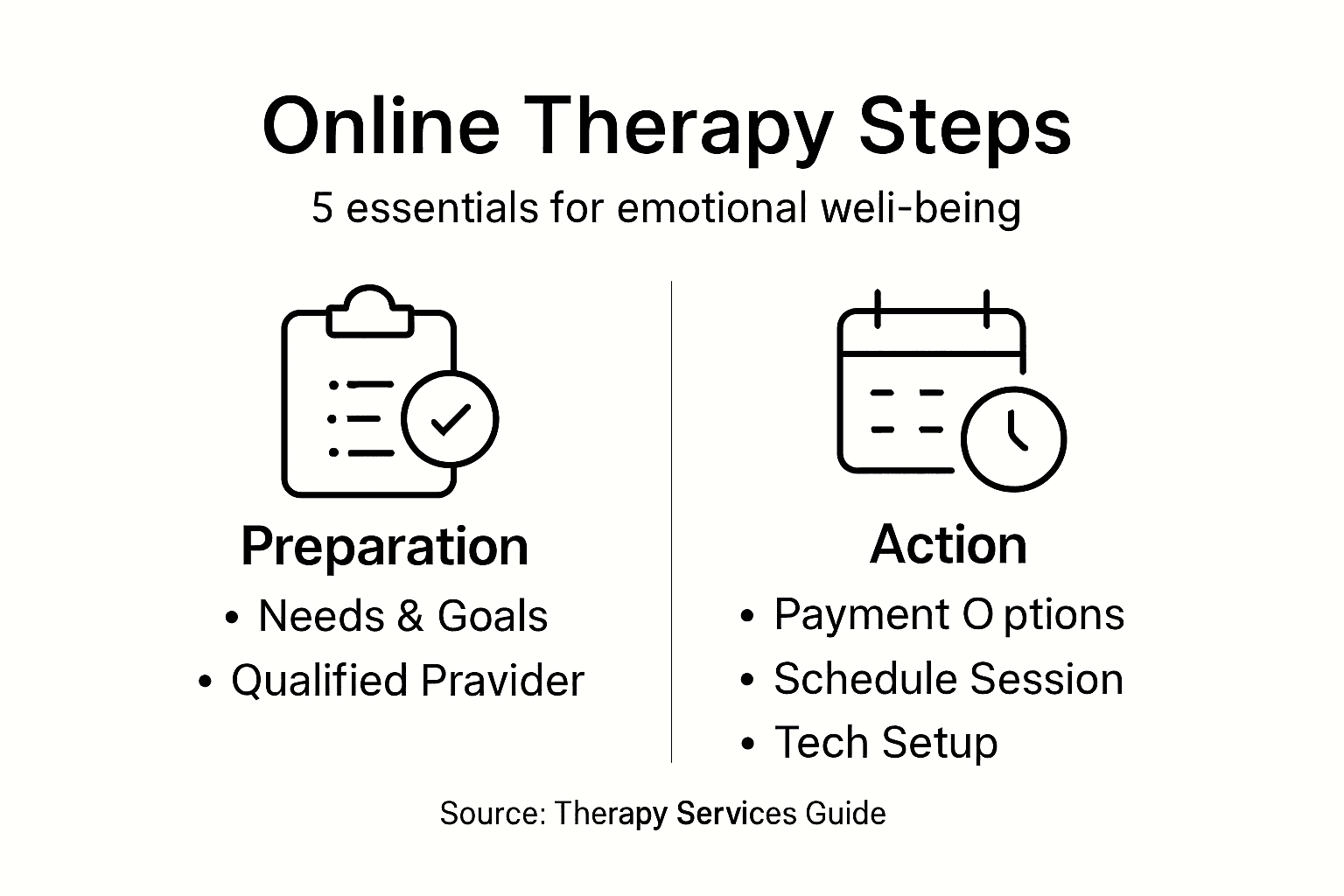
- Step 1: Identify Your Therapy Needs And Goals
- Step 2: Research Qualified Online Therapists
- Step 3: Verify Insurance And Payment Options
- Step 4: Schedule Your First Secure Session
- Step 5: Prepare Your Space And Technology
Quick Summary
| Important Insight | Clear Explanation |
|---|---|
| 1. Identify Therapy Needs | Start with an honest self-assessment of your emotional landscape to clarify goals and challenges. |
| 2. Research Qualified Therapists | Evaluate potential therapists based on licensure, experience, and comfort with online therapy to ensure a good match. |
| 3. Verify Insurance Options | Understand your insurance coverage and inquire about mental health benefits to reduce financial stress. |
| 4. Schedule Secure Sessions | Choose a private location and test technology to facilitate effective and confidential online therapy sessions. |
| 5. Prepare Your Therapy Space | Create a distraction-free environment, using good lighting and audio equipment to ensure a productive session. |
Step 1: Identify Your Therapy Needs and Goals
Identifying your therapy needs and goals is the critical first step toward transforming your emotional well-being. This process helps you create a targeted roadmap for personal growth and healing, ensuring that your therapy experience is meaningful and effective.
Start by conducting an honest self-assessment of your current emotional landscape. Psychotherapy aims to help individuals address specific challenges by understanding the underlying symptoms and life experiences impacting your mental health. Consider the following key areas:
- Emotional patterns you want to change
- Specific symptoms like anxiety or depression
- Life challenges affecting your daily functioning
- Relationship dynamics causing stress
- Personal growth objectives
Collaborating with a therapist means setting clear, achievable goals that provide direction and motivation. Effective goals should be:
- Specific and well-defined
- Measurable to track progress
- Realistic and attainable
- Personal to your unique situation
Successful therapy goals are created through a collaborative process between you and your mental health professional.
Break down larger objectives into smaller, manageable steps. This approach builds confidence and provides a sense of incremental progress. For instance, if managing anxiety is your primary goal, initial steps might include identifying triggers, learning relaxation techniques, and practicing mindful breathing.
Pro tip: Keep a journal to track your emotional progress and reflect on the subtle changes you experience during therapy.
Step 2: Research Qualified Online Therapists
Researching qualified online therapists requires a strategic approach to ensure you find a mental health professional who can effectively support your emotional well-being. This step involves carefully evaluating potential therapists using multiple criteria to find the right match for your unique needs.
Professional therapy research standards emphasize the importance of systematically assessing a therapist’s qualifications and therapeutic approach. Begin your research by considering these critical factors:
- Licensure and professional credentials
- Specialized experience in your specific mental health concerns
- Telehealth expertise and comfort with online platforms
- Therapeutic approach and methodology
- Cultural competence and understanding of your background
When evaluating potential online therapists, focus on the following key steps:
- Verify professional licensing through state boards
- Check educational background and advanced certifications
- Review professional memberships
- Examine specialization areas
- Read client testimonials and professional reviews
Successful online therapy depends on finding a qualified professional who can create a supportive and effective therapeutic relationship.
Utilize reputable directories and professional networks to find licensed therapists who specialize in your specific mental health needs. Many professional organizations offer searchable databases that allow you to filter therapists by expertise, specialization, and treatment approaches.
Pro tip: Schedule brief initial consultations with 2-3 therapists to assess their communication style and professional compatibility before making a final decision.
Step 3: Verify Insurance and Payment Options
Understanding your insurance coverage and payment options is a crucial step in making online therapy accessible and affordable. Navigating the financial aspects of mental health care can seem complex, but with the right approach, you can find a solution that fits your budget and treatment needs.
Telehealth insurance protocols provide comprehensive guidelines for verifying mental health service coverage. Begin by taking these essential steps to understand your financial options:
- Contact your insurance provider directly
- Request a detailed breakdown of mental health benefits
- Understand co-pay and deductible requirements
- Verify telehealth coverage specifics
- Check for out-of-network therapy options
When exploring payment and insurance details, follow these systematic steps:
- Call your insurance company’s customer service
- Ask about specific telehealth mental health coverage
- Request a list of in-network therapists
- Understand your out-of-pocket expenses
- Explore alternative payment methods
Knowing your insurance coverage can significantly reduce financial stress and help you access the mental health support you need.
Many therapists offer flexible payment options beyond traditional insurance, including sliding-scale fees, package rates, and payment plans. Some online platforms also provide more affordable alternatives like subscription-based therapy or reduced-rate sessions.
Here is a summary of common online therapy payment options and their typical advantages:
| Payment Option | Accessibility | Typical Cost Range | Flexibility Level |
|---|---|---|---|
| Insurance Coverage | Available for many providers | Lower out-of-pocket | Depends on plan details |
| Sliding-Scale Fees | Offered by select therapists | Adjusted per income | High, income-based |
| Subscription Services | Platform memberships required | $40-$90 per week | Moderate, auto-renewal |
| Package Rates | Multiple sessions upfront | Discounted bulk rates | Moderate, upfront payment |
| Payment Plans | Monthly installments possible | Varies by arrangement | High, budget-friendly |
Pro tip: Request a detailed insurance verification form from potential therapists to get a precise estimate of your expected costs before committing to treatment.
Step 4: Schedule Your First Secure Session
Scheduling your first online therapy session requires careful preparation and attention to privacy and confidentiality. This critical step transforms your mental health journey from consideration to active healing, setting the foundation for a supportive therapeutic relationship.
Secure telehealth appointment protocols emphasize the importance of choosing a safe and professional virtual platform. Prepare for your first session by following these essential steps:
- Choose a quiet and private location
- Test your internet connection
- Check audio and video equipment
- Prepare necessary documents
- Create a comfortable virtual environment
When scheduling your first secure session, follow these systematic guidelines:
- Confirm the telehealth platform’s security features
- Review consent and privacy documentation
- Complete any required intake forms
- Verify technical requirements
- Prepare a list of initial discussion topics
Your first therapy session is a confidential, safe space dedicated to understanding your unique emotional landscape.
Most online therapy platforms offer user-friendly scheduling systems that allow you to select convenient time slots, specify your preferred therapist, and complete preliminary paperwork securely. Some platforms even provide brief preliminary questionnaires to help match you with the most suitable mental health professional.

Pro tip: Set up a dedicated, distraction-free space with good lighting and a stable internet connection at least 15 minutes before your scheduled session to minimize technical stress.
Step 5: Prepare Your Space and Technology
Creating an optimal virtual therapy environment is crucial for a productive and comfortable online counseling experience. Your physical and digital setup can significantly impact the quality of your therapeutic interaction, ensuring privacy, comfort, and effective communication.
Telehealth technology recommendations emphasize the importance of a well-prepared space and reliable technical infrastructure. Consider these essential preparation strategies:
- Select a private and quiet location
- Ensure stable internet connection
- Use high-quality audio equipment
- Position camera at eye level
- Minimize potential background distractions
Prepare your technology and environment through these systematic steps:
- Test video and audio functionality
- Check internet bandwidth speed
- Update communication platform
- Prepare backup communication method
- Secure your digital privacy
A thoughtfully prepared space creates a sense of safety and allows for more genuine therapeutic conversations.
Consider using noise-canceling headphones, finding a room with good lighting, and ensuring your device is fully charged or plugged in. Some therapists recommend using a neutral background or a virtual background that maintains your privacy while creating a professional atmosphere.
Compare technical and environmental preparations that impact your online therapy experience:
| Preparation Type | Why It Matters | Pro Tip |
|---|---|---|
| Technology Setup | Ensures smooth session | Test devices early |
| Environment | Protects privacy | Choose a distraction-free area |
| Audio Equipment | Improves clarity | Use noise-canceling headphones |
| Lighting | Supports engagement | Use natural or soft lighting |
Pro tip: Conduct a technical trial run 24 hours before your session to identify and resolve any potential connectivity or equipment issues.
Take the First Step Toward Emotional Well-Being with Expert Online Therapy
If you are feeling overwhelmed by anxiety, depression, trauma, or relationship challenges the detailed steps in “How to Start Online Therapy for Emotional Well-Being” offer a clear path forward. Identifying your therapy goals and finding a qualified therapist who understands your unique needs are essential to your healing journey. At ReviveHealthTherapy we specialize in trauma-informed care using proven methods like EMDR and CBT to support personal growth and emotional regulation in a safe telehealth environment.
Whether you need flexible scheduling, affordable sliding-scale fees, or insurance options including HSA and FSA we are here to help you access evidence-based psychotherapy tailored to your life. Start with a free 20-minute consultation where you can explore your therapy needs and connect with an experienced professional ready to support you. Learn more about our holistic approach by visiting our Uncategorized – ReviveHealthTherapy and take advantage of this opportunity to prioritize your mental wellness.

Don’t wait to transform your emotional health and build resilience for the future. Fill out this quick form for your free 20-minute consultation with a therapist and begin your journey with compassionate care today. Visit ReviveHealthTherapy now to get started.
Find out more about how we make therapy accessible and effective at Our Therapy Services.
Frequently Asked Questions
How do I identify my therapy needs and goals?
To identify your therapy needs and goals, start with a self-assessment of your emotional state. Reflect on patterns you want to change, specific symptoms, life challenges, and personal growth objectives, and break larger goals into smaller, achievable steps.
What should I look for when researching online therapists?
When researching online therapists, focus on their licensure, specialized experience, therapeutic approach, and comfort with telehealth platforms. Verify their qualifications by checking their educational background and client testimonials to ensure a good match for your needs.
How can I verify my insurance coverage for online therapy?
To verify your insurance coverage for online therapy, contact your insurance provider directly and request a breakdown of your mental health benefits. Make sure to ask about co-pays, deductibles, and specifics related to telehealth coverage to understand your potential out-of-pocket costs.
What steps should I take to prepare for my first online therapy session?
To prepare for your first online therapy session, choose a quiet, private location, test your internet connection, and ensure your audio and video equipment is functioning correctly. Create a list of topics you want to discuss, and complete any required paperwork in advance to facilitate a smooth session.
How can I create an optimal environment for online therapy?
To create an optimal environment for online therapy, select a distraction-free, well-lit location with stable internet connectivity. Minimize background noise, and set up your camera at eye level to promote effective communication during your sessions.
Recommended
- How to Start Therapy for Emotional Growth in California – ReviveHealthTherapy
- 7 Effective Types of Therapy for Adults to Improve Well-Being – ReviveHealthTherapy
- 7 Essential Tips for Choosing a Therapist in California – ReviveHealthTherapy
- How to Choose a Therapist in California for Lasting Change – ReviveHealthTherapy
- EMDR Therapy in Los Angeles | Mental Health & Addiction Treatment
One Response