
Every parent faces moments of uncertainty when their child struggles with big emotions or behavioral challenges. Understanding the truth behind childhood anxiety and trauma is crucial, especially given the myths that surround mental health care. Child psychotherapy offers a safe path forward, using proven, developmentally appropriate techniques to help young minds heal. Families in California can discover how therapy and telehealth provide real solutions that fit today’s busy lives and growing needs for affordable, flexible support.
Table of Contents
- Defining Child Psychotherapy and Common Myths
- Main Therapy Types for Children in California
- How Child Psychotherapy Works in Practice
- Key Benefits for Anxiety and Trauma Recovery
- Cost, Insurance, and Access Considerations
- Telehealth and In-Person Therapy Compared
Key Takeaways
| Point | Details |
|---|---|
| Child Psychotherapy is Specialized | It focuses on addressing the unique psychological needs of children and adolescents using developmentally sensitive techniques. |
| Common Myths About Child Mental Health | Child mental health disorders are legitimate conditions, not the result of poor parenting or personal weaknesses. |
| Variety of Therapy Approaches | California offers diverse psychotherapy options, including CBT, DBT, and trauma-informed therapies, tailored to individual needs. |
| Accessibility Challenges | Navigating insurance and costs is crucial for families seeking therapy; exploring multiple funding options can help mitigate these barriers. |
Defining Child Psychotherapy and Common Myths
Child psychotherapy represents a specialized approach to supporting mental health for children and adolescents, focusing on understanding and addressing psychological challenges through developmentally sensitive therapeutic techniques. Unlike adult therapy, child psychotherapy requires unique strategies that account for younger patients’ cognitive and emotional development.
At its core, child psychotherapy involves psychological treatments tailored specifically to children’s emotional and behavioral needs. Psychological treatments for mental disorders often incorporate multiple approaches, including:
- Psychoanalytic techniques
- Educational interventions
- Problem-solving strategies
- Family systems therapy
- Emotional regulation skill building
Contrary to widespread misconceptions, child mental health disorders are not simply the result of poor parenting or personal weakness. Instead, these conditions frequently have complex biological and environmental origins that require professional, evidence-based interventions.
Child psychotherapy helps children develop essential emotional tools and coping mechanisms before challenges become deeply entrenched.
Many parents hesitate to seek therapy due to persistent myths surrounding child mental health. Psychiatric disorders in children are legitimate medical conditions requiring compassionate, professional support, not signs of weakness or parental failure.
Pro Tip: Consider scheduling an initial consultation with a child psychotherapist to understand your child’s unique emotional landscape and potential support needs.
Main Therapy Types for Children in California
California offers a comprehensive range of child psychotherapy approaches designed to address the unique emotional and behavioral challenges children and adolescents face. Multiple psychotherapy types have proven effective in supporting young patients through various mental health challenges.
The most commonly utilized therapeutic approaches in California include:
- Cognitive Behavioral Therapy (CBT): Helps children recognize and change negative thought patterns
- Dialectical Behavior Therapy (DBT): Supports emotional regulation and interpersonal skills
- Family Therapy: Involves entire family system in healing process
- Group Therapy: Provides peer support and social skill development
- Interpersonal Therapy (IPT): Focuses on improving relationship dynamics
Trauma-informed therapies play a critical role in addressing children’s complex emotional needs. Cue-Centered Therapy represents an innovative approach specifically developed to help youth process traumatic experiences, integrating multiple therapeutic techniques to support holistic healing.
California’s child therapy landscape emphasizes personalized, evidence-based interventions that respect each child’s unique emotional journey.
Therapeutic approaches are often customized, combining different techniques to create comprehensive treatment plans that address individual children’s specific psychological requirements. Some therapies may also be paired with medication management to enhance overall treatment effectiveness.
Here’s a concise comparison of main child therapy methods in California:
| Therapy Type | Core Focus | Common Setting |
|---|---|---|
| CBT | Change negative thinking | Individual sessions |
| DBT | Regulate emotions | Individual or group |
| Family Therapy | Improve family dynamics | Whole family involved |
| Group Therapy | Build social skills | Small child peer group |
| Interpersonal (IPT) | Enhance relationships | One-on-one sessions |
| Cue-Centered | Process trauma | Child-adapted setting |
Pro Tip: Always consult with a licensed child psychotherapist to determine the most appropriate therapeutic approach for your child’s specific emotional and developmental needs.
How Child Psychotherapy Works in Practice
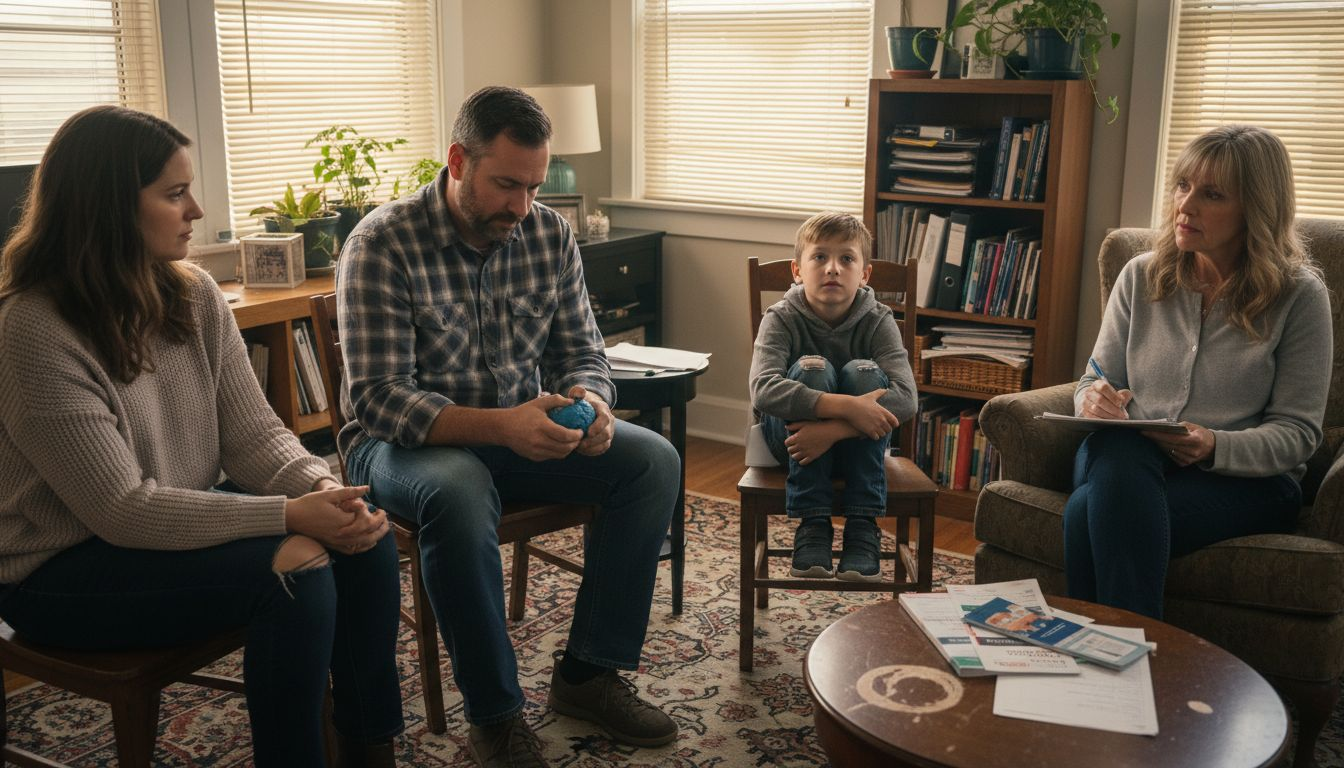
Child psychotherapy is a nuanced, collaborative process designed to help young patients navigate complex emotional landscapes. Therapeutic conversations serve as the primary mechanism for understanding and addressing children’s psychological challenges, utilizing specialized techniques tailored to each child’s unique developmental stage.
The practical implementation of child psychotherapy typically involves several critical components:
- Building a trusting therapeutic relationship
- Creating a safe, non-judgmental environment
- Using age-appropriate communication strategies
- Incorporating play, art, or interactive techniques
- Engaging family members in the healing process
Assessment and intervention are fundamental to effective child psychotherapy. Evidence-based treatments focus on identifying behavioral patterns, understanding their root causes, and developing targeted strategies to support emotional regulation and psychological well-being.
Professional child therapists recognize that each child’s emotional journey is unique, requiring personalized, compassionate approaches.
Therapeutic approaches may include individual sessions, family counseling, or group interventions, depending on the child’s specific needs. Therapists carefully monitor progress, adjusting techniques to ensure the most effective support for the child’s emotional and developmental growth.
Pro Tip: Encourage open communication with your child’s therapist and actively participate in the therapeutic process to maximize treatment outcomes.
Key Benefits for Anxiety and Trauma Recovery
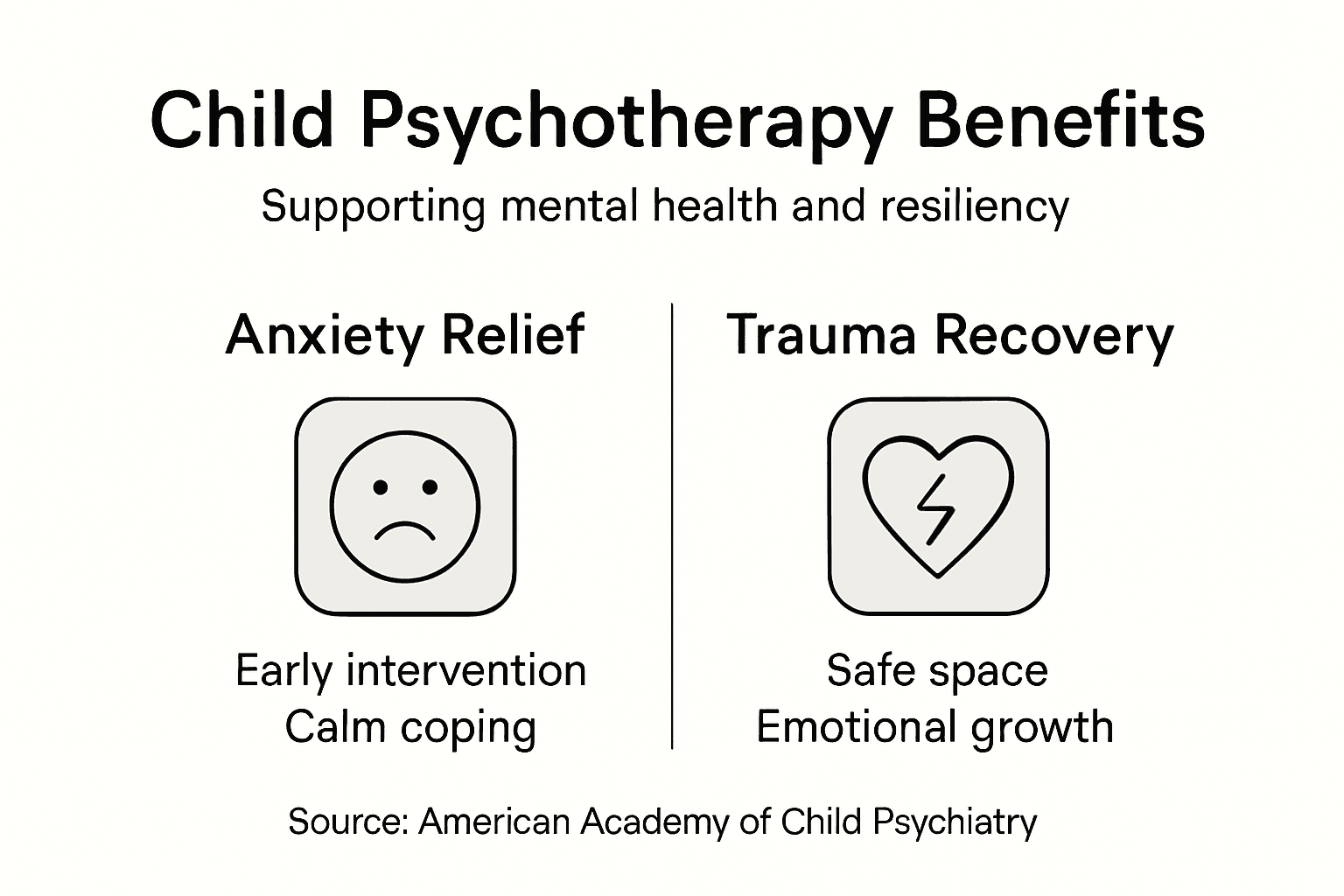
Child psychotherapy offers transformative healing for children struggling with anxiety and trauma, providing a structured pathway to emotional resilience and psychological recovery. Trauma-Focused Cognitive Behavioral Therapy represents a powerful intervention specifically designed to address complex emotional challenges in young patients.
The key benefits of psychotherapy for anxiety and trauma recovery include:
- Developing healthy emotional regulation skills
- Building age-appropriate coping mechanisms
- Reducing symptoms of post-traumatic stress
- Improving self-esteem and confidence
- Restoring a sense of safety and control
- Breaking destructive behavioral patterns
- Creating supportive communication strategies
Emotional healing is not a linear process, but a comprehensive journey of understanding and transformation. Children learn to process difficult experiences, reframe negative thought patterns, and develop resilience that extends far beyond the therapeutic setting.
Trauma recovery is about empowering children to reclaim their emotional narrative and build a foundation for lifelong psychological well-being.
By addressing anxiety and trauma early, psychotherapy helps prevent long-term psychological complications, supporting children in developing robust mental health strategies that will serve them throughout their lives.
Pro Tip: Prioritize consistent therapy attendance and maintain open communication with your child’s therapist to maximize the healing potential of the therapeutic process.
Cost, Insurance, and Access Considerations
Navigating the financial landscape of child psychotherapy can be challenging for California families, with multiple factors impacting accessibility and affordability. Psychotherapy access varies significantly based on insurance status, creating complex barriers for families seeking mental health support.
Key financial considerations for child psychotherapy include:
- Insurance coverage limitations
- In-network vs. out-of-network provider costs
- Sliding scale fee options
- Potential additional out-of-pocket expenses
- Telehealth alternatives for cost reduction
- Potential school or community mental health resources
Insurance challenges can substantially impact families’ ability to access mental health services. Many psychologists do not accept insurance due to administrative burdens and low reimbursement rates, which can create significant obstacles for families seeking affordable care.
Mental health accessibility requires understanding complex insurance landscapes and exploring multiple financial support strategies.
California families can mitigate financial barriers by exploring multiple funding options, including health savings accounts, flexible spending arrangements, and community mental health programs that offer reduced-cost services.
Pro Tip: Contact multiple providers to compare rates, ask about sliding scale options, and verify detailed insurance coverage before beginning treatment.
Telehealth and In-Person Therapy Compared
Modern child psychotherapy offers families multiple approaches to mental health support, with telehealth and in-person therapy presenting distinct advantages and considerations. Electronic communication methods have dramatically transformed therapy delivery, providing unprecedented flexibility for California families.
Key differences between telehealth and in-person therapy include:
- Convenience and accessibility
- Communication quality
- Nonverbal interaction potential
- Technology requirements
- Privacy considerations
- Cost-effectiveness
- Geographical flexibility
Telehealth therapy provides significant benefits for families with transportation challenges or limited local mental health resources. Online therapy offers unique advantages by eliminating travel barriers and creating comfortable treatment environments.
Effective therapy transcends physical location, focusing on connection, understanding, and personalized healing strategies.
While both approaches can be equally effective, the optimal choice depends on individual child needs, technological access, and specific therapeutic goals. Some families might benefit from a hybrid model that combines telehealth and in-person sessions.
The table below highlights practical differences between telehealth and in-person therapy for children:
| Feature | Telehealth | In-Person Therapy |
|---|---|---|
| Physical attendance | Not required | Essential |
| Nonverbal communication | More limited | Easier to observe |
| Technology needs | Reliable internet, device | Minimal |
| Scheduling flexibility | High | Less flexible |
| Privacy challenges | At home, varies | Controlled in clinic |
Pro Tip: Discuss technology comfort and potential session format options with your child’s therapist to determine the most suitable treatment approach.
Support Your Child’s Emotional Growth with Expert Psychotherapy
Understanding why psychotherapy for children matters most means recognizing the unique challenges your child faces with anxiety trauma or emotional regulation. If you are seeking trauma-informed care that uses proven approaches like CBT and mindfulness tailored for children and teens in California ReviveHealthTherapy offers accessible and compassionate support that makes a difference. Our expert therapists work closely with families to develop personalized treatment plans that empower your child to build healthy coping skills and regain a sense of safety.

Take the first step toward your child’s emotional healing by exploring our range of specialized therapies and flexible options including both in-person sessions in Walnut Creek and Oakland as well as secure telehealth services statewide. Visit our Uncategorized – ReviveHealthTherapy page to learn more about how we can partner with you in this important journey and schedule a consultation today. Your child deserves compassionate care that transforms challenges into growth and resilience.
Frequently Asked Questions
What is child psychotherapy?
Child psychotherapy is a specialized approach focused on addressing the mental health needs of children and adolescents, utilizing developmentally sensitive techniques to support their emotional and behavioral challenges.
How does child psychotherapy differ from adult therapy?
Child psychotherapy utilizes unique strategies tailored to children’s cognitive and emotional development, whereas adult therapy often addresses social and relational aspects that are more relevant to adults.
What are the common types of therapy for children?
Common types of therapy for children include Cognitive Behavioral Therapy (CBT), Dialectical Behavior Therapy (DBT), Family Therapy, Group Therapy, Interpersonal Therapy (IPT), and Trauma-informed therapies like Cue-Centered Therapy.
Why is child psychotherapy important for anxiety and trauma recovery?
Child psychotherapy helps children develop emotional regulation skills, build coping mechanisms, reduce symptoms of anxiety and trauma, and fosters a sense of safety and control, supporting their overall psychological well-being.
Recommended
- 7 Types of Child Therapy Every Parent Should Know About – ReviveHealthTherapy
- Child Therapy: Healing Emotional Wounds Early – ReviveHealthTherapy
- NEW CHILDREN’S THERAPY – ReviveHealthTherapy
- Why Seek Psychotherapy: Transforming Mental Wellness – ReviveHealthTherapy
- Stomatologie copii – Dr. Nassar – Clinica Implantologie Dr. Lorelei Nassar
2 Responses