
TL;DR:
- Brain fog involves cognitive symptoms like confusion, fatigue, and slowed thinking that impair daily function. It often results from reversible causes such as sleep deprivation, nutritional deficiencies, stress, or underlying medical conditions like long COVID or autoimmune disorders. Effective evaluation and targeted lifestyle changes or clinical treatments can significantly improve or resolve brain fog symptoms.
Brain fog is defined as a cluster of cognitive symptoms including impaired concentration, mental fatigue, confusion, and slowed thinking that interfere with daily functioning. Clinically, it is not a standalone diagnosis but a symptom complex, sometimes called cognitive dysfunction, that signals an underlying issue worth investigating. The Brain Fog Scale now gives clinicians a validated tool to measure it precisely, with a 2026 study of 602 adults confirming its multidimensional structure across impaired cognition, inattentiveness, and mental exhaustion. If you have been struggling to think clearly, losing words mid-sentence, or feeling mentally drained by noon, this guide explains exactly what is happening and what you can do about it.
What causes brain fog and who is affected?
Brain fog results from a wide range of causes, some reversible within days and others tied to complex medical conditions requiring specialist care. Identifying your specific trigger is the fastest path to relief.
Reversible, lifestyle-driven causes are the most common starting point. Chronic sleep deprivation slows reaction time, impairs memory consolidation, and disrupts the brain’s overnight waste-clearance process, all of which produce the classic foggy feeling by morning. Dehydration, even mild, reduces blood volume reaching the brain. Nutritional deficiencies in vitamin B12, iron, and vitamin D are well-documented contributors because each plays a direct role in nerve function and oxygen transport. Chronic stress floods the body with cortisol, which over time shrinks the hippocampus and narrows attention.
Medical conditions that commonly produce cognitive dysfunction include:
- Long COVID, where executive function impairments often persist months after infection
- Autoimmune disorders such as lupus and multiple sclerosis
- Hypothyroidism, which slows nearly every metabolic process including cognition
- Depression and anxiety, which impair working memory and reduce mental processing speed
- Diabetes and blood sugar dysregulation, which starve neurons of consistent fuel
Medications are a frequently overlooked cause. Sedating antihistamines, opioids, sleep aids, and some antidepressants can all dull cognitive clarity. The effect is dose-dependent and often reversible with a provider-guided adjustment, so never stop a prescribed medication without medical guidance.
Different causes produce different symptom profiles. Sleep deprivation tends to create generalized slowness and irritability. Nutritional deficiencies often produce fatigue paired with difficulty retrieving words. Long COVID-related cognitive dysfunction frequently targets executive function, making planning and multitasking disproportionately difficult even when standard memory tests appear normal.
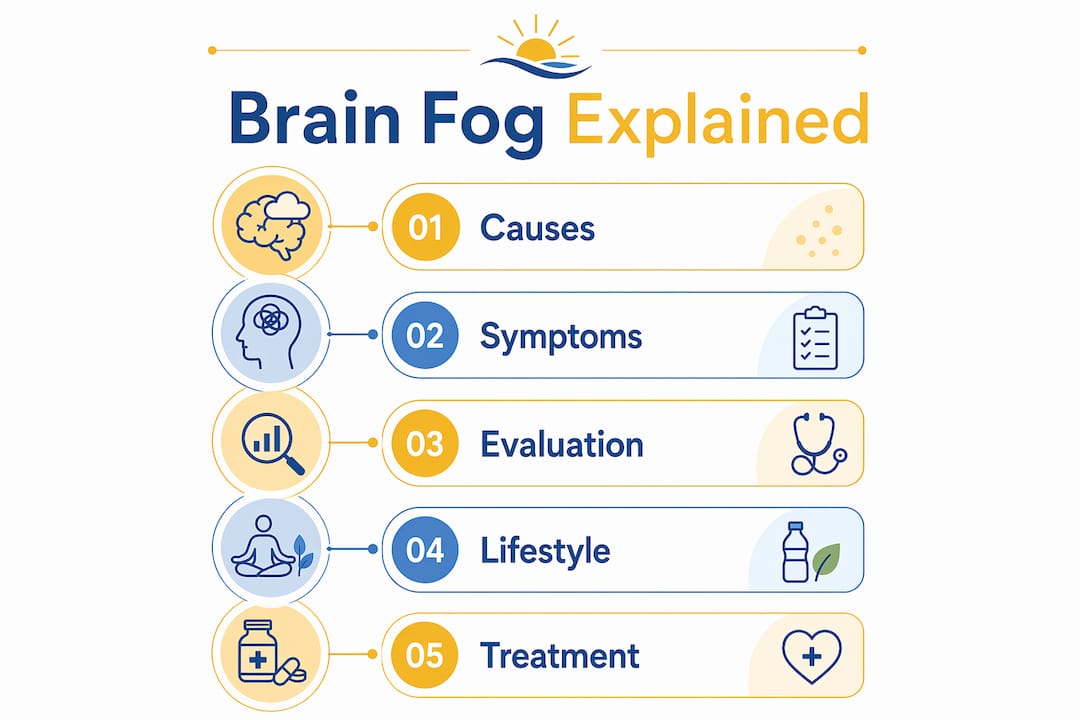
How is brain fog evaluated and diagnosed?
A structured clinical evaluation is the only reliable way to distinguish reversible cognitive fog from a condition requiring targeted treatment. Most workups follow a logical sequence.
Step 1: Medical history and physical exam. Your provider will ask about symptom onset, duration, fluctuation patterns, sleep quality, stress levels, recent illnesses, and current medications. Sudden-onset cognitive changes carry different urgency than symptoms that have crept in over months. Symptom timeline is one of the most diagnostically useful pieces of information you can provide.
Step 2: Blood work. Primary care evaluation typically includes a complete blood count, thyroid panel, B12 and folate levels, iron studies, fasting glucose, HbA1c, and vitamin D. These tests rule out the most common reversible contributors before any specialist referral is considered.
Step 3: Medication review. Your provider will cross-reference your current medications against known cognitive side effects and assess whether timing or dosage adjustments could improve clarity.
Step 4: Mental health screening. Depression and anxiety screening tools such as the PHQ-9 and GAD-7 are standard because mood disorders are among the most common and treatable causes of cognitive dysfunction.
Step 5: Cognitive testing. Brief in-office assessments like the Montreal Cognitive Assessment (MoCA) or Mini-Mental State Examination (MMSE) provide a baseline. When symptoms persist beyond six months or are functionally disabling, formal neuropsychological testing is the next step.
| Symptom pattern | Recommended evaluation priority |
|---|---|
| Sudden onset, severe | Urgent neurological workup, rule out stroke or infection |
| Gradual onset, fatigue-dominant | Thyroid, B12, iron, vitamin D panel first |
| Post-COVID, months-long | Neuropsychological testing, executive function focus |
| Mood-linked, motivation loss | Mental health screening, PHQ-9, GAD-7 |
| Medication-related timing | Medication review with prescribing provider |
When to seek urgent care: Sudden, severe cognitive changes, especially paired with headache, vision changes, weakness, or speech difficulty, require emergency evaluation. These symptoms can indicate stroke, meningitis, or other time-sensitive neurological events.
How to clear brain fog with lifestyle changes
Most cases of cognitive fog respond well to targeted lifestyle adjustments, and the evidence behind these strategies is solid. The Watson Clinic’s medically reviewed guidance identifies sleep, hydration, and nutrition as the three highest-yield starting points.
Sleep hygiene is non-negotiable. Aim for seven to nine hours of uninterrupted sleep. Keep a consistent wake time, even on weekends, because irregular schedules disrupt the circadian rhythm that governs memory consolidation. Avoid screens for 60 minutes before bed and keep your room cool and dark. If you wake unrefreshed despite adequate hours, ask your provider about sleep apnea screening.

Nutrition and blood sugar stability matter more than most people realize. Skipping meals or eating high-glycemic foods creates blood sugar spikes and crashes that directly impair concentration. Prioritize protein and healthy fats at breakfast to stabilize energy through the morning. Deficiencies in B12, iron, and vitamin D are correctable with supplementation once confirmed by blood work, and many people notice cognitive improvement within weeks of starting treatment.
Physical activity is one of the most powerful brain fog remedies available. 150 minutes of moderate aerobic exercise per week, plus two strength sessions, promotes neuroplasticity and increases cerebral blood flow. Even a 20-minute brisk walk improves processing speed measurably. You do not need a gym membership to start.
Stress management directly reduces cognitive load. CBT and mindfulness lower cortisol levels and improve mental clarity by interrupting the stress-cognition feedback loop. A mindfulness practice for anxiety does not require hours of meditation. Even five to ten minutes of focused breathing daily produces measurable reductions in perceived mental fatigue within two weeks.
Additional strategies that support cognitive clarity:
- Schedule your most demanding cognitive tasks in the morning when alertness peaks
- Break large tasks into smaller steps to reduce working memory load
- Limit alcohol, which disrupts REM sleep and slows neural processing
- Stay hydrated throughout the day, targeting at least 64 ounces of water for most adults
Pro Tip: Keep a symptom log for two weeks before your doctor’s appointment. Note the time of day your fog is worst, what you ate, how you slept, and your stress level. This pattern data cuts diagnostic time significantly and helps your provider prioritize the right tests.
What to do when brain fog persists
When cognitive dysfunction continues beyond several weeks despite lifestyle changes, a more structured clinical approach is required. Persistent symptoms signal that a reversible cause may have been missed or that an underlying condition needs direct treatment.
Neuropsychological testing is the gold standard for objectively measuring cognitive impairment. It assesses processing speed, working memory, executive function, attention, and language in detail that brief in-office screens cannot capture. This matters because standard cognitive batteries frequently miss the subjective executive-function deficits that are most disabling in long COVID and similar complex cases. Testing results also create a documented baseline for tracking improvement over time.
| Evaluation tool | What it measures | Best used when |
|---|---|---|
| MoCA or MMSE | General cognitive screening | Initial office visit |
| Neuropsychological battery | Processing speed, executive function, memory | Symptoms persist beyond 6 months |
| Online cognitive assessments | Subjective executive function, daily task performance | Post-COVID monitoring between visits |
| Brain Fog Scale (BFS) | Multidimensional symptom severity | Tracking treatment response over time |
Targeted treatments for persistent cognitive dysfunction include cognitive rehabilitation, which uses structured exercises to rebuild specific impaired domains like processing speed and executive function. Neuromodulation techniques such as transcranial magnetic stimulation (TMS) are being studied for post-COVID cognitive symptoms with promising early results. Addressing comorbid depression or anxiety with CBT or medication often produces significant cognitive improvement as a secondary benefit.
Documentation matters practically. Neuropsychological test results can support workplace accommodation requests or disability claims when cognitive impairment is functionally significant. If your fog is affecting your job performance or daily independence, ask your provider explicitly about documentation options.
Pro Tip: If you are pursuing neuropsychological testing, bring a list of your medications, a timeline of when symptoms started, and any prior cognitive test results. The more context the neuropsychologist has, the more targeted and useful the report will be.
Key takeaways
Brain fog is a measurable, treatable symptom complex rooted in identifiable causes, and most cases improve significantly with the right combination of lifestyle changes, clinical evaluation, and targeted care.
| Point | Details |
|---|---|
| Brain fog is quantifiable | The Brain Fog Scale measures symptom severity across cognition, attention, and fatigue for tracking over time. |
| Reversible causes come first | Sleep, nutrition, hydration, and stress are the highest-yield targets before specialist referral. |
| Timeline shapes the workup | Sudden onset requires urgent evaluation; gradual onset prioritizes blood work and medication review. |
| Neuropsychological testing adds precision | Standard screens miss executive function deficits; full testing is warranted after six months of persistent symptoms. |
| Mental health treatment improves cognition | CBT and mindfulness reduce cortisol and directly improve mental clarity in mood-related cognitive fog. |
What I have learned from working with people through cognitive fog
The most common misconception I encounter is that brain fog is just stress or laziness. People minimize it, push through it, and feel ashamed when they cannot think as sharply as they used to. That minimization costs them months of unnecessary suffering.
What I have seen consistently is that brain fog almost always has a traceable cause, and finding it requires a willingness to look at the whole picture: sleep, nutrition, mental health, medications, and medical history together. Treating only one piece rarely produces lasting relief. The people who recover most fully are the ones who stop trying to white-knuckle through the fog and instead get curious about it.
I also want to push back on the idea that persistent cognitive symptoms mean permanent damage. Even in long COVID cases, where executive function deficits can feel profound, cognitive rehabilitation targeting specific impaired domains produces real, measurable improvement. Recovery is not always linear, but it is possible for the vast majority of people. The key is not giving up after the first round of blood work comes back normal. That is often just the beginning of the diagnostic process, not the end.
Interdisciplinary care, combining primary care, mental health support, and sometimes neuropsychology, produces better outcomes than any single provider working alone. If you feel like your concerns are being dismissed, advocate for a referral. You deserve a complete evaluation.
— Amy
How Revivehealththerapy can support your path to mental clarity

Cognitive fog rooted in stress, anxiety, depression, or trauma responds directly to evidence-based psychotherapy. Revivehealththerapy offers CBT, EMDR, and mindfulness-based therapy at locations in Walnut Creek and Oakland, as well as secure telehealth sessions statewide for flexible access. These approaches target the mental health contributors to brain fog directly, reducing cortisol, improving sleep, and rebuilding cognitive clarity over time. Sliding-scale fees and insurance acceptance, including HSA and FSA plans, make care accessible regardless of income. If you are ready to address the mental health side of your cognitive symptoms, explore mental health services for adults and find the right fit for where you are right now.
FAQ
Is brain fog a medical symptom or just tiredness?
Brain fog is a recognized symptom complex involving impaired cognition, poor concentration, and mental fatigue. It differs from ordinary tiredness because it persists even after rest and often signals an underlying medical or psychological condition.
What are the most common causes of brain fog?
The most common causes include poor sleep, chronic stress, dehydration, nutritional deficiencies in B12 and vitamin D, depression, anxiety, and medications like sedating antihistamines or opioids. Long COVID is now one of the most widely recognized medical triggers.
How long does brain fog last?
Duration depends entirely on the cause. Fog from dehydration or a single poor night of sleep can resolve within hours. Fog tied to nutritional deficiencies may lift within weeks of treatment. Post-COVID cognitive symptoms can persist for months and may require neuropsychological evaluation.
When should I see a doctor about brain fog?
See a doctor if cognitive symptoms last more than two to three weeks, worsen over time, or interfere with work and daily tasks. Sudden, severe cognitive changes paired with headache, weakness, or speech difficulty require immediate emergency care.
Can therapy help with brain fog?
Yes. When brain fog is driven by depression, anxiety, or chronic stress, CBT and mindfulness-based therapy directly reduce the psychological contributors. Research confirms that these approaches lower cortisol and improve mental clarity, making them a clinically supported part of treatment.
Recommended
- Food Noise: What It Is and How to Quiet It – Revive Health Therapy
- Mindfulness workflow for anxiety relief: step-by-step – Revive Health Therapy
- How mindfulness eases anxiety: Evidence-based strategies – Revive Health Therapy
- Mental health self-care ideas for anxiety and depression – Revive Health Therapy