
TL;DR:
- Wellness is an ongoing practice of caring for your mind, body, emotions, and environment, not a destination for dramatic change. Small, consistent habits such as movement, sleep, and meaningful connection build lasting resilience better than temporary overhauls. Recognizing burnout signals as messages and seeking professional support when needed are crucial components of sustainable holistic living.
Most people believe wellness requires a complete life overhaul. A new diet, a gym membership, a morning routine that starts at 5 a.m. That belief stops a lot of people before they even start. Real wellness isn’t a destination you reach after a dramatic transformation. It’s an ongoing practice of tending to your mind, body, and emotions in ways that actually fit your life. This article breaks down what wellness really involves, what the latest research says about sustainable habits, and how you can build a wellness lifestyle that lasts well beyond January.
Table of Contents
- Key takeaways
- What wellness actually means
- Daily habits that support mental and emotional wellness
- Holistic living: listening instead of fixing
- What modern wellness retreats actually offer
- Building your personal wellness plan
- My take on wellness sustainability
- Support your wellness with professional care
- FAQ
Key takeaways
| Point | Details |
|---|---|
| Wellness is interconnected | Mental, emotional, physical, and environmental health all influence each other and must be addressed together. |
| Movement beats medication | Physical activity is up to 1.5x more effective than medication for managing depression. |
| Small habits win long-term | Compound, repeatable behaviors build more lasting wellness than dramatic, one-time overhauls. |
| Boundaries protect your energy | Viewing limits as clarity rather than restriction helps prevent burnout and strengthens relationships. |
| Professional support matters | Therapy, whether in-person or via telehealth, is a legitimate and powerful wellness tool, not a last resort. |
What wellness actually means
Wellness is not just the absence of illness. It’s an active, ongoing process of making choices that support your full health, physically, mentally, emotionally, and even environmentally. Most people focus on one dimension and wonder why they still feel burned out, anxious, or disconnected.
The four core components of wellness work like a web. Pull one thread and the rest shifts.
- Physical wellness involves movement, sleep, nutrition, and how you respond to your body’s signals. It’s the most visible dimension, but not the most important one on its own.
- Mental wellness refers to your cognitive health, how you process information, manage stress, and maintain clarity and focus over time.
- Emotional wellness is your capacity to understand, express, and regulate your feelings. It includes how you relate to others and how you treat yourself during hard times.
- Environmental wellness captures how your physical surroundings, your home, your neighborhood, your digital environment, affect your nervous system and sense of safety.
Blue Zones research, which studies the world’s longest-living populations, offers a compelling argument for this interconnected view. People in those communities don’t just eat well. They have strong social bonds, a sense of purpose, moderate and consistent movement, and low-stress environments. No single factor explains their longevity. The combination does. This is exactly why a truly holistic living approach looks at all four dimensions, not just the one you find easiest to manage.
| Wellness dimension | Signs of strength | Signs of strain |
|---|---|---|
| Physical | Consistent energy, restful sleep | Fatigue, chronic pain, poor sleep |
| Mental | Focus, adaptability, clear thinking | Overwhelm, difficulty concentrating |
| Emotional | Healthy boundaries, self-awareness | Reactivity, emotional numbness |
| Environmental | Calm, organized spaces, safe relationships | Chronic exposure to chaos or conflict |
Neglecting any one area eventually affects the others. Poor sleep degrades emotional regulation. Chronic stress breaks down physical health. Relationship conflict drains mental resources. Wellness planning that ignores this reality tends to produce short-term results at best.
Daily habits that support mental and emotional wellness
The science here is more specific than most people realize. You don’t need a $300 supplement protocol. You need consistency with a handful of well-supported habits.
-
Move your body every day. Physical activity is 1.5 times more effective than counseling or medication for managing depression. Exercise releases endorphins, reduces cortisol, and creates a physiological shift in mood that no mindset trick can fully replicate. Even a 20-minute walk counts.
-
Cut your social media use dramatically. Reducing screen time to 15 minutes per day measurably lowers anxiety and breaks the cycle of comparison and digital triggering. This doesn’t mean quitting entirely. It means being intentional. Try a mindfulness approach to digital anxiety that helps you disengage without feeling deprived.
-
Protect your sleep like it’s non-negotiable. Sleep is when your brain processes emotion, consolidates memory, and regulates stress hormones. Irregular sleep patterns, even on weekends, disrupt your body’s natural cortisol rhythm and make every other wellness habit harder to maintain.
-
Practice grounding when stress spikes. Mindfulness and grounding techniques, like the 5-4-3-2-1 sensory method or slow diaphragmatic breathing, activate the parasympathetic nervous system and reduce the body’s threat response within minutes. The benefits of mindfulness extend beyond stress relief to improved focus, emotional resilience, and even sleep quality.
-
Invest in meaningful connection. Volunteering, spending time with people you genuinely care about, and participating in community activities all reduce the stress effects of isolation. Loneliness has measurable physiological consequences. Connection has measurable protective ones.
Pro Tip: You don’t need to implement all five habits at once. Pick the one that feels most accessible right now and commit to it for two weeks before adding another. Stacking habits gradually is far more sustainable than a full reset.
Holistic living: listening instead of fixing
Here’s something most wellness content won’t tell you: burnout signals disconnection, not weakness or failure. When you feel depleted, anxious, or emotionally flat, those aren’t problems to override. They’re information. The holistic living approach treats those signals as messages worth listening to rather than symptoms to suppress.

This reframe changes everything about how you build self-care routines. Instead of asking “What should I be doing?” you start asking “What does my body or mind actually need right now?” Sometimes that’s a workout. Sometimes it’s 20 minutes of silence. Sometimes it’s a conversation you’ve been avoiding.
Effective wellness habits tend to share a few qualities:
- They’re small and repeatable, not dramatic and exhausting. Compound habits like intentional breathing, hydration, and short walks accumulate into genuine resilience over weeks and months.
- They’re flexible across seasons. A wellness routine that works in summer may need to look different in winter, after a job loss, or during a demanding family period. Rigid routines tend to collapse when life changes. Flexible ones adapt.
- They account for relational and environmental factors. Your nervous system is constantly responding to your surroundings. A cluttered, noisy, or emotionally unsafe environment drains regulation capacity even if your habits are otherwise solid.
Setting boundaries is a critical part of this. Boundaries as clarity rather than limitation is a meaningful distinction. When you say no to something that depletes you, you’re not being restrictive. You’re managing a finite resource, your energy, with intention. That’s one of the most practical mental health tips available, and it costs nothing.
Pro Tip: Start your week with a short “energy audit.” Ask yourself: what drained me last week, and what restored me? Let your answers shape one decision about the week ahead, not your whole schedule.
What modern wellness retreats actually offer
The wellness retreat market has shifted significantly. What used to mean massages and herbal teas now increasingly looks like a clinical program with measurable outcomes. Retreats focused on healthspan now recommend 10 to 28 days for meaningful rejuvenation, with Ayurvedic Panchakarma programs specifically advocating 21 days for optimal physiological benefit.
The best modern programs include sleep tracking, physiological diagnostics, and individualized protocols that you can carry into daily life after you leave. Nature exposure plays a central role in many of these programs. Time outdoors lowers blood pressure, reduces stress hormones, and helps the mind-body system recalibrate away from external demands.
| Retreat type | Duration | Focus areas | What to look for |
|---|---|---|---|
| Ayurvedic Panchakarma | 21 days | Detox, digestion, rest | Individualized diet and treatment plans |
| Healthspan and longevity | 10 to 28 days | Sleep, biomarkers, movement | Measurable outcomes, post-program coaching |
| Mindfulness and silence | 7 to 10 days | Meditation, nervous system reset | Qualified facilitators, structured silence periods |
| Mental health focused | 14 to 21 days | Trauma, mood, stress | Clinical assessments and licensed practitioners |
One caution worth naming: premium pricing does not guarantee lasting change. A retreat that doesn’t teach you how to replicate its benefits at home is a vacation, not a wellness investment. Ask programs directly how they support habit transferability before you book.
Building your personal wellness plan
You don’t need a retreat or a coach to start. A personal wellness plan can begin this week with a few clear steps.
-
Assess your current baseline. Look honestly at sleep, movement, emotional patterns, and stress levels. Use a simple journal or the anxiety self-care checklist at Revivehealththerapy to identify where you’re most depleted.
-
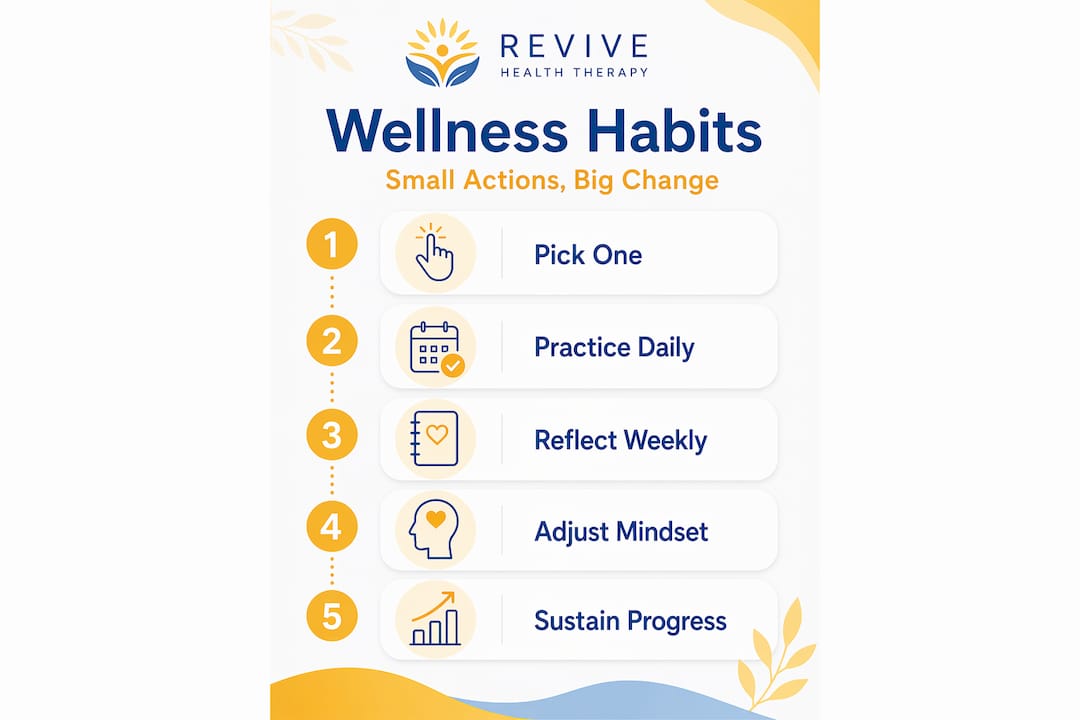
Choose one priority area. Don’t try to fix everything at once. Small wins build resilience more effectively than sweeping overhauls. Start where the gap between where you are and where you want to be is smallest.
-
Design a daily anchor habit. This is one consistent practice that grounds your day, a five-minute breathing routine, a morning walk, a no-phone hour before bed. Anchors create rhythm, and rhythm is what makes wellness sustainable.
-
Set a realistic review point. Commit to your plan for four weeks, then assess. What improved? What felt forced? Adjust based on honest feedback, not guilt.
-
Know when to reach for professional support. Self-care routines are powerful. They are not a substitute for therapy when anxiety, depression, trauma, or relationship stress goes beyond what daily habits can address. There is no wellness plan that replaces working with someone trained to help you process what’s underneath the surface.
My take on wellness sustainability
I’ve spent years watching people approach wellness with the same exhausting formula: go hard, burn out, feel ashamed, and start over. In my experience, the most significant barrier to lasting wellness isn’t information. It’s the all-or-nothing mentality that experts now explicitly warn against.
What I’ve learned is that small, unglamorous consistency beats dramatic restarts every single time. A 10-minute walk you actually do is worth more than a 60-minute gym session you keep postponing. The clients who make the most durable progress aren’t the ones who overhaul everything at once. They’re the ones who get honest about what depletes them and make one small change that sticks.
I also think the wellness industry sells too much “fixing” and not enough listening. Burnout and emotional exhaustion aren’t problems you push through. They’re signals that something in your life needs attention, maybe a boundary you haven’t enforced, a relationship dynamic you’ve been avoiding, or simply rest you’ve convinced yourself you don’t deserve.
The most honest mental health tip I can offer: self-compassion is not soft. It’s strategic. You cannot sustain any wellness practice from a place of self-contempt.
— Amy
Support your wellness with professional care
If you’ve been working through the strategies in this article and still feel like something isn’t shifting, that’s not a sign you’re failing at wellness. It’s often a sign that deeper support would help.
Revivehealththerapy offers evidence-based therapy for adults, couples, teens, and children across California, both in-person in Walnut Creek and Oakland and via secure telehealth statewide. Whether you’re managing anxiety, processing trauma, or simply ready to invest in your emotional health, their mental health services for adults are designed to be accessible, with sliding-scale fees and insurance options including HSA and FSA plans. You can also explore telehealth therapy options for flexible, private support wherever you are in California. Professional guidance isn’t a step you take when everything else fails. It’s one of the most direct investments in your long-term wellness.
FAQ
What does wellness actually mean?
Wellness is an active, ongoing process of supporting your mental, physical, emotional, and environmental health. It’s not a fixed state but a dynamic practice that evolves with your life circumstances.
What are the most effective mental health tips for daily life?
Daily movement, limiting social media to around 15 minutes, protecting sleep, practicing mindfulness, and maintaining meaningful social connections are among the most research-supported strategies for mental and emotional wellness.
How does mindfulness support stress management?
Mindfulness activates the parasympathetic nervous system, which directly counters the body’s stress response. Regular practice improves emotional regulation, reduces anxiety, and strengthens focus over time.
How long does a wellness retreat need to be to make a difference?
Research suggests 10 to 28 days for meaningful rejuvenation from healthspan-focused programs, with some Ayurvedic protocols recommending a full 21 days. Short weekend retreats can offer rest but are unlikely to produce lasting behavioral change without structured follow-through.
When should I seek professional mental health support instead of managing wellness on my own?
When anxiety, depression, trauma responses, or relationship challenges consistently interfere with daily functioning, self-care routines alone are not enough. A licensed therapist provides structured, evidence-based support that self-help strategies cannot replicate.
Recommended
- Mindfulness workflow for anxiety relief: step-by-step – Revive Health Therapy
- Mindfulness for California Families: A Practical How-To – Revive Health Therapy
- Emotional Wellness Checklist: 35% Better Therapy Adherence – ReviveHealthTherapy
- Wellness medication vs. therapy: Effective paths for mental health – Revive Health Therapy