
Most American adults in California face steep barriers when seeking mental health support, with nearly half reporting financial stress as a reason for delaying therapy. When anxiety or depression disrupts daily life, understanding affordable trauma-informed options like EMDR and cognitive behavioral therapy becomes essential. This guide breaks down practical steps to help you clarify your needs, compare evidence-based approaches, and confidently choose therapy that supports your healing.
Table of Contents
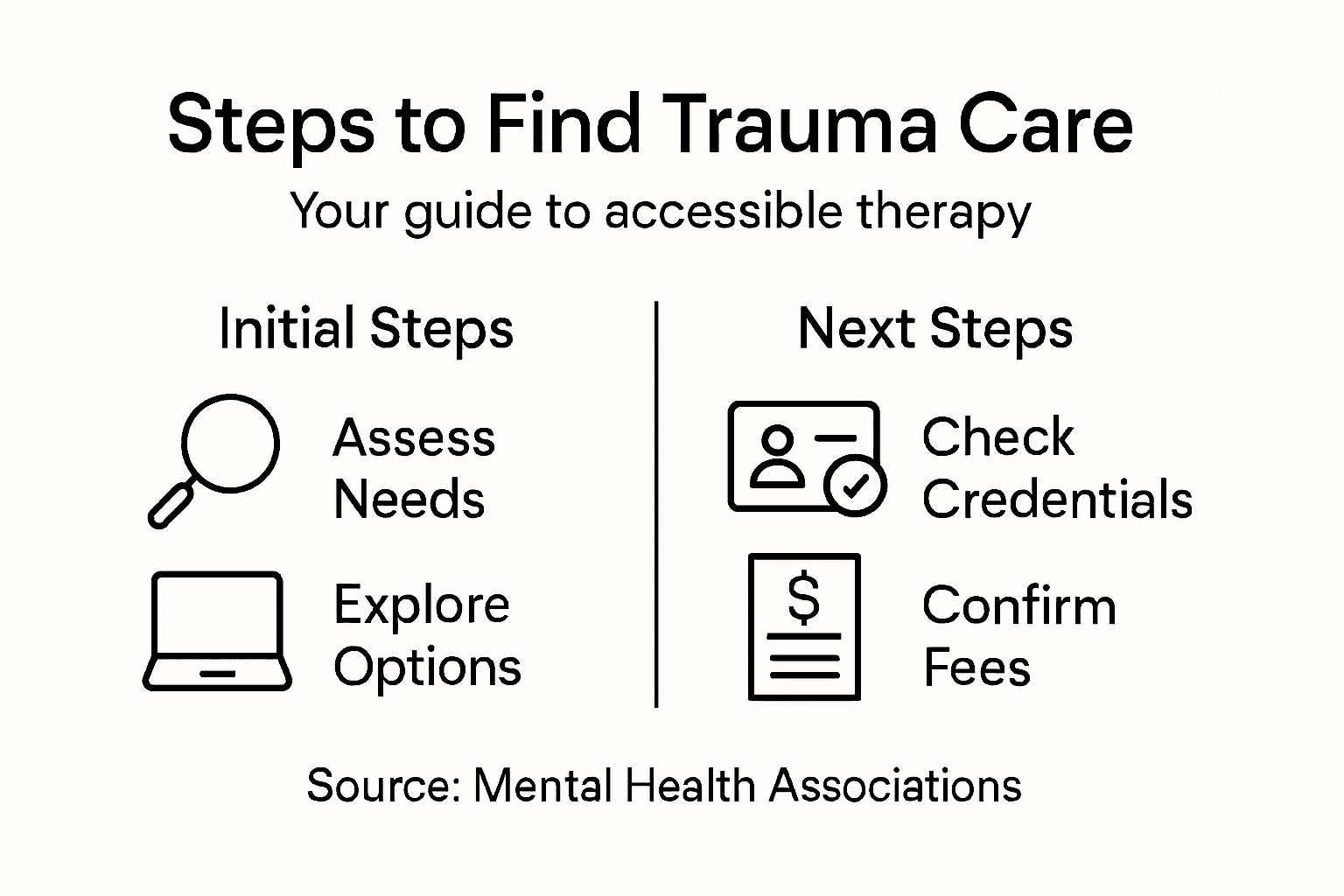
- Step 1: Assess Your Therapy Needs And Preferences
- Step 2: Explore Affordable And Trauma-Informed Options
- Step 3: Verify Credentials And Experience
- Step 4: Evaluate Availability And Session Format
- Step 5: Confirm Insurance And Fee Compatibility
Quick Summary
| Key Point | Explanation |
|---|---|
| 1. Assess Your Therapy Needs | Identify specific mental health challenges such as anxiety or past trauma to guide your therapy search effectively. |
| 2. Explore Affordable Options | Research community resources, sliding scale fees, and telehealth services to find budget-friendly trauma therapy. |
| 3. Verify Credentials and Experience | Check therapists’ licenses and specialized trauma certifications to ensure high-quality, ethical care. |
| 4. Evaluate Availability and Formats | Choose a therapist whose scheduling options and session formats align with your personal needs and lifestyle. |
| 5. Confirm Insurance and Fees | Understand your insurance benefits and ask about payment plans to manage therapy costs effectively. |
Step 1: Assess Your Therapy Needs and Preferences
Understanding your unique mental health needs is the first critical step in finding effective trauma care. Trauma-informed care starts with recognizing that your individual experience matters deeply, and therapy should be tailored to support your specific healing journey.
To begin assessing your needs, reflect on the specific challenges you are experiencing. Are you struggling with anxiety, depression, relationship difficulties, or unresolved past trauma? Consider the symptoms that most impact your daily life emotional regulation, sleep patterns, work performance, or personal relationships. Think about what specific outcomes you hope to achieve through therapy whether that means developing coping strategies, processing traumatic memories, or building healthier interpersonal skills.
As you explore potential therapy approaches, remember that trauma care shifts from asking “What’s wrong with you?” to understanding “What happened to you?”. This means finding a therapist who creates a safe, supportive environment that validates your experiences and empowers your healing process. Look for professionals who specialize in trauma treatment and demonstrate expertise in evidence-based methods like EMDR, cognitive behavioral therapy, or somatic experiencing.
Pro tip: Create a simple journal listing your top three mental health goals and most challenging symptoms to help guide your initial therapist consultations.
Here’s a summary comparing popular trauma therapy approaches:
| Approach | Typical Format | Key Focus | Commonly Used For |
|---|---|---|---|
| EMDR | Individual sessions | Processing traumatic memories | PTSD, acute trauma |
| Cognitive Behavioral Therapy | Individual or group | Thoughts, emotions, behavior change | Anxiety, depression, trauma |
| Somatic Experiencing | Individual sessions | Body awareness and release | Stress, trauma, chronic pain |
Step 2: Explore Affordable and Trauma-Informed Options
Navigating affordable trauma therapy requires strategic research and understanding of various accessible mental health resources. Trauma-informed interventions offer multiple approaches that can help you heal without creating financial strain.
Start by investigating community mental health centers, nonprofit organizations, and local clinics that provide sliding scale fees based on your income. Many therapists offer reduced rates for clients experiencing financial challenges. Consider exploring group therapy sessions, which are typically less expensive than individual counseling and can provide valuable support networks. Universities with psychology training programs often provide low cost therapy services supervised by licensed professionals.
Research online platforms and telehealth options that might offer more affordable mental health support. Trauma-informed approaches can be systematically applied across different service sectors to ensure accessible and culturally competent care. Check if your workplace offers an employee assistance program, health insurance includes mental health coverage, or if local social service agencies provide referrals to affordable trauma treatment options.
Pro tip: Call multiple therapy practices and directly ask about their sliding scale fees, income based pricing, and payment plan options to find the most affordable trauma care.
Use this table to compare affordable trauma therapy options:
| Resource Type | Description | Typical Cost Range | Notable Benefits |
|---|---|---|---|
| Community Mental Health Center | Local clinics for broad needs | Low to moderate, income-based | Offers sliding scale fees |
| University Training Clinic | Supervised by licensed professionals | Minimal, discounted rates | Provides quality, affordable care |
| Online Platforms | Therapy via video or chat | Varies, some as low as $30/session | Convenient and accessible anywhere |
| Group Therapy | Peer-based support sessions | Lower than individual therapy | Builds community, reduces isolation |
Step 3: Verify Credentials and Experience
Verifying a therapist’s professional credentials is crucial to ensuring you receive high quality, ethical trauma care. Credential verification confirms a therapist’s professional legitimacy and helps protect your mental health journey.
Start by checking the therapist’s professional licensing status through your state’s licensing board website. Look for advanced certifications specific to trauma treatment, such as Trauma Focused Cognitive Behavioral Therapy certification which demonstrates specialized training in evidence based trauma interventions. Request their professional credentials, including their degree, licensure type, years of experience treating trauma, and any additional specialized training in trauma care techniques like EMDR or somatic experiencing.

Research the therapist’s background by reviewing their professional website, psychology directory profiles, and online professional references. Check for memberships in professional organizations like the American Psychological Association or specialized trauma treatment associations. Consider scheduling a brief initial consultation to ask direct questions about their experience treating clients with similar trauma backgrounds and their approach to trauma informed care.
Pro tip: Request to see a therapist’s current professional license and verify its active status directly with the state licensing board before scheduling your first appointment.
Step 4: Evaluate Availability and Session Format
Choosing a therapist with the right availability and session format is crucial for maintaining consistent and comfortable trauma care. Flexible therapy options accommodate individual needs and support your healing journey.
Consider the various therapy delivery formats that might work best for you. APA guidelines recommend personalizing treatment approaches including options like in-person sessions, telehealth, virtual meetings, or group therapy. Assess your personal schedule, transportation capabilities, work constraints, and comfort level with different session types. Some therapists offer evening or weekend appointments, while others provide morning slots or flexible online scheduling. Discuss potential time slots, session frequency, and your preferred communication method during initial consultations.
Evaluate practical aspects like session duration, cancellation policies, and potential rescheduling options. Some therapists offer 45 or 60 minute sessions, while others might provide shorter or longer formats. Consider your energy levels, work commitments, and personal preferences when selecting a session length and frequency that feels sustainable for your mental health journey.
Pro tip: Request a brief initial consultation to test the therapist’s communication style and verify their availability matches your scheduling needs.
Step 5: Confirm Insurance and Fee Compatibility
Navigating the financial aspects of trauma therapy requires careful planning and proactive communication. Insurance verification is a critical first step in making mental health care accessible and affordable.
Start by contacting your health insurance provider to understand your mental health coverage details. Ask specific questions about out-of-network benefits, copayment rates, and whether preauthorization is required for trauma therapy. The APA Psychologist Locator can help filter therapists by insurance compatibility and provide a streamlined approach to finding in network providers. Request a detailed breakdown of your insurance plan’s mental health benefits, including session limits, annual coverage maximums, and any required referrals from primary care physicians.
If insurance coverage is limited or unavailable, explore alternative payment options. Many therapists offer sliding scale fees based on income, payment plans, or reduced rates for self paying clients. Nonprofit organizations and community health centers often provide affordable trauma care options. Consider discussing fee structures directly with potential therapists, including package rates, session discounts, or flexible payment arrangements that can make therapy more financially manageable.
Pro tip: Request a written fee agreement and insurance verification documentation before starting therapy to prevent unexpected financial complications.
Discover Accessible Trauma Care Tailored to Your Healing Journey
If you are feeling overwhelmed by the challenge of finding trauma-informed therapy that truly understands what happened to you, you are not alone. Many face barriers like affordability, availability, or uncertainty about which approach best fits their mental health goals. At ReviveHealthTherapy, we specialize in evidence-based trauma care using proven methods like EMDR and Cognitive Behavioral Therapy to support your unique path to recovery. We recognize the importance of a safe, validating environment where your experiences are honored and healing feels possible.

Take control of your mental wellness with flexible options including in-person therapy in Walnut Creek and Oakland or secure telehealth sessions anywhere in California. We offer sliding-scale fees and accept insurance plans to reduce financial stress and make help accessible now. Begin your healing by exploring how we can align with your needs and schedule. Visit ReviveHealthTherapy to learn more about our trauma-informed services and start your personalized care plan today. Your journey to emotional well-being deserves thoughtful, affordable support right when you need it most.
Frequently Asked Questions
How do I assess my trauma therapy needs?
Start by reflecting on the specific challenges you’re facing, such as anxiety, depression, or unresolved trauma. Identify your top three mental health goals and any symptoms that significantly affect your daily life to guide your search for a therapist.
What affordable options are available for trauma therapy?
Explore community mental health centers, nonprofit organizations, and universities that offer therapy at reduced rates. Additionally, consider checking telehealth platforms and group therapy sessions to find more budget-friendly options.
How can I verify a therapist’s credentials and experience?
Check your therapist’s licensing status on your state’s licensing board website and ask about their specific trauma treatment certifications. Take the time to research their background and consider scheduling an initial consultation to discuss their experience with trauma care.
What should I consider regarding therapy session formats and availability?
Evaluate whether you prefer in-person sessions, telehealth, or group therapy, and ensure the therapist’s availability aligns with your schedule. During your initial consultation, ask about session duration, frequency options, and any flexible scheduling they may offer.
How do I confirm insurance compatibility for trauma therapy?
Contact your health insurance provider to understand your mental health coverage, including copayment rates and any required preauthorization. Make sure to ask for a detailed breakdown of your benefits, and consider discussing fee structures upfront with potential therapists to avoid unexpected costs.
What steps can I take to find a therapist who is trauma-informed?
Look for a therapist who specializes in trauma treatment and utilizes evidence-based approaches like EMDR or Cognitive Behavioral Therapy. Research their website and professional profiles to identify their experience and commitment to creating a supportive healing environment.
7 Responses