
Every parent faces uncertainty when preparing for their child’s first therapy session, especially with so many emotions at play. For families in California, building trust with the therapist and starting honest conversations at home can make a real difference in easing your child’s worries. This guide shares how to focus on gathering key insights, set clear expectations, and support your child with empathy so those first steps toward emotional growth feel safe and positive.
Table of Contents
- Step 1: Gather Essential Information From Your Therapist
- Step 2: Discuss Therapy Expectations With Your Child
- Step 3: Create A Calm And Supportive Environment At Home
- Step 4: Arrange Practical Details For A Smooth Session
- Step 5: Reflect On The Session And Offer Reassurance
Quick Summary
| Key Point | Explanation |
|---|---|
| 1. Gather critical details from the therapist | Ask questions about assessment methods and therapeutic approach to support a tailored treatment plan for your child. |
| 2. Prepare your child for therapy | Discuss therapy in age-appropriate language, normalizing the experience and reassuring your child about the support they’ll receive. |
| 3. Create a supportive home environment | Establish routines and encourage open communication to provide emotional safety and comfort during your child’s therapy journey. |
| 4. Organize practical details for the session | Complete intake paperwork, confirm logistics, and prepare any necessary documents to ensure a smooth therapy appointment. |
| 5. Reflect and reassure after the session | Engage in open dialogue about your child’s experience, validating their feelings and reinforcing the positive aspects of their therapy journey. |
Step 1: Gather essential information from your therapist
Preparing for your child’s first therapy session involves collecting critical details that will help create a supportive and effective treatment environment. Understanding what information to request from the therapist can significantly improve your child’s therapeutic experience and set the foundation for successful mental health support.
Begin by scheduling a preliminary conversation with the therapist to discuss your child’s specific needs. During this discussion, focus on gathering key insights about their therapeutic approach and assessment methods. Effective preparation strategies can help parents understand what to expect during the initial session.
Here are essential questions to ask your therapist:
- What assessment techniques will you use with my child?
- How do you typically engage children during therapy sessions?
- What therapeutic approaches do you recommend for my child’s specific situation?
- Can you explain your confidentiality policy regarding minors?
- How will you communicate progress and treatment recommendations to me?
By asking these targeted questions, you demonstrate active involvement in your child’s mental health journey and help the therapist develop a tailored treatment plan.
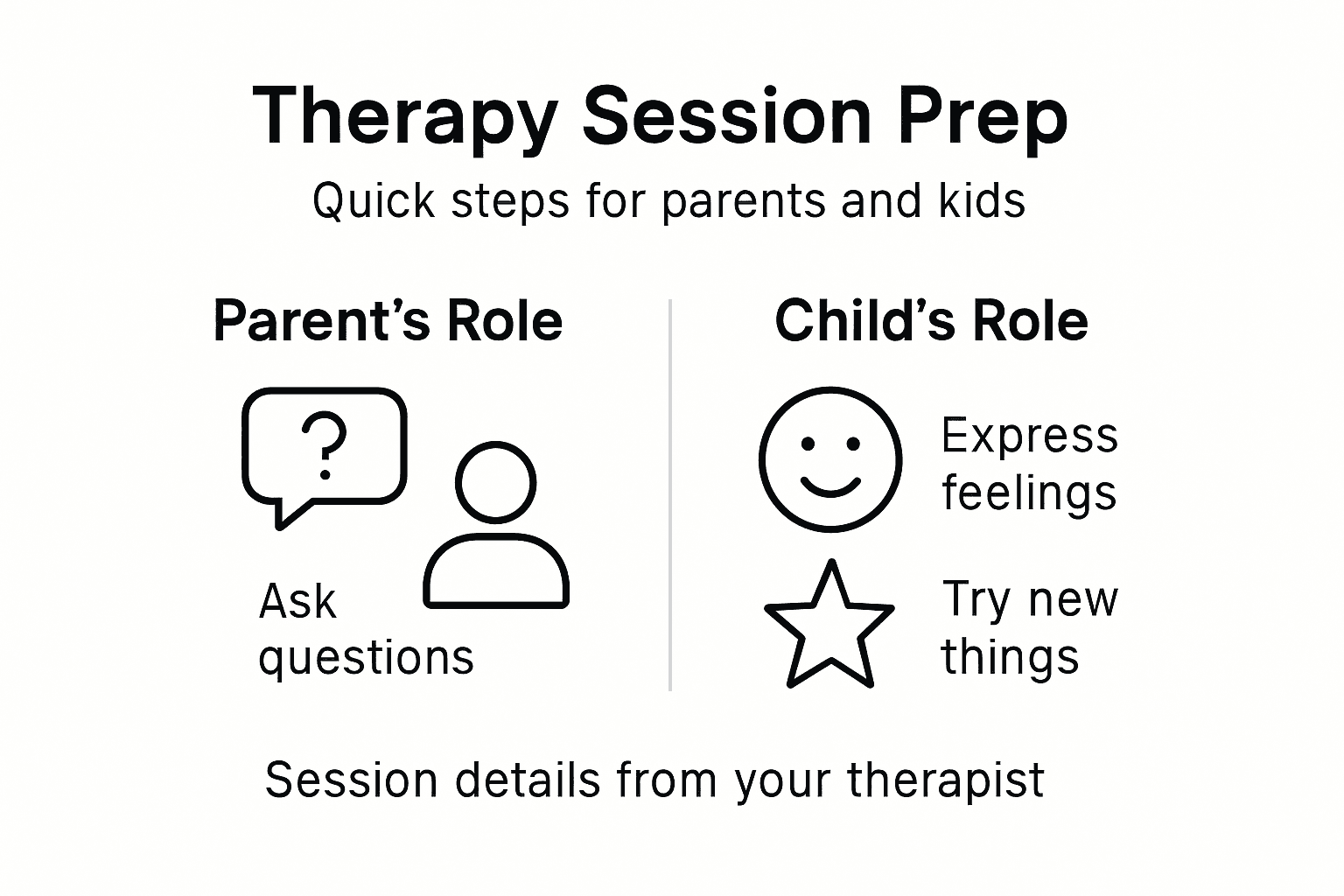
Here’s a summary of common parental concerns and how therapists typically address them:
| Parental Concern | Therapist’s Approach | Benefit for Child |
|---|---|---|
| Confidentiality worries | Outlines privacy policies clearly | Builds trust and safety |
| Communication expectations | Shares updates in agreed formats | Ensures ongoing collaboration |
| Assessment techniques | Explains methods before sessions | Reduces child’s anxiety |
| Behavioral changes | Discusses observed trends openly | Supports tailored strategies |
Pro tip: Bring a brief written summary of your child’s background, including any significant life events, behavioral changes, or concerns that might help the therapist understand their emotional landscape more comprehensively.
Step 2: Discuss therapy expectations with your child
Navigating the conversation about therapy with your child requires sensitivity, openness, and age-appropriate communication. Effective therapy preparation involves creating a safe and supportive dialogue that helps your child understand the purpose and process of therapeutic support.
When discussing therapy, consider these key communication strategies:
- Use simple, clear language that matches your child’s developmental level
- Explain that therapy is a safe space to discuss feelings and challenges
- Reassure them that seeking help is a sign of strength, not weakness
- Validate any concerns or anxieties they might express
- Emphasize that the therapist is there to help them feel better
Therapy is not about fixing something broken, but about supporting emotional growth and learning healthy coping strategies.
Involve your child in the process by encouraging questions and allowing them to share their thoughts and feelings about therapy. Normalize the experience by sharing that many children and adults benefit from talking with a professional who can help them understand their emotions and develop stronger mental health skills.

Pro tip: Practice a brief, calm rehearsal conversation about therapy, using positive, encouraging language that helps your child feel safe and supported throughout the process.
Step 3: Create a calm and supportive environment at home
Preparing a nurturing home environment is crucial for supporting your child’s therapeutic journey. Creating a supportive atmosphere involves establishing emotional safety and demonstrating consistent understanding and acceptance.
Consider implementing these strategies to foster a supportive home environment:
- Maintain consistent daily routines to provide stability
- Listen actively without judgment when your child wants to talk
- Avoid pressuring your child to share more than they’re comfortable with
- Create dedicated quiet spaces for reflection and emotional processing
- Demonstrate open and compassionate communication
A calm home environment acts as a foundational support system for your child’s emotional growth and healing.
Emphasize that therapy is a positive experience by modeling emotional openness and showing genuine interest in your child’s feelings. Approach conversations with patience and compassion, recognizing that healing is a gradual process that requires consistent support and understanding.
Pro tip: Establish a weekly check-in routine where your child can share their feelings about therapy in a relaxed, pressure-free environment, using gentle and supportive language.
Step 4: Arrange practical details for a smooth session
Successfully preparing for your child’s first therapy session requires careful logistical planning and thoughtful organization. Practical therapy preparation involves addressing administrative details and creating a structured approach to the upcoming appointment.
Use this comprehensive checklist to ensure a seamless therapy session experience:
- Complete all required intake paperwork in advance
- Confirm the exact appointment time and location
- Arrange transportation and plan your arrival 15 minutes early
- Prepare a list of specific behavioral observations or concerns
- Organize any relevant medical or school documents
- Discuss insurance coverage and payment expectations
Thorough preparation reduces anxiety and sets a positive tone for your child’s therapeutic journey.
Document important details like contact information, session duration, and therapist’s communication preferences. Consider creating a dedicated folder or digital file to track therapy-related information, which will help you stay organized and support your child’s ongoing mental health care.
Pro tip: Create a simple, child-friendly calendar marking therapy days and use a special sticker or color to help your child feel more comfortable and engaged with the process.
Step 5: Reflect on the session and offer reassurance
After your child’s first therapy session, creating a safe space for open dialogue becomes crucial. Post-therapy emotional support involves listening carefully and validating your child’s experience without judgment or pressure.
Consider these compassionate strategies for reflection:
- Ask open-ended questions about their experience
- Acknowledge any emotions they express, positive or negative
- Avoid interrogating or forcing conversation
- Reassure them that their feelings are valid and normal
- Emphasize that therapy is a supportive journey
Your calm, accepting response helps your child feel secure and understood during this vulnerable moment.
Normalize the therapy experience by sharing that many children and adults benefit from professional support. Celebrate their courage in attending the session, focusing on their strength and willingness to explore their emotions.
Pro tip: Create a gentle, low-pressure routine after therapy sessions where your child knows they can share as much or as little as they feel comfortable, without any expectations or judgments.
This comparison highlights the roles of parent and therapist in supporting a child’s therapy journey:
| Role | Key Responsibilities | Impact on Session Outcome |
|---|---|---|
| Parent | Prepare, reassure, communicate | Reduces stress and increases trust |
| Therapist | Guide, assess, support | Creates effective treatment plans |
| Child | Participate, express, reflect | Gains emotional growth and skills |
Support Your Child’s Journey to Emotional Wellbeing with Expert Care
Preparing your child for their first therapy session can feel overwhelming. The article highlights common challenges like managing expectations, addressing confidentiality concerns, and creating a calm environment. At ReviveHealthTherapy, we specialize in trauma-informed, evidence-based psychotherapy tailored to children’s unique emotional needs. Our caring therapists use proven approaches such as CBT and mindfulness to help your child build coping skills and feel safe throughout their therapy experience. Discover how thoughtful preparation combined with professional support can make all the difference.

Take the next step toward empowering your child today by exploring our comprehensive mental health services. Whether you prefer in-person sessions in Walnut Creek or Oakland or secure telehealth options statewide, we offer affordable care designed to fit your family’s needs. Prepare your child with confidence knowing you have a trusted partner at https://revivehealththerapy.com. Learn more about our Uncategorized – ReviveHealthTherapy services and start helping your child thrive emotionally now.
Frequently Asked Questions
How can I gather information from my child’s therapist before the first session?
To effectively prepare for your child’s first therapy session, schedule a preliminary conversation with the therapist. Focus on understanding their assessment techniques, confidentiality policy, and recommended therapeutic approaches for your child’s specific needs.
What should I tell my child about going to therapy?
When discussing therapy with your child, use simple and reassuring language. Explain that therapy is a safe space to talk about feelings and that seeking help is a sign of strength, encouraging them to ask questions and express any concerns.
How can I create a supportive environment at home before therapy begins?
Establish a calm home environment by maintaining daily routines and encouraging open communication. Listen actively to your child’s thoughts and feelings about therapy, creating a safe space for them to express themselves without pressure.
What practical details should I arrange before my child’s first therapy session?
Prepare for your child’s first therapy session by completing necessary intake paperwork in advance and confirming the appointment details. Make transportation arrangements to arrive 15 minutes early, and prepare a list of specific observations or concerns to discuss during the session.
How do I support my child after their first therapy session?
After the session, provide a supportive space for your child to share their thoughts and feelings. Ask open-ended questions and validate their emotions, emphasizing that therapy is a normal and positive experience to help them feel secure and understood.
2 Responses