
More than one in five American teens struggles with significant anxiety, depression, or relationship issues during high school. For parents in California, understanding what quality therapy really means can make all the difference. In a world where misconceptions often hold families back, this guide shines a light on the truth about teen-focused support and highlights affordable, trauma-informed options including flexible telehealth services.
Table of Contents
- Defining Therapy For Teens And Common Misconceptions
- Key Types Of Therapy Used With Teens
- What Happens In A Teen Therapy Session
- Making Therapy Accessible And Affordable In California
- How Parents And Teens Can Work Together
Key Takeaways
| Point | Details |
|---|---|
| Importance of Teen Therapy | Specialized approaches are crucial for addressing the unique emotional and developmental challenges faced by adolescents. |
| Common Misconceptions | Therapy should be viewed as a proactive step towards emotional wellness, not a sign of weakness or that something is wrong. |
| Collaborative Techniques | Effective teen therapy often combines individual, family, and group methods to support emotional growth within a broader relational context. |
| Accessibility Initiatives | California has implemented various measures, including telehealth and sliding-scale fees, to make mental health services more accessible for teens. |
Defining Therapy for Teens and Common Misconceptions
Teenage mental health requires specialized, compassionate approaches that recognize the unique developmental challenges adolescents face. Teen therapy services address complex emotional landscapes where traditional counseling methods often fall short. Unlike adult therapy, teen-focused treatment must navigate the intricate balance between independence, emotional vulnerability, and emerging personal identity.
Common misconceptions about teen therapy can prevent adolescents from seeking essential support. Many parents and teens believe therapy implies something is fundamentally wrong, when in reality, counseling represents a proactive approach to emotional wellness. Therapy provides adolescents with critical communication skills, emotional regulation techniques, and strategies for managing stress, relationships, and personal growth. These interventions are not indicators of weakness but demonstrate remarkable emotional intelligence and self-awareness.
Adolescent therapy typically involves collaborative, age-appropriate techniques that respect teenage autonomy while providing professional guidance. Therapists use interactive approaches like cognitive behavioral strategies, art therapy, and solution-focused interventions tailored specifically to teenage developmental stages. These methods help teens explore their emotions, build resilience, and develop healthy coping mechanisms without feeling judged or misunderstood.
Pro tip: Encourage open dialogue about therapy by normalizing mental health conversations and presenting counseling as a strength-building opportunity rather than a problem-solving last resort.
Key Types of Therapy Used With Teens
Teens benefit from diverse therapeutic approaches that address their complex emotional and developmental needs. Psychotherapies for adolescents encompass multiple specialized strategies designed to support their unique psychological landscapes. Cognitive Behavioral Therapy (CBT), Dialectical Behavior Therapy (DBT), and interpersonal therapies represent core modalities that help teenagers navigate challenging emotional terrains.
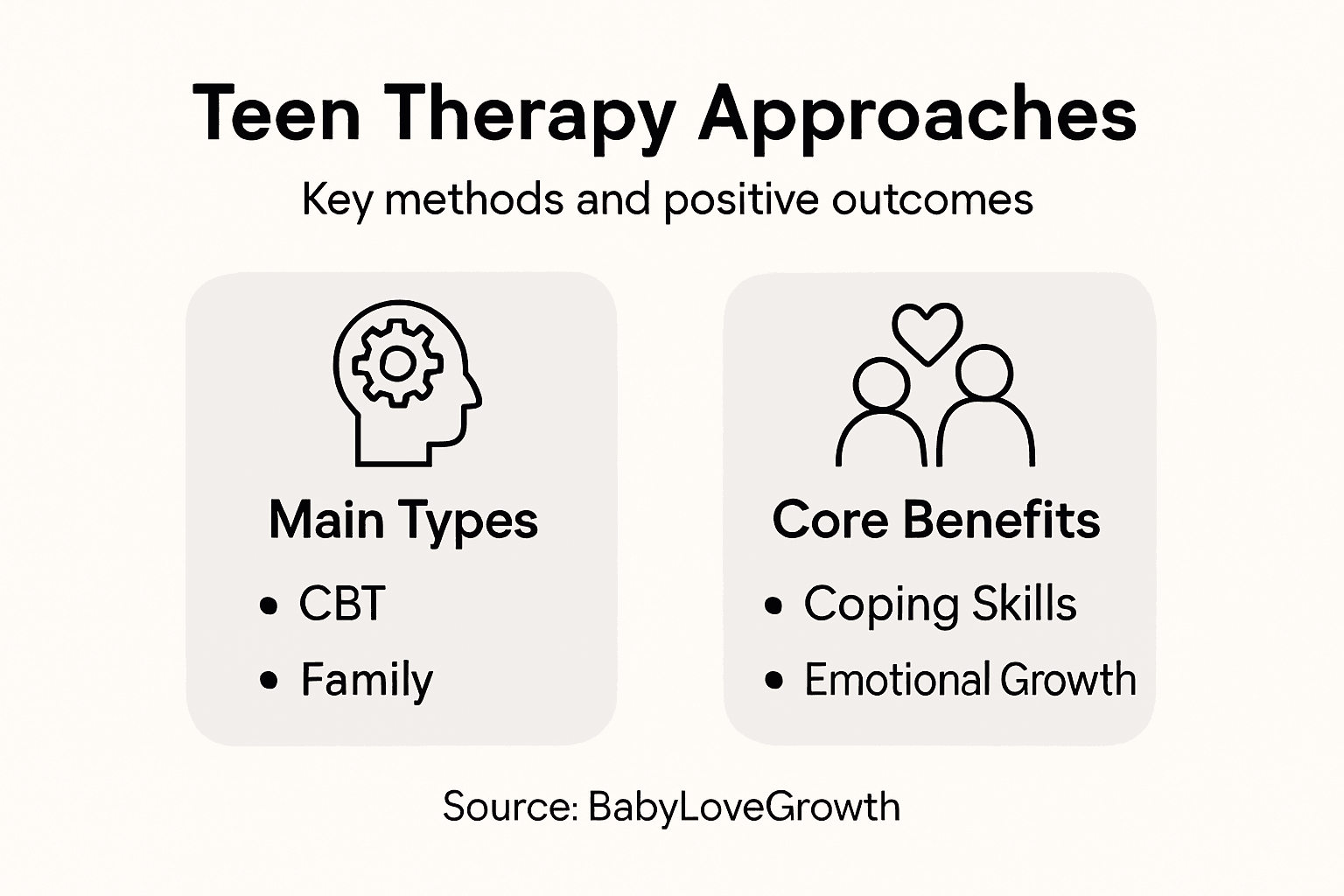
Cognitive Behavioral Therapy stands out as a primary intervention for teen mental health challenges. This approach helps adolescents identify negative thought patterns, challenge distorted beliefs, and develop healthier cognitive frameworks. By teaching practical skills for emotional regulation, CBT empowers teens to manage anxiety, depression, and stress more effectively. Individual therapy techniques often incorporate CBT principles to create personalized healing strategies that respect each teenager’s individual experiences and emotional complexity.
Group and family therapies offer complementary approaches that expand therapeutic support beyond individual sessions. Group therapy provides teenagers with opportunities to build social skills, learn from peer experiences, and develop a sense of community. Family therapy, meanwhile, addresses systemic dynamics, improving communication patterns and helping family members understand and support the teenager’s emotional journey. These collaborative approaches recognize that teen mental health is deeply interconnected with their broader social and familial contexts.
Here’s an overview of common therapy types used with teens and their main benefits:
| Therapy Type | Core Focus | Typical Benefits |
|---|---|---|
| Cognitive Behavioral Therapy | Restructuring negative thoughts | Reduces anxiety and depression |
| Dialectical Behavior Therapy | Managing intense emotions | Improves self-control and resilience |
| Interpersonal Therapy | Enhancing relationships | Builds communication and social skills |
| Art-Based Therapy | Expressing emotions creatively | Eases self-expression and emotional release |
| Family Therapy | Addressing family dynamics | Strengthens family communication |
Pro tip: Encourage teens to view therapy as a collaborative process of personal growth and self-discovery, emphasizing that seeking help demonstrates emotional strength and self-awareness.
What Happens in a Teen Therapy Session
Understanding adolescent therapy reveals a carefully structured and compassionate approach designed to support teenagers through complex emotional landscapes. Teen therapy sessions are uniquely crafted environments where adolescents can explore their thoughts, feelings, and experiences in a safe, confidential space. Unlike adult therapy, these sessions prioritize developmental appropriateness, ensuring that communication styles, therapeutic techniques, and goals align with the teenager’s specific psychological and emotional needs.
Typical therapy sessions involve a combination of structured and flexible interactions. A therapist might begin by establishing rapport through casual conversation, gradually introducing therapeutic techniques like cognitive behavioral strategies, art-based expression, or narrative approaches. Teen therapy services often incorporate interactive elements such as journaling, drawing, or role-playing to help teenagers articulate emotions that might be challenging to verbalize directly. These creative approaches allow teens to engage with difficult topics in a less intimidating manner, facilitating deeper emotional exploration and understanding.

Confidentiality plays a crucial role in teen therapy sessions, creating a foundation of trust between the therapist and adolescent. While therapists maintain professional boundaries, they also recognize the importance of involving parents or guardians when necessary. Some sessions might include family components to improve communication dynamics, address systemic challenges, or provide context for the teenager’s emotional experiences. The goal is to create a holistic support system that respects the teenager’s growing independence while ensuring their emotional and psychological well-being.
Pro tip: Encourage teens to view therapy as a collaborative journey of self-discovery, where they are active participants in their emotional growth and healing process.
Making Therapy Accessible and Affordable in California
California’s mental health system has made significant strides in creating comprehensive, affordable therapy options for residents, particularly teens and young adults. The state has developed innovative approaches to reduce financial barriers and increase mental health support accessibility. Individual therapy services now offer sliding-scale fees, telehealth options, and multiple payment strategies designed to make professional mental health care more attainable for diverse income levels.
Medi-Cal and other state insurance programs provide critical support for teenagers seeking mental health services. Many county-based programs offer free or low-cost therapy options, ensuring that financial constraints do not prevent adolescents from accessing essential mental health care. These programs typically cover a range of services including individual counseling, group therapy, crisis intervention, and specialized support for teens dealing with anxiety, depression, trauma, and relationship challenges. Some initiatives specifically target youth mental health, providing dedicated resources and support networks.
Technology and telehealth have revolutionized therapy accessibility in California, particularly for teens and families in remote or underserved areas. Online counseling platforms, secure video sessions, and digital mental health resources have expanded treatment options, making professional support more convenient and flexible. These innovative approaches reduce transportation barriers, accommodate busy schedules, and provide comfortable, confidential environments for teenagers to engage in therapeutic conversations. Many providers now offer evening and weekend appointments, evening out access for students and working teens.
Here’s a comparison of traditional in-person therapy and modern telehealth options for California teens:
| Aspect | In-Person Therapy | Telehealth Therapy |
|---|---|---|
| Accessibility | Limited by location | Statewide, remote access |
| Privacy | In-office sessions | Private, often at home |
| Scheduling | Fixed weekday hours | Evening/weekend flexibility |
| Technology Use | Minimal, face-to-face | Secure video or phone sessions |
Pro tip: Research local county mental health resources and verify insurance coverage beforehand, as many affordable options are available but require proactive investigation.
How Parents and Teens Can Work Together
Parental involvement in adolescent psychological interventions significantly improves treatment outcomes by creating a supportive, collaborative environment. Parents play a crucial role in teen mental health by understanding, supporting, and actively participating in their child’s therapeutic journey. This approach transforms therapy from a standalone intervention into a comprehensive, family-centered healing process that acknowledges the interconnected nature of teenage emotional development.
Parent-teen relationships thrive when communication is open, respectful, and non-judgmental. Successful collaboration involves parents learning to listen actively, validate their teenager’s emotions, and create safe spaces for honest dialogue. This means moving beyond traditional advice-giving to becoming emotional coaches who help teens develop self-understanding, emotional regulation skills, and healthy coping mechanisms. Parents can support therapy by reinforcing learned strategies at home, showing genuine interest in their teen’s progress, and maintaining a consistent, supportive presence.
Practical strategies for parents include attending joint therapy sessions, participating in family counseling components, and maintaining consistent communication with the therapist. This might involve regular check-ins, learning about specific therapeutic techniques being used, and understanding how to create a home environment that supports their teenager’s mental health journey. Parents should also focus on building trust, respecting their teen’s privacy, and avoiding excessive pressure or criticism that might undermine the therapeutic process.
Pro tip: Create a non-threatening weekly check-in ritual where teens can share their feelings without fear of judgment, using open-ended questions that invite conversation rather than demanding details.
Discover Compassionate Therapy Tailored for Teens
Struggling with teen anxiety depression or the complexities of emotional regulation can feel overwhelming for both adolescents and parents. This article highlights key therapeutic approaches like Cognitive Behavioral Therapy and trauma-informed care that empower teens to manage their feelings and build resilience. At ReviveHealthTherapy we understand these challenges and offer personalized teen therapy services in California that combine evidence-based methods such as CBT and mindfulness with safe engaging environments. Our therapists prioritize your teen’s unique developmental needs while fostering emotional strength and growth.

Take the important step today to support your teen’s mental wellness with accessible individual therapy options including flexible in-person sessions in Walnut Creek and Oakland or convenient statewide telehealth therapy. Our affordable sliding-scale fees and insurance acceptance make professional help more attainable than ever. Visit ReviveHealthTherapy now to learn how our expert clinicians can guide your family through this journey toward healing and self-discovery.
Frequently Asked Questions
What types of therapy are most effective for teens?
Teen therapy often utilizes Cognitive Behavioral Therapy (CBT), Dialectical Behavior Therapy (DBT), interpersonal therapy, and art-based therapies, each focusing on different aspects of emotional and psychological well-being.
How does a typical teen therapy session work?
A typical session includes establishing rapport, engaging in interactive techniques like journaling or drawing, and discussing thoughts and feelings in a safe environment, while also respecting the teen’s confidentiality.
Why should teens consider therapy if they don’t feel they have serious problems?
Therapy is a proactive approach to mental wellness, providing teens with communication skills, emotional regulation techniques, and strategies for handling stress and personal growth rather than just addressing problems.
How can parents support their teens during therapy?
Parents can enhance therapy outcomes by being involved, attending joint sessions, maintaining open communication, and reinforcing therapeutic skills at home, creating a supportive environment for their teen’s emotional development.
One Response