
Feeling overwhelmed by anxiety or weighed down by depression is a reality many people in California know all too well. It can be tough to figure out where to turn for support, especially when worries about cost and finding the right therapist add to the stress. Therapy offers more than just a conversation—it is an evidence-based process that helps you build lasting skills for emotional wellness and personal growth. Discover how affordable, trauma-informed therapy can bring genuine relief and practical strategies for living better, no matter where you are in California.
Table of Contents
- Defining Adult Therapy And Common Myths
- Evidence-Based Approaches For Adults
- Key Benefits For Emotional Health
- Accessing Therapy In California
- Costs, Insurance, And Making Therapy Work
Key Takeaways
| Point | Details |
|---|---|
| Importance of Therapy | Therapy is a collaborative process beneficial for anyone seeking emotional support, not just those with severe mental illness. |
| Evidence-Based Approaches | Effective therapy relies on proven techniques like CBT and EMDR, tailored to individual needs for optimal results. |
| Accessibility | Various options, including sliding-scale fees and telehealth, exist to make therapy affordable and accessible in California. |
| Long-Term Benefits | Engaging in therapy fosters lasting emotional wellness and practical skills that enhance daily functioning and relationships. |
Defining Adult Therapy and Common Myths
Adult therapy, also called psychotherapy or talk therapy, is a collaborative process where you work with a licensed mental health professional to identify and change troubling emotions, thoughts, and behaviors. It’s not a one-size-fits-all treatment—it addresses everything from anxiety and depression to relationship issues, grief, and everyday stress.
Therapy happens in different formats. You might meet one-on-one with a therapist in person at our Oakland or Walnut Creek locations, or connect through secure telehealth sessions from anywhere in California. Some people benefit from group therapy settings where shared experiences create connection and understanding.
What Therapy Actually Does
Therapy helps you gain real relief from symptoms while improving your daily functioning and overall quality of life. It’s more than just talking about your problems—it’s a structured, evidence-based process using proven methodologies. When you work with trauma-informed therapists trained in approaches like EMDR or CBT, you’re using techniques backed by decades of research.
Key benefits include:
- Identify patterns in thinking and behavior that keep you stuck
- Develop practical tools for managing stress and emotional regulation
- Improve problem-solving skills for real-world challenges
- Process trauma and past experiences in a safe environment
- Build stronger relationships and communication skills
Busting the Common Myths
Myth 1: Therapy is only for people with serious mental illness. The reality is different. Psychotherapy benefits anyone seeking emotional support or guidance, whether you’re managing anxiety, navigating a career transition, or working through relationship challenges. You don’t need a crisis to deserve professional support.
Myth 2: Therapy takes years to show results. Many people notice meaningful changes within weeks or months. The timeline depends on your specific situation and therapeutic goals, but progress is often visible much sooner than people expect.
Myth 3: It’s just talking—nothing actually changes. Therapy involves objective recognition of behavior patterns and deliberate strategies for change. A skilled therapist helps you see connections you’ve missed and develop new approaches to old problems. The talking is the vehicle, but the work transforms how you think and act.
Myth 4: Therapy is a sign of weakness. Modern culture recognizes therapy as a resource for mental wellness and personal growth. Getting professional support shows self-awareness and strength, not vulnerability.
Stress, grief, and relationship problems affect everyone. Therapy isn’t reserved for emergencies—it’s available for anyone wanting to feel better and understand themselves more deeply.
Therapy is a collaborative, evidence-based process designed to help anyone improve emotional wellness, regardless of their current life circumstances.
Pro tip: When looking for adult therapy in California, ask potential therapists about their experience with your specific concerns and whether they offer sliding-scale fees or accept your insurance—affordability shouldn’t be a barrier to getting help.
Evidence-Based Approaches for Adults
When you’re considering therapy, you want to know it actually works. Evidence-based approaches are therapies grounded in scientific research and proven to reduce symptoms and improve how you function in daily life. This means your treatment relies on methods tested thousands of times, not guesswork.
Evidence-based practice integrates three critical components: research evidence from rigorous studies, your therapist’s clinical expertise, and your own preferences and values. This combination ensures you receive the most effective care tailored to your specific situation.
Proven Methods That Work
ReviveHealthTherapy uses several evidence-based approaches to treat anxiety, depression, trauma, and other challenges. These aren’t trendy techniques—they’re backed by decades of research and endorsed by professional organizations.
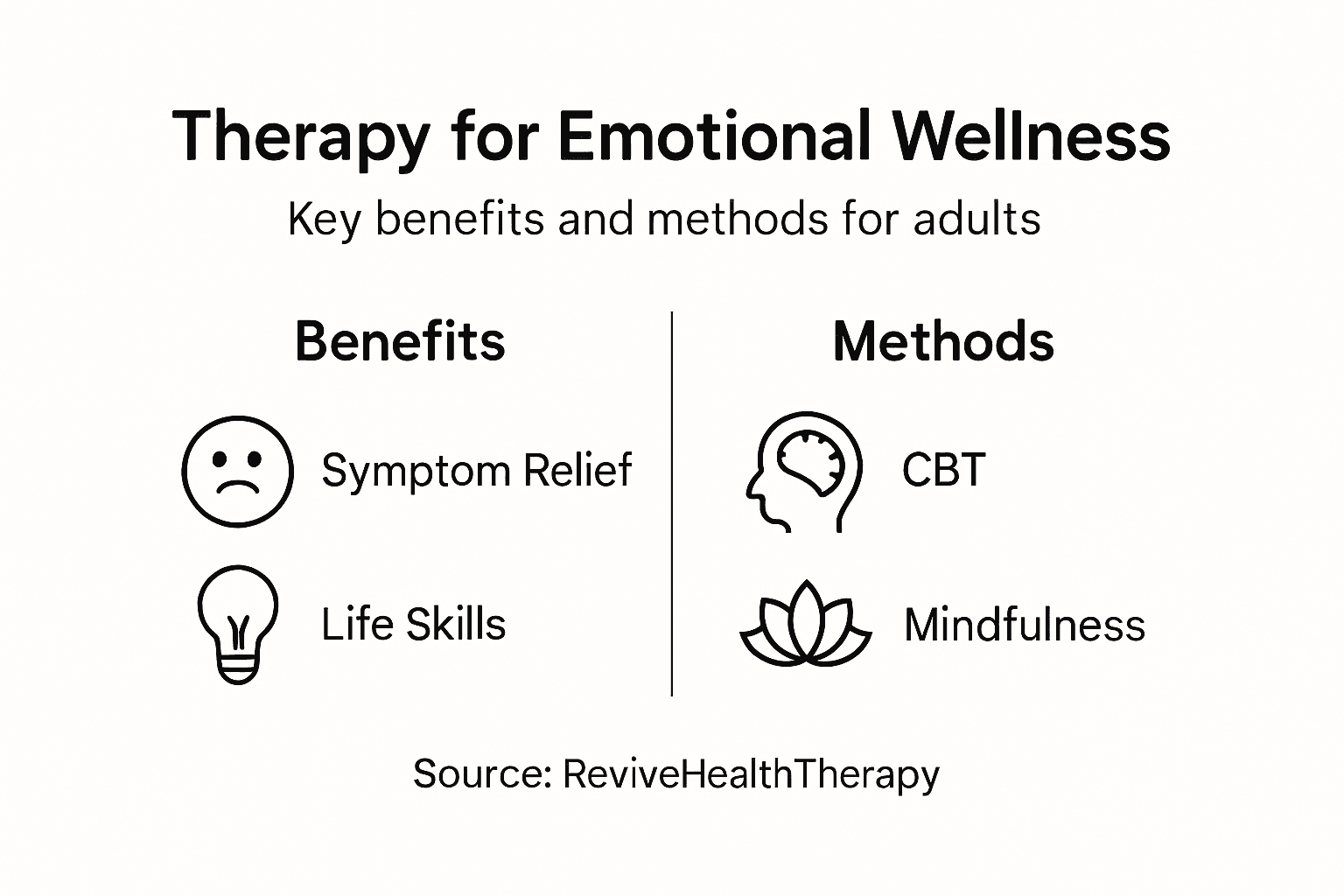
The most effective evidence-based therapies include:
Here’s a comparison of popular evidence-based therapy approaches for adults:
| Approach | Primary Focus | Typical Use Cases |
|---|---|---|
| CBT | Restructuring thoughts | Anxiety, depression |
| EMDR | Trauma processing | PTSD, past trauma |
| Mindfulness-Based | Stress reduction | Anxiety, mood disorders |
| CPT | Changing beliefs after trauma | PTSD, trauma recovery |
| Prolonged Exposure | Facing traumatic memories | Trauma, phobias |
| TF-CBT | Trauma and emotional healing | Childhood trauma |
- Cognitive Behavioral Therapy (CBT): Helps you identify and change thought patterns that fuel emotional struggles
- Trauma-Focused Cognitive Behavioral Therapy (TF-CBT): Specifically designed for processing traumatic experiences
- Cognitive Processing Therapy (CPT): Teaches you to examine how trauma has shaped your beliefs
- Prolonged Exposure Therapy: Helps you gradually face trauma-related memories and situations
- Eye Movement Desensitization and Reprocessing (EMDR): Uses bilateral stimulation to help your brain process trauma
- Mindfulness-Based Approaches: Incorporates present-moment awareness to reduce anxiety and depression
Why Evidence Matters
Recommended evidence-based treatments for adults robustly reduce symptoms and improve functioning across various mental health conditions. Research shows that therapy works best when tailored to your individual needs rather than following a one-size-fits-all formula.
Your therapist combines scientific knowledge with real clinical experience. They understand which approach works best for which situation, and they adjust treatment based on how you respond. This personalized approach increases your chances of meaningful progress.
At ReviveHealthTherapy, our therapists stay current with the latest research. They choose trauma-informed, evidence-based methods because they’re committed to your actual recovery, not just talking about your problems.
Evidence-based therapy means your treatment is grounded in scientific research, clinical expertise, and your personal goals—a combination proven to create lasting change.
Pro tip: When choosing a therapist in California, ask specifically which evidence-based approaches they use for your concern and how they measure progress—accountability matters.
Key Benefits for Emotional Health
Therapy isn’t just about feeling better in the moment—it creates lasting changes in how you think, feel, and function. The benefits extend far beyond symptom relief, touching every area of your life from relationships to work performance.
When you commit to therapy, you’re investing in yourself. The emotional wellness gains you build become tools you carry forward, helping you navigate challenges long after therapy ends.
Relief from Emotional Suffering
One immediate benefit is symptom reduction. Whether you’re struggling with anxiety that keeps you awake at night or depression that makes mornings feel impossible, therapy helps you experience real relief. Many people notice improvement within weeks rather than months.

Therapy addresses more than just the surface symptoms. It helps you understand what’s driving your anxiety or depression, which means the relief tends to stick around. You’re not just treating the problem—you’re addressing its roots.
Building Real Life Skills
Therapy teaches you practical tools you can use every single day. These aren’t abstract concepts—they’re concrete strategies that work in real situations.
Key emotional health skills you develop include:
- Coping strategies: Techniques for managing stress, grief, and strong emotions
- Problem-solving skills: Ways to approach challenges more effectively
- Healthy boundaries: Learning to say no without guilt or anger
- Communication skills: Expressing yourself clearly and listening better
- Emotional regulation: Managing your emotions instead of letting them control you
Stronger Relationships
Building coping skills and strengthening relationships are central therapy benefits that transform how you connect with others. When you understand your own emotions better, you communicate more authentically. You set healthier boundaries and respond rather than react.
Your relationships improve because you’re showing up more present and regulated. Your partner, family, and friends notice you’re more available and less reactive. This creates a ripple effect of improved connection.
Improved Daily Functioning
Therapy helps you maintain or enhance daily functioning across work, home, and personal life. You sleep better, focus more clearly, and handle stress without falling apart. Your productivity increases because you’re not burning energy managing overwhelming emotions.
You develop self-confidence knowing you can handle difficult situations. This confidence carries into job interviews, family conversations, and personal goals. Life feels more manageable.
Therapy provides lasting emotional wellness by giving you skills, insight, and resilience that benefit every area of your life.
Pro tip: Track specific improvements throughout therapy—better sleep, fewer anxiety attacks, or more patient responses—so you recognize progress that might not feel obvious at first.
Accessing Therapy in California
Finding therapy in California has never been easier, yet barriers like cost and availability still hold people back. The good news is that multiple pathways exist to connect you with affordable, evidence-based care—whether you prefer in-person sessions or virtual appointments.
California offers robust mental health resources through public programs, private insurance, and sliding-scale providers. ReviveHealthTherapy makes accessing care seamless with locations in Oakland and Walnut Creek, plus statewide telehealth options.
Your Therapy Options in California
You have several ways to access mental health care depending on your situation and preferences.
Common access pathways include:
- Private therapy: Direct payment or through your insurance plan
- Medi-Cal coverage: California’s Medicaid program offering behavioral health services
- Sliding-scale fees: Affordable rates based on your income
- HSA/FSA plans: Using health savings or flexible spending accounts
- Telehealth sessions: Online therapy accessible from anywhere in California
- In-person appointments: Sessions at our Oakland or Walnut Creek offices
Insurance and Payment Options
Most insurance plans cover therapy, including major carriers in California. ReviveHealthTherapy accepts numerous insurance plans, making mental health care more affordable for diverse income levels.
California’s Medi-Cal program provides behavioral health services for eligible residents. These services include assessments, therapy, and medication management for both mild to moderate and severe mental health conditions.
Beyond insurance, sliding-scale fees mean you only pay what you can afford based on income. This removes the cost barrier that keeps many people from getting help.
Here’s a summary of therapy payment and access options in California:
| Payment Option | Who It Benefits | How to Access |
|---|---|---|
| Insurance | Insured individuals | Through provider network |
| Medi-Cal | Low-income residents | Apply via state program |
| Sliding-Scale Fees | Anyone with limited income | Directly with provider |
| HSA/FSA Accounts | Employees with health savings | Use pre-tax healthcare funds |
| Community Centers | Uninsured or low income | Local mental health clinics |
Finding the Right Therapist
Choosing a therapist who understands your specific needs matters. You want someone trained in trauma-informed care with experience treating your particular concerns—whether anxiety, depression, or trauma.
ReviveHealthTherapy’s therapists specialize in evidence-based approaches like EMDR, CBT, and mindfulness-based therapy. They’re committed to your actual recovery, not just managing symptoms.
Treatment facility locators can help you explore additional options across California if needed.
Getting Started Today
Taking the first step is often the hardest part. Contact ReviveHealthTherapy to schedule a consultation. Our team can answer questions about therapist fit, payment options, and scheduling.
You can start with a phone call or secure online inquiry. Many people begin their therapy journey with telehealth, making it convenient to fit appointments into busy schedules.
Accessing therapy in California is achievable—multiple payment options, flexible formats, and qualified providers are available right now.
Pro tip: Call ahead and ask about your specific insurance coverage or sliding-scale rates before your first appointment so there are no financial surprises.
Costs, Insurance, and Making Therapy Work
Money shouldn’t stop you from getting mental health care. Yet cost remains one of the biggest barriers keeping Californians from seeking therapy. The reality is that therapy is more affordable than ever—you just need to know your options.
Whether you have insurance, limited income, or fall somewhere in between, pathways exist to make therapy work financially. ReviveHealthTherapy is committed to removing affordability barriers through sliding-scale fees, insurance acceptance, and flexible payment options.
Understanding Therapy Costs
Therapy costs vary widely depending on your therapist, location, and treatment approach. A typical session ranges from $75 to $200 per hour, but this isn’t your only option.
Cost factors include:
- Therapist experience: Licensed professionals may charge more than newer therapists
- Location: Urban areas like Oakland and Walnut Creek may have different rates
- Treatment modality: Specialized approaches like EMDR may cost more initially
- Session frequency: Weekly versus monthly sessions affect total expenses
- Insurance coverage: Your plan determines out-of-pocket costs
Making Insurance Work for You
Insurance is a key method for affording therapy, though navigating the system can feel frustrating. Insurance companies sometimes create administrative challenges that complicate access, but your benefits still represent real money toward mental health care.
Before starting therapy, call your insurance company to clarify coverage details. Ask about deductibles, copays, out-of-network costs, and pre-authorization requirements. ReviveHealthTherapy staff can help you understand your coverage.
Many plans cover therapy through in-network providers. Check whether ReviveHealthTherapy participates with your plan.
Affordable Options Beyond Insurance
If insurance isn’t an option, you have choices. Sliding fee scales, grants, and payment plans make therapy accessible regardless of income level.
Affordable access methods include:
- Sliding-scale fees: Pay based on what you actually earn
- Payment plans: Spread costs across multiple months
- HSA/FSA accounts: Use pre-tax health savings
- Community health centers: Often offer reduced-cost services
- Support groups: Free peer support alongside paid therapy
Making the Investment Count
Therapy is an investment in yourself that pays dividends long-term. When you commit to consistent attendance and active participation, results come faster—often within weeks or months.
You’ll notice reduced anxiety, better sleep, improved relationships, and increased productivity at work. These changes often lead to financial benefits through better job performance and fewer sick days.
Think of therapy not as an expense but as preventative care. Treating emotional issues early prevents costlier problems later.
Therapy costs less than most people expect, and multiple payment options ensure affordability doesn’t determine whether you get help.
Pro tip: Ask your therapist about their sliding scale and payment plan options upfront—transparency about costs prevents surprises and makes consistent attendance easier.
Take Charge of Your Emotional Wellness with Expert Adult Therapy
If you recognize the challenges of managing anxiety, depression, or past trauma you are not alone. Many adults struggle with these issues and benefit greatly from trauma-informed, evidence-based approaches such as EMDR and CBT discussed in this article. At ReviveHealthTherapy, we understand how overwhelming emotional distress can be and offer a supportive pathway to healing through practical tools and compassionate care.
Explore our full range of services by visiting our Uncategorized – ReviveHealthTherapy page to learn more about how our skilled therapists help build resilience and emotional regulation. Dont let cost or location hold you back because we provide flexible telehealth options statewide in California combined with affordable sliding-scale fees and insurance acceptance. Ready to start your journey toward lasting emotional wellness Reach out today to contact us and take the first step toward meaningful change.
Frequently Asked Questions
What is adult therapy?
Adult therapy, also known as psychotherapy or talk therapy, is a collaborative process where a licensed mental health professional helps individuals identify and change troubling emotions, thoughts, and behaviors to improve their emotional wellness.
What are the benefits of seeking therapy for emotional wellness?
Seeking therapy can help individuals experience symptom relief, build practical coping skills, improve relationships, and enhance daily functioning. Therapy also provides a deeper understanding of emotions and behaviors.
How long does it take to see results from therapy?
Many individuals start noticing meaningful changes within weeks or months after beginning therapy. The timeline for progress varies based on individual circumstances and therapeutic goals.
Are there specific methods used in adult therapy?
Yes, common evidence-based methods used in adult therapy include Cognitive Behavioral Therapy (CBT), Eye Movement Desensitization and Reprocessing (EMDR), and Mindfulness-Based approaches. These methods are designed to effectively address various mental health challenges.
Recommended
- 7 Types of Child Therapy Every Parent Should Know About – ReviveHealthTherapy
- Teen Therapy – ReviveHealthTherapy
- 7 Effective Types of Therapy for Adults to Improve Well-Being – ReviveHealthTherapy
- Therapy for Teens: Building Self-Growth and Resilience – ReviveHealthTherapy
- Why Discover Your Purpose: Unlocking Fulfillment
- INUSUAL | Cómo liderar con inteligencia emocional en equipos de alto rendimiento
One Response