
More than 60 percent of American teenagers struggle with anxiety or emotional issues each year, leaving many California parents searching for real solutions. Understanding therapy’s role in teen self-growth is crucial when emotional resilience and mental health shape future opportunities. This article shines a light on evidence-based therapy options that make lasting self-growth accessible, affordable, and trauma-informed for California families facing these challenges.
Table of Contents
- Defining Therapy’s Role in Teen Self-Growth
- Different Therapy Types for Teens Explained
- How Therapy Supports Emotional Regulation and Coping
- Trauma-Informed Care and California Best Practices
- Accessibility, Costs, and Finding the Right Therapist
Key Takeaways
| Point | Details |
|---|---|
| Therapy Fosters Emotional Resilience | Therapy provides a supportive environment for teens to explore emotions and develop coping skills, essential for long-term mental health. |
| Diverse Therapeutic Approaches | Tailored therapy methods such as CBT, DBT, and family therapy address the specific challenges adolescents face in their emotional development. |
| Trauma-Informed Care is Essential | Recognizing the impact of trauma in treatment creates a safer space for healing, empowering teens through personalized strategies. |
| Navigating Barriers to Access | Financial constraints and stigma can hinder access to therapy, making it important to explore sliding scale options and raise mental health awareness. |
Defining Therapy’s Role in Teen Self-Growth
Adolescence represents a critical developmental period where mental health support can profoundly shape future emotional resilience. Therapy for teenagers goes far beyond traditional counseling – it provides a transformative pathway for understanding complex emotional landscapes and developing lifelong psychological skills. Cognitive and emotional self-efficacy research demonstrates how targeted therapeutic interventions can dramatically improve mental health outcomes during these formative years.
Therapy serves as a critical scaffold for teen self-growth by offering a safe, structured environment where adolescents can explore their inner experiences without judgment. Professional therapists help teenagers decode emotional patterns, recognize unhealthy thought cycles, and develop constructive coping mechanisms. Through evidence-based approaches like cognitive behavioral therapy, teens learn to reframe negative thinking, build emotional intelligence, and cultivate resilience against social pressures, academic stress, and personal challenges.
The neurological reality of adolescent brain development makes therapy particularly impactful during this stage. Teenagers’ brains remain highly plastic, meaning therapeutic interventions can literally reshape neural pathways and emotional response patterns. Research from psychological studies confirms that early therapeutic support can prevent long-term mental health complications, providing teenagers with essential tools for emotional regulation, communication, and self-understanding.
Pro Tip: Ask potential therapists specifically about their experience with adolescent brain development and teen-focused therapeutic approaches before beginning treatment.
Different Therapy Types for Teens Explained
Teenagers have diverse therapeutic needs, requiring specialized approaches that address their unique developmental challenges. Several therapeutic modalities offer distinct pathways for supporting adolescent mental health and emotional growth. Group therapy approaches provide a particularly powerful intervention, enabling teenagers to develop social skills, emotional regulation, and peer support simultaneously.
Individual therapy remains a cornerstone of teen mental health support, offering personalized, one-on-one counseling tailored to specific emotional challenges. Cognitive Behavioral Therapy (CBT) stands out as an especially effective method, helping teenagers recognize and reframe negative thought patterns. Therapists trained in adolescent psychology use techniques like cognitive restructuring, helping teens challenge distorted thinking and develop healthier emotional responses to stressors such as academic pressure, social anxiety, and family conflicts.

Additional therapeutic approaches include family therapy, which addresses systemic family dynamics and communication patterns, and specialized interventions like Eye Movement Desensitization and Reprocessing (EMDR) for trauma recovery. Each therapeutic method offers unique benefits, with teen therapy services designed to provide comprehensive, developmentally appropriate mental health support. The goal is not just symptom management, but empowering teenagers to build long-term emotional resilience and self-understanding.
Pro Tip: Request a consultation with multiple therapists to find the therapeutic approach that best matches your teenager’s unique personality and emotional needs.
Here’s a side-by-side summary of common teen therapy types and their main benefits:
| Therapy Type | Key Focus | Main Benefits for Teens | Best for Addressing |
|---|---|---|---|
| Cognitive Behavioral | Thoughts & behaviors | Reframes negative thinking, builds resilience | Anxiety, depression, stress |
| Group Therapy | Peer interaction | Enhances social skills, provides peer support | Social anxiety, peer dynamics |
| Family Therapy | Family relationships | Improves communication, resolves conflicts | Family struggles, systemic issues |
| EMDR | Trauma recovery | Eases distress from past trauma, rewires memory | PTSD, traumatic experiences |
| DBT | Emotion regulation | Manages mood swings, increases self-awareness | Impulsivity, emotional dysregulation |
How Therapy Supports Emotional Regulation and Coping
Emotional regulation represents a critical developmental challenge for teenagers, requiring sophisticated strategies to navigate complex psychological landscapes. Emotional regulation techniques provide essential tools for adolescents to understand, manage, and respond to intense emotional experiences. By teaching teens how to recognize, interpret, and modulate their emotional responses, therapy creates a structured pathway for developing healthy psychological coping mechanisms.
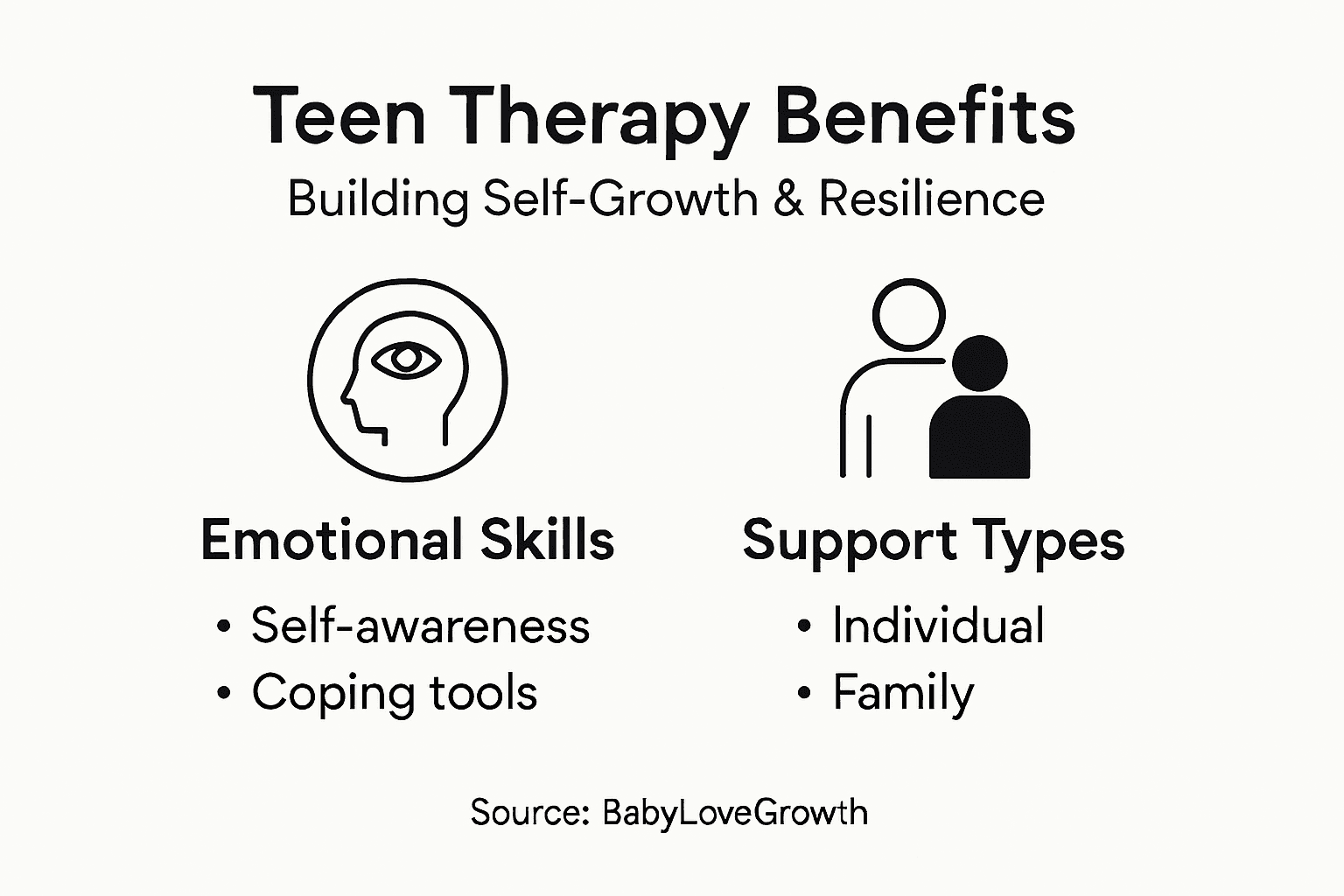
Dialectical Behavior Therapy (DBT) emerges as a powerful intervention for supporting emotional regulation among teenagers. DBT skills training equips adolescents with practical strategies for managing mood fluctuations, reducing impulsive behaviors, and developing greater emotional awareness. Techniques like mindfulness, distress tolerance, and cognitive restructuring help teenagers transform potentially overwhelming emotional experiences into opportunities for self-understanding and personal growth.
Therapeutic interventions go beyond immediate symptom management, focusing on building long-term emotional resilience. Professional therapists work collaboratively with teens to develop personalized emotional regulation strategies, addressing unique challenges such as academic stress, social pressures, and familial dynamics. By providing a safe, non-judgmental environment, therapy enables teenagers to explore their emotional landscapes, understand underlying thought patterns, and cultivate healthier emotional responses that support their overall psychological development.
Pro Tip: Practice discussing emotions openly with your teenager, creating a supportive home environment that validates and normalizes their emotional experiences.
Trauma-Informed Care and California Best Practices
Trauma-informed care represents a transformative approach to mental health treatment, particularly crucial for teenagers navigating complex emotional landscapes. Trauma-informed practices prioritize creating safe, supportive environments that recognize the profound impact of traumatic experiences. In California, mental health professionals are pioneering approaches that shift from traditional treatment models to holistic, empowerment-driven strategies that acknowledge each teenager’s unique healing journey.
The core principles of trauma-informed care in California emphasize understanding, preventing, and mitigating the potential for retraumatization. This approach involves comprehensive staff training, organizational commitment, and adaptive frameworks like the Sanctuary Model and Six Core Strategies. Mental health providers focus on building trust, offering choice, and collaborating with teenagers to develop personalized healing strategies that respect their individual experiences and emotional boundaries.
Trauma Informed California initiatives are reshaping mental health services by promoting a cultural shift towards strength-based, consumer-driven practices. This approach goes beyond traditional therapeutic interventions, creating systemic support that empowers teenagers to take an active role in their recovery. By integrating trauma-informed principles across healthcare, educational, and community settings, these practices aim to build resilience, promote healing, and support long-term psychological well-being for adolescents dealing with traumatic experiences.
Pro Tip: Ask potential therapists specific questions about their trauma-informed training and approach to ensure they provide a sensitive, empowering therapeutic environment.
Accessibility, Costs, and Finding the Right Therapist
Mental health barriers for teenagers extend far beyond simple financial constraints, encompassing complex psychological, social, and systemic challenges. These obstacles include stigma, limited mental health literacy, perceived embarrassment, and the complex navigation of therapy options. California offers a diverse landscape of therapeutic services designed to address these multifaceted access challenges, with many providers offering sliding-scale fees, telehealth options, and insurance-friendly approaches to make mental health support more attainable.
Navigating therapy costs requires strategic planning and understanding of available resources. Many mental health practices in California provide flexible payment options, including sliding-scale fees based on family income, acceptance of various insurance plans, and potential Health Savings Account (HSA) or Flexible Spending Account (FSA) coverage. Individual therapy services often offer initial consultations that help families understand pricing structures, potential financial assistance, and the most appropriate therapeutic approaches for their teenager’s specific needs.
Finding the right therapist involves more than just financial considerations. Parents should prioritize therapists with specialized training in adolescent mental health, experience with trauma-informed care, and a demonstrated ability to build trust with teenage clients. Key factors include the therapist’s communication style, approach to confidentiality, expertise in specific areas like anxiety or emotional regulation, and their ability to create a safe, non-judgmental therapeutic environment that empowers teenagers to explore their emotional landscapes.
Pro Tip: Request free 20-minute consultations with multiple therapists to assess their approach and compatibility with your teenager’s unique needs.
The following table outlines key barriers to teen therapy access and potential solutions:
| Barrier | Impact on Teen Access | Potential Solution |
|---|---|---|
| Financial Constraints | Limits therapy options | Sliding scale, insurance coverage |
| Stigma | Discourages seeking help | School programs, awareness |
| Limited Literacy | Reduces understanding of therapy | Workshops, parent education |
| Location/Transport | Hinders physical attendance | Telehealth, online resources |
Empower Your Teen’s Emotional Growth with Expert Therapy Support
Navigating the challenges of adolescence requires more than just empathy it demands specialized therapeutic care centered on building self-growth and resilience. If your teenager is struggling with anxiety, emotional regulation, or the aftermath of trauma therapy designed with evidence-based methods like CBT, EMDR, and mindfulness can offer real transformation. At ReviveHealthTherapy, we focus on trauma-informed care tailored specifically for teens to help them develop healthy coping skills and emotional intelligence in a safe, supportive environment.

Begin your teen’s journey to emotional strength today by connecting with therapists experienced in adolescent mental health and trauma recovery. With flexible telehealth options statewide and in-person sessions in Walnut Creek and Oakland, plus sliding-scale fees and insurance acceptance including HSA/FSA, we make access to quality therapy easier for families across California. Take the next step now at ReviveHealthTherapy and explore individual therapy services designed to empower your teen toward lasting self-growth.
Frequently Asked Questions
What are the benefits of therapy for teenagers?
Therapy helps teenagers develop emotional regulation, coping mechanisms, and resilience against life’s challenges, enhancing their mental health and self-understanding.
How does Cognitive Behavioral Therapy (CBT) work for teens?
CBT helps teenagers identify and reframe negative thought patterns, teaching them healthier emotional responses to stressors like academic pressure and social anxiety.
What is trauma-informed care, and why is it important for teens?
Trauma-informed care focuses on creating safe environments and recognizing the impact of trauma, enabling teens to engage in healing without risk of re-traumatization.
How can parents support their teenager during therapy?
Parents can encourage open discussions about emotions, validate their teen’s feelings, and create a supportive home environment that fosters emotional exploration.
3 Responses