
Every parent faces worries when a child struggles with overwhelming emotions or past trauma, and finding the right support can feel daunting. As California invests in making mental health care more accessible than ever, families now see real options—like trauma-informed therapy and flexible virtual sessions—tailored to their unique needs. Discover how new resources and expanded services empower you to connect with compassionate, affordable care for your child’s well-being.
Table of Contents
- Therapy Accessibility: What It Means Today
- Types of Therapy Services Available
- Flexible Access: In-Person And Telehealth Options
- Affordable Care: Insurance And Sliding-Scale Models
- Overcoming Barriers: Language, Culture, And Stigma
Key Takeaways
| Point | Details |
|---|---|
| Improved Therapy Accessibility | California is breaking down barriers to mental health support, emphasizing individualized, culturally competent care through various modalities such as telehealth and sliding-scale fees. |
| Diverse Therapy Options | An array of therapy services is available, including individual, family, and couples therapy, as well as specialized treatments for children and various mental health conditions. |
| Flexible Delivery Methods | Both in-person and telehealth services offer clients the flexibility to access mental health support based on their personal needs and circumstances. |
| Financial Accessibility Solutions | Sliding-scale fee structures and expanded insurance coverage make therapy more affordable, particularly benefiting low- to middle-income clients. |
Therapy Accessibility: What It Means Today
California is experiencing a transformative moment in mental health care, with innovative approaches making therapy more attainable than ever before. Behavioral health system reforms are breaking down traditional barriers that once made mental health support feel out of reach for many residents.
Accessibility in therapy today means more than simply having available appointments. It encompasses a holistic approach that considers financial constraints, geographic limitations, cultural competence, and diverse treatment modalities. Modern therapy services now recognize that one-size-fits-all approaches do not work. Instead, Californians can access specialized care tailored to individual needs, whether through telehealth platforms, sliding-scale fee structures, multilingual services, or trauma-informed treatment options.
The landscape of mental health support has dramatically shifted, with technology and policy changes dramatically expanding who can receive care. Insurance coverage has expanded, online platforms have emerged, and professional training now emphasizes culturally responsive treatment. Therapists are increasingly trained to understand complex intersectional experiences, ensuring that marginalized communities feel genuinely welcomed and understood in therapeutic spaces.
Pro Tip: When exploring therapy options, request a brief consultation to assess therapist compatibility and understand their specific approach to your unique mental health needs.
Types of Therapy Services Available
California offers an incredibly diverse range of therapy services designed to meet the unique needs of individuals, families, and communities. Psychotherapy approaches have evolved to provide targeted, personalized treatment options that address specific mental health challenges and emotional experiences.
The primary therapy services available include individual therapy, which focuses on one-on-one counseling for personal growth and addressing specific mental health concerns. Family therapy helps improve communication and resolve conflicts within family units, while couples therapy supports partners in navigating relationship challenges. Specialized services also extend to children’s therapy, which uses age-appropriate techniques to support young individuals experiencing emotional or behavioral difficulties.
Moreover, therapy services now encompass various evidence-based treatment modalities. These include cognitive-behavioral therapy (CBT), which helps individuals identify and change negative thought patterns, dialectical behavior therapy (DBT) for emotional regulation, and trauma-focused therapies that support healing from past experiences. Group therapy options provide additional support, allowing individuals to connect with others facing similar challenges and learn coping strategies in a supportive environment.
Pro Tip: Consider exploring multiple therapy approaches and therapists to find the most comfortable and effective match for your specific mental health needs.
Flexible Access: In-Person and Telehealth Options
California has revolutionized mental health care delivery by offering unprecedented flexibility through both in-person and telehealth therapy services. This innovative approach ensures that individuals can access critical mental health support regardless of their location, mobility, or personal circumstances.
In-person therapy remains a cornerstone of mental health treatment, providing face-to-face interactions that allow for deeper personal connections and nuanced communication. Therapists in California offer convenient office locations in urban centers like San Francisco, Oakland, and Los Angeles, as well as in suburban and rural areas. Simultaneously, telehealth options have dramatically expanded access, particularly for individuals with transportation challenges, work constraints, or those living in remote regions. Virtual therapy sessions enable clients to connect with licensed professionals through secure video platforms, phone consultations, and even text-based counseling.

The integration of both in-person and digital therapy options reflects a comprehensive approach to mental health care. Telehealth platforms now offer specialized services including individual sessions, couples counseling, family therapy, and group support networks. These digital solutions are particularly beneficial for populations with limited mobility, busy professionals, parents, and individuals in rural or underserved communities who previously struggled to access consistent mental health support.
Here’s how major therapy delivery methods meet different client needs:
| Aspect | In-Person Therapy | Telehealth Therapy |
|---|---|---|
| Privacy | Enclosed office visit | Home or chosen location |
| Flexibility | Fixed appointment schedule | Wider time options available |
| Geographic Access | Urban, suburban, rural clinics | Statewide, including remote areas |
| Personal Interaction | Direct face-to-face | Video, phone, or text-based |
| Technology Needs | None required | Internet or phone access required |
Pro Tip: Always verify your internet connection and choose a private, quiet space before starting a telehealth therapy session to ensure the most effective and comfortable virtual experience.
Affordable Care: Insurance and Sliding-Scale Models
California has pioneered innovative approaches to make mental health care financially accessible through comprehensive Medi-Cal coverage options. The state’s commitment to reducing financial barriers ensures that individuals from diverse economic backgrounds can receive critical mental health support.
Sliding-scale therapy models have emerged as a revolutionary solution for managing treatment costs. These flexible pricing structures allow therapists to adjust their fees based on a client’s income, ensuring that high-quality mental health care remains within reach for those with limited financial resources. Many clinics, community health centers, and private practitioners now offer tiered pricing, making therapy more equitable and accessible. Insurance coverage has also expanded, with many plans now including comprehensive mental health benefits that significantly reduce out-of-pocket expenses for therapy services.
Additionally, California provides multiple pathways to affordable mental health care. Low-cost treatment options include university-sponsored therapy programs with supervised graduate students, community health centers, and nonprofit organizations that offer reduced-rate services. Some mental health providers also partner with pharmaceutical assistance programs to help clients manage medication costs, creating a more holistic and financially sustainable approach to mental health treatment.
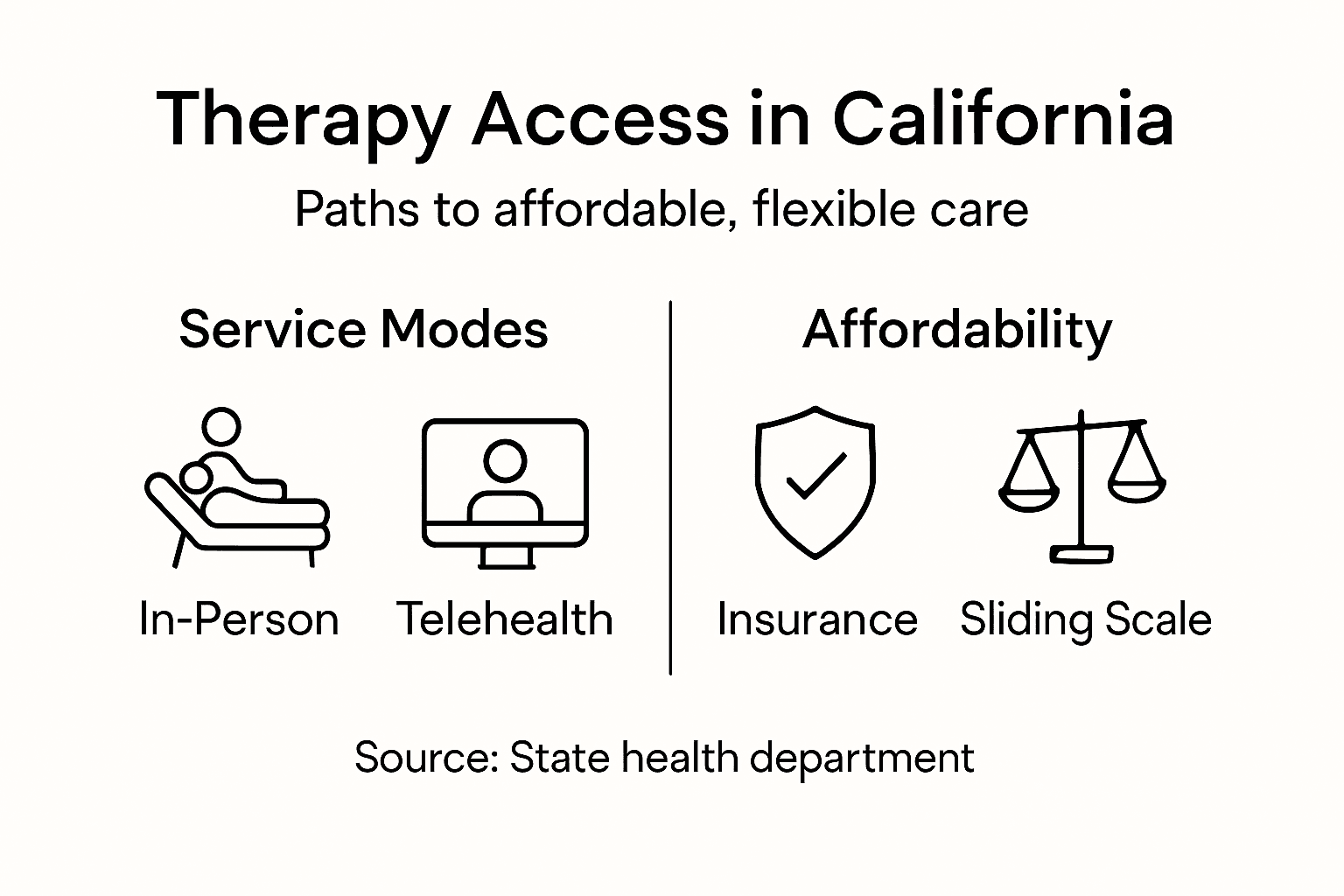
Key strategies for affordable therapy in California:
| Approach | How It Lowers Cost | Who Benefits Most |
|---|---|---|
| Sliding-Scale Fees | Adjusts rates by income | Low- and middle-income clients |
| University Clinics | Supervised student therapists | Students, cost-sensitive adults |
| Community Health Centers | Subsidized or reduced rates | Uninsured or underinsured residents |
| Expanded Insurance | Covers therapy sessions | Those with employer or public plans |
Pro Tip: Always inquire about sliding-scale options, income-based discounts, and alternative payment arrangements when exploring therapy services to find the most financially manageable solution for your mental health needs.
Overcoming Barriers: Language, Culture, and Stigma
Addressing mental health challenges requires understanding and dismantling complex barriers that prevent individuals from seeking support. Language barriers significantly impact immigrant communities, creating significant obstacles to accessing essential mental health resources.
Cultural competence has emerged as a critical approach in modern therapy, recognizing that mental health experiences are deeply influenced by individual cultural backgrounds. Therapists in California are increasingly trained to provide nuanced, culturally sensitive care that respects diverse communication styles, family dynamics, and cultural interpretations of mental health. This includes offering services in multiple languages, understanding cultural stigmas around mental health, and creating safe spaces that validate unique cultural experiences and healing traditions.
Moreover, mental health stigma remains a persistent challenge that prevents many individuals from seeking necessary support. California’s mental health community is actively working to combat these social perceptions through public education, community workshops, and initiatives that normalize conversations about mental wellness. By promoting understanding, sharing personal stories, and challenging misconceptions, mental health professionals are gradually breaking down the walls of silence and shame that have traditionally surrounded mental health discussions.
Pro Tip: When seeking therapy, prioritize finding a provider who demonstrates genuine cultural understanding and creates a welcoming environment that makes you feel fully seen and respected.
Discover Accessible Therapy Tailored for You in California
The article highlights how many Californians face challenges like financial constraints, limited local options, cultural barriers, and the need for flexible therapy choices. At ReviveHealthTherapy, we understand these pain points deeply. We offer trauma-informed, evidence-based therapy using methods like CBT and EMDR to help with anxiety, depression, relationship struggles, and emotional regulation. Whether you prefer in-person visits in Walnut Creek or Oakland or the convenience of secure telehealth sessions statewide, we make therapy truly accessible with sliding-scale fees and insurance acceptance, including HSA/FSA plans.
Explore a range of services designed to meet your unique needs and overcome barriers such as stigma and language differences by visiting our Uncategorized – ReviveHealthTherapy page.

Ready to take the next step toward improved mental wellness with compassionate and flexible therapy options? Begin by connecting with a licensed therapist through our free 20-minute consultation. Don’t wait—accessible mental health support in California is just a click away.
Frequently Asked Questions
What does therapy accessibility mean today?
Accessibility in therapy today means having a variety of mental health support options without traditional barriers, such as financial constraints, geographic limitations, and cultural competence. It includes services like telehealth, sliding-scale fees, and multilingual support that cater to individual needs.
How can I access therapy in California?
You can access therapy in California through in-person sessions at various clinics and therapists, as well as telehealth services that allow you to connect with licensed professionals remotely via video, phone, or text.
What types of therapy services are available?
California offers a range of therapy services, including individual therapy, family therapy, couples therapy, children’s therapy, and group therapy. Evidence-based treatments like cognitive-behavioral therapy (CBT) and dialectical behavior therapy (DBT) are also widely used.
Are there affordable options for therapy in California?
Yes, California provides various affordable therapy options, including sliding-scale fees based on income, university-sponsored therapy programs, and community health centers that offer subsidized services. Many insurance plans also cover mental health treatment, reducing out-of-pocket expenses.
Recommended
- What Is Telehealth Therapy? Flexible Care for Californians – ReviveHealthTherapy
- Blogs – ReviveHealthTherapy
- Why Seek Psychotherapy: Transforming Mental Wellness – ReviveHealthTherapy
- Top 6 Best Affordable Therapy Services in 2026 – ReviveHealthTherapy
- trauma test free: Powerful Childhood & Adult 4 Trauma Self
3 Responses