
Feeling overwhelmed by anxiety or depression can leave you searching for answers that actually work. California residents often face busy routines and financial pressures, making it tough to prioritize mental health. Evidence-based psychotherapy offers affordable, expert support tailored to your needs, even through telehealth. This article clears up common misconceptions, breaks down therapy types, and shows you practical paths to emotional recovery and personal growth—so you can find real relief without leaving home.
Table of Contents
- Psychotherapy Defined And Common Misconceptions
- Evidence-Based Therapy Types Explained
- How Psychotherapy Improves Emotional Health
- Therapy Accessibility And Costs In California
- Comparing Psychotherapy With Other Supports
Key Takeaways
| Point | Details |
|---|---|
| Psychotherapy Benefits Many | Psychotherapy is beneficial for a wide range of individuals, not just those with severe mental health issues, aiding in personal growth and coping with life challenges. |
| Evidence-Based Approaches | Various evidence-based therapy types, like CBT and DBT, are designed to address specific mental health conditions effectively. |
| Accessibility Challenges | In California, barriers such as cost and geographic disparities significantly impact access to mental health services. |
| Holistic Mental Health Strategy | Combining psychotherapy with other supports, such as medication and peer support, creates a comprehensive approach to emotional wellness. |
Psychotherapy Defined and Common Misconceptions
Psychotherapy, commonly known as talk therapy, is a professional mental health intervention designed to help individuals address emotional challenges, behavioral patterns, and psychological concerns. Unlike casual conversations, psychotherapy involves structured, evidence-based techniques delivered by licensed professionals who provide objective insights and targeted support. Mental health professionals utilize systematic approaches to help clients develop healthier coping mechanisms and improve overall psychological functioning.
Many people misunderstand psychotherapy, believing it is only for individuals with severe mental health diagnoses. In reality, psychotherapy benefits a broad spectrum of individuals experiencing life transitions, stress management challenges, relationship difficulties, or simply seeking personal growth. Therapy provides a confidential, neutral environment where individuals can explore their thoughts and emotions without judgment, working collaboratively with a trained professional to develop strategies for emotional wellness.
The core purpose of psychotherapy extends far beyond symptom management. Empirically supported therapeutic techniques help clients gain deeper self-understanding, develop more effective communication skills, process complex emotional experiences, and build resilience. Therapists are trained to recognize underlying patterns, challenge unproductive thinking, and guide clients toward meaningful personal transformation. This process involves creating a safe, supportive relationship where individuals can explore their inner world, challenge existing beliefs, and develop more adaptive approaches to life’s challenges.
Pro tip: Consider scheduling an initial consultation with a therapist to understand how psychotherapy could specifically support your unique mental health and personal growth goals.
Evidence-Based Therapy Types Explained
Evidence-based psychotherapy represents a systematic approach to mental health treatment that relies on scientifically validated methods proven effective through rigorous research. These therapeutic approaches are carefully designed and tested to address specific mental health conditions, ensuring clients receive the most effective interventions tailored to their unique psychological needs. Comprehensive research protocols have identified several key therapeutic modalities that demonstrate consistent positive outcomes for individuals struggling with various mental health challenges.
Some of the most widely recognized evidence-based therapy types include Cognitive Behavioral Therapy (CBT), Dialectical Behavior Therapy (DBT), and Eye Movement Desensitization and Reprocessing (EMDR). Cognitive Behavioral Therapy focuses on identifying and changing negative thought patterns and behaviors, helping clients develop more adaptive coping mechanisms. Dialectical Behavior Therapy combines cognitive-behavioral techniques with mindfulness strategies, particularly effective for individuals managing emotional regulation and interpersonal relationship challenges. EMDR is especially powerful for treating trauma-related conditions, helping individuals process and heal from deeply distressing experiences.
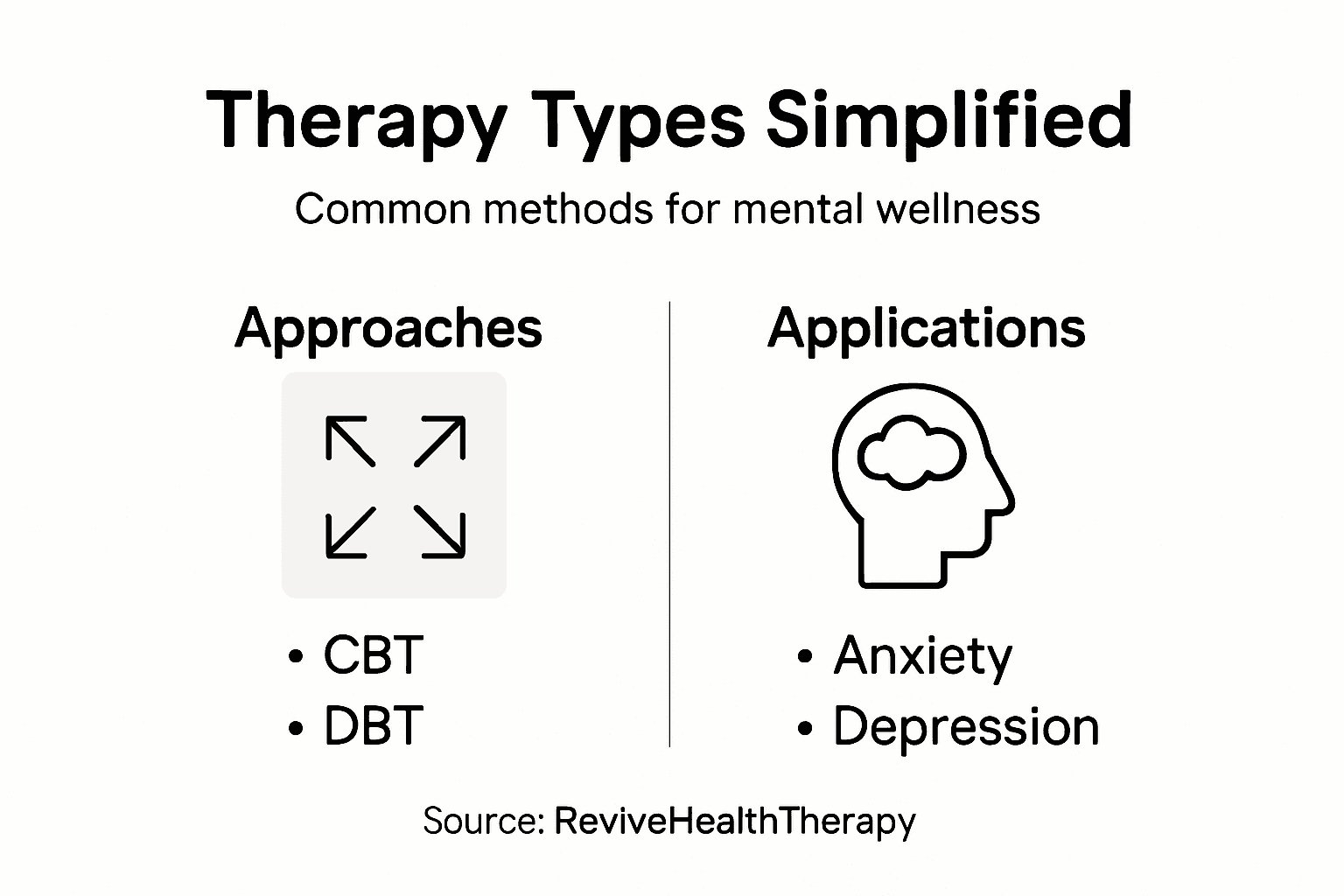
The selection of an appropriate therapy type depends on multiple factors, including the specific mental health condition, individual psychological profile, and personal treatment goals. For instance, individuals dealing with anxiety and depression might benefit most from CBT, while those experiencing complex trauma might find EMDR more effective. Other evidence-based approaches include Acceptance and Commitment Therapy (ACT), which helps individuals develop psychological flexibility, and Interpersonal Therapy (IPT), which focuses on improving relationship patterns and communication skills. These therapies share a common foundation of empirical research, ensuring that clients receive treatment approaches with documented effectiveness and measurable outcomes.
Here’s a comparison of key evidence-based therapy types and their primary uses:
| Therapy Type | Key Focus | Typical Applications |
|---|---|---|
| Cognitive Behavioral Therapy (CBT) | Restructuring negative thoughts | Anxiety, depression, phobias |
| Dialectical Behavior Therapy (DBT) | Emotional regulation and mindfulness | Borderline personality, emotion dysregulation |
| EMDR | Trauma processing and healing | PTSD, trauma recovery |
| Acceptance & Commitment Therapy (ACT) | Psychological flexibility | Stress, coping, chronic pain |
| Interpersonal Therapy (IPT) | Relationship and communication skills | Depression, relationship issues |
Pro tip: Discuss multiple therapy approaches with your mental health professional to identify the most suitable evidence-based intervention for your specific psychological needs and personal wellness goals.
How Psychotherapy Improves Emotional Health
Psychotherapy is a powerful tool for enhancing emotional wellness, offering individuals a structured approach to understanding and transforming their mental health challenges. Comprehensive therapeutic interventions provide targeted strategies for identifying and addressing the root causes of emotional distress, enabling clients to develop more effective coping mechanisms and improve their overall psychological functioning. By creating a safe, supportive environment, therapists help individuals explore their inner emotional landscape, uncover underlying patterns, and develop healthier approaches to managing life’s challenges.

The process of emotional healing through psychotherapy involves multiple interconnected strategies. Therapists utilize evidence-based techniques such as cognitive restructuring, emotional regulation skills, and trauma-informed approaches to help clients reframe negative thought patterns, develop resilience, and build more adaptive emotional responses. Different therapeutic modalities like Cognitive Behavioral Therapy (CBT), Dialectical Behavior Therapy (DBT), and Interpersonal Therapy offer specialized tools for addressing specific emotional challenges, from managing anxiety and depression to improving relationship dynamics and processing traumatic experiences.
Psychotherapy goes beyond symptom management, focusing on holistic emotional transformation and personal growth. Psychological resilience development is a key outcome of effective therapy, enabling individuals to build stronger emotional foundations, improve self-understanding, and develop more robust mental health strategies. This transformative process helps clients not only address immediate emotional challenges but also develop long-term skills for navigating life’s complexities, managing stress, and maintaining emotional balance.
Pro tip: Approach therapy as a collaborative journey of self-discovery, being open and honest with your therapist to maximize the potential for emotional healing and personal growth.
Therapy Accessibility and Costs in California
Mental health service accessibility remains a critical challenge for California residents, with significant barriers preventing many individuals from receiving necessary psychological support. The state faces a complex landscape of mental health service delivery, complicated by factors such as cost, insurance limitations, geographic disparities, and systemic inequities. These challenges are particularly pronounced for low-income communities, communities of color, and individuals experiencing economic instability, who often encounter the most significant obstacles in accessing quality mental health care.
California offers multiple strategies to improve therapy accessibility, including sliding-scale fee structures, telehealth services, and insurance coverage expansions. Many mental health providers now offer flexible payment options to accommodate diverse financial situations, with some clinics providing services based on income levels. Telehealth has emerged as a particularly transformative approach, allowing individuals in rural or underserved areas to connect with therapists remotely, significantly reducing transportation and time-related barriers to mental health treatment.
The cost of therapy in California varies widely, typically ranging from $100 to $250 per session for private practice therapists, with more affordable options available through community clinics, training centers, and group therapy settings. Complex barriers to mental health care extend beyond direct costs, including perceived stigma, limited awareness of available resources, and personal hesitation about seeking psychological support. Many individuals delay or avoid treatment due to misconceptions about therapy, financial concerns, or uncertainty about finding the right mental health professional.
Below is an overview of psychotherapy accessibility and cost factors in California:
| Factor | Typical Range/Impact | Strategies to Improve Access |
|---|---|---|
| Private Therapist Cost | $100–$250 per session | Sliding-scale, insurance, group therapy |
| Insurance Coverage | Varies by plan, may be limited | Seek in-network providers, Medicaid |
| Geographic Barriers | Rural/remote areas face shortages | Utilize telehealth and online services |
| Community Clinics | Often more affordable, variable wait | Apply early, consider training centers |
Pro tip: Explore multiple payment options such as sliding-scale fees, insurance coverage, and telehealth services to make mental health care more financially accessible and convenient.
Comparing Psychotherapy With Other Supports
Mental health treatment options vary widely, with psychotherapy standing out as a uniquely personalized approach to addressing psychological challenges. Unlike medication or peer support, psychotherapy offers a comprehensive, collaborative process that explores underlying emotional patterns, helping individuals develop deeper self-understanding and sustainable coping strategies. While other supports play valuable roles in mental health management, psychotherapy provides a structured, evidence-based method for transforming thought processes and behavioral patterns at their core.
Peer support and community resources complement psychotherapy by offering additional layers of emotional connection and shared experience. Peer support services provide unique benefits through connections with individuals who have navigated similar mental health challenges, offering empathy, practical insights, and lived-experience perspectives. These supports can be particularly powerful when integrated with professional therapeutic approaches, creating a holistic support network that addresses both clinical and personal dimensions of mental wellness.
The most effective mental health strategies often involve a multifaceted approach, combining psychotherapy with other supportive interventions. Medication can address biochemical aspects of mental health conditions, while peer support provides community connection, and psychotherapy offers deep psychological exploration and skill-building. This integrated approach recognizes that mental health is complex, requiring personalized, nuanced strategies that address emotional, biological, and social dimensions of an individual’s experience.
Pro tip: Consider exploring a comprehensive mental health approach that combines professional therapy, potential medication management, and peer support to create a well-rounded strategy for emotional wellness.
Take the First Step Toward Transforming Your Mental Wellness Today
If you have been feeling overwhelmed by anxiety, depression, trauma, or difficulties in managing your emotions and relationships you are not alone. This article highlights how evidence-based psychotherapy techniques like CBT, EMDR, and mindfulness can unlock deeper self-understanding and build resilience. At ReviveHealthTherapy, we focus on making these proven approaches accessible through trauma-informed care tailored to your unique needs.
Discover how our team supports individuals, couples, families, and teens across California with flexible options including secure telehealth sessions and in-person therapy in Walnut Creek and Oakland. We believe cost should never be a barrier to healing which is why sliding-scale fees and insurance including HSA/FSA plans are available.

Explore more about our comprehensive mental health services on our Uncategorized – ReviveHealthTherapy page and learn how therapy can positively change your life. Take action now and schedule your free 20-minute consultation by filling out this quick form at ReviveHealthTherapy. Your path to emotional health and personal growth starts today.
Frequently Asked Questions
What is psychotherapy and how does it work?
Psychotherapy, also known as talk therapy, is a professional mental health intervention that involves structured techniques delivered by licensed professionals. It helps individuals address emotional challenges, behavioral patterns, and psychological concerns through collaborative exploration and evidence-based strategies.
Who can benefit from psychotherapy?
Psychotherapy is beneficial not only for individuals with severe mental health diagnoses but also for anyone facing life transitions, stress management issues, relationship difficulties, or seeking personal growth and emotional wellness.
What are evidence-based therapy types?
Evidence-based therapy types include Cognitive Behavioral Therapy (CBT), Dialectical Behavior Therapy (DBT), and Eye Movement Desensitization and Reprocessing (EMDR), among others. These techniques are scientifically validated to effectively address specific mental health conditions and foster emotional development.
How does psychotherapy improve emotional health?
Psychotherapy enhances emotional health by providing targeted strategies to identify and address the root causes of emotional distress, develop coping mechanisms, and foster self-understanding, resilience, and adaptive emotional responses.
10 Responses