
Every California parent knows how overwhelming it can be when your child is struggling with anxiety or trauma and you are searching for effective therapy solutions. The way you engage in your child’s treatment can mean the difference between minimal progress and true healing. Research shows that dynamic parent engagement strategies are key, allowing parents to support their child not only emotionally but by actively participating in therapy and building stronger recovery outcomes. This guide helps you understand your most effective roles, why your actions matter, and how to partner with therapists for the best results.
Table of Contents
- Defining Parental Involvement In Therapy
- Types Of Evidence-Based Parent Participation
- How Parental Actions Influence Outcomes
- Trauma-Informed Approaches For Parents
- Common Barriers To Parent Engagement
- Legal And Practical Responsibilities In California
Key Takeaways
| Point | Details |
|---|---|
| Parental Involvement Enhances Outcomes | Active participation of parents significantly improves the therapeutic experience and effectiveness for children. |
| Communication is Key | Fostering open dialogue between parents, children, and therapists is crucial for emotional support and successful treatment. |
| Recognize Unique Family Dynamics | Tailoring parental engagement strategies to fit each family’s specific situation promotes better mental health outcomes. |
| Overcome Engagement Barriers | Addressing common obstacles to parent involvement, such as time constraints and emotional overwhelm, is essential for effective therapy. |
Defining Parental Involvement in Therapy
Parental involvement in therapy represents a dynamic and critical process that goes far beyond passive observation. Therapy engagement requires parents to actively participate in their child’s psychological healing journey, transforming traditional treatment models into collaborative recovery experiences.
Research indicates that parental involvement can significantly enhance therapeutic outcomes. Dynamic parent engagement strategies demonstrate that parents play multifaceted roles in supporting their child’s mental health recovery:
- Implementing therapeutic strategies recommended by clinicians
- Providing consistent emotional support
- Facilitating communication between therapist and child
- Creating a supportive home environment that reinforces therapeutic progress
- Monitoring and reporting behavioral changes
Psychological intervention studies reveal that parental involvement becomes particularly crucial during adolescence, when developmental complexities can impact treatment effectiveness. The parent’s role shifts from direct intervention to strategic support and collaborative partnership with mental health professionals.
Communication emerges as the cornerstone of effective parental involvement. Parents must learn to listen without judgment, ask supportive questions, and create safe spaces for their children to express emotions and experiences.
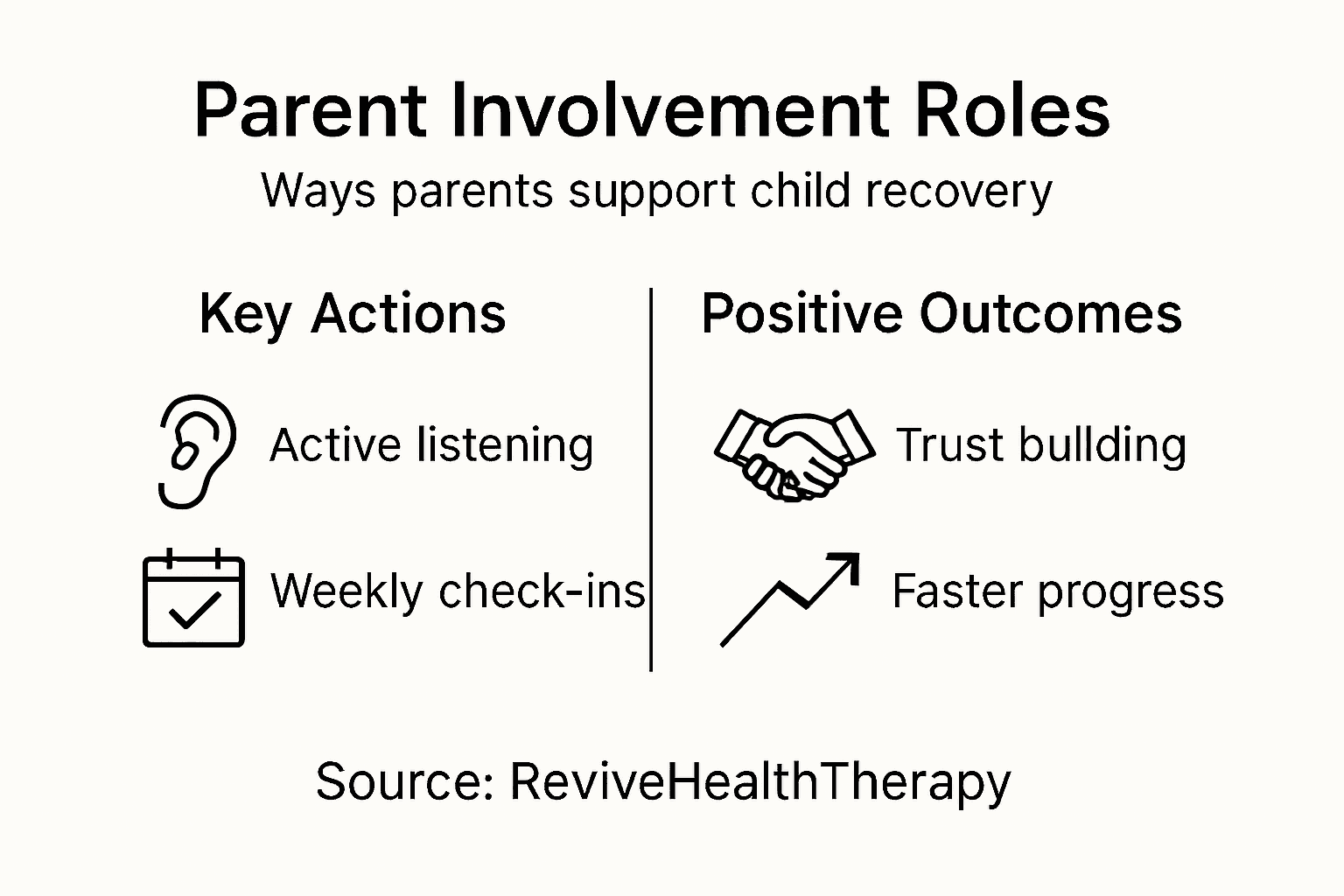
Pro tip: Schedule regular check-ins with your child’s therapist to understand treatment progress and learn specific strategies for supporting your child’s emotional growth.
Types of Evidence-Based Parent Participation
Parental involvement in therapy is far from a one-size-fits-all approach. Evidence-based participation models reveal multiple strategic ways parents can contribute to their child’s mental health treatment, each with unique therapeutic benefits.
Research identifies several key types of parent participation:
- Informant Role: Providing comprehensive medical and developmental history
- Support Provider: Creating emotional safety and psychological comfort
- Skill Coach: Helping children practice and generalize therapeutic techniques
- Active Treatment Participant: Directly engaging in intervention strategies
- Intervention Recipient: Receiving targeted parent-specific therapeutic guidance
Digital cognitive behavioral therapy interventions demonstrate that parental involvement can be dynamically adapted based on the child’s specific needs and treatment format. This flexibility allows therapists to customize parent participation strategies that maximize therapeutic effectiveness.
The most successful parent participation approaches recognize that each family’s dynamics are unique. Collaborative engagement means parents work alongside clinicians, not as passive observers but as active partners in their child’s healing process. This approach requires ongoing communication, mutual respect, and a shared commitment to the child’s mental health journey.
Pro tip: Ask your child’s therapist to explicitly outline your specific role and participation strategy during treatment planning sessions.
The table below compares different parent participation roles and how each impacts child therapy outcomes.
| Parent Role | Main Contribution | Example of Impact |
|---|---|---|
| Informant | Shares in-depth child history | Enables targeted treatment plans |
| Support Provider | Offers emotional safety | Increases child engagement |
| Skill Coach | Reinforces therapy techniques | Improves skill retention at home |
| Active Treatment Participant | Joins therapy activities | Builds stronger parent-child bond |
| Intervention Recipient | Receives parent-focused guidance | Reduces parent stress and burnout |
How Parental Actions Influence Outcomes
Parental behaviors represent a powerful catalyst in determining therapy success for children and adolescents. Intervention research demonstrates that specific parental actions can dramatically transform therapeutic outcomes, creating a profound ripple effect on a child’s mental health trajectory.
Key parental actions that significantly influence therapy outcomes include:
- Consistent emotional support and validation
- Active participation in treatment planning
- Modeling healthy emotional regulation
- Implementing recommended therapeutic strategies at home
- Maintaining open communication with therapists
- Reducing family accommodation of negative behavioral patterns
Parent-focused intervention studies reveal that strategic parental behaviors can modify child anxiety trajectories. By understanding and implementing specific intervention techniques, parents become crucial architects of their child’s psychological recovery.

The most transformative parental actions go beyond passive support. Intentional engagement means actively learning, adapting, and consistently applying therapeutic principles within the family system. This approach requires ongoing education, self-reflection, and a commitment to understanding the complex emotional landscape of childhood mental health.
Pro tip: Keep a weekly journal documenting your child’s progress and your implementation of therapeutic strategies to track meaningful behavioral changes.
Trauma-Informed Approaches for Parents
Trauma-informed parenting represents a specialized approach that transforms how parents understand and support their child’s emotional healing. Parental engagement strategies emphasize creating a safe, predictable environment that acknowledges the complex impacts of traumatic experiences.
Key trauma-informed approaches for parents include:
- Recognizing trauma’s physiological and psychological effects
- Practicing emotional regulation and calm responses
- Avoiding judgment or blame
- Creating consistent and predictable home environments
- Learning to identify and respond to trauma triggers
- Developing deep empathy and patience
- Supporting without overwhelming the child
Trauma-informed care frameworks highlight the critical importance of parents understanding their own stress responses. This self-awareness allows parents to model healthy emotional processing and create a therapeutic alliance that supports their child’s recovery.
The most effective trauma-informed parents become active learners, continuously educating themselves about emotional healing pathways. This means moving beyond traditional parenting approaches and developing a nuanced understanding of how trauma reshapes a child’s perception of safety, trust, and emotional connection.
Pro tip: Attend trauma-informed parenting workshops or seek individual coaching to develop advanced skills in supporting your child’s emotional recovery.
Common Barriers to Parent Engagement
Parent engagement in therapy is often hindered by complex systemic and personal challenges that can significantly undermine treatment effectiveness. Intervention research reveals multiple layers of obstacles that parents must navigate when supporting their child’s mental health journey.
Common barriers to parent engagement include:
- Limited time and scheduling constraints
- Financial challenges and treatment costs
- Insufficient understanding of therapy processes
- Cultural stigma surrounding mental health treatment
- Communication gaps with healthcare providers
- Personal emotional overwhelm
- Transportation and logistical difficulties
- Fear of being judged or blamed
Comprehensive service analysis demonstrates that these barriers disproportionately impact diverse populations, creating unequal access to critical mental health resources. Socioeconomic factors, work schedules, and systemic inequalities often prevent parents from fully participating in their child’s therapeutic process.
Successful parent engagement requires a proactive, empathetic approach that addresses both external obstacles and internal psychological barriers. Collaborative strategies must focus on creating flexible, supportive environments that recognize the unique challenges parents face when supporting their child’s mental health recovery.
Pro tip: Discuss potential engagement barriers directly with your child’s therapist and collaboratively develop personalized strategies to overcome them.
Here’s a reference table outlining common engagement barriers and potential ways therapists can help parents overcome them.
| Barrier | Therapist Strategy | Parent Tip |
|---|---|---|
| Time constraints | Offer flexible scheduling | Plan ahead and prioritize sessions |
| Financial challenges | Suggest sliding scale or resources | Explore community mental health |
| Lack of understanding | Educate about therapy process | Ask clarifying questions |
| Emotional overwhelm | Provide stress management tools | Practice self-care routines |
Legal and Practical Responsibilities in California
Navigating the legal landscape of child therapy in California requires parents to understand their complex statutory obligations. California Family Code provisions establish a comprehensive framework that balances parental rights with child protection and therapeutic best practices.
Key legal and practical responsibilities for California parents include:
- Providing informed consent for therapy
- Maintaining confidentiality of treatment information
- Participating actively in treatment planning
- Supporting therapeutic recommendations
- Protecting the child’s right to privacy
- Ensuring continuity of care
- Collaborating with healthcare providers
- Understanding minor consent laws
Confidentiality represents a critical legal consideration. Parents must recognize that while they have oversight responsibilities, children aged 12-17 have specific rights to confidential mental health services. This means therapists can maintain certain communications in confidence, depending on the nature of the treatment and potential risks.
The most successful parents approach these responsibilities as a collaborative partnership. Legal compliance is not about bureaucratic checkbox completion, but about creating a supportive ecosystem that prioritizes the child’s mental health and emotional well-being.
Pro tip: Request a detailed explanation of confidentiality guidelines and minor consent laws from your child’s therapist during the initial consultation.
Empower Your Role in Your Child’s Healing Journey
Supporting a child’s recovery through therapy can feel overwhelming when facing challenges like maintaining consistent engagement, understanding trauma-informed approaches, and navigating legal responsibilities. This article highlights the importance of active parental participation, effective communication, and strategic emotional support to transform therapeutic outcomes.
At ReviveHealthTherapy, we understand these struggles and offer evidence-based psychotherapy services that emphasize collaboration between parents and therapists. Our trauma-informed care and flexible options, including in-person sessions in Walnut Creek and Oakland plus statewide telehealth, are designed to make mental health support accessible and tailored to your family’s unique needs.

Ready to strengthen your role as a supportive partner in your child’s mental health journey today? Explore more insights on people taking their first steps at Uncategorized – ReviveHealthTherapy and connect with our experts by scheduling your free 20-minute consultation. Start transforming your child’s recovery experience with guidance and proven strategies now.
Frequently Asked Questions
What is the importance of parental involvement in therapy?
Parental involvement is crucial as it significantly enhances therapeutic outcomes by actively engaging in their child’s psychological healing process and providing emotional support.
How can parents effectively support their child’s therapy at home?
Parents can support their child’s therapy by implementing strategies recommended by the therapist, offering consistent emotional validation, maintaining open communication, and providing a supportive home environment.
What barriers might parents face in engaging with their child’s therapy?
Common barriers include time constraints, financial challenges, lack of understanding of therapy processes, and emotional overwhelm. Addressing these barriers requires collaboration with therapists to develop personalized strategies.
What legal responsibilities do parents have in their child’s therapy?
Parents must provide informed consent, maintain confidentiality, actively participate in treatment planning, and understand the child’s rights to privacy when it comes to therapeutic services.
One Response