
Every parent faces tough moments when communication with their teenager seems strained or even impossible. In California, where families juggle busy schedules and unique pressures, finding support for emotional challenges like anxiety or depression is more important than ever. Family therapy offers a proven way to address these issues by improving understanding and rebuilding connections at home, giving parents and teens a practical path toward healthier relationships and stronger mental health.
Table of Contents
- Defining Family Therapy for Teens
- Key Approaches and Therapy Methods
- How Sessions Improve Communication
- Benefits for Teen Mental Health
- Cost, Insurance, and Access in California
- Common Mistakes and How to Avoid Them
Key Takeaways
| Point | Details |
|---|---|
| Family Therapy Focuses on Family Dynamics | This therapeutic approach examines family relationships and communication patterns, addressing mental health issues in teenagers from a holistic perspective. |
| Diverse Therapeutic Methods Are Utilized | Key therapy methods include Structural-Strategic, Systemic, and Solution-Focused Brief Therapy, each tailored to improve specific family interactions. |
| Communication Skills Are Essential | Family therapy sessions emphasize developing effective communication strategies among family members to enhance understanding and minimize conflict. |
| Access to Therapy Has Improved | In California, innovative policies have expanded mental health access, including Medi-Cal coverage for low-income teenagers, increasing support for families seeking help. |
Defining Family Therapy for Teens
Family therapy represents a specialized therapeutic approach designed to address mental health challenges among teenagers by examining and improving family dynamics and communication patterns. Unlike traditional individual counseling, this intervention recognizes that an adolescent’s psychological well-being is deeply interconnected with their family system.
According to research, family therapy conceptualizes psychological challenges as interpersonal interactions rather than solely individual problems. This means therapists focus on understanding how family relationships, communication styles, and systemic patterns contribute to a teenager’s mental health challenges.
Key characteristics of family therapy for teens include:
- Treating the entire family unit, not just the individual
- Exploring relationship dynamics and communication patterns
- Identifying systemic factors contributing to psychological distress
- Developing healthier interaction strategies
- Providing tools for mutual understanding and support
Professional family therapists utilize various evidence-based models tailored to specific adolescent challenges. These approaches can effectively address multiple issues, including:
- Behavioral disorders
- Substance use challenges
- Depression and anxiety
- Eating disorders
- Suicidal ideation
The goal is not to blame or criticize family members but to create a collaborative environment where everyone can contribute to the teenager’s mental health recovery. Family therapy facilitates more effective engagement by supporting relational mechanisms that promote healing.
Pro tip: When considering family therapy, approach the process with openness, patience, and a willingness to listen and learn from each family member’s perspective.
Key Approaches and Therapy Methods
Family therapy encompasses diverse therapeutic strategies designed to address adolescent mental health challenges by transforming family dynamics. These approaches recognize that teenagers’ psychological well-being is intricately connected to their familial relationships and communication patterns.
One prominent method is systemic family therapy with targeted intervention modules, which provides a structured pathway for addressing adolescent behavioral problems. This approach involves comprehensive techniques such as family outreach, strategic parent and youth engagement, and developing healthier interaction skills.
Key therapy methods for adolescent family therapy include:
- Structural-Strategic Family Therapy: Focuses on restructuring family interactions
- Systemic Family Therapy: Examines broader family system dynamics
- Communication-Based Therapy: Improves family communication patterns
- Solution-Focused Brief Therapy: Targets specific behavioral challenges
- Multi-Systemic Therapy: Addresses environmental and interpersonal factors
Research demonstrates that structural-strategic approaches effectively improve family cohesion and parenting practices. These methods help families develop more supportive, understanding relationships by clarifying boundaries and promoting healthier interactions.
Professional therapists typically customize these approaches based on each family’s unique dynamics, ensuring a personalized intervention that addresses specific challenges faced by teenagers and their families.
Here’s a comparison of family therapy methods commonly used for teens:
| Therapy Method | Main Focus | Typical Outcomes |
|---|---|---|
| Structural-Strategic | Restructuring interactions | Improved boundaries, cohesion |
| Systemic | Analyzing family systems | Greater understanding, support |
| Communication-Based | Enhancing family dialogue | Better listening, less conflict |
| Solution-Focused Brief | Goals-driven behavior change | Quick behavioral improvements |
| Multi-Systemic | Multiple influences addressed | Reduced risks, stronger support |
Key therapeutic goals include:
- Identifying problematic interaction patterns
- Developing better communication strategies
- Establishing healthier family boundaries
- Supporting adolescent emotional development
- Creating collaborative problem-solving mechanisms
Pro tip: Approach family therapy with genuine openness, understanding that meaningful change requires commitment and patience from all family members.
How Sessions Improve Communication
Family therapy sessions create a structured environment where teenagers and their families can learn and practice more effective communication strategies. These carefully designed interactions help break down existing communication barriers and rebuild trust through guided, supportive dialogue.

Family therapy interventions target communication challenges by providing a neutral, professional space where all family members can express themselves openly and honestly. Therapists facilitate these conversations, teaching critical skills that transform how family members interact and understand each other.
Key communication improvements typically include:
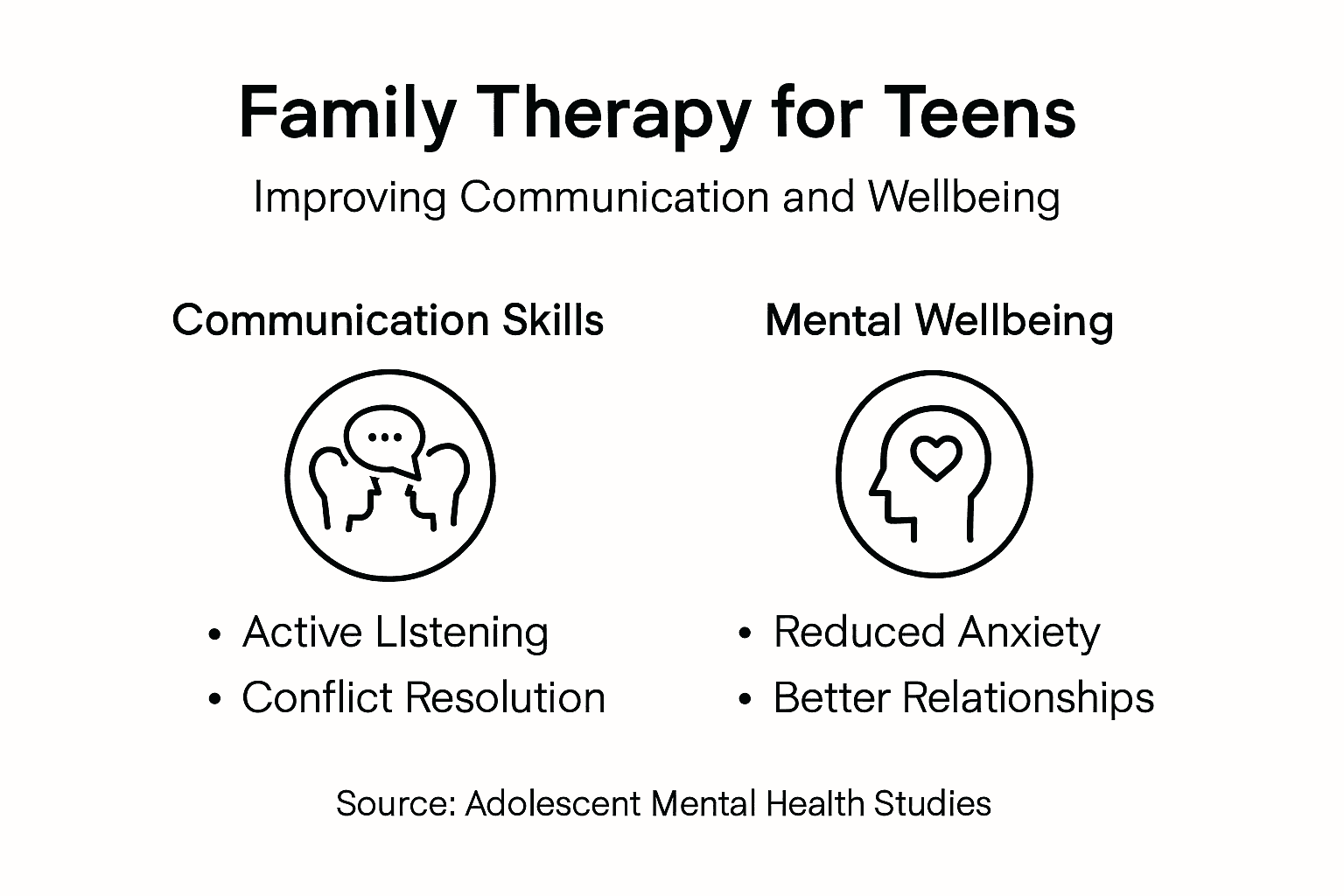
- Learning active listening techniques
- Developing empathy and emotional validation skills
- Understanding non-verbal communication cues
- Practicing constructive conflict resolution
- Recognizing and managing emotional triggers
The therapeutic process helps families develop more nuanced communication tools. Therapeutic programs teach specific communication strategies such as:
- Using time-outs during heated discussions
- Expressing feelings without blame
- Asking clarifying questions
- Demonstrating genuine curiosity about each other’s experiences
- Maintaining respectful boundaries
Professional therapists guide families through practiced scenarios, helping them replace unproductive communication patterns with more supportive, understanding interactions. These skills extend far beyond the therapy room, creating lasting improvements in family dynamics.
Pro tip: Practice one new communication skill between sessions, focusing on listening without interrupting or judging.
Benefits for Teen Mental Health
Family counseling provides a comprehensive approach to addressing the complex mental health challenges teenagers face in today’s high-pressure environment. By focusing on the entire family system, these therapeutic interventions create a supportive network that promotes holistic healing and emotional well-being.
Family counseling effectively treats multiple mental health issues experienced by teenagers, including anxiety, depression, eating disorders, and suicidal ideation. The therapeutic process helps adolescents develop critical emotional regulation and coping skills that extend far beyond traditional individual therapy approaches.
Key mental health benefits include:
- Reducing symptoms of anxiety and depression
- Improving emotional regulation skills
- Enhancing self-esteem and personal resilience
- Developing healthier coping mechanisms
- Creating stronger family support systems
Structural-strategic family therapy demonstrates significant improvements in adolescent mental health by addressing both individual symptoms and family dynamics. This approach helps reduce internalizing and externalizing symptoms while simultaneously strengthening family relationships and communication.
Specific mental health outcomes typically observed include:
- Decreased behavioral problems
- Increased emotional intelligence
- Better stress management skills
- Improved academic performance
- Enhanced social relationships
By targeting the entire family system, these therapeutic interventions create a comprehensive support network that empowers teenagers to navigate complex emotional challenges more effectively.
Pro tip: Encourage open dialogue at home and view therapy as a collaborative journey of growth and understanding, not a criticism of family dynamics.
Cost, Insurance, and Access in California
Mental health therapy for teenagers in California is becoming increasingly accessible, with innovative policies and insurance approaches designed to reduce financial barriers and support adolescent mental wellness. Understanding the complex landscape of therapy costs and coverage is crucial for families seeking support.
California recently expanded mental health access for teenagers, particularly those from low-income backgrounds. The state has implemented groundbreaking policies that allow teens aged 12 and older to access mental health services through Medi-Cal without parental consent, addressing systemic barriers to treatment.
Key considerations for therapy access include:
- Sliding scale fee structures
- Insurance coverage options
- Telehealth alternatives
- Community mental health resources
- School-based counseling programs
Typical insurance and cost options for teen therapy in California involve:
- Medi-Cal coverage for low-income families
- Private insurance mental health benefits
- School-based counseling services
- Community health center programs
- Nonprofit organization support
Navigating therapy costs doesn’t mean compromising on quality care. Many providers offer flexible payment options to ensure teenagers receive the support they need.
Most therapy providers in California offer multiple payment strategies, including:
The table below summarizes common cost and access options for teen therapy in California:
| Access Option | Who Qualifies | Cost Structure |
|---|---|---|
| Medi-Cal | Low-income teens | State-funded, low or no cost |
| Private Insurance | Insured families | Copays, deductibles apply |
| School-Based Counseling | Enrolled students | Free or minimal fees |
| Community Health Centers | Local residents | Sliding scale fees |
| Nonprofit Support | At-risk households | Grant or donation funded care |
- Sliding scale fees based on family income
- Flexible payment plans
- Acceptance of multiple insurance types
- Telehealth options to reduce overall costs
- Group therapy sessions at reduced rates
Pro tip: Contact multiple therapy providers to compare pricing and explore insurance coverage options before making a final decision.
Common Mistakes and How to Avoid Them
Family therapy for teenagers requires careful navigation and intentional engagement to maximize therapeutic benefits. Understanding potential pitfalls can help families approach counseling with realistic expectations and proactive strategies.
Common family therapy mistakes can significantly undermine treatment effectiveness, making awareness and prevention crucial for successful outcomes. Recognizing these potential challenges allows families to create more meaningful and transformative therapeutic experiences.
Key mistakes families often encounter include:
- Entering therapy without clear, specific goals
- Silencing or minimizing certain family members’ perspectives
- Overlooking cultural and individual communication differences
- Treating therapy as a quick, one-time solution
- Neglecting homework or between-session skill-building activities
Strategies to prevent common therapeutic missteps involve:
- Establishing concrete, measurable treatment objectives
- Ensuring equal participation from all family members
- Practicing active and empathetic listening
- Committing to consistent, long-term engagement
- Completing assigned therapeutic exercises
Successful family therapy requires commitment, openness, and a willingness to challenge existing communication patterns.
Additional recommendations for maximizing therapy effectiveness include:
- Maintaining open and honest communication
- Being patient with the therapeutic process
- Approaching sessions with a growth mindset
- Asking questions when something is unclear
- Supporting each other’s individual and collective healing
Pro tip: Discuss expectations and goals as a family before the first therapy session to create a shared understanding and commitment.
Strengthen Family Bonds and Support Your Teen’s Mental Wellness Today
Navigating the challenges of adolescent mental health requires open communication and a supportive family environment. If you are seeking ways to improve your family’s interactions and help your teen thrive emotionally, exploring evidence-based family therapy can make a meaningful difference. ReviveHealthTherapy understands the vital role of addressing family dynamics to enhance communication, emotional regulation, and overall wellbeing for teens and their families.

Take the first step toward a healthier family dynamic by connecting with experienced therapists who provide trauma-informed, personalized care tailored to your unique situation. Whether you prefer in-person sessions in Walnut Creek or Oakland or the convenience of secure telehealth options across California, ReviveHealthTherapy offers affordable solutions with sliding-scale fees and insurance acceptance. Learn more about our comprehensive mental health services designed for teens and families at Uncategorized – ReviveHealthTherapy. Visit our homepage to start your journey toward improved communication and emotional resilience for your teen and your family now.
Frequently Asked Questions
What is family therapy for teens?
Family therapy for teens is a therapeutic approach that addresses mental health challenges by improving family dynamics and communication. It focuses on the entire family unit to support an adolescent’s psychological well-being.
How does family therapy improve communication?
Family therapy improves communication by teaching critical skills like active listening, empathy, and conflict resolution. Therapists facilitate conversations that help family members express themselves openly and understand each other better.
What are the benefits of family therapy for adolescent mental health?
Family therapy enhances mental health by reducing symptoms of anxiety and depression, improving emotional regulation, increasing self-esteem, and creating stronger family support systems.
What common mistakes should families avoid in therapy?
Families should avoid entering therapy without clear goals, minimizing any family member’s perspective, or treating therapy as a quick fix. It’s essential to engage fully and commit to the therapeutic process.
2 Responses