
TL;DR:
- Peptides are short amino acid chains acting as biological messengers that regulate various health functions. Only a limited number of peptides, such as FDA-approved drugs like tirzepatide, have strong clinical evidence, while most wellness peptides remain experimental and unregulated. Responsible use requires verifying regulatory status, seeking professional guidance, and prioritizing foundational health practices over unproven supplement use.
Peptides for holistic care are short chains of amino acids that act as biological messengers, regulating functions from skin repair to stress response and metabolic health. The term “peptide therapy” is the recognized clinical standard for using these molecules to restore or supplement signaling pathways that support wellness. What makes peptides genuinely interesting is their specificity. Unlike broad supplements, each peptide targets a narrow set of receptors, which means the potential benefits are precise and the risks, when misunderstood, are equally specific. This article separates the evidence from the hype, covers natural and synthetic sources, and gives you a clear framework for using peptides responsibly.
What does the science say about peptide benefits?
The research on peptides splits cleanly into two categories: well-studied approved compounds and experimental wellness peptides with far thinner evidence.
On the stronger end, oral collagen peptides show modest but consistent benefits for skin hydration and joint comfort at daily doses of 2.5–10 grams. The results are real but not dramatic. Skin elasticity improves in some trials, joint discomfort decreases in others, and the data is inconsistent enough that no clinician should promise transformative results.
The FDA-approved peptide tirzepatide offers the clearest example of what rigorous clinical testing looks like. Phase 3 trials show tirzepatide reduces HbA1c by approximately 2 percentage points in people with metabolic disease. That is a clinically meaningful number. It demonstrates what a peptide can achieve when it goes through proper development and testing.
Experimental compounds occupy a very different space. A small study of 20 obese adults found trends for lower glucose and modest weight loss over four weeks. Promising, but a 20-person, four-week trial is not a foundation for confident health decisions. The gap between early-stage data and the claims you see on wellness websites is enormous.
Pro Tip: When evaluating any peptide supplement, search for human randomized controlled trials, not animal studies or testimonials. If you cannot find them, the compound is experimental by definition.
| Peptide | Evidence Level | Primary Benefit | Status |
|---|---|---|---|
| Collagen peptides | Moderate human trials | Skin hydration, joint comfort | Available as supplement |
| Tirzepatide | Phase 3 clinical trials | Blood sugar regulation, metabolic health | FDA-approved |
| Experimental wellness peptides | Animal data, small pilots | Varies widely | Unregulated |
| Topical skincare peptides | Limited human studies | Skin texture, firmness | Widely marketed |
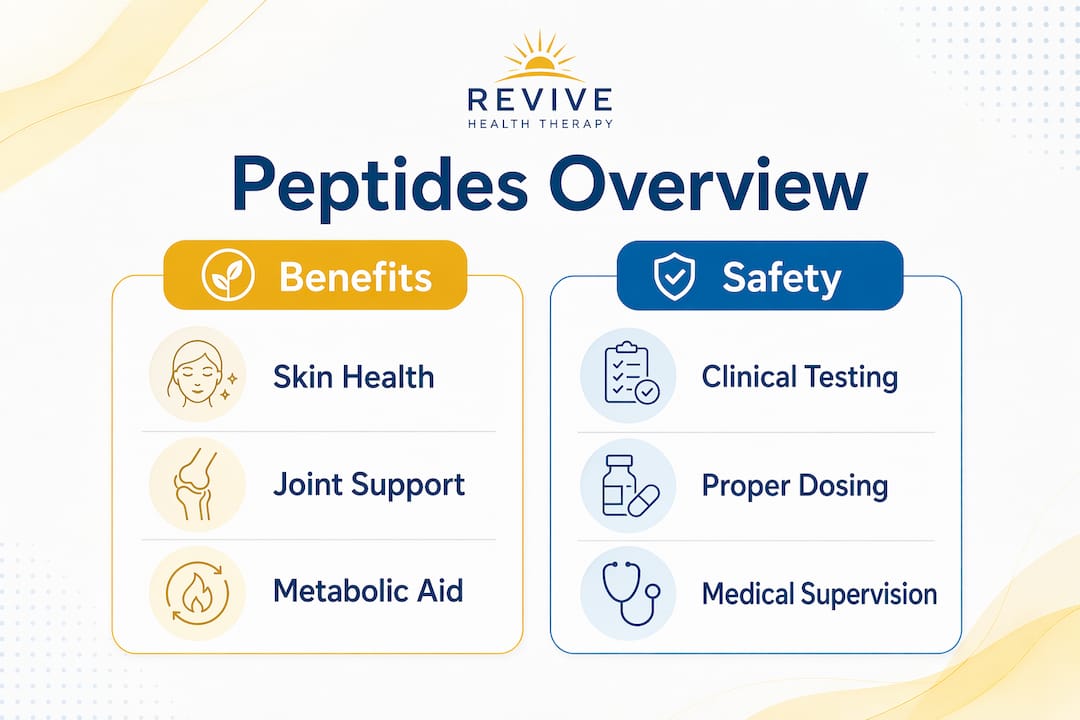
Natural vs. synthetic peptide sources: what is the difference?
The distinction between natural and synthetic peptides matters more than most wellness content admits.
Collagen peptides in supplements are broken into smaller fragments specifically to improve absorption. Natural food sources like bone broth, chicken skin, and fish skin contain collagen too, but in larger, less bioavailable forms. You would need to consume significant quantities of bone broth daily to approach the concentrated doses used in clinical trials. Supplements close that gap more reliably.
Natural food sources of peptides
- Bone broth: Rich in collagen precursors, glycine, and proline
- Fish and shellfish: Marine collagen peptides absorb efficiently and are popular in skincare research
- Eggs: Contain bioactive peptides with antioxidant properties
- Soy and legumes: Provide plant-based peptides with modest cardiovascular research behind them
- Skin-on poultry: One of the most direct dietary sources of collagen
Synthetic peptides cover a wide spectrum. FDA-approved drugs like tirzepatide and semaglutide go through years of safety and efficacy testing. Experimental compounds sold as research chemicals or wellness supplements do not. About 100 peptides currently hold FDA approval, while hundreds more circulate in the wellness market without that scrutiny. That gap is where consumer risk concentrates.
Topical peptides in skincare products like Matrixyl (palmitoyl pentapeptide-4) and Argireline (acetyl hexapeptide-3) represent a middle ground. They are widely used, generally well-tolerated, and supported by some clinical data on skin texture and firmness. They do not carry the systemic risks of injectable compounds. For people exploring the best peptides for skin, topical options are the lowest-risk entry point.
What safety risks come with peptide use?
Safety in peptide therapy depends almost entirely on which peptide, what form, and who is overseeing the process.

Peptides degrade quickly in the body and face real instability challenges that limit their clinical usefulness without chemical modification. This is not a minor technical footnote. It means that a peptide you take orally may break down before reaching its target tissue, which is why delivery method matters as much as the compound itself.
The regulatory picture is genuinely confusing. Many popular wellness peptides lack robust human clinical evidence and rely on animal studies and testimonials instead. Marketers rarely make that distinction clear. You are often paying for a compound that has never been tested in a human trial at the dose being sold.
DIY use carries the sharpest risks. Self-injecting research-grade peptide powders without medical oversight creates real exposure to contamination, incorrect dosing, and unknown interactions. Experts are direct about this: unsupervised home injection of unverified compounds is not a wellness practice. It is an uncontrolled experiment.
Here is a practical safety framework before you consider any peptide beyond food sources or established supplements:
- Verify regulatory status. Check whether the compound holds FDA approval or is classified as a research chemical. The difference is not semantic.
- Demand a certificate of analysis. Any reputable supplier provides third-party testing results confirming purity and concentration.
- Consult a licensed provider. The peptide field lacks consensus on dosing and long-term safety, which means professional oversight is not optional for off-label use.
- Avoid injectable peptides without clinical supervision. Topical and oral forms carry meaningfully lower risk profiles.
- Research the specific compound. Generic claims about “peptides” tell you nothing. The molecule matters.
Pro Tip: Before purchasing any peptide supplement, search the compound name plus “human clinical trial” on PubMed. If nothing comes up, the evidence base is animal data at best.
How do you incorporate peptides into a wellness routine?
The most important thing to understand about integrative health and peptides is that peptides are not a foundation. They are an addition to one.
Sleep, nutrition, exercise, and stress management produce measurable, well-documented effects on skin health, mental wellness, and metabolic function. Peptides work best when those foundations are already in place. Adding collagen peptides to a diet lacking protein and micronutrients will not compensate for the deficit.
Matching peptide type to your goal
For skin health, topical peptides like Matrixyl and Argireline are the most evidence-supported starting point. Oral collagen peptides at 2.5–10 grams daily add a systemic layer with modest clinical backing. For mental health and peptides, the research is earlier-stage, but compounds influencing cortisol regulation and neuropeptide signaling are active areas of study.
For metabolic support, FDA-approved GLP-1 receptor agonists like semaglutide and tirzepatide are the only peptides with strong enough evidence to justify clinical use. Everything else in the metabolic space is experimental.
Practical steps for responsible integration:
- Choose brands that publish third-party testing and list exact dosages per serving
- Start with food-based sources or established oral supplements before considering anything injectable
- Track outcomes over 8–12 weeks before drawing conclusions
- Work with a healthcare provider who understands both conventional and integrative medicine
- Revisit your approach if you notice adverse effects, even mild ones
The benefits of peptides are real in specific contexts. The key is matching the right compound to a clear goal, with evidence behind both.
Key takeaways
Peptide therapy delivers real benefits in specific, well-studied contexts, but most wellness peptides on the market lack the human clinical evidence needed to justify unsupervised use.
| Point | Details |
|---|---|
| Collagen peptides have modest evidence | Daily doses of 2.5–10g show consistent but limited skin and joint benefits. |
| FDA-approved peptides set the standard | Tirzepatide and semaglutide demonstrate what rigorous testing produces. |
| Most wellness peptides are experimental | About 100 peptides hold FDA approval; hundreds more are unregulated. |
| DIY injection carries serious risk | Unsupervised use of research-grade peptides risks contamination and dosing errors. |
| Build foundations first | Nutrition, sleep, and stress management must precede any peptide supplementation. |
What i have learned from watching the peptide trend closely
The peptide conversation in wellness communities has a pattern I recognize from other supplement cycles. A genuinely interesting biological mechanism gets discovered, legitimate clinical research begins, and then the marketing machine runs about five years ahead of the actual evidence.
Collagen peptides are the clearest example of a supplement that earned its place through consistent, if modest, human trial data. That is worth respecting. Tirzepatide shows what happens when a peptide goes through real development. The results are significant. But neither of those stories justifies the leap to injecting unverified research compounds at home because a wellness influencer posted about it.
What concerns me most is the absence of standardized dosing protocols across the field. Practitioners and consumers are essentially guessing at doses for most off-label peptides. That is not a minor gap. It is the kind of gap that produces harm over time, quietly, without obvious attribution.
My honest read: collagen peptides and topical skincare peptides are reasonable additions to a wellness routine for most people. FDA-approved peptide drugs belong in clinical settings with medical oversight. Everything else requires a level of skepticism that most wellness content does not encourage. The evidence on wellness peptides is thinner than the marketing suggests, and that gap matters when you are making decisions about your body.
If you are drawn to peptides because you want better mental wellness, more energy, or reduced stress, those are legitimate goals. They are also goals that respond well to approaches with far stronger evidence bases, including therapy, structured sleep, and evidence-based stress management.
— Amy
Mental wellness goes beyond supplements
Peptide therapy for wellness addresses the physical signaling layer of health. But mental well-being requires more than biochemistry. Structured, evidence-based psychotherapy addresses the patterns, trauma, and emotional regulation challenges that no supplement reaches.

Revivehealththerapy offers trauma-informed care in California using EMDR, CBT, and mindfulness, with both in-person sessions in Walnut Creek and Oakland and secure telehealth therapy statewide. Sliding-scale fees and insurance acceptance, including HSA and FSA plans, make access realistic for most budgets. If you are building a genuine wellness routine, professional psychotherapy belongs in it alongside any supplement strategy you are considering.
FAQ
What are peptides and how do they work?
Peptides are short chains of amino acids that act as signaling molecules in the body, directing processes like collagen production, hormone regulation, and immune response. They bind to specific receptors, which is what gives them their targeted effects.
Are collagen peptides worth taking for skin health?
Oral collagen peptides at 2.5–10 grams daily show modest, consistent evidence for improved skin hydration and elasticity in human trials. Results vary between individuals, and effects are gradual rather than dramatic.
What is the difference between fda-approved and wellness peptides?
Approximately 100 peptides hold FDA approval after rigorous safety and efficacy testing, while hundreds of wellness peptides are sold without that scrutiny. The distinction determines whether a compound has verified dosing, purity standards, and known safety data.
Is DIY peptide use at home safe?
Self-injecting research-grade peptide powders without medical supervision carries real risks including contamination, dosing errors, and unknown drug interactions. Experts recommend against unsupervised home injection of any unverified compound.
Can peptides support mental health and stress relief?
Some peptides influence cortisol regulation and neuropeptide signaling pathways relevant to stress and mood, but human clinical evidence in this area remains early-stage. Established approaches like CBT and EMDR have far stronger evidence for mental wellness outcomes.