
Finding time for in-person therapy while juggling work and family in California can feel impossible, especially when stress and sadness linger. That constant pressure makes mental health support seem out of reach just when it’s needed most. With telehealth therapy, modern technology now connects you to licensed professionals using evidence-based methods like EMDR for trauma recovery and personal growth. Discover how secure virtual sessions can deliver personalized care, boost accessibility, and let you focus on healing wherever you feel comfortable.
Table of Contents
- What Telehealth Therapy Means Today
- How Telehealth Expands Access and Flexibility
- Evidence-Based Methods in Virtual Care
- Privacy, Safety, and Legal Protections
- Comparing Telehealth and In-Person Therapy
- Cost, Insurance, and Accessibility Considerations
Key Takeaways
| Point | Details |
|---|---|
| Telehealth Therapy Expands Access | Telehealth dramatically increases mental health service accessibility, overcoming geographic barriers and offering flexible scheduling options. |
| Evidence-Based Virtual Care | Digital mental health interventions utilize evidence-based strategies to ensure effective therapeutic outcomes comparable to traditional therapy. |
| Privacy and Legal Protections | Robust legal frameworks protect patient privacy in telehealth, maintaining high standards for confidentiality and professional conduct. |
| Cost-Effectiveness of Telehealth | Telehealth services can be more economical, reducing travel expenses and potentially lowering out-of-pocket costs compared to in-person therapy. |
What Telehealth Therapy Means Today
Telehealth therapy represents a transformative approach to mental health support, leveraging technology to deliver professional psychological care beyond traditional office settings. Telemedicine services now provide health care across different locations using advanced telecommunications technology, making mental wellness more accessible than ever for Californians.
Today’s telehealth therapy goes far beyond simple video calls. It encompasses a comprehensive range of digital health interventions designed to meet diverse mental health needs:
- Synchronous video counseling sessions
- Asynchronous messaging and support platforms
- Digital mental health assessments
- Remote psychological monitoring
- Secure, encrypted communication channels
Digital mental health services have dramatically expanded since the COVID-19 pandemic, creating new pathways for therapeutic support. Telehealth technologies enable remote communication and health interventions that maintain professional standards while offering unprecedented flexibility.
Modern telehealth therapy isn’t just convenient—it’s a sophisticated, evidence-based approach to mental wellness. Licensed therapists utilize secure platforms that protect patient confidentiality, integrate multiple communication methods, and provide personalized care tailored to individual needs. This approach ensures that Californians can access high-quality mental health support regardless of geographical constraints or scheduling challenges.
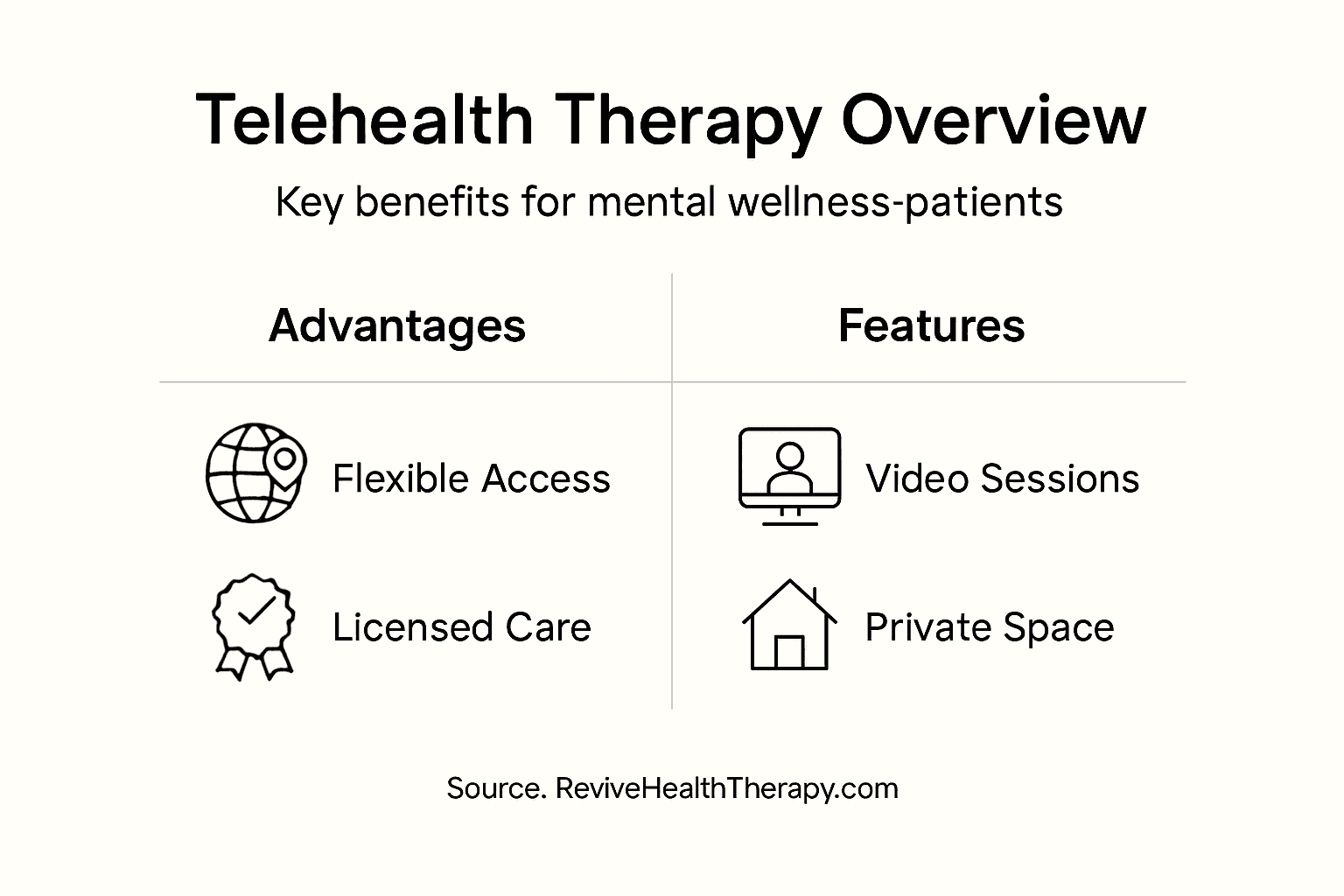
Pro tip: Before starting telehealth therapy, ensure you have a reliable internet connection and a private, quiet space for your sessions.
How Telehealth Expands Access and Flexibility
Telehealth therapy represents a revolutionary approach to mental health care, dramatically expanding service accessibility for individuals across California. By eliminating traditional barriers, these digital services ensure that mental health support reaches people who might otherwise struggle to receive care.
The key advantages of telehealth therapy include:
- Overcoming geographic limitations
- Reducing travel time and expenses
- Providing flexible scheduling options
- Addressing provider shortages
- Enabling continuity of care
- Increasing service reach to underserved communities
Mental health accessibility has transformed significantly with telehealth technologies. Remote counseling services overcome traditional healthcare constraints by offering scheduled and on-demand support that adapts to individual needs and preferences.
The flexibility of telehealth extends beyond convenience. Licensed therapists can now provide personalized, professional support through secure digital platforms, ensuring that Californians receive high-quality mental health care regardless of their location, work schedule, or personal circumstances. This approach democratizes mental wellness, making professional support more attainable than ever before.

Pro tip: Research your potential telehealth provider’s credentials, technology security, and insurance compatibility before scheduling your first session.
Evidence-Based Methods in Virtual Care
Digital mental health interventions are revolutionizing psychological treatment, utilizing evidence-based strategies to enhance therapeutic outcomes. These advanced approaches go beyond traditional counseling by integrating cutting-edge technologies with proven therapeutic techniques.
Key components of evidence-based virtual care include:
- Structured video counseling sessions
- Secure digital communication platforms
- Scientifically validated assessment tools
- Personalized treatment algorithms
- Continuous progress tracking
- Real-time therapeutic interventions
Systematic reviews confirm the effectiveness of tele-mental health strategies, demonstrating comparable clinical outcomes to traditional in-person therapy. These virtual approaches leverage multiple communication channels, including video consultations, telephone support, and secure messaging platforms, to deliver comprehensive mental health care.
Professional telehealth services integrate rigorous clinical protocols with technological innovations. Licensed therapists utilize secure, HIPAA-compliant platforms that maintain the same high standards of care as traditional therapy settings, ensuring confidentiality, professional integrity, and personalized treatment approaches tailored to individual mental health needs.
Pro tip: Request a brief technical consultation before your first session to ensure your device and internet connection are compatible with the telehealth platform.
Privacy, Safety, and Legal Protections
Telehealth services require robust legal frameworks to protect patient rights and ensure comprehensive mental health care. Legislation provides essential governance for telehealth accountability, establishing critical standards for privacy, professional conduct, and patient safety.
Key legal protections for telehealth patients include:
- Comprehensive data security protocols
- Strict patient confidentiality requirements
- Professional liability safeguards
- Clear consent and autonomy guidelines
- Standardized healthcare quality metrics
- Patient rights protection mechanisms
Telehealth legal frameworks address complex ethical challenges surrounding remote healthcare delivery. These regulations are particularly crucial when serving vulnerable populations, ensuring that digital mental health platforms maintain the same rigorous standards as traditional therapeutic settings.
Professional telehealth providers invest heavily in secure infrastructure, implementing advanced encryption technologies, HIPAA-compliant communication platforms, and comprehensive identity verification processes. These multilayered security approaches protect patient information while enabling seamless, confidential therapeutic interactions that respect individual privacy and professional ethics.
Pro tip: Always verify your telehealth provider’s specific privacy policy and request detailed information about their data protection and confidentiality protocols.
Comparing Telehealth and In-Person Therapy
Mental health treatment has evolved dramatically, with telehealth emerging as a powerful alternative to traditional in-person therapy. Systematic reviews demonstrate telehealth’s comparable treatment efficacy across various psychiatric conditions, including anxiety, depression, and PTSD.
Key differences and similarities between telehealth and in-person therapy include:
- Treatment effectiveness
- Therapeutic alliance strength
- Accessibility and convenience
- Cost considerations
- Patient comfort and engagement
- Technological requirements
Medicare beneficiary studies reveal sustained telehealth effectiveness with many patients preferring a hybrid approach that combines both digital and face-to-face therapeutic interactions. This flexible model allows individuals to choose the most comfortable and convenient method of receiving mental health support.
While both modalities maintain professional standards, telehealth offers unique advantages like reduced travel time, increased scheduling flexibility, and improved access for individuals with mobility challenges or living in remote areas. The core therapeutic principles remain consistent, ensuring that patients receive high-quality, personalized mental health care regardless of the delivery method.
Here is a concise overview of the core differences and similarities between telehealth and in-person therapy:
| Aspect | Telehealth Therapy | In-Person Therapy |
|---|---|---|
| Session Delivery | Video, phone, or secure chat | Face-to-face in a physical room |
| Privacy Measures | End-to-end encryption | Soundproofed office, manual records |
| Accessibility | Reachable statewide, flexible | Limited by location and travel |
| Technology Needed | Internet, device, telehealth app | None beyond office facilities |
| Patient Engagement | Digital tools, remote check-ins | In-person cues, direct interaction |
Pro tip: Discuss with your therapist the most suitable therapy format for your specific mental health needs, considering your personal preferences and practical constraints.
Cost, Insurance, and Accessibility Considerations
Mental health services are becoming increasingly accessible, with telehealth providing innovative solutions for cost-effective care. Post-pandemic data reveal complex healthcare cost dynamics that challenge traditional healthcare delivery models.
Key financial and accessibility considerations include:
- Insurance coverage variations
- Out-of-pocket expense comparisons
- Sliding scale fee options
- Potential travel cost reductions
- Employer-sponsored mental health benefits
- Flexible payment plans
Telemedicine demonstrates cost-effectiveness for rural communities, particularly for individuals with limited healthcare access. By reducing travel expenses and improving treatment adherence, telehealth creates more economical mental health support pathways.
Navigation of insurance landscapes requires careful understanding. Many insurance providers now offer comprehensive telehealth coverage, recognizing its effectiveness and potential for reducing overall healthcare expenses. California residents have multiple options, including private insurance, Medicare, Medicaid, and specialized mental health plans that increasingly support digital therapeutic interventions.
The following table summarizes key financial considerations when evaluating mental health therapy options:
| Expense Category | Telehealth Therapy | In-Person Therapy |
|---|---|---|
| Insurance Coverage | Frequently expanding, varies by provider | Generally established benefits |
| Out-of-Pocket Costs | Reduced travel, possible lower copays | Includes travel, standard copays |
| Accessibility for Rural | Highly accessible, minimal travel needed | Limited, higher indirect costs |
| Flexible Payment Plans | Often available through platforms | Varies by provider or clinic |
Pro tip: Contact your insurance provider directly to understand specific telehealth mental health coverage details and potential out-of-pocket expenses.
Discover Better Mental Wellness with Telehealth Therapy Today
If you are seeking flexible, accessible, and evidence-based mental health support across California, telehealth therapy offers a powerful solution. Many face challenges such as geographic barriers, scheduling difficulties, or concerns about privacy and cost when seeking traditional therapy. Telehealth removes these obstacles by providing secure, licensed care from the comfort of your home with flexible session options and personalized treatment plans involving methods like EMDR, CBT, and mindfulness.
Explore how our trauma-informed and client-centered approach at ReviveHealthTherapy can meet your mental health needs with affordability through sliding-scale fees and insurance acceptance. Learn more about our services on our Uncategorized – ReviveHealthTherapy page.

Take charge of your mental wellness now by scheduling your free 20-minute consultation to discuss how telehealth therapy can work for you. Visit Fill Out This Quick Form for Your Free 20-Min Consultation with a Therapist and connect with skilled therapists who understand your journey and provide compassionate support every step of the way.
Frequently Asked Questions
What are the benefits of telehealth therapy?
Telehealth therapy provides numerous benefits, including increased accessibility, reduced travel time and expenses, flexible scheduling, and the ability to receive care in a comfortable environment. It also helps bridge gaps in provider availability and can offer services to underserved communities.
How does telehealth therapy ensure privacy and security?
Telehealth services are bound by strict legal frameworks that enforce comprehensive data security protocols, confidentiality requirements, and HIPAA regulations. Providers use secure, encrypted communication platforms to safeguard patient information during therapy sessions.
Is telehealth therapy as effective as in-person therapy?
Yes, research shows that telehealth therapy can be as effective as in-person therapy for various mental health conditions, including anxiety and depression. Systematic reviews indicate comparable treatment outcomes, making it a viable option for many individuals.
What technology do I need for telehealth therapy sessions?
To participate in telehealth therapy, you typically need a reliable internet connection and a device such as a computer, tablet, or smartphone that supports video calls or secure messaging. Make sure to have a quiet, private space for your sessions to ensure effective communication.
Recommended
- What Is Telehealth Therapy? Flexible Care for Californians – ReviveHealthTherapy
- Affordable Therapy: What It Means and Why It Matters – ReviveHealthTherapy
- Why Seek Psychotherapy: Transforming Mental Wellness – ReviveHealthTherapy
- Why Is Therapy Accessible for Californians Today – ReviveHealthTherapy
- How Mental Health and Weight Loss Affect Each Other? – LeanAndFit
3 Responses