
Anxiety is a future-oriented emotional state marked by worried thoughts, physical tension, and a sense that something bad is coming. That feeling is normal and even useful. It becomes an anxiety disorder when it is excessive, persistent, and gets in the way of daily life. The American Psychological Association and the National Institute of Mental Health both draw the line at three factors:
- Duration: symptoms lasting six months or longer (for generalized anxiety disorder)
- Impairment: the anxiety interferes with work, relationships, or basic routines
- Intensity: the worry or fear is out of proportion to the actual situation
Anxiety disorders affect an estimated 359 million people worldwide, making them the most common group of mental health conditions globally. If you or someone you know is in crisis or having thoughts of suicide, call or text 988 (Suicide and Crisis Lifeline) or call 911 immediately.
Key Takeaways
Anxiety is a normal emotion that becomes a disorder when it is persistent, excessive, and interferes with daily functioning, and effective treatment exists for every major anxiety disorder type.
| Point | Details |
|---|---|
| Normal vs. disorder | Anxiety becomes a disorder when it lasts six months or more, causes significant impairment, and is out of proportion to the situation. |
| Global scale | Anxiety disorders affect 359 million people worldwide, yet only a minority receive treatment. |
| Effective treatments | CBT, exposure therapy, EMDR, and SSRIs/SNRIs are all evidence-based options; most people benefit from a combination approach. |
| Crisis resource | If you are in crisis or having thoughts of suicide, call or text 988 immediately. |
| Revivehealththerapy | Offers CBT, EMDR, and telehealth therapy across California with sliding-scale fees and insurance acceptance. |
Table of Contents
- What is anxiety, and why does it exist?
- What are the symptoms of anxiety?
- What are the main types of anxiety disorders?
- What causes anxiety disorders?
- When should you see a clinician about anxiety?
- What are the most effective anxiety treatment options?
- How to calm anxiety right now
- What to expect from therapy for anxiety
- How Revivehealththerapy approaches anxiety treatment
- Anxiety care is available to you now
- Sources
What is anxiety, and why does it exist?
Anxiety is a future-oriented emotion characterized by tension, worried thoughts, and physical arousal. Fear, by contrast, is a present-focused response to an immediate, identifiable threat. You feel fear when a car runs a red light in front of you. You feel anxiety the night before a difficult conversation you haven’t had yet. That distinction matters practically: fear is short-lived and proportional; anxiety lingers and often attaches to possibilities rather than certainties.
The underlying biology is the same for both. The brain’s threat-detection system triggers a fight-or-flight response, flooding the body with adrenaline, tightening muscles, and sharpening attention. This adaptive response evolved to protect us from real danger. The problem arises when the alarm fires constantly, even when no real threat exists.
| Statistic | Figure | Source |
|---|---|---|
| People affected globally | 359 million | WHO |
| Approximate share receiving treatment | About 1 in 4 | WHO |
| Disorders often begin | Childhood or adolescence | WHO/NIMH |
What are the symptoms of anxiety?
Symptoms of anxiety fall into three broad categories. Recognizing them in yourself is the first step toward deciding whether to seek help.
Psychological and cognitive symptoms
- Persistent, hard-to-control worry
- Catastrophic thinking (“What if the worst happens?”)
- Difficulty concentrating or mind going blank
- Irritability or a sense of dread
Behavioral symptoms
- Avoiding situations that trigger anxiety
- Procrastinating on tasks that feel threatening
- Seeking constant reassurance from others
Physical symptoms
- Racing or pounding heart
- Shortness of breath or chest tightness
- Muscle tension, headaches, or fatigue
- Sweating, trembling, or gastrointestinal upset
These cognitive, physical, and behavioral signs often reinforce each other. Avoidance, for example, provides short-term relief but teaches the brain that the avoided situation is genuinely dangerous, which strengthens the anxiety over time.
What a panic attack actually feels like
A panic attack is a sudden surge of intense fear that peaks within minutes. Hallmark signs include a pounding heart, chest pain, dizziness, shortness of breath, numbness or tingling, and a terrifying sense of losing control or dying. Panic attacks are not dangerous in themselves, but they are deeply distressing and can lead people to avoid any situation where they fear one might occur.
Pro Tip: If you experience chest pain, shortness of breath, or a racing heart for the first time, see a doctor before assuming it is anxiety. Cardiac and thyroid conditions can produce nearly identical symptoms, and ruling them out is standard clinical practice.
What are the main types of anxiety disorders?
Anxiety disorders are not one condition. They share the core feature of excessive, impairing fear or worry, but each has a distinct focus and pattern.
Generalized Anxiety Disorder (GAD) involves persistent, wide-ranging worry about everyday matters: health, finances, work, family. The worry is difficult to control and is accompanied by physical symptoms like fatigue and muscle tension. Someone with GAD often describes feeling like they can never fully relax, even when nothing specific is wrong.
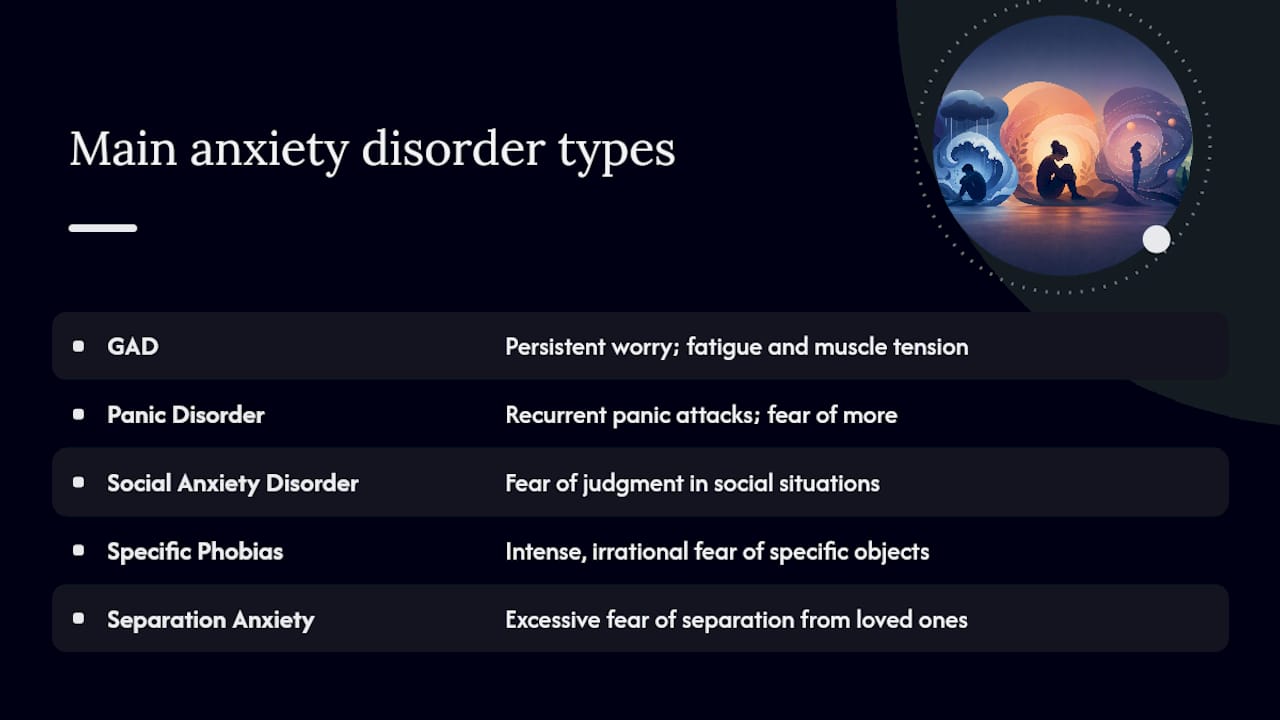
Panic Disorder is defined by recurrent, unexpected panic attacks plus ongoing worry about having more attacks or changing behavior to avoid them. The anticipatory dread of the next attack can become as disabling as the attacks themselves.
Social Anxiety Disorder goes well beyond shyness. People with this condition fear being judged, embarrassed, or humiliated in social or performance situations. A job interview, eating in public, or even making a phone call can feel genuinely threatening.
Specific Phobias involve intense, irrational fear of a particular object or situation: heights, flying, needles, dogs. The fear is recognized as excessive, but exposure still triggers immediate anxiety or avoidance.
Separation Anxiety Disorder is most recognized in children but occurs in adults too. It involves excessive fear about being separated from attachment figures, often accompanied by physical complaints when separation is anticipated.
Comorbidity is the rule, not the exception. NIMH notes that anxiety disorders frequently co-occur with depression, other anxiety disorders, and substance use disorders. Diagnosis is always a clinician’s task, based on duration, impairment, and established diagnostic criteria.
What causes anxiety disorders?
No single cause explains why one person develops an anxiety disorder and another does not. The causes of anxiety disorders are typically a combination of factors:
- Genetics and brain chemistry: Anxiety disorders run in families. Differences in how the brain regulates neurotransmitters like serotonin and GABA appear to raise vulnerability.
- Temperament: People who are naturally more inhibited, negative in outlook, or sensitive to stress tend to have higher baseline anxiety.
- Stressful or traumatic life events: Childhood adversity, trauma, abuse, or major life stressors (job loss, divorce, illness) can trigger or worsen anxiety disorders.
- Medical conditions: Hyperthyroidism, cardiac arrhythmias, and respiratory disorders can produce anxiety-like symptoms. Clinicians routinely order labs and a physical exam to rule out these causes before assigning an anxiety disorder diagnosis.
- Medications and substances: Stimulants, certain asthma medications, caffeine, and alcohol withdrawal can all provoke or intensify anxiety symptoms.
Understanding anxiety causes matters because it shapes treatment. Someone whose anxiety is driven primarily by a thyroid condition needs different care than someone whose anxiety is rooted in childhood trauma.
Onset and gender patterns: WHO data shows anxiety disorders often begin in childhood or adolescence and are more common in women than men. Early onset does not mean lifelong suffering; it does mean that earlier intervention tends to produce better outcomes.
When should you see a clinician about anxiety?
Most people feel anxious sometimes. The question is whether the anxiety has crossed into disorder territory. Seek professional evaluation when:
- Worry or fear is present most days and hard to control
- Anxiety is interfering with work, school, relationships, or self-care
- You are avoiding situations to manage anxiety
- Physical symptoms (chest pain, dizziness) are unexplained by a medical exam
- You are using alcohol or substances to cope
- Panic attacks are occurring or you fear having them
Seek immediate help if you are experiencing thoughts of suicide or self-harm, or if anxiety has become so severe that you cannot function safely. Call or text 988 or call 911.
How anxiety is diagnosed
There is no blood test for an anxiety disorder. Clinicians use a structured clinical interview, review symptom history, and often use validated screening tools. The GAD-7 (Generalized Anxiety Disorder 7-item scale) is one of the most widely used; it asks about the frequency of seven core symptoms over the past two weeks and produces a score that guides further evaluation. A score alone does not diagnose anything. The clinician also considers duration (typically six months or more for GAD), functional impairment, and whether symptoms are better explained by a medical condition or substance use.
Primary care physicians are often the first point of contact, especially when physical symptoms are prominent. They can order labs, rule out medical causes, and refer to a mental health specialist when appropriate.
What are the most effective anxiety treatment options?
Anxiety disorders are among the most treatable mental health conditions. The most effective approach for most people combines psychological treatment, lifestyle changes, and sometimes medication.
Psychological treatments
Cognitive Behavioral Therapy (CBT) is the most extensively studied psychological treatment for anxiety. It works by identifying distorted thought patterns and gradually changing the behaviors that maintain anxiety. A step-by-step CBT approach typically involves learning to recognize anxious thoughts, evaluating their accuracy, and practicing new responses. Most people see meaningful improvement within 12–20 sessions.
Exposure therapy, a core component of CBT, involves gradual, structured confrontation with feared situations or thoughts. Avoidance keeps anxiety alive; exposure, done carefully, teaches the brain that the feared outcome is either unlikely or manageable.
EMDR (Eye Movement Desensitization and Reprocessing) is particularly effective when anxiety is rooted in trauma. It uses bilateral stimulation while the person processes distressing memories, reducing the emotional charge attached to them. Revivehealththerapy offers EMDR therapy in Oakland and Walnut Creek as well as via telehealth.

Medication options
SSRIs (selective serotonin reuptake inhibitors) and SNRIs (serotonin-norepinephrine reuptake inhibitors) are the first-line medications for most anxiety disorders. They are not sedatives and do not work immediately; most people need four to eight weeks before noticing a meaningful reduction in symptoms. Side effects vary but commonly include initial nausea, sleep changes, and sexual side effects. Benzodiazepines are sometimes used short-term for acute anxiety but carry risks of dependence and are generally not recommended for long-term management.
For a balanced look at how medication and therapy compare, this overview of wellness medication vs. therapy covers the practical trade-offs.
Lifestyle and self-care
ADAA recommendations include limiting caffeine, maintaining consistent sleep, exercising regularly, and practicing CBT-based skills between sessions. These are not alternatives to treatment; they are force multipliers. Someone doing CBT who also cuts caffeine and sleeps seven to eight hours will typically progress faster than someone who does not. A structured anxiety self-care checklist can help build these habits into a daily routine.

Pro Tip: Before your first appointment, write down three questions: What treatment approach do you recommend for my symptoms, and why? How long before I should expect to notice improvement? What are the most common side effects or challenges with this approach? Clinicians expect these questions and a good one will welcome them.
How to calm anxiety right now
These techniques will not cure an anxiety disorder, but they can reduce the intensity of an anxious moment enough to think more clearly. Grounding and mindfulness practices work best with consistent practice, but they are also useful in the moment.
- 5-4-3-2-1 grounding: Name 5 things you can see, 4 you can touch, 3 you can hear, 2 you can smell, and 1 you can taste. This pulls attention out of worried thoughts and into the present environment.
- Box breathing: Inhale for 4 counts, hold for 4, exhale for 4, hold for 4. Repeat four times. Slow, controlled breathing activates the parasympathetic nervous system and reduces the physical arousal of anxiety.
- Progressive muscle relaxation: Starting at your feet, tense each muscle group for five seconds, then release. Work upward through calves, thighs, abdomen, hands, arms, and shoulders. The contrast between tension and release signals the body to relax.
- Worry log: Write the worry down with a specific time you will think about it later. Structured worry postponement is more effective than trying to stop worrying entirely, because it gives the anxious mind a container rather than a fight.
If anxiety is severe, you are having thoughts of self-harm, or physical symptoms feel medically urgent, stop and call 988 or 911 rather than attempting to self-manage.
What to expect from therapy for anxiety
Starting therapy can feel uncertain, especially if you have never done it before. Here is what typically happens.
The first one to two sessions are an assessment. The therapist asks about your history, current symptoms, what has helped or not helped before, and what you want to change. You are not expected to have answers to everything. Goal-setting happens collaboratively, and a good therapist will explain their approach and why they think it fits your situation.
By session three, most people have a clearer picture of their anxiety patterns and have started learning at least one concrete skill, whether that is a breathing technique, a thought record, or a grounding practice. Improvement is rarely linear. Many people feel slightly more anxious in early sessions as they start paying closer attention to symptoms they had been avoiding. That is normal and usually temporary.
Realistic timeframes: CBT for anxiety typically runs 12–20 sessions. EMDR for trauma-related anxiety can produce significant change in fewer sessions for some people. Medication, when used, is usually evaluated at the four-to-eight-week mark. For a broader look at therapy modalities, this overview of therapy types for anxiety covers the options clearly.
Questions to ask when choosing a therapist:
- What is your training in CBT or EMDR for anxiety?
- Do you offer telehealth sessions?
- Do you offer a sliding-scale fee or accept my insurance?
- How will we know if the treatment is working?
- What happens if I am not improving after a few months?
Practical barriers are real. Insurance coverage for mental health varies, and out-of-pocket costs can be significant. Sliding-scale fees, HSA/FSA accounts, and telehealth access have expanded options considerably. If cost or location has been a barrier, it is worth asking directly about these options before ruling out therapy. For families navigating anxiety together, anxiety management resources for California families offer practical starting points.
How Revivehealththerapy approaches anxiety treatment
At Revivehealththerapy, anxiety treatment is grounded in evidence-based, trauma-informed care. The clinical team uses CBT, EMDR, and mindfulness-based approaches tailored to each person’s history and goals, not a one-size-fits-all protocol. In-person sessions are available in Oakland and Walnut Creek; secure telehealth sessions are available to anyone in California.
Affordability is built into the model. Revivehealththerapy accepts insurance, HSA/FSA plans, and offers sliding-scale fees for those who qualify. Adults, teens, couples, and families are all served.
Anxiety care is available to you now
If what you have read here sounds familiar, the clearest next step is a conversation with a licensed clinician who can assess your specific situation. Revivehealththerapy offers online therapy across California with flexible scheduling, telehealth access statewide, and sliding-scale fees that make care accessible regardless of income. In-person sessions are available in Oakland and Walnut Creek.
You can also review the profile of Amanda Parker, LCSW, a licensed therapist offering telehealth sessions, to get a sense of the clinical approach before booking. Scheduling an initial consultation is straightforward: visit the contact page or the telehealth page to request an appointment.
Sources
- Anxiety – American Psychological Association
- Anxiety Disorders – National Institute of Mental Health (NIMH)
- Tips and Strategies to Manage Anxiety and Stress – ADAA
- Anxiety – MedlinePlus
This article provides general health information and is not a substitute for professional medical or mental health advice. Consult a licensed clinician or your primary care physician to evaluate your specific symptoms and circumstances.
Recommended
- Build Your Anxiety Self-Care Checklist for Everyday Relief – Revive Health Therapy
- How mindfulness eases anxiety: Evidence-based strategies – Revive Health Therapy
- Why Seek Therapy for Anxiety: 70% Treatment Success Rate – ReviveHealthTherapy
- Manage anxiety with proven therapies in California 2026 – Revive Health Therapy