
Despite more than 70% of individuals with anxiety disorders never seeking therapy due to stigma and misconceptions, evidence shows therapy reduces symptoms dramatically. This guide explains the scientific reasons therapy works for anxiety and how Californians can access evidence-based treatment options tailored to their needs.
Table of Contents
- Understanding Anxiety And Its Impact
- How Therapy Works To Alleviate Anxiety
- Comparing Therapy Modalities For Anxiety
- Overcoming Barriers: Accessibility And Affordability In California
- Common Misconceptions About Therapy For Anxiety
- Therapy For Children And Teens With Anxiety
- How To Get Started With Anxiety Therapy In California
- Ready To Take The Next Step? Start Therapy In California Today
- Why Seek Therapy For Anxiety: Frequently Asked Questions
Key Takeaways
| Point | Details |
|---|---|
| Brain Changes | Therapy modifies fear circuits in the brain, reducing anxiety symptoms by up to 70%. |
| Treatment Options | CBT, EMDR, and mindfulness offer distinct approaches for different anxiety types and ages. |
| Access Improvements | Telehealth and sliding-scale fees make California therapy more accessible than ever. |
| Myths Block Care | Common misconceptions prevent treatment, but chronic anxiety worsens without intervention. |
| Youth Benefit | Children and teens respond exceptionally well to specialized therapies with family support. |
Understanding Anxiety and Its Impact
Anxiety is far more than occasional nervousness. Clinical anxiety manifests as persistent, excessive worry that disrupts daily functioning. Symptoms include restlessness, difficulty concentrating, muscle tension, sleep disturbances, and overwhelming fear responses.
The brain’s fear center, the amygdala, becomes hyperactive in people with anxiety disorders. This heightened state triggers constant alertness even when no real threat exists. The prefrontal cortex, responsible for rational thinking, struggles to regulate these intense emotional responses.
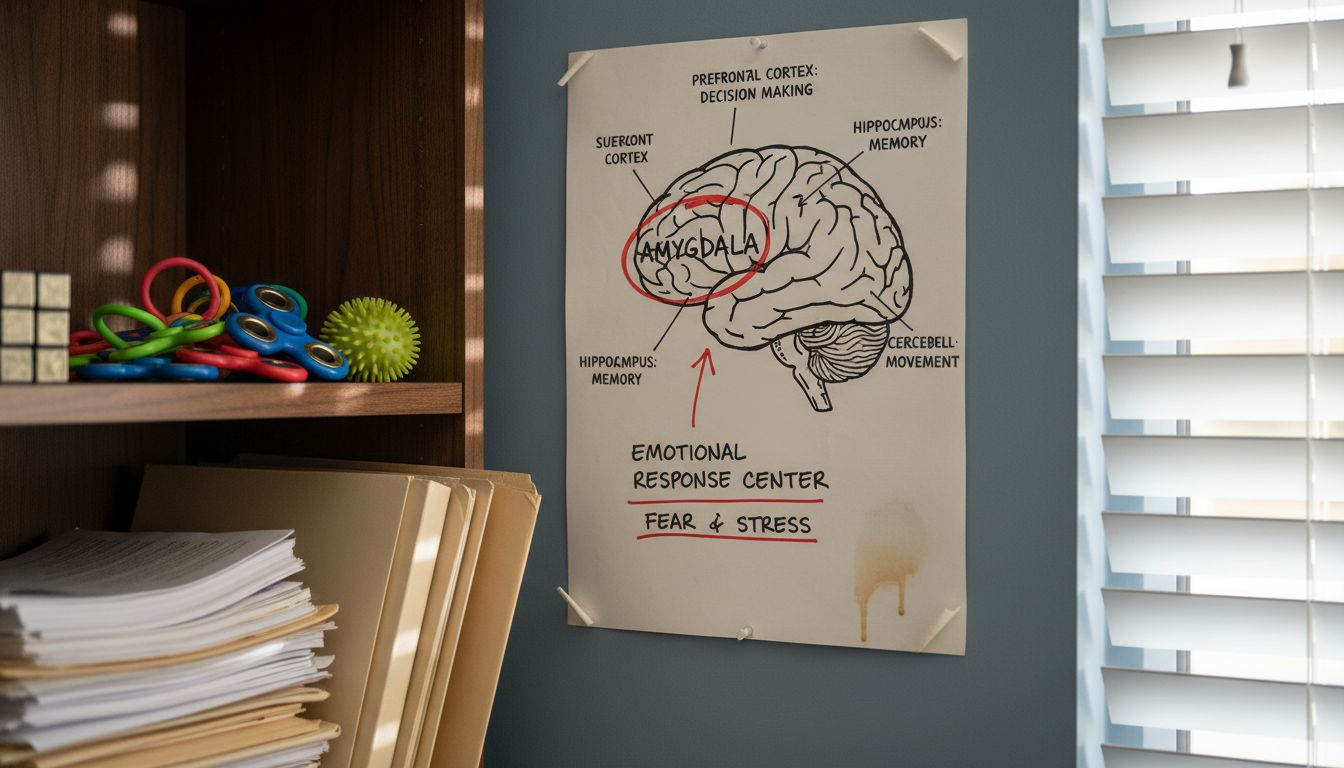
This neurological imbalance affects every aspect of life. Work performance suffers as concentration wanes. Relationships strain under irritability and withdrawal. Physical health declines through disrupted sleep, digestive issues, and chronic tension. About 18% of U.S. adults experience anxiety annually, with California mirroring these troubling statistics.
Critical insight: Anxiety isn’t weakness. It’s a diagnosable condition rooted in brain chemistry and neural pathways that therapy effectively addresses.
How Therapy Works to Alleviate Anxiety
Therapy produces measurable changes in brain structure and function. Research shows therapy modifies circuits involving the amygdala and prefrontal cortex, improving emotional control and reducing fear responses.
Three primary approaches dominate evidence-based anxiety treatment:
- Cognitive Behavioral Therapy (CBT) identifies and restructures distorted thought patterns that fuel anxiety. You learn to challenge catastrophic thinking and replace it with balanced perspectives.
- Eye Movement Desensitization and Reprocessing (EMDR) processes traumatic memories that trigger anxiety. Bilateral stimulation helps the brain reprocess distressing events, reducing their emotional charge.
- Mindfulness-based therapies train attention and awareness. You develop skills to observe anxious thoughts without getting swept away, breaking rumination cycles.
These modalities share a common mechanism: they strengthen prefrontal cortex control over the amygdala. Repeated practice during therapy sessions rewires neural pathways, making calm responses more automatic.
“The brain’s neuroplasticity allows therapy to create lasting structural changes. Consistent engagement strengthens new neural connections while weakening old anxiety patterns.”
Pro Tip: Therapy works best with active participation. Complete homework assignments, practice techniques between sessions, and attend consistently for 8 to 16 weeks to maximize neurological changes.
When choosing the right therapy, consider your specific anxiety triggers and symptoms. The scientific evidence on therapy’s brain impact continues growing stronger.
Comparing Therapy Modalities for Anxiety
Each therapy type offers unique advantages. Understanding these differences helps you select the most effective approach.
| Therapy Type | Symptom Reduction | Best For | Typical Duration |
|---|---|---|---|
| CBT | 60% improvement | Generalized anxiety, panic disorder | 12 to 20 sessions |
| EMDR | 70% improvement | Trauma-related anxiety, PTSD | 8 to 12 sessions |
| Mindfulness | 30 to 40% sustained reduction | Ongoing emotional regulation | 8+ weeks, continued practice |
Studies demonstrate that EMDR provides up to 70% symptom reduction for trauma-related anxiety, making it particularly effective for children and teens.
CBT excels for adults with generalized anxiety who need structured problem-solving approaches. The therapy’s focus on thought patterns suits logical thinkers who want concrete tools. Sessions involve identifying triggers, challenging beliefs, and practicing new responses.
EMDR works rapidly for anxiety rooted in specific traumatic events. The bilateral stimulation process helps the brain reprocess memories without prolonged exposure to distressing details. This gentler approach benefits children and teens especially well.
Mindfulness serves as an excellent complement to other therapies. While it produces more modest symptom reduction alone, it builds sustained resilience. Regular practice prevents relapse by maintaining emotional balance.
Pro Tip: Many therapists integrate multiple approaches. You might use CBT for thought patterns while adding mindfulness for daily stress management. Discuss combining therapy options for anxiety with your provider.
Consider family involvement in therapy if anxiety affects household dynamics. The mindfulness therapy benefits extend beyond symptom reduction to overall wellbeing. Research on EMDR evidence in youth anxiety continues expanding.
Overcoming Barriers: Accessibility and Affordability in California
Geography and cost traditionally limited therapy access. California has made significant progress addressing these barriers through innovative delivery models and payment options.
Teletherapy revolutionized mental health care delivery. Research shows telehealth increases therapy initiation and retention by 30 to 40% in underserved California populations. Video sessions eliminate travel time and expand provider options beyond local areas.
Financial concerns prevent many from starting therapy. Multiple solutions now exist:
- Sliding scale fees adjust costs based on income, making therapy affordable across economic levels
- Insurance coverage increasingly includes mental health benefits with reasonable copays
- HSA and FSA accounts allow pre-tax dollars to pay for therapy sessions
- Community mental health centers offer reduced-cost services
Stigma remains a persistent barrier. Many people fear judgment or believe seeking help signals weakness. Education efforts emphasize that anxiety is a medical condition, not a character flaw. Successful professionals, parents, and students all benefit from therapy.
Practical steps improve access. Start by verifying insurance mental health benefits. Research providers offering therapy accessibility in California through various payment models. Consider telehealth therapy services if local options are limited. Understand your insurance coverage benefits before the first session.
The telehealth benefits in California continue expanding as technology improves and regulations adapt.
Common Misconceptions About Therapy for Anxiety
Myths about anxiety and therapy prevent countless people from getting effective help. Let’s examine and correct the most damaging misconceptions.
Myth 1: Anxiety will resolve on its own without treatment. Reality shows 50% of untreated anxiety cases become chronic or worsen over five years. Waiting rarely works. Anxiety typically intensifies without intervention as avoidance behaviors strengthen neural patterns.
Myth 2: Anxiety is just part of my personality, not a treatable condition. Anxiety disorders involve specific brain circuit dysfunctions distinct from personality traits. Therapy successfully modifies these circuits. Your core personality remains intact while symptoms diminish.
Myth 3: Therapy only helps adults, not children or teens. Young people respond exceptionally well to therapy, often faster than adults. Their developing brains show greater neuroplasticity. Early intervention prevents anxiety from becoming entrenched.
Myth 4: I’m too busy for therapy. Teletherapy sessions fit into lunch breaks or evening hours. The time investment of one hour weekly prevents far greater time losses from anxiety-related impairment at work and home.
Myth 5: Medication is the only real solution. While medication helps some people, therapy produces lasting changes without side effects. Many achieve full recovery through therapy alone.
“Correcting misconceptions dramatically increases the likelihood of seeking effective treatment. Understanding that anxiety is treatable empowers action.”
Learn more about clarifying therapy misconceptions and review data on chronicity of untreated anxiety to understand why early treatment matters.
Therapy for Children and Teens with Anxiety
Young people experience anxiety differently than adults, requiring specialized therapeutic approaches. Parents often underestimate how significantly anxiety impacts their child’s development, academic performance, and social relationships.
Children may express anxiety through behavioral changes rather than verbal complaints. Watch for school avoidance, clinginess, irritability, physical complaints, or sleep difficulties. Teens might isolate themselves, struggle academically despite capability, or develop perfectionist tendencies.
EMDR therapy reduces trauma-related anxiety in children and teens by up to 70% after just 8 sessions. This rapid response makes EMDR particularly valuable for young people whose development anxiety interrupts.
Family involvement amplifies treatment success. When parents understand anxiety mechanisms and learn supportive responses, children progress faster. Therapists teach families to:
- Recognize anxiety symptoms early
- Avoid reinforcing avoidance behaviors
- Provide appropriate reassurance without enabling
- Model healthy coping strategies
- Create home environments that support therapy work
Developmental considerations shape treatment approaches. Play therapy works for younger children who lack vocabulary for emotions. Teens benefit from cognitive approaches similar to adult CBT but adapted to their concerns and communication styles.
Explore therapy for children and teens and understand the importance of family involvement in teen therapy. Review evidence for EMDR in youth anxiety to understand this powerful intervention.
How to Get Started with Anxiety Therapy in California
Starting therapy feels overwhelming when anxiety already clouds decision-making. This step-by-step approach simplifies the process.
Step 1: Acknowledge your symptoms and their impact. Write down specific ways anxiety affects your work, relationships, health, and happiness. This clarity motivates commitment and helps therapists understand your needs.
Step 2: Research and select an evidence-based therapy type. Review the comparisons earlier in this article. Consider whether trauma underlies your anxiety (EMDR), if thought patterns drive it (CBT), or if you need ongoing regulation skills (mindfulness).
Step 3: Find a qualified therapist offering your chosen approach. Verify credentials, specializations, and experience with your specific anxiety type. Check availability, location or telehealth options, and payment methods.
Step 4: Commit to consistent attendance for 8 to 16 weeks. Research indicates therapy typically requires this timeframe to show significant improvement. Missing sessions disrupts the neurological changes therapy produces.
Step 5: Include family members when appropriate. If anxiety affects household dynamics or you’re seeking help for a child or teen, family participation strengthens outcomes.
Step 6: Track your progress and communicate with your therapist. Notice symptom changes, celebrate small victories, and discuss concerns openly. Good therapy involves ongoing collaboration and adjustment.
Pro Tip: Telehealth and sliding scale fees remove common barriers. Many California therapists now offer evening and weekend appointments via secure video platforms. Financial assistance makes therapy accessible regardless of income level.
Resources for finding accessible therapy in California and telehealth therapy options simplify the search. Understanding expected therapy duration helps set realistic expectations.
Ready to Take the Next Step? Start Therapy in California Today
You now understand how therapy scientifically reduces anxiety and know the practical steps to access treatment. Revive Health Therapy offers evidence-based anxiety therapies including CBT and EMDR, delivered by experienced clinicians who specialize in treating adults, children, and teens.
Accessible options make starting easier than ever. Telehealth sessions serve clients throughout California, eliminating travel barriers. Sliding scale fees and insurance acceptance, including HSA/FSA plans, address affordability concerns. In-person appointments are available in Walnut Creek and Oakland for those preferring face-to-face sessions.
Whether you’re struggling personally or seeking help for your child, professional support tailored to your specific needs makes recovery possible. Learn more about why seek psychotherapy in California, explore teen therapy services, or review individual therapy options to find the right fit.
Why seek therapy for anxiety: Frequently Asked Questions
What if I’m not sure I have anxiety?
Common signs include persistent worry lasting weeks or months, physical symptoms like racing heart or muscle tension, restlessness, difficulty concentrating, and sleep problems. If these symptoms interfere with work, relationships, or daily activities, evaluation by a mental health professional can clarify whether you meet diagnostic criteria.
Can I do therapy remotely if I live far from cities?
Yes, teletherapy provides the same effectiveness as in-person sessions. California therapists offer secure video sessions accessible from anywhere with internet connection. This flexibility serves rural areas, busy professionals, and anyone preferring home-based care.
How long before I see results?
Most people notice improvement after 8 to 16 weeks of consistent therapy. Some modalities like EMDR work faster, with changes appearing within 8 sessions. Factors affecting timeline include anxiety severity, treatment consistency, and active skill practice between sessions.
Is therapy effective for children too?
Yes, children and teens often respond faster than adults due to greater brain neuroplasticity. Specialized approaches like play therapy for young children and EMDR for trauma-related anxiety show particularly strong results. Family involvement enhances outcomes significantly.
What if I can’t afford therapy?
Multiple options address cost concerns. Sliding scale fees adjust rates based on income. Insurance plans increasingly cover mental health with reasonable copays. HSA and FSA accounts allow pre-tax payment. Community mental health centers offer reduced-cost services. Discussing finances openly with providers helps identify solutions.
How do I choose between CBT, EMDR, and mindfulness?
Consider your anxiety’s root cause. Trauma-related anxiety responds best to EMDR. Generalized worry and thought pattern issues suit CBT. Ongoing emotional regulation needs benefit from mindfulness. Many therapists integrate approaches. When choosing therapy type, discuss your specific symptoms and preferences with potential therapists.
One Response