
A trigger is a cue or reminder; a flashback is an involuntary re-experiencing response that can follow certain triggers. The distinction matters because the two call for different responses: a trigger often calls for grounding and self-awareness, while a flashback may call for more active grounding or clinical processing over time. Below, we walk through how to tell them apart, what to do in the moment, and when it’s time to bring in professional support.
TL;DR:
- External triggers like sounds, smells, or locations can cause distress without necessarily leading to a flashback.
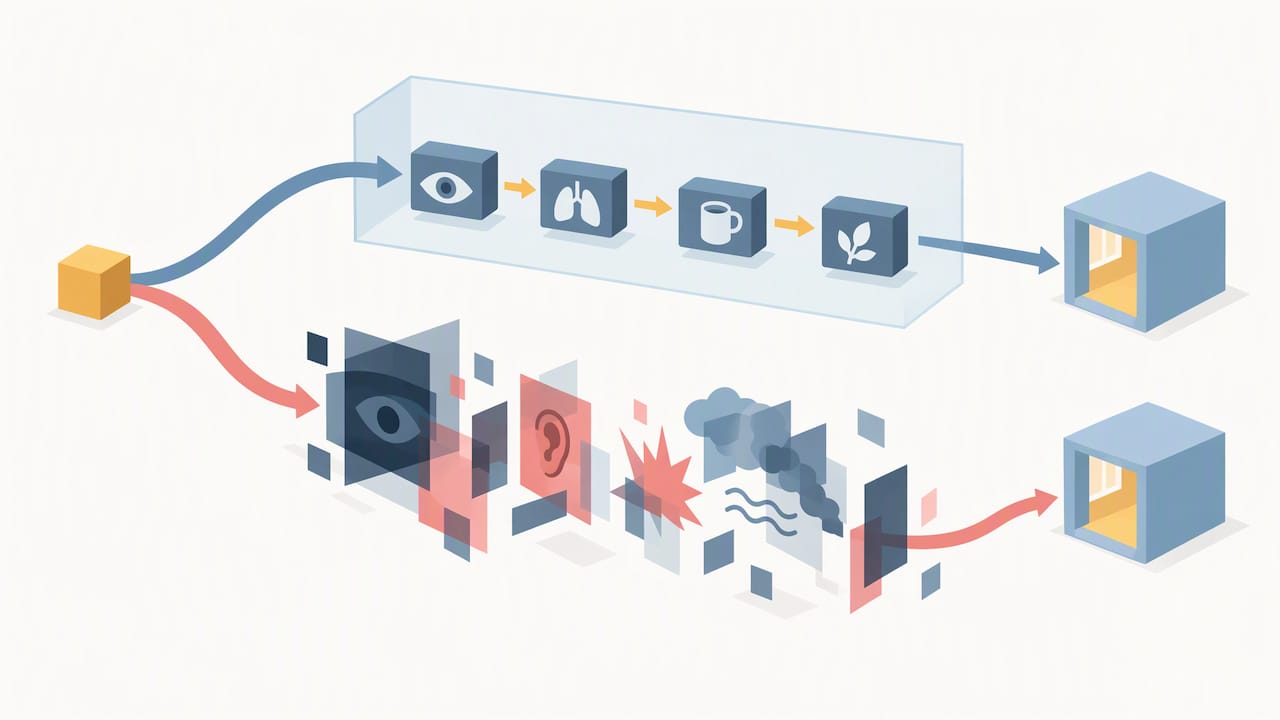
- Flashbacks involve vivid, multisensory re-experiencing that feels like the traumatic event is happening again, often lasting longer than triggers.
- During a flashback, sensory details are more intense, and awareness of the present can blur, unlike with triggers where the present remains clear.
- Grounding techniques like naming objects and reminding yourself of the current date are effective in interrupting flashbacks, but severe episodes may require professional help.
- Persistent or worsening flashbacks, especially with suicidal thoughts or substance reliance, signal the need for structured clinical treatment.
Table of Contents
- What is a trauma trigger?
- What is a flashback, and why does it feel like it’s happening now?
- How to tell a trigger from a flashback in the moment
- What typically causes triggers and flashbacks
- What to do during a flashback, and how to support someone else
- When to seek professional help and what treatment involves
- Why the trigger-flashback distinction shapes treatment
- How ReviveHealthTherapy supports trauma recovery
- FAQ
- Sources
What is a trauma trigger?
A trauma trigger, sometimes called a trauma reminder, is any cue connected to a past traumatic event that stirs up distress or a memory of that event. The National Center for PTSD describes trauma reminders broadly: they can be places, people, sounds, smells, thoughts, or feelings that bring a traumatic experience back to mind, even without warning.
Triggers fall into two rough categories. External triggers come from the environment: a car backfiring, a particular cologne, a crowded room, an anniversary date, a news story, or a specific location. Internal triggers come from inside the body or mind: a racing heartbeat, a wave of shame, a passing thought, or even a particular body position.
- A loud, sudden noise that resembles the sound present during the original trauma.
- A smell, like cigarette smoke or a certain perfume, tied to the event or the person involved.
- An internal sensation, such as a tight chest or shallow breathing, that mirrors how the body felt during the trauma.
Not every trigger leads to a flashback. The same cue can produce anxiety, irritability, a strong urge to avoid the situation, or a spike in physical arousal without any full re-experiencing of the past. Recognizing a trigger for what it is, rather than assuming something is wrong with you for reacting, is often the first step toward managing it.
What is a flashback, and why does it feel like it’s happening now?
A flashback is a specific kind of re-experiencing symptom in which fragments of the traumatic memory intrude on the present as if the event were happening again. According to a BJPsych Advances review, flashbacks are considered uniquely characteristic of post-traumatic stress disorder and involve vivid, multisensory re-experiencing that is decontextualized, meaning it arrives stripped of its original time and place.
That decontextualization is why a flashback feels present-tense rather than like an old memory. The same review explains that traumatic perceptual fragments get retrieved without the surrounding context that would normally mark them as “in the past,” and that effective treatment works by restoring that time-and-place context so the memory’s intensity fades.
Flashbacks exist on a spectrum rather than a single fixed experience:
- A brief, fleeting intrusive image or sound that passes within seconds.
- A longer episode involving sights, sounds, smells, and bodily sensations tied to the trauma.
- A full dissociative reliving in which someone temporarily loses touch with their current surroundings.
Someone can still state the correct date or recognize their living room during a flashback and still be having one. Partial orientation to the present does not rule out re-experiencing; clinicians look at sensory vividness, duration, and the person’s own sense of “it’s happening again” rather than relying on orientation alone.
How to tell a trigger from a flashback in the moment
Several practical signals separate the two, and noticing them helps you choose the right response.
- Cue versus response: a trigger is the external or internal cue itself; a flashback is one possible reaction to that cue, not the cue.
- Sensory vividness: a trigger produces discomfort or alertness, while a flashback brings sensory detail (images, sounds, physical sensations) that feels replayed rather than remembered.
- Time and place awareness: with a trigger, you generally know you’re in the present; with a flashback, that sense of “now” can blur or disappear entirely.
- Duration: triggers tend to cause a spike that settles within minutes; flashbacks can last anywhere from seconds to much longer, especially in more severe episodes.
- Typical behavior: a trigger might prompt avoidance or irritability; a flashback often prompts freezing, flinching, or sudden disorientation.
Consider two people who hear the same car alarm. One feels a jolt of irritation and moves away, a classic triggered response without re-experiencing. The other suddenly sees fragments of a car accident, feels their body tense as if bracing for impact, and loses track of where they are for several seconds. Same cue, different response, because trauma history, nervous system state, and context all shape the outcome.
A flashback is one of several re-experiencing symptoms described in NIMH’s PTSD overview, alongside recurring distressing memories and nightmares, which is why clinicians assess the full symptom picture rather than relying on a single episode.
When you’re deciding what to do in real time, ask yourself whether you feel uncomfortable but oriented (likely a trigger response, where grounding and distraction often help) or whether you feel pulled into the past (likely a flashback, where active grounding and, afterward, professional support matter more).
What typically causes triggers and flashbacks
Trauma reminders can come from almost any sensory or situational detail connected to the original event. Sensory cues include sounds, smells, textures, and specific colors or lighting. Contextual cues include anniversaries, specific locations, certain relationships, or media coverage of similar events. Internal cues include stress, physical pain, fatigue, or even positive arousal that happens to mimic the body’s trauma response.
- Anniversaries of the traumatic event or related dates tend to raise reactivity for many people.
- Sleep loss and chronic stress lower the threshold at which a cue produces a strong reaction.
- Substance use can blunt coping skills while also increasing emotional volatility.
- Cumulative, ongoing stress, such as a difficult work period or family conflict, can stack on top of trauma history and intensify responses.
Two people with similar trauma histories can react very differently to the same cue, shaped by factors like how much time has passed, whether they’ve had treatment, their current support system, and their baseline stress level. There’s no fixed formula for what will or won’t trigger a response, which is part of why self-judgment rarely helps and self-awareness does.
What to do during a flashback, and how to support someone else
When a flashback hits, the goal is to interrupt the sense of reliving and reconnect with the present. The National Center for PTSD’s coping guidance outlines steps that are safe to try in the moment:
- Keep your eyes open and look around the room, naming a few objects you see.
- State out loud where you are and what today’s date is, to re-anchor yourself in the present.
- Remind yourself that the trauma happened in the past and is not happening now.
- Move your body if it’s safe to do so, such as standing up or walking to another room.
- Drink water or splash cool water on your hands, which can help interrupt the physical state.
- Reach out to someone you trust once the acute moment passes.
Pro Tip: Pair a grounding phrase (“I am safe, it is 2026, I am in my kitchen”) with a physical action, like pressing your feet into the floor, so your mind and body reorient together.
If you’re supporting someone else, ask them ahead of time, during a calm moment, what helps and what doesn’t. Offer a steady, calm presence rather than pressing them to describe what’s happening, and never touch someone without clear consent, since unexpected contact can intensify a flashback. Give space if that’s what they’ve asked for, and avoid questions that demand a detailed account mid-episode.
Self-help steps have limits. If a flashback includes thoughts of self-harm, lasts an unusually long time, or happens alongside a medical emergency, that calls for emergency services rather than grounding techniques alone.
When to seek professional help and what treatment involves
Certain signs suggest it’s time to bring in a clinician rather than managing alone: flashbacks that interfere with work, relationships, or daily functioning, episodes that are frequent or increasingly intense, thoughts of suicide, or reliance on substances to cope.
NIMH’s overview of PTSD names several evidence-based treatment approaches used for re-experiencing symptoms, including cognitive processing therapy (CPT), prolonged exposure (PE), and other trauma-focused cognitive behavioral approaches. EMDR is also widely used and works through a structured protocol that helps the brain reprocess traumatic memories; you can read more about how EMDR works and how it compares with exposure-based approaches.
Treatment isn’t one-size-fits-all. According to an APA Monitor piece on complex trauma, many clients benefit from building stabilization and coping skills before diving into memory-focused processing work, and clinicians adjust pacing to match where a client is. For a broader look at what sessions typically involve, our overview of PTSD therapy options covers what to expect, and care is available through telehealth or in-person sessions, often with sliding-scale or insurance-based pricing.
- Functional impairment at work, school, or in relationships is a clear signal to seek support.
- Frequent or intense flashbacks, rather than occasional mild triggers, point toward needing structured treatment.
- Suicidal thoughts or escalating substance use call for prompt professional involvement.
Why the trigger-flashback distinction shapes treatment
Separating triggers from flashbacks isn’t just an academic exercise. It guides how we assess risk, choose a treatment pace, and decide whether someone needs grounding skills first or is ready for memory-focused work. Clients who are flooded by frequent, intense flashbacks often need stabilization before processing trauma directly, while those dealing mainly with triggered distress may move into trauma-focused work sooner. Recovery is rarely linear, but understanding this difference gives both the client and the clinician a clearer map of where to start.
— Amy
How ReviveHealthTherapy supports trauma recovery
If what you’ve read here resonates, trauma-informed therapy can help you build a personalized plan rather than guessing at what might work. We offer individual therapy grounded in evidence-based approaches like EMDR and CBT, delivered through telehealth and in person, with sliding-scale fees and insurance or HSA/FSA acceptance to keep care within reach.
- We match you with a clinician experienced in trauma-informed care during a brief intake conversation.
- We offer various evidence-based treatments, so your treatment plan fits your specific symptoms and pace.
- We schedule sessions around your availability, whether in person or via telehealth.
Ready to take the next step? Visit our therapy services page to see your options and book an appointment.
This article is general information, not a substitute for advice from a qualified doctor. Consult a qualified healthcare professional about your own circumstances before acting on anything here.
FAQ
What are the symptoms of CPTSD emotional flashbacks?
Emotional flashbacks involve intense feelings, such as shame, fear, or helplessness, that surface without a clear visual memory attached, often tied to complex trauma from prolonged or repeated exposure. For a deeper breakdown of how complex trauma symptoms differ from single-incident PTSD, see our guide to complex PTSD.
How can you help someone come out of a flashback?
Calmly remind the person of the current date, location, and that the trauma is in the past, while encouraging them to look around the room and name familiar objects. Offer water, gentle movement, and a steady presence, and avoid touching them without asking first, since unexpected contact can heighten distress during the episode.
What should you avoid doing with someone who has PTSD?
Avoid pressuring someone to describe their trauma in detail, touching them without consent, or dismissing their reaction as an overreaction. Creating predictable routines and asking in advance what support they prefer tends to work better than improvising during a stressful moment.
What are common symptoms of a PTSD episode?
Common symptoms include intrusive memories or flashbacks, intense physical reactions like a racing heart, avoidance of reminders, negative shifts in mood, and heightened alertness or startle responses. The NIMH overview of PTSD groups these into re-experiencing, avoidance, negative mood, and hyperarousal clusters.
Sources
- Flashbacks uniquely characterise post-traumatic stress disorder: distinguishing flashbacks from other psychological processes and phenomena | BJPsych Advances
- Trauma reminders: Triggers – PTSD: National Center for PTSD
- When trauma becomes complex | APA Monitor (March 2025)
- Post-Traumatic Stress Disorder (PTSD) – NIMH