
Feeling stuck with anxiety or past trauma can make it difficult to move forward, especially when support feels out of reach in California. Defining your therapy goals is more than a simple checklist—it serves as the foundation for effective treatment and emotional growth. By focusing on goal setting as a foundational part of recovery, you set yourself up to get the most from affordable, evidence-based options like EMDR or other therapies that truly fit your needs and life.
Table of Contents
- Step 1: Clarify Your Therapy Goals And Needs
- Step 2: Research Evidence-Based Therapy Options
- Step 3: Evaluate Affordable And Accessible Providers
- Step 4: Contact And Schedule With A Therapist
- Step 5: Prepare For Your First Therapy Session
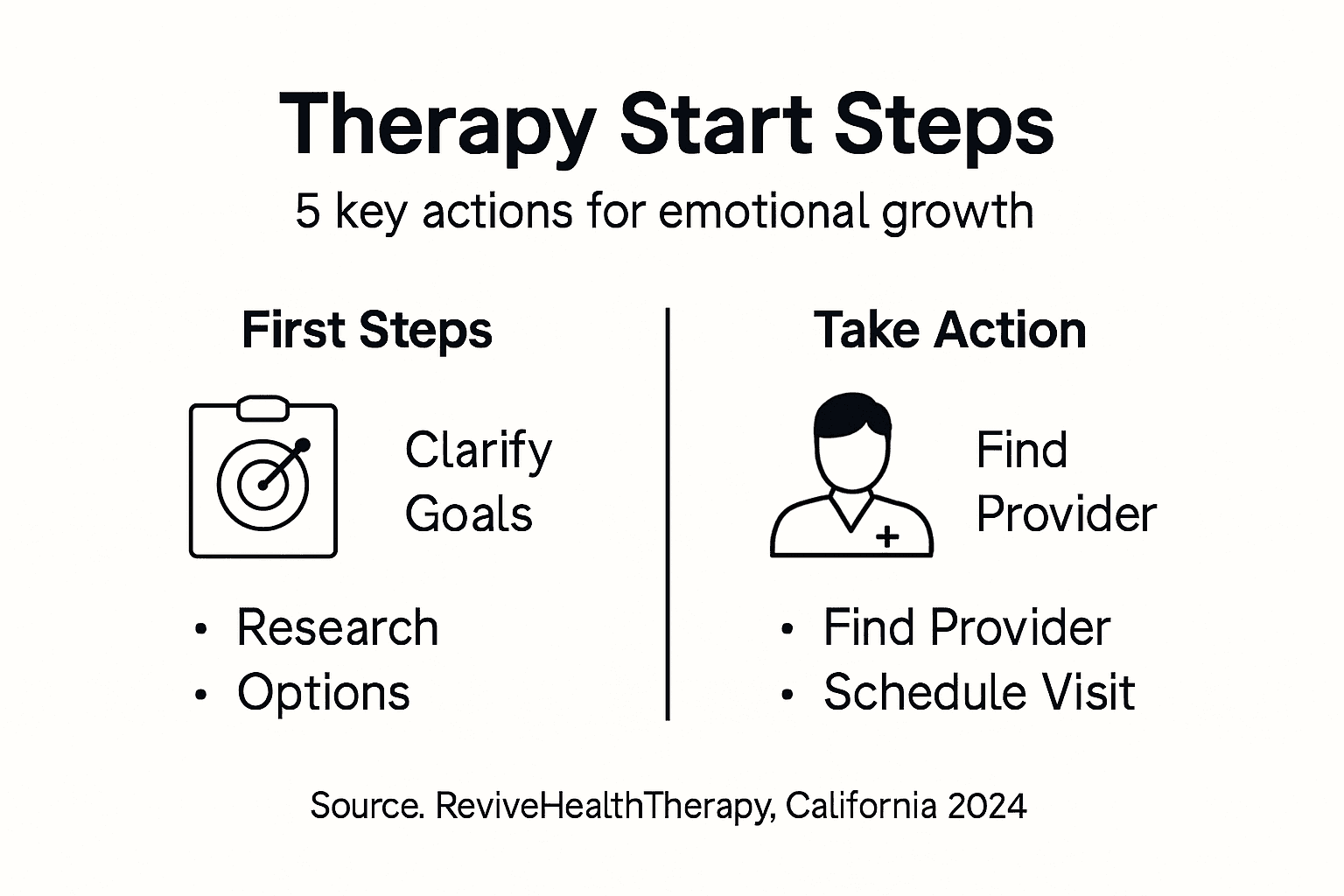
Quick Summary
| Key Point | Explanation |
|---|---|
| 1. Clarify Your Therapy Goals | Identify specific issues to address in therapy for focused progress and effective use of time with your therapist. |
| 2. Research Evidence-Based Therapies | Explore proven therapeutic methods like CBT, EMDR, and DBT to find the best fit for your specific challenges and needs. |
| 3. Evaluate Providers for Accessibility | Consider cost, insurance acceptance, and telehealth options to ensure you choose a therapist that fits your lifestyle and budget. |
| 4. Prepare for Your First Session | Reflect on key points about your struggles and desired outcomes to set the stage for a productive first meeting with your therapist. |
| 5. Make Initial Contact | Reach out to therapists and be transparent about your needs to ascertain if they are a good fit before scheduling an appointment. |
Step 1: Clarify your therapy goals and needs
Before you schedule your first appointment, take time to identify what you actually want to work on in therapy. This step shapes everything that comes next. Your goals become the roadmap your therapist uses to guide the process, and they directly influence which therapeutic approach works best for your situation. Whether you’re dealing with anxiety that disrupts your sleep, trauma from past experiences, relationship struggles, or simply wanting to understand yourself better, clarity around your needs matters. Many people arrive at their first session with vague ideas like “I want to feel better,” but the more specific you can be, the more focused and effective your therapy becomes.
Think about what’s currently causing you the most distress or what’s holding you back from living the life you want. Is it panic attacks that hit without warning? Difficulty trusting people after a difficult experience? Arguments that keep repeating with your partner? Overwhelming stress from your job? Write down specific situations where you struggle. Instead of “I’m anxious,” try “I get anxious in social settings and avoid going out, which isolates me from friends.” This level of detail helps. Next, consider what success looks like for you personally. Not what you think you should want, but what would actually improve your daily life. Some people prioritize symptom reduction (fewer panic attacks, less intrusive thoughts), while others focus on behavioral changes (having more fulfilling relationships, getting back to hobbies, being more present with family). Both are valid goals. Goal setting is foundational to emotional growth and recovery, and your therapist will help you refine these into specific, achievable milestones you can actually measure.
You might also consider whether you prefer working with someone who specializes in specific techniques. If you’ve heard about EMDR for trauma or CBT for anxiety, mention these interests. California therapists use various evidence-based approaches, and knowing what draws you can help your therapist determine if it’s a good fit. Additionally, think about practical factors like whether you need telehealth sessions for flexibility, if cost is a major concern, or whether you have specific insurance coverage. When you start individual therapy, these details help ensure you’re matched with someone who can truly support your growth.
Pro tip: Write down your three biggest challenges and one specific change you want to see within the next three months, then bring these notes to your first session so you stay focused and can reference them as you progress.
Step 2: Research evidence-based therapy options
Now that you know what you want to work on, it’s time to explore which therapy approaches actually work for your specific concerns. Not all therapies are created equal, and the difference between evidence-based options and unproven methods can significantly impact your results. Evidence-based therapies have undergone rigorous scientific research demonstrating their effectiveness, which means you’re investing your time and money in approaches with real track records. California has excellent access to these proven methods, so you have genuine options to choose from based on what resonates with you and your goals.
Start by researching the main evidence-based approaches that address your specific challenges. If you’re dealing with anxiety or depression, Cognitive Behavioral Therapy (CBT) has decades of research supporting its effectiveness and teaches you practical skills to change thought patterns that fuel your struggles. Dialectical Behavior Therapy (DBT) works exceptionally well for emotional regulation and is particularly helpful if you experience intense emotions or relationship difficulties. For trauma specifically, Eye Movement Desensitization and Reprocessing (EMDR) has strong scientific support and helps process traumatic memories in ways traditional talk therapy sometimes misses. Acceptance and Commitment Therapy (ACT) focuses on helping you accept uncomfortable feelings while committing to meaningful actions, making it valuable for anxiety and chronic stress. Mindfulness-based approaches have also gained substantial research backing for their impact on anxiety and depression, often integrated into other therapies rather than used alone. Each approach targets different aspects of what you’re experiencing, so matching the right therapy to your needs matters. Someone processing childhood trauma might benefit more from EMDR than someone struggling with daily worry patterns, though there’s often overlap and therapists may blend techniques.
Take time to read about these options and notice which ones spark interest or feel like they address what you’re going through. Many therapists in California are trained in multiple evidence-based modalities and can adapt their approach based on what works best for you. When you’re ready to connect with a therapist, mention which approaches appeal to you. They’ll discuss how those techniques fit your situation and be transparent about what research shows regarding effectiveness for your particular concerns. Don’t hesitate to ask questions about their training, experience, and success rates with people who have similar challenges to yours. This research phase helps you move forward with confidence, knowing you’re choosing a path backed by science rather than guesswork.
Here’s an overview of leading evidence-based therapy modalities, their main focus, and recommended use cases:
| Therapy Approach | Main Focus | Best For |
|---|---|---|
| CBT | Thought and behavior change | Anxiety, depression |
| DBT | Emotional regulation | Intense emotions, relationships |
| EMDR | Trauma processing | PTSD, traumatic memories |
| ACT | Acceptance, values-based actions | Chronic stress, anxiety |
| Mindfulness-Based | Present moment awareness | Anxiety, mood improvement |
Pro tip: Create a comparison document listing the therapy types that interest you, your main symptoms they address, and note which therapists you find mention training in those specific modalities when you begin searching for providers.
Step 3: Evaluate affordable and accessible providers
Finding the right therapist means more than just matching therapy types to your needs. You also need to find someone whose services fit your budget and schedule. In California, cost and accessibility are real barriers that keep many people from starting therapy, but you have more options than you might think. The goal in this step is to identify providers who offer the affordability and access formats that work for your life, whether that means sliding scale fees, insurance acceptance, telehealth availability, or evening appointments.

Start by clarifying your financial situation and insurance coverage. Do you have health insurance that covers mental health services? If so, check what your plan actually pays for by calling the number on your insurance card or logging into your online portal. Ask specifically about copays, deductibles, and whether the plan covers therapy in your area. Many people are shocked to discover they have decent coverage they never knew about. If you don’t have insurance or your coverage is limited, don’t assume therapy is out of reach. Many California therapists offer sliding scale fees based on income, meaning you pay what you can actually afford. Some practices also accept HSA and FSA funds, which can stretch your healthcare dollars further. Take time to research therapists who explicitly mention affordable options in their descriptions rather than guessing whether they might work with you. Then consider whether you need in-person sessions or if telehealth works better for your situation. Telehealth offers genuine flexibility for people juggling work, childcare, or transportation challenges. Some people live far from therapy offices or have mobility issues that make in-person appointments difficult. Telehealth removes those barriers. Therapists practicing statewide through secure telehealth can serve you regardless of where you live in California, which dramatically expands your choices and increases your odds of finding someone who specializes in what you need and offers rates you can sustain.
When you’re evaluating specific providers, ask about their actual availability, not just their theoretical hours. Can they see you when you actually have free time? Do they have cancellation policies that work for your life? Are they accepting new clients, or do they have a waiting list? Getting clear answers to these practical questions prevents frustration later. You can also ask about their experience with your specific concerns and whether they’ve helped people with situations similar to yours. This conversation helps you gauge whether they’re a genuine fit before committing. Remember that your first session is often an opportunity to assess compatibility. If something feels off or you don’t connect with a therapist, you can look for someone else. Finding the right match sometimes takes trying a few providers, and that’s completely normal and acceptable.
Pro tip: Before scheduling, create a simple spreadsheet listing providers’ names, their costs, accepted insurance, telehealth availability, and first appointment wait times so you can compare options side by side and make a confident decision.
Here are practical factors to consider when evaluating a therapist’s affordability and accessibility:
| Criteria | Why It Matters | Example Considerations |
|---|---|---|
| Insurance Accepted | Lowers out-of-pocket cost | Coverage, copays, network status |
| Sliding Scale Fees | Makes therapy accessible | Fee structure based on income |
| Telehealth Option | Adds more flexibility | Remote access, statewide reach |
| Appointment Times | Fits your real schedule | Evening hours, waitlist, cancellations |
Step 4: Contact and schedule with a therapist
You’ve done your homework, identified what you need, researched your options, and found providers that fit your budget and schedule. Now comes the moment to actually reach out. Making that first contact can feel like a big step, but most therapists have streamlined this process to make it as simple and welcoming as possible. When you contact a therapist or therapy practice, expect to have a brief initial conversation or screening where you share basic information about what brought you in and what you’re hoping to work on.
Start by choosing your preferred contact method. Many therapists offer phone, email, or online contact forms through their websites. Phone calls can feel more personal and direct, especially if you want to ask questions before committing to a first session. If talking on the phone makes you anxious, email or a contact form might feel better. There’s no wrong choice here. When you make contact, be honest about what you’re experiencing and what you’re looking for. You don’t need to share your entire life story at this point, but mentioning your main concerns helps the therapist understand if they’re a good fit and what to prioritize in your first session. For example, you might say something like “I’m dealing with anxiety that’s affecting my sleep and work performance,” or “I experienced trauma five years ago and want to work through it with EMDR if possible.” Being specific helps. Initial intake screenings typically involve a brief phone or online assessment where you discuss your needs and the therapist or their staff confirms availability and matches you with the right person. During this conversation, ask about their rates, insurance acceptance, session length, and cancellation policies to confirm everything aligns with what you discovered during your research. This is also when you can ask about their experience with your specific concerns and whether they think they’re a good match for you.
Once you’ve confirmed the logistics, schedule your first appointment. Most practices will offer you several time options or ask you to check their online availability. If the first available time doesn’t work for your life, say so and ask about alternatives. Don’t force yourself into an appointment time that creates stress before you’ve even started therapy. After scheduling, the practice typically sends you confirmation details, any intake forms to complete beforehand, and information about how to connect if it’s a telehealth session. Complete those forms thoughtfully since they help your therapist understand your background and prepare for your first meeting. Before your first session, take a moment to jot down any questions you want to ask and remind yourself that this is a mutual fit situation. You’re interviewing them as much as they’re assessing you. If you click with your therapist, fantastic. If something feels off after the first session or two, you can absolutely look for someone else. Starting therapy is a commitment to your growth, and that commitment matters more than sticking with a provider who doesn’t feel right.
Pro tip: Schedule your first appointment for a time when you’re not rushing or stressed, ideally when you have some breathing room afterward to process the experience and maybe journal about what came up.
Step 5: Prepare for your first therapy session
Your first appointment is almost here. This is the moment where therapy shifts from planning to action. Some nervousness is completely normal. Many people worry about what to say, how to start, or whether they’ll “do therapy right.” The truth is there’s no wrong way to show up for your mental health. Preparation doesn’t mean having everything figured out or presenting a polished version of yourself. It means taking a few practical steps to get the most out of that initial time with your therapist.
Start by thinking about what you want your therapist to know about you. You don’t need to write a memoir, but jotting down a few key points helps. What are your main concerns right now? What’s been happening that made you decide to seek therapy now? How long have you been struggling with this? Are there specific situations or triggers that make things worse? If you have relevant history like past trauma, family patterns, or previous therapy experiences, note those too. This information helps your therapist understand your context and build rapport faster. You might also think about what you hope to achieve in the next three months, six months, and a year from now. These timelines give your therapist a sense of your priorities and help shape the work you’ll do together. During your first session, you won’t need to cover everything at once. Think of the first appointment as an introduction where you and your therapist get to know each other and establish the foundation for ongoing work.
Next, take care of the logistics. Know exactly how you’re connecting with your therapist. If it’s telehealth, test your internet connection, camera, and audio beforehand. Make sure you’re in a quiet, private space where you can talk openly without interruptions. If it’s in-person, plan your route so you arrive a few minutes early and have time to settle in. Bring your insurance card if you’re using insurance, and any intake paperwork you didn’t complete online. If you’re paying out-of-pocket or using a sliding scale, confirm the amount and payment method in advance. Knowing these details prevents distracting logistics stress during your session. Before you go in, take a few deep breaths and remind yourself why you’re doing this. You’re investing in your wellbeing and emotional growth. That takes courage. Your therapist has worked with people facing situations similar to yours. They’re not there to judge you. They’re there to listen, understand, and help you move forward. When you walk into that session, bring your honest self. Talk about what’s really going on, not what you think you should say. The more authentic you are, the more your therapist can actually help you. If something feels unclear during the session, ask questions. Good therapists welcome questions and want you to feel comfortable and understood.
Pro tip: The night before your appointment, avoid making big plans or decisions so you have mental space to focus on your session, and plan something gentle for afterward like a walk or journaling to process what emerges.
Take the First Step Toward Emotional Growth with Expert Support
Starting therapy in California can feel overwhelming when you are facing anxiety, trauma, or relationship challenges. You want clear goals, proven approaches like EMDR or CBT, and a therapist who understands your unique story and schedule. If cost and accessibility concerns hold you back, you are not alone. Many people struggle to find effective, affordable mental health care that fits their busy lives.
At ReviveHealthTherapy we specialize in evidence-based psychotherapy that is trauma-informed and tailored to your needs. Our therapists offer flexible telehealth sessions across California and in-person support in Walnut Creek and Oakland. We accept insurance, provide sliding scale fees, and accept HSA/FSA plans to make therapy accessible without added financial stress.

Ready to clarify your therapy goals and find a trusted professional who can help you achieve meaningful change? Visit our Uncategorized – ReviveHealthTherapy page for insights and then take advantage of a free 20-minute consultation by filling out this quick form. Start your emotional growth journey today with personalized care that meets you where you are.
Frequently Asked Questions
How do I clarify my therapy goals before starting?
Start by identifying specific challenges you face, like anxiety or relationship issues, and write them down. Consider what success looks like for you, such as wanting to reduce panic attacks or improve communication skills in relationships.
What evidence-based therapy options should I consider for emotional growth?
Research modalities like Cognitive Behavioral Therapy (CBT), Dialectical Behavior Therapy (DBT), or Eye Movement Desensitization and Reprocessing (EMDR), as each targets different emotional challenges. Choose based on which approach resonates with your specific needs, such as anxiety, trauma, or emotional regulation.
How can I find affordable therapy options in California?
Look for therapists who accept your insurance or offer sliding scale fees based on income. Research online for practices that clearly mention their rates and funding options to ensure the therapy fits within your budget.
What should I expect when I contact a therapist for the first time?
Anticipate a brief conversation where you’ll share your main concerns and gather information regarding rates and availability. Prepare to discuss your emotional challenges honestly, which helps the therapist determine if they are a good fit for you.
How can I prepare for my first therapy session?
To prepare, jot down key points about your emotional challenges and goals for therapy. Consider handling logistics, like checking your connection for a telehealth session and arriving early for an in-person meeting, to create a calm environment for discussion.
What if I don’t connect with my therapist after the first session?
It’s perfectly okay to seek a different therapist if the fit doesn’t feel right. Remember that finding the right match may take time, so feel free to try a few providers until you find someone who truly understands your needs.
2 Responses