
Struggling with anxiety or depression can leave you feeling overwhelmed, especially when finding affordable therapy that genuinely fits your needs in California. Deciding between trauma-focused approaches like EMDR and mindfulness techniques means considering more than just price or insurance. Having good rapport with a therapist is the most important factor in therapy outcome, so clarifying your goals and preferences early helps you connect with someone who understands your journey and supports lasting progress.
Table of Contents
- Step 1: Clarify Your Therapy Goals And Preferences
- Step 2: Research Therapists’ Qualifications And Specialties
- Step 3: Verify Licensing And Trauma-Informed Credentials
- Step 4: Compare Affordability, Insurance, And Scheduling Options
- Step 5: Schedule A Consultation To Confirm The Right Fit
Quick Summary
| Key Point | Explanation |
|---|---|
| 1. Define Your Therapy Goals | Clarify specific symptoms and outcomes you want from therapy to guide your search for the right therapist. |
| 2. Research Therapist Qualifications | Investigate the education and specialties of potential therapists to ensure they are qualified to address your specific needs. |
| 3. Verify Licensing Credentials | Confirm a therapist’s credentials through official databases to ensure they’re legally authorized to practice therapy. |
| 4. Evaluate Affordability and Availability | Understand your financial options and scheduling needs to maintain consistent therapy attendance without overspending. |
| 5. Schedule Initial Consultations | Meet potential therapists to assess compatibility and ensure their approach aligns with your goals before committing. |
Step 1: Clarify your therapy goals and preferences
Before you even schedule that first appointment, spend some time getting clear on what you actually want from therapy. This isn’t about having everything figured out, but rather understanding what brought you to seek help in the first place. Are you dealing with anxiety that keeps you awake at night? Depression that makes getting out of bed feel impossible? Trauma that still affects your relationships? Or maybe you’re looking to build better coping skills for stress? Getting specific about this matters because your goals will guide everything else about choosing the right therapist for you.

Start by writing down what symptoms or behaviors you want to change. If anxiety is your concern, describe how it shows up in your life. Does it hit you in social situations? During work presentations? At random moments when you’re trying to relax? The more specific you are, the better a therapist can determine if they’re equipped to help. Next, think about what success looks like to you. For some people, that means reducing panic attacks from five times a week to once a month. For others, it’s being able to have conversations without analyzing every word or managing intrusive thoughts that derail your focus. Clarifying what relief from symptoms looks like helps you measure progress and know when you’re moving in the right direction. You should also consider what type of therapy approach appeals to you. Are you drawn to trauma-focused work like EMDR, which directly processes past events? Or do you prefer mindfulness-based approaches that help you observe thoughts without judgment? Your personal preferences matter because having good rapport with a therapist is the most important factor in therapy outcome, and that rapport develops faster when you’re working with someone whose approach resonates with you.
Consider practical preferences too. Do you need affordability because you’re managing on a limited budget? Are you looking for in-person sessions or does telehealth work better with your schedule? Some people prefer working with a therapist who specializes in their specific concern, while others care more about finding someone who understands their cultural background or life experience. If cost is a barrier, look for therapists offering sliding scale fees or accepting insurance and HSA/FSA plans, which can make individual therapy more accessible. Write all this down, not because you need a perfect list, but because you’ll reference it when you’re evaluating potential therapists. This clarity keeps you grounded when you’re researching options and helps you ask informed questions during initial consultations.
Pro tip: Create a simple one-page summary of your top three goals and your preferred therapy approach, then bring it to your first therapy session so both you and your therapist are on the same page from day one.
Step 2: Research therapists’ qualifications and specialties
Not all therapists are trained the same way, and not all are equipped to treat what you’re dealing with. This step is about getting into the specifics of who’s qualified to help you. The mental health field includes various mental health professionals such as psychiatrists, psychologists, social workers, and counselors, each with different training backgrounds and areas of expertise. A psychiatrist has a medical degree and can prescribe medication. A psychologist typically holds a doctoral degree in psychology and specializes in behavioral and cognitive approaches. A licensed clinical social worker (LCSW) brings training in both therapy and social systems. A licensed professional counselor (LPC) has specialized training in counseling techniques. Understanding these differences matters because the right credential combined with the right specialty can make the difference between therapy that helps and therapy that misses the mark.
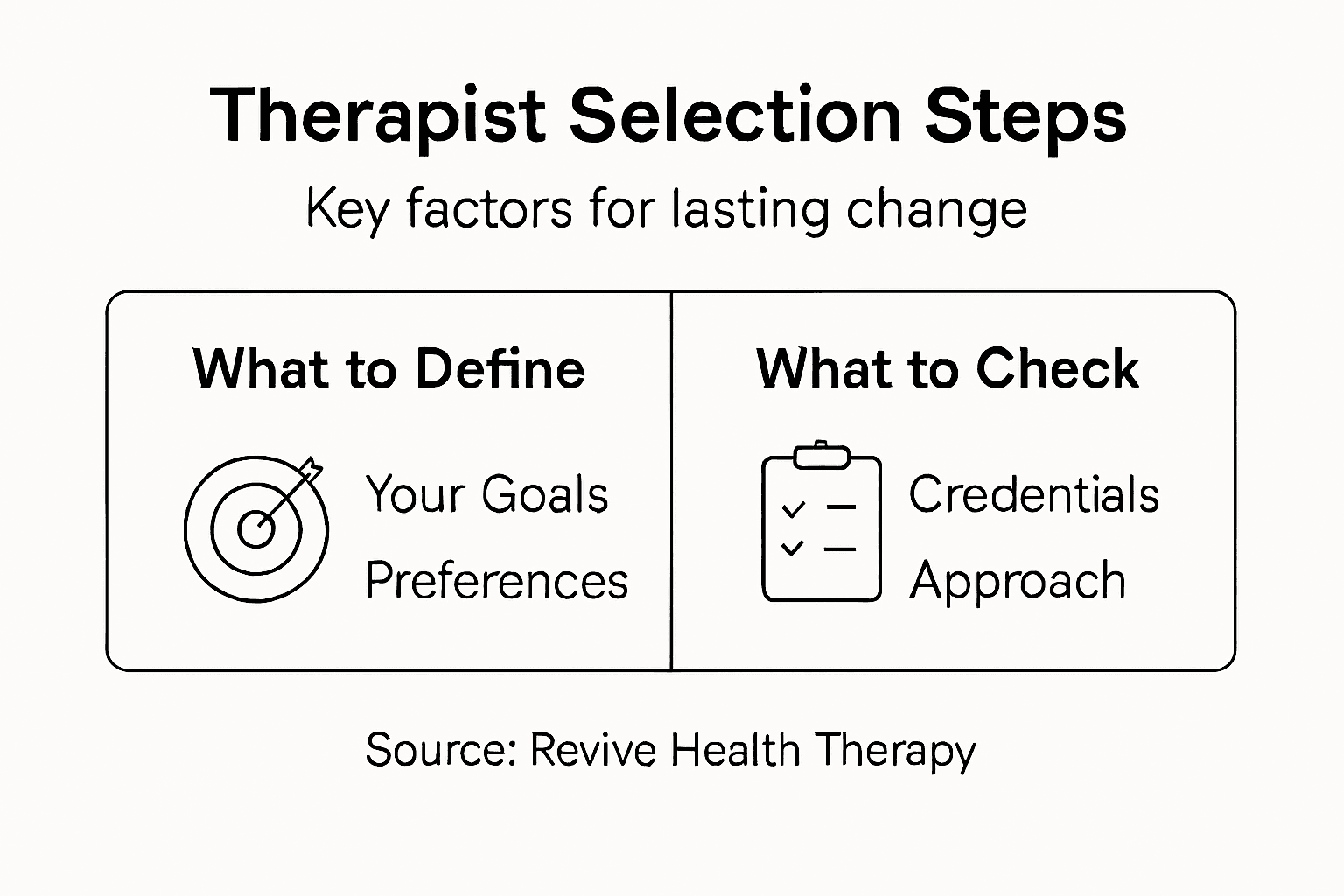
Here’s a quick comparison of common mental health professionals and their core qualifications:
| Title | Education & Training | Can Prescribe Medication? | Typical Focus |
|---|---|---|---|
| Psychiatrist | Medical degree (MD or DO), psychiatry residency | Yes | Medication management, medical issues |
| Psychologist | Doctorate in psychology (PhD or PsyD) | No | Assessment, therapy, research |
| LCSW | Master’s in social work, clinical license | No | Therapy, social support systems |
| LPC | Master’s in counseling, professional license | No | Counseling, talk therapy, coping skills |
Once you know the basic credential types, focus on specialty areas. If you’re dealing with trauma, you want someone trained in trauma-focused approaches like EMDR or cognitive processing therapy. For anxiety, you might seek someone skilled in cognitive behavioral therapy (CBT) or trauma treatment and specialized therapeutic approaches. For depression paired with relationship strain, a therapist trained in both individual and couples work could be valuable. Specialties matter because therapists undergo different training paths depending on their focus, and that specialized education translates directly into how well they can help you. When you’re researching, look at their education, certifications, and any post-graduate training they’ve completed. Many therapists list these details on their websites or in online directories. Don’t just assume credentials without verification, though. California has licensing boards you can check to confirm someone’s credentials are current and in good standing.
Beyond credentials and specialties, pay attention to whether a therapist’s approach aligns with what you want. Some therapists emphasize mindfulness and present-moment awareness. Others are more directive and goal-focused. Some integrate body-based work. You’re looking for someone whose method matches both your needs and your personality. If you’ve identified that you want EMDR or mindfulness-based therapy from the previous step, use that information now to filter your options. Reading therapist bios, their training descriptions, and any articles or content they’ve published gives you insight into how they think about therapy and what matters to them professionally. This research phase takes time, but it’s time well spent because you’re building a shortlist of candidates who actually have the training and specialties you need.
Pro tip: Check the California Department of Consumer Affairs licensing verification database to confirm credentials, then cross-reference each therapist’s listed specialties with your specific goals from Step 1 to create a ranked shortlist of three to five candidates.
Step 3: Verify licensing and trauma-informed credentials
This is the step where you move from research mode into verification mode. You need to confirm that a therapist’s credentials are actually legitimate and current, not just claimed on a website. California has specific regulatory bodies that maintain official records, and checking them takes just a few minutes but gives you tremendous peace of mind. The California Board of Behavioral Sciences offers a primary source license verification system for therapists including LMFTs, LCSWs, and LPCCs. This isn’t optional due diligence. This is the official way to confirm that someone is legally authorized to practice therapy in California and has no disciplinary actions on their record.
When you visit the California Board of Behavioral Sciences website, you’ll find their license verification tool. Enter the therapist’s name and look for their current license status. The verification will show you their license type, when it was issued, and whether it’s active. This is also where you can see if there have been any complaints or disciplinary actions taken against them. Yes, checking this feels a bit intense, but consider it part of vetting someone you’ll be trusting with your most vulnerable thoughts and experiences. Beyond the basic license check, pay attention to trauma-informed care training or certifications. Many therapists list additional certifications like EMDR training, Trauma-Focused CBT certification, or mindfulness-based stress reduction credentials. These indicate specialized preparation for working with trauma and anxiety, which aligns with what you’re seeking. The Board of Behavioral Sciences maintains that professional standards require trauma-informed care training as part of behavioral health professional requirements, so ask directly if a therapist has completed this training if it’s not clearly listed.
Don’t hesitate to reach out and ask therapists directly about their credentials and training. A legitimate therapist will welcome the question and provide clear answers about their education, licenses, and specializations. If someone seems evasive or defensive about credentials, that’s a red flag. Also ask specifically whether they have experience treating anxiety and depression with the approaches you identified in Step 1, whether that’s EMDR, mindfulness-based work, or something else. This conversation also gives you a feel for how they communicate and whether you sense the rapport that matters so much for therapy success. Once you’ve verified licensing and confirmed trauma-informed training, you’re ready to move toward scheduling consultations with your top candidates.
Pro tip: Before scheduling a full first session, request a brief phone consultation with each finalist therapist to ask about their trauma training and experience with your specific concerns, then choose based on who you felt most heard by during that conversation.
Step 4: Compare affordability, insurance, and scheduling options
Money and logistics matter in therapy. You can have the perfect therapist with ideal credentials, but if you can’t afford the sessions or schedule appointments around your life, it won’t work. This step forces you to be practical about the real constraints that affect your ability to stick with therapy long enough to see results. Cost is often the biggest barrier. Some therapists charge $150 per session, others charge $250 or more. If you have insurance, your copay might be $20 or $50 per visit, or you might have a deductible you need to meet first. If you’re uninsured or underinsured, you’ll need to understand sliding scale options, which let therapists adjust their fees based on your income. California’s Medi-Cal Managed Care plans offer mental health coverage with varying levels of affordability depending on the plan you select. Many adults in California report that rising premiums and deductibles impact access to mental health care, making it critical to compare what different therapists actually cost you out of pocket.
Start by gathering the specific financial details. Contact your insurance company and ask three questions: Which mental health providers are in network for your plan? What’s your copay for therapy sessions? Is there an annual limit on how many sessions you can have? If your insurance won’t cover much, ask therapists directly about their sliding scale fees. Many trauma-informed therapists accept sliding scales because they understand that therapy shouldn’t be available only to people with money. Also ask whether they accept HSA or FSA funds, which can effectively reduce your cost since those dollars come out before taxes. Beyond cost, ask about scheduling. Do they offer early morning appointments before work? Evening slots after 5 PM? Weekend availability? Can they do telehealth or in-person sessions? If you’re managing anxiety or depression, you might struggle to get to appointments on a rigid schedule. A therapist who offers flexibility in how and when you meet is more likely to keep you showing up. Some therapists maintain waitlists and might take weeks to see you, while others have more availability. Be direct about your scheduling needs and ask how quickly they can typically get someone started.
The following table summarizes practical questions to ask your insurance company about therapy coverage:
| Insurance Question | Why It Matters | What to Note |
|---|---|---|
| Are therapists in-network? | Determines lower out-of-pocket costs | List preferred providers |
| What is the copay per session? | Helps estimate ongoing costs | Document per visit fee |
| Annual session limit? | Prevents unplanned costs | Maximum covered visits per year |
Create a simple comparison for your top candidates. List each therapist’s name, their fee or copay, whether they take your insurance, whether sliding scale is available, and their scheduling flexibility. This isn’t romantic, but it’s realistic. You want someone skilled and qualified, but you also want someone you can actually afford and access consistently. The best therapist for your anxiety is useless if you can only afford two sessions before giving up. Once you’ve narrowed your list based on affordability and scheduling, you’re ready for the final step of actually connecting with these therapists and making your choice.
Pro tip: Ask potential therapists for their cancellation policy upfront and confirm whether missed sessions still count against insurance visit limits, since unexpected life events often disrupt early therapy schedules.
Step 5: Schedule a consultation to confirm the right fit
You’ve done the research, verified credentials, and compared costs. Now comes the moment where you actually talk to a therapist and get a sense of whether this person is right for you. A consultation, often called an intake or initial screening, is your chance to ask questions, describe what you’re dealing with, and gauge whether you feel heard and understood. This isn’t a commitment. This is you interviewing potential therapists before deciding to work with one.
When you call to schedule, be clear about what you’re looking for. Tell them you’d like to schedule an initial consultation and briefly mention what brings you in, whether that’s anxiety, depression, trauma, or a combination. Many therapists will do a brief phone screening before scheduling your first in-person or video appointment. This screening helps them understand if they’re equipped to help and if there’s basic compatibility. Scheduling an intake or consultation is the first step to confirm therapy fit and assess whether the therapist’s approach matches your goals. During the consultation itself, you’re gathering information on multiple levels. Listen to how they explain their approach. Do they reference the specific methods you wanted, like EMDR or mindfulness-based work? Do they ask thoughtful questions about your symptoms and what success looks like to you? Pay attention to whether you feel judgment or openness. A good therapist creates space for you to talk without rushing or minimizing what you’re experiencing. Notice if they explain their process clearly or if they’re vague about how therapy would work. You should also book phone, video, or in-person consultations based on your preference and availability, since the format matters to how comfortable you feel.
Bring your notes from Step 1 with you. Remind them of your goals and ask directly how they’d work toward those goals. Ask about their experience treating anxiety or depression specifically. Ask what to expect in the first few sessions and how long they typically work with clients before seeing measurable progress. Ask about their cancellation policy, how often you’d meet, and what happens if you hit a rough patch and need to pause therapy. Pay attention to your gut feeling throughout the conversation. Therapy is a relationship, and relationships require a certain chemistry. You can respect someone’s credentials while not feeling a connection. It’s okay to schedule consultations with two or three therapists before deciding. Many people find that the first one isn’t the right fit, and that’s valuable information. Once you’ve had consultations and identified someone you want to work with, you’ve essentially completed the hard part of choosing. What comes next is showing up, being honest, and giving the relationship time to develop and work.
Pro tip: Prepare three specific questions about how the therapist has treated anxiety or depression before your consultation, so you can compare responses across candidates and notice who gives detailed, experienced answers.
Find the Right Therapist in California Who Truly Understands Your Needs
Choosing the right therapist can feel overwhelming when faced with anxiety, depression, or trauma. This article highlights how clarifying your therapy goals and verifying trauma-informed care are crucial steps toward lasting change. At ReviveHealthTherapy, we recognize these challenges and specialize in evidence-based approaches like EMDR, CBT, and mindfulness tailored to your unique journey. Whether you prefer in-person sessions in Walnut Creek or Oakland, or need flexible telehealth options across California, we help remove barriers to care with sliding scale fees and insurance acceptance.

Ready to take control of your mental wellness by connecting with a trauma-informed therapist who aligns with your goals? Start by filling out this quick form for your free 20-minute consultation and experience how accessible, personalized care can make a difference today. Discover more mental health insights on our Uncategorized – ReviveHealthTherapy page to empower your therapy journey.
Take the first step now at Revive Health Therapy’s free consultation.
Frequently Asked Questions
How do I clarify my therapy goals before choosing a therapist?
To clarify your therapy goals, take time to reflect on the specific symptoms or behaviors you want to address. Write down what you’re experiencing and what relief looks like for you, then bring this summary to your first appointment to ensure you and your therapist are aligned.
What qualifications should I look for in a therapist?
Look for therapists with credentials that suit your needs, such as Licensed Clinical Social Workers or psychologists. Check their specialties to ensure they are equipped to help with your specific concerns, like anxiety or trauma, and verify their credentials for peace of mind.
How can I verify a therapist’s licensing and credentials?
To verify a therapist’s credentials, visit the California Board of Behavioral Sciences website and use their license verification tool. This allows you to confirm their license status is active and check for any disciplinary actions on their record.
What should I consider regarding affordability and insurance when choosing a therapist?
Consider the cost of therapy sessions and whether the therapist accepts your insurance or offers a sliding scale for fees. Gather specifics about your insurance coverage, such as copay amounts and session limits, to assess what you can afford and create a practical budget.
How do I know if a therapist is the right fit for me?
During a consultation, gauge whether you feel heard and understood by the therapist. Ask direct questions about their approach and experience with your specific issues, and trust your instincts about your comfort level with them during the conversation.
What should I ask during a therapist consultation?
Prepare specific questions about how the therapist has treated issues similar to yours, such as anxiety or depression. For example, ask about the methods they use and what to expect in your first few sessions to help you compare potential candidates effectively.
3 Responses