
Missing a therapy appointment because of traffic or packed schedules can feel discouraging when you are already coping with anxiety, depression, or trauma. In California, telehealth broadly covers mental health services delivered remotely through video, phone, email, and text, creating real flexibility for people who need support without added stress. For those prioritizing evidence-based care and affordability, this approach allows you to connect with a qualified therapist on your terms, removing barriers that might have stood in your way before.
Table of Contents
- What Telehealth Therapy Means For Mental Health
- Main Types And Approaches In Telehealth Therapy
- How Telehealth Therapy Sessions Work
- Legal, Privacy, And Ethical Requirements
- Cost, Insurance, And Access Considerations
Key Takeaways
| Point | Details |
|---|---|
| Accessibility | Telehealth therapy allows Californians to connect with therapists from anywhere, removing traditional barriers like transportation and scheduling conflicts. |
| Cost-Effectiveness | Telehealth reduces overall therapy costs by eliminating travel expenses and offering sliding-scale fees, making mental health care more affordable. |
| Consistency | Patients benefit from uninterrupted therapy relationships, as telehealth accommodates life changes and varying schedules without disruption. |
| Confidentiality and Compliance | Telehealth adheres to strict legal and ethical standards, ensuring that patient privacy is maintained through secure, encrypted platforms. |
What Telehealth Therapy Means for Mental Health
Telehealth therapy fundamentally changes how Californians access mental health care. Instead of sitting in a waiting room or scheduling around commute times, you can connect with a therapist from your home, office, or anywhere with an internet connection. Telehealth broadly covers mental health services delivered remotely through video, phone, email, and text, meaning you get flexibility without sacrificing the quality of care. For Californians dealing with anxiety, depression, or trauma, this accessibility removes real barriers that once prevented people from seeking help.
The impact on your mental health journey is significant. Traditional therapy barriers like transportation costs, scheduling inflexibility, and even the stigma of walking into a therapist’s office disappear with telehealth. You get to choose when and where you receive care, which matters enormously when you’re managing symptoms that make leaving home difficult. Telehealth improves patient satisfaction while reducing costs, making quality evidence-based therapy accessible regardless of your income level. At ReviveHealthTherapy, we provide secure telehealth sessions statewide using proven approaches like EMDR, CBT, and mindfulness-based interventions. The therapy itself remains just as effective whether your therapist is across town or two hours away.
What makes telehealth particularly powerful for Californians is continuity. You maintain consistent therapy relationships without interruptions from traffic, weather, or work conflicts. If you’re working through trauma with a trained clinician, or learning mindfulness techniques to manage anxiety and depression, staying connected on your schedule strengthens outcomes. The flexibility also supports life changes. Moving within California, changing jobs, or experiencing schedule shifts no longer means losing your therapist or missing weeks of treatment.
Pro tip: Test your technology setup (camera, microphone, internet speed) 15 minutes before your first telehealth session to eliminate technical stress and focus entirely on your therapy work.
Main Types and Approaches in Telehealth Therapy
Telehealth therapy comes in several distinct formats, each designed to meet different needs and preferences. The most common approach is synchronous therapy, where you connect live with your therapist via video or phone call. This mimics traditional in-person sessions, allowing real-time conversation, immediate feedback, and the personal connection that many people find essential when working through anxiety, depression, or trauma. Video sessions offer the advantage of seeing your therapist’s facial expressions and body language, while phone calls provide flexibility if you’re on the go or prefer audio-only interaction. For Californians with unpredictable schedules, asynchronous communication provides another option. This means you send messages, emails, or recorded videos to your therapist, who reviews them and responds within an agreed-upon timeframe, typically 24 to 48 hours. This approach works well for processing thoughts between sessions or when your schedule doesn’t align with traditional appointment times.

Beyond these core formats, four fundamental telehealth types include synchronous live interactions, asynchronous store-and-forward communications, remote patient monitoring, and mobile health apps. At ReviveHealthTherapy, we primarily focus on synchronous and asynchronous approaches because they align best with evidence-based therapy practices like EMDR, CBT, and mindfulness-based interventions. Many therapists combine these methods strategically. You might have your main weekly therapy session through live video with your therapist, then send a message during the week when you experience a breakthrough or setback that you want to discuss before your next scheduled appointment. This hybrid approach maximizes the benefits of both real-time connection and flexible communication.
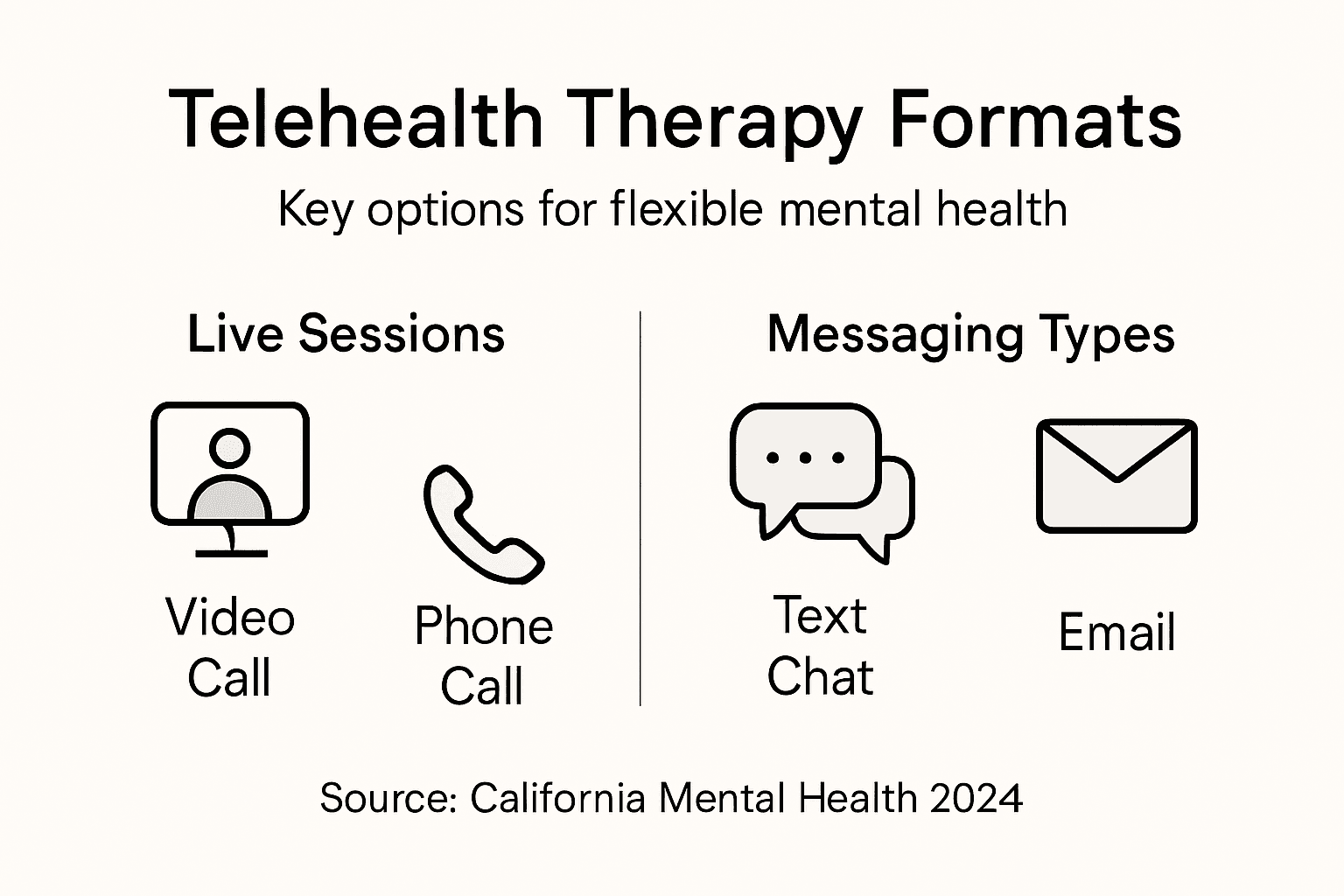
The therapeutic approach itself remains consistent across these formats. Whether you’re receiving individual therapy via video or exchanging messages with your therapist, the core techniques and evidence-based methods don’t change. What changes is accessibility and convenience. You still work through difficult emotions, learn coping strategies, and develop the insights needed for healing. The format simply removes barriers that might otherwise prevent you from getting care. Some people find they actually open up more easily in written communication, while others thrive with face-to-face connection. Your therapist can help determine which approach, or combination of approaches, works best for your specific situation and mental health goals.
Pro tip: Try your preferred telehealth format during a trial session before committing long-term, since some people feel more comfortable with video while others prefer phone or messaging based on their communication style.
Here’s how common telehealth therapy formats compare:
| Format Type | Real-Time Interaction | Best For | Example Use Case |
|---|---|---|---|
| Video Sessions | Yes | Personal connection | Face-to-face therapy |
| Phone Sessions | Yes | Flexible location | Therapy on the go |
| Asynchronous (Text) | No (Delayed response) | Scheduling challenges | Messaging therapist |
| Email Communication | No (Delayed response) | Processing thoughts slowly | Longer written updates |
How Telehealth Therapy Sessions Work
A typical telehealth therapy session follows a structure remarkably similar to in-person therapy, just conducted from wherever you are. You’ll receive a link or meeting invitation from your therapist a few minutes before your scheduled appointment time. Click it, and you’re connected through a secure video platform. Your therapist appears on screen, ready to engage in the same meaningful work that happens in a traditional office. The session flows naturally: you discuss what’s been happening in your life, explore patterns in your thinking or behavior, and work through the specific challenges you came to address. Whether you’re processing trauma with EMDR therapy, learning cognitive tools through CBT, or developing coping strategies, the therapeutic process remains the same. Telehealth therapy sessions involve licensed therapists conducting virtual appointments that include discussion of your concerns, treatment planning, and follow-up work, exactly as you’d experience in person.
What makes these sessions different is the environment. You control your setting. Some people find this empowering because they’re in a space where they feel safe and grounded. Others appreciate that they can step outside onto their porch during a stressful conversation, or sit in their favorite chair with a cup of tea nearby. The privacy is yours to manage. You’ll want to ensure you have adequate privacy so you can speak openly without worrying about being overheard, and a stable internet connection matters for clear video and audio. Many therapists recommend closing extra browser tabs and silencing notifications to minimize distractions. The session itself typically runs the same length as in-person therapy, usually 45 to 60 minutes, and follows the same clinical standards for confidentiality and care quality.
Between sessions, you might exchange messages with your therapist if they offer asynchronous communication. You could share a thought that came to you, ask a quick question, or work through something that surfaced during your week. This bridges the gap between formal sessions and deepens your therapeutic work. At ReviveHealthTherapy, we integrate both synchronous video sessions and asynchronous messaging to create a comprehensive approach tailored to your needs. Your therapist takes notes, maintains your treatment plan, and tracks your progress just as they would with traditional therapy. The only real difference is the screen between you, and honestly, many people report that the convenience and accessibility actually help them show up more consistently and engage more fully with their healing.
Pro tip: Set up your telehealth space the night before your first session by testing your camera angle, lighting, and microphone volume so you can focus entirely on your therapy rather than technical troubleshooting during the appointment.
Legal, Privacy, and Ethical Requirements
When you engage in telehealth therapy with a licensed provider, you’re entering a relationship governed by strict legal and ethical standards designed to protect you. California requires that your therapist maintain the same confidentiality obligations they would in person, meaning what you discuss stays private within the limits of the law. Your therapist is bound by the California Consumer Legal Remedies Act, the Health Insurance Portability and Accountability Act (HIPAA), and state licensing board regulations. Before your first session, you’ll sign informed consent documents that explain how your therapy will work, the limitations of telehealth, how your information will be stored, and your rights as a client. This transparency matters because you deserve to know exactly what you’re agreeing to. Legal requirements for telehealth include obtaining informed consent, following licensing laws, and adhering to professional board standards. Providers must verify your identity and document all necessary consents in medical records to ensure accountability.
Privacy is taken seriously in telehealth environments. Your therapist uses encrypted platforms that meet HIPAA standards, meaning your video sessions and messages are transmitted securely. ReviveHealthTherapy utilizes secure telehealth infrastructure specifically designed to protect sensitive mental health information. You should never assume that other platforms like regular video calls or unencrypted email are appropriate for therapy communication. Your therapist will never record sessions without your explicit written permission, and they’ll explain exactly how they store your records and for how long. If you’re concerned about privacy in your home, your therapist can help you identify a secure location for sessions. You also have the right to request copies of your records, request corrections, and understand who has access to your information.
Ethical standards in telehealth go beyond legal compliance. Your therapist commits to treating you with respect, maintaining appropriate boundaries, using evidence-based practices, and regularly checking in about whether the telehealth format is working for you. If your therapist believes you need in-person care or services they cannot provide remotely, they have an ethical obligation to discuss this and help you transition to appropriate resources. At ReviveHealthTherapy, this commitment to ethical care means we’re transparent about our approach, we stay current with licensing requirements, and we prioritize your wellbeing above all else. You should feel comfortable asking your therapist about their credentials, their approach to privacy, and any concerns you have about the telehealth process.
Pro tip: Request and review your therapist’s informed consent document and privacy policy before your first session so you can ask clarifying questions about data storage, confidentiality limits, and your rights as a client.
Key legal and privacy considerations for telehealth therapy:
| Requirement | Purpose | What Clients Should Expect |
|---|---|---|
| Informed Consent | Ensure knowledge and agreement | Review process before sessions begin |
| HIPAA Compliance | Protect health information | Encrypted and secure communications |
| Licensing Verification | Confirm provider qualifications | Therapist licensed for your state |
| Confidentiality Limits | Define boundaries of privacy | Clarified in consent documents |
Cost, Insurance, and Access Considerations
Cost is often the first barrier that stops Californians from seeking therapy, but telehealth has fundamentally changed the financial landscape of mental health care. Traditional in-person therapy requires you to factor in travel time, gas or public transportation costs, and often time off work. Telehealth eliminates these hidden expenses while maintaining the same therapeutic quality. At ReviveHealthTherapy, we offer sliding-scale fees based on your income level, meaning you pay what you can afford. We also accept most major insurance plans, including Health Savings Account (HSA) and Flexible Spending Account (FSA) contributions, which many employers offer. This matters because it means your therapy costs can come from pre-tax dollars, reducing your overall out-of-pocket expense. Insurance coverage for telehealth has expanded significantly in recent years. Telehealth reimbursement policies have expanded through payer coverage changes, particularly following the COVID-19 pandemic, though variability remains between different insurance companies and states.
Understanding your specific coverage requires a few steps. Call your insurance company and ask whether they cover telehealth mental health services, what your copay or deductible is, and whether there are any session limits per year. Some plans cover unlimited therapy sessions, while others cap at a certain number annually. Ask specifically whether they require you to see an in-network provider or if they cover out-of-network therapists. ReviveHealthTherapy can help you navigate this process by providing the documentation your insurance company needs for billing and reimbursement. If cost remains a barrier even with insurance, our sliding-scale option ensures that financial constraints don’t prevent you from accessing care. California’s commitment to mental health equity means many community health centers and nonprofit organizations also offer telehealth therapy at reduced rates for uninsured or underinsured individuals.
Access extends beyond cost. Telehealth improves access to mental health care by reducing barriers related to geography and transportation, making therapy available to Californians in rural areas, those with mobility limitations, and people managing transportation challenges. You don’t need to live near a major city to connect with a therapist trained in trauma-informed care, EMDR, or evidence-based approaches. Caregivers managing children or elderly family members can attend sessions from home without arranging childcare. People working multiple jobs can book appointments during lunch breaks or early mornings. This flexibility means therapy integrates into your actual life, not the other way around. For many Californians dealing with anxiety, depression, or trauma recovery, this accessibility difference is the factor that allows them to finally seek help.
Pro tip: Contact your insurance company before your first session and ask for written confirmation of your mental health coverage, session limits, and copay amounts so you can budget accurately and avoid surprise bills.
Discover Flexible Telehealth Therapy Designed for Californians
Accessing quality mental health care should never feel complicated or out of reach. If anxiety, depression, or trauma make it hard for you to attend traditional therapy sessions, telehealth offers a flexible solution that fits your busy life and unique needs. At ReviveHealthTherapy, we specialize in trauma-informed care using evidence-based methods like EMDR, CBT, and mindfulness to help you heal and grow from the comfort and safety of your own space.

Take control of your mental wellness with personalized telehealth therapy that removes barriers like transportation and scheduling conflicts. Visit our Uncategorized – ReviveHealthTherapy page to learn more about how telehealth transforms access to care. Ready to start your journey toward healing today? Fill out this quick form for your free 20-minute consultation with a therapist and discover therapy designed around your life.
Frequently Asked Questions
What is telehealth therapy?
Telehealth therapy is a form of mental health care delivered remotely through video, phone, email, or text, allowing individuals to connect with therapists from the comfort of their own homes or any location with an internet connection.
How does telehealth therapy improve accessibility for mental health care?
Telehealth therapy reduces barriers such as transportation costs, scheduling conflicts, and the stigma of in-person visits, making it easier for individuals to seek help when dealing with anxiety, depression, or trauma.
What types of telehealth therapy formats are available?
The most common formats include synchronous therapy (live video or phone sessions), and asynchronous communication (messages or emails). These formats allow flexibility in how and when therapy is conducted, catering to individual preferences and schedules.
Are telehealth therapy sessions as effective as in-person sessions?
Yes, telehealth therapy sessions maintain the same therapeutic quality and effectiveness as in-person sessions. The core techniques and evidence-based methods used by therapists are consistent across both formats.
Recommended
- Fill out this quick form for your FREE 20-min consultation with a therapist – ReviveHealthTherapy
- Fill out this quick form for your FREE 20-min consultation with a therapist – ReviveHealthTherapy
- New individual therapy – ReviveHealthTherapy
- Home Page – ReviveHealthTherapy
- Why Try Online Therapy: Complete Guide to Benefits – Interactive Counselling
4 Responses