
TL;DR:
- 94% of California youth aged 14-25 experience regular mental health challenges, with anxiety being most common.
- Untreated youth anxiety can lead to academic decline, social issues, and increased risk of severe outcomes like suicide.
- Evidence-based treatments, such as CBT and ACT, along with accessible resources, are essential for effective support.
94% of California youth ages 14 to 25 report regular mental health challenges, with anxiety topping the list. That is not a minor worry trend. It is a public health reality that California families are living through right now. Many parents assume their child is just going through a phase, but clinical anxiety is different from everyday stress, and the gap between those two things can have serious consequences. This article breaks down how widespread youth anxiety really is, what happens when it goes untreated, which strategies actually work, and how to find accessible, quality care for your child in California.
Table of Contents
- Understanding the scope: How common is youth anxiety in California?
- The risks of ignoring anxiety: Short- and long-term impacts
- Finding solutions: Evidence-based strategies for managing youth anxiety
- Accessing effective care in California: Resources, coverage, and equity gaps
- A deeper look: What most families miss about addressing youth anxiety
- Find the support your family deserves: Expert youth anxiety care in California
- Frequently asked questions
Key Takeaways
| Point | Details |
|---|---|
| Anxiety is widespread | Nearly all California teens deal with mental health challenges, with anxiety leading the list. |
| Early action matters | Untreated anxiety can lead to severe consequences, but prompt intervention boosts resilience and recovery. |
| Evidence-based care works | CBT, ACT, and professional interventions are proven to help, especially when paired with accessible local resources. |
| Access is expanding | California offers growing options—through schools, Medi-Cal, and telehealth—that help more families get support. |
Understanding the scope: How common is youth anxiety in California?
Everyone feels nervous before a big test or a first day at a new school. That is normal. Clinical anxiety is something else entirely. It is persistent, it interferes with daily life, and it does not go away on its own. Generalized anxiety disorder, social anxiety, panic disorder, and separation anxiety are all diagnosable conditions that require real support, not just reassurance.
The numbers in California are striking. 71.9% of youth cite anxiety as their top mental health concern, making it the most reported challenge among teens statewide. And the problem is not evenly distributed.
| Group | Anxiety prevalence (2023 est.) | Trend toward 2026 |
|---|---|---|
| All California youth 14 to 25 | 71.9% | Rising |
| LGBTQ+ youth | Significantly higher | Worsening |
| Youth of color | Above average | Persistent gap |
| High-vulnerability counties | Elevated | Underserved |
| Climate-stressed communities | Emerging pattern | Growing concern |
“Anxiety is not a personality trait or a sign of weakness. In California’s youth population, it is the most commonly reported mental health challenge, and it demands the same attention we give to physical illness.”
Parents often miss the signs because anxious kids can look like perfectionists, people-pleasers, or just quiet kids. Here is what to watch for:
- Persistent avoidance of school, social situations, or activities they used to enjoy
- Physical complaints like stomachaches or headaches with no medical cause
- Sleep disruption, including trouble falling asleep or frequent nightmares
- Irritability or emotional outbursts that seem disproportionate
- Declining grades or sudden disengagement from school
- Withdrawal from friends or family
Understanding mental health accessibility in California is part of recognizing that help exists and is within reach. The first step is knowing that what you are seeing in your child is real and worth addressing.
The risks of ignoring anxiety: Short- and long-term impacts
Knowing how widespread youth anxiety is, it is vital to understand what can happen if these issues go unaddressed. Anxiety does not typically resolve on its own. In fact, it often compounds.
In the short term, untreated anxiety affects academic performance, social development, and physical health. Chronically anxious teens are more likely to miss school, avoid friendships, and develop secondary issues like depression or substance use. Long term, the consequences can be severe.
Youth suicide is the second leading cause of death in California among ages 10 to 24, and anxiety is a significant contributing factor. That statistic deserves to sit with you for a moment.
| Outcome | Early intervention | Delayed intervention |
|---|---|---|
| Symptom reduction | High (60 to 80%) | Moderate to low |
| Treatment duration | Shorter (weeks to months) | Longer (months to years) |
| Cost over time | Lower | Significantly higher |
| Risk of secondary issues | Reduced | Elevated |
| Academic and social impact | Minimal | Substantial |
Here is why waiting is especially risky:
- Anxiety grows with avoidance. Every time a child skips a feared situation, the fear gets stronger.
- Parental accommodation backfires. When families reorganize their lives around a child’s anxiety, it reinforces the message that the world is dangerous.
- The window for early intervention narrows. Adolescent brains are highly responsive to therapy, but that window does not stay open forever.
- Co-occurring conditions develop. Depression, eating disorders, and substance use are all more likely in teens with untreated anxiety.
Learning the child therapy steps available in California can help parents move from awareness to action quickly. And understanding treatment success for anxiety gives families the confidence that getting help actually works.
Finding solutions: Evidence-based strategies for managing youth anxiety
Once parents understand the costs of ignoring anxiety, the focus shifts to which actions are truly evidence-based and deliver real improvement. Not all approaches are created equal.
CBT is the gold standard for youth anxiety, but Acceptance and Commitment Therapy (ACT) may outperform CBT for certain teens, particularly those who struggle with rigid thinking patterns. Medication, primarily SSRIs, is sometimes used alongside therapy but is rarely the first line of treatment on its own.
Here is a quick breakdown:
- CBT (Cognitive Behavioral Therapy): Helps teens identify and challenge distorted thoughts. Best for generalized anxiety, social anxiety, and panic.
- ACT (Acceptance and Commitment Therapy): Teaches teens to accept uncomfortable feelings rather than fight them. Effective for teens who feel stuck in avoidance cycles.
- SSRIs (medication): May be recommended by a psychiatrist when anxiety is severe or when therapy alone is not enough. Always used alongside, not instead of, therapy.
- Mindfulness-based approaches: Strong supporting evidence for reducing anxiety symptoms, especially in school settings.
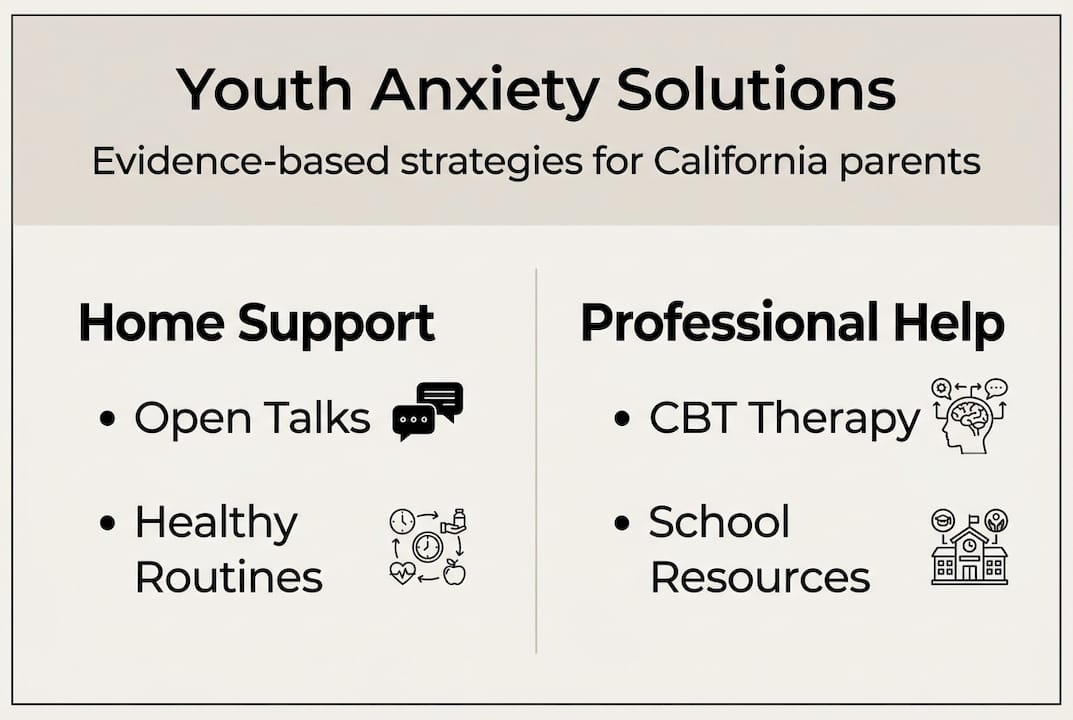
Home strategies matter too. Consistent sleep schedules, regular physical activity, reduced screen time, and nutritious meals all support a calmer nervous system. But here is the honest truth: these lifestyle factors help, but they are not enough on their own for a child with clinical anxiety.
Signs your child needs professional support beyond home strategies:
- Anxiety has lasted more than two weeks and is not improving
- They are refusing school or avoiding major parts of their life
- You notice self-harm or hear statements about hopelessness
- Home strategies have not made a meaningful difference
Pro Tip: Avoid the instinct to remove every stressor from your child’s life. Gradual, supported exposure to feared situations is actually part of effective treatment. Changing family routines too much to accommodate anxiety can unintentionally make it worse.
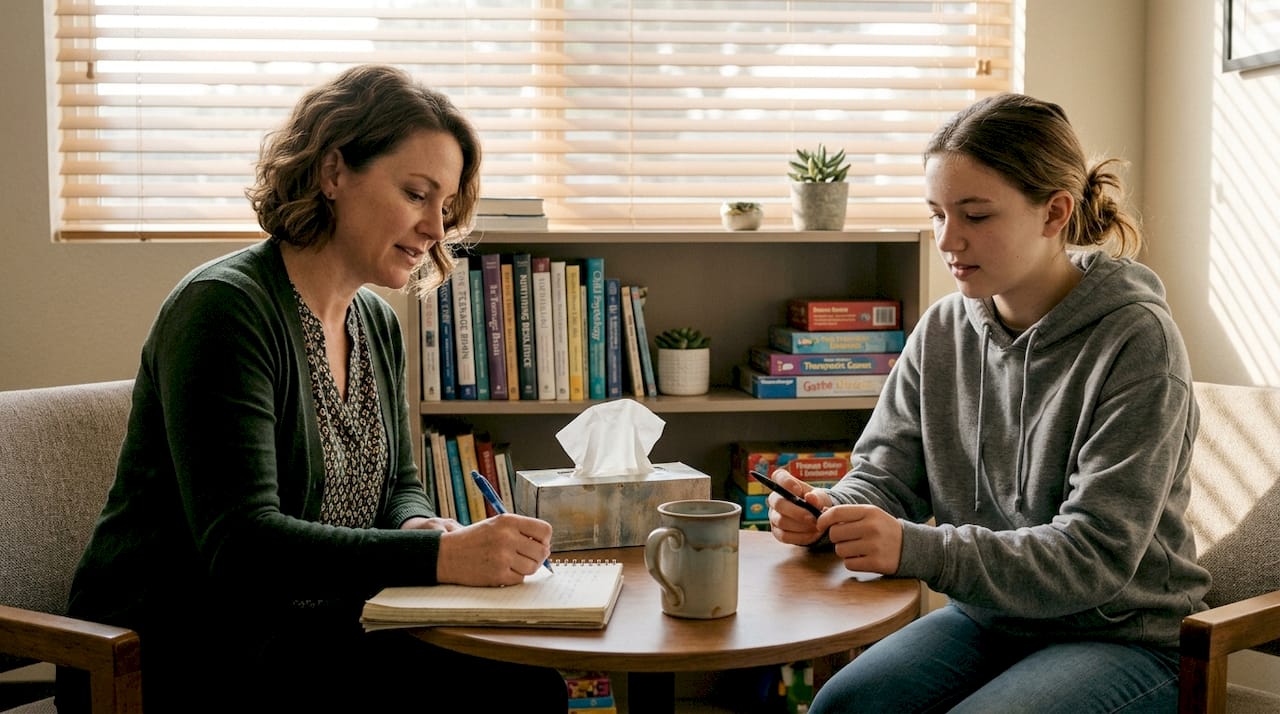
Working with a therapist who specializes in CBT for teens in California gives your child the structured, evidence-based support that home strategies alone cannot provide.
Accessing effective care in California: Resources, coverage, and equity gaps
With a toolkit in hand, parents need to know where and how to actually begin finding support for their child. California has more resources than most states, but navigating them takes some direction.
Steps to access care:
- Start with your child’s school. Many schools now have wellness centers or counselors who can screen for anxiety and make referrals.
- Talk to your pediatrician. They can conduct an ACE (Adverse Childhood Experiences) screening and refer you to mental health services.
- Check Medi-Cal eligibility. California has expanded Medi-Cal mental health benefits, including coverage for therapy and telehealth.
- Explore telehealth options. Telehealth for youth mental health removes the barrier of geography and scheduling, making it easier for teens to access consistent care.
- Look into community wellness centers. School-Based Health Improvement Programs (SBHIP) and CalHOPE offer free or low-cost services.
California has invested heavily in closing access gaps. Initiatives like the Children and Youth Behavioral Health Initiative (CYBHI), Medi-Cal expansion, and school-based care programs are making real progress. But up to 80% of youth still receive no care, which means the gap between available resources and actual access remains wide.
Equity matters here. LGBTQ+ youth, youth of color, and children in high-vulnerability or climate-stressed counties face the biggest barriers. California-specific resources like ACE screenings, SBHIP wellness centers, and mindfulness-based programs are specifically designed to reach these communities, but families often do not know they exist.
If you are unsure where to start, what is telehealth therapy is a helpful starting point for understanding your options. And for a broader view, mental health tips for CA families offers practical guidance tailored to the California context.
Pro Tip: Call your child’s school and ask specifically about their wellness center or whether they offer ACE screenings. This single step can open doors to free assessments and referrals that most parents do not know are available.
A deeper look: What most families miss about addressing youth anxiety
Here is something we see often: parents who are supportive, loving, and doing everything right, yet still waiting for their child’s anxiety to improve on its own. Support is necessary. But it is not sufficient.
Anxiety is a cycle. It feeds on avoidance and grows when nothing interrupts it. Parental action, meaning actually connecting with a professional and following through on treatment, is what breaks that cycle. Talking about feelings helps. Changing the pattern requires structured intervention.
California is uniquely positioned to help families do this. The state has more culturally responsive providers, more telehealth infrastructure, and more publicly funded programs than almost anywhere else in the country. The challenge is not a lack of resources. It is a lack of awareness about how to access them.
The idea that kids will just grow out of anxiety is one of the most persistent and costly myths we encounter. The data on therapy for anxiety success rates is clear: early intervention works, and waiting makes outcomes harder to achieve. Your child does not have to white-knuckle through adolescence. Real help is available, and it works.
Find the support your family deserves: Expert youth anxiety care in California
You have read the research, you understand the risks, and you know which strategies actually work. The next step is connecting your family with care that delivers on all of it.

At Revive Health Therapy, we offer evidence-based therapy for children and teens across California, including CBT, ACT, and mindfulness-informed approaches. We provide both in-person sessions in Walnut Creek and Oakland, and secure telehealth statewide. Insurance, Medi-Cal, HSA/FSA, and sliding-scale fees make our services accessible to families at every income level. If you are ready to take the next step, explore why seek psychotherapy or browse our teen therapy options to find the right fit for your child.
Frequently asked questions
What are the signs my child’s anxiety needs professional help?
Persistent avoidance, panic attacks, disrupted sleep, withdrawal from friends, or academic decline are all warning signs for anxiety that signal it is time to seek professional support rather than waiting it out.
Does insurance or Medi-Cal cover youth anxiety therapy in California?
Yes, most insurance plans cover evidence-based youth anxiety therapy, and CYBHI expands Medi-Cal services for youth mental health, including school-based and telehealth options.
How can parents support anxious kids at home?
Routines, open dialogue, and positive lifestyle habits all help, but home strategies alone are not sufficient for most youth with clinical anxiety and should be paired with professional therapy.
What if my child is LGBTQ+ or a youth of color with anxiety?
These groups face higher rates of anxiety and specific barriers to care, but California offers culturally responsive support through schools, Medi-Cal, and community wellness centers designed to meet their needs.
Recommended
- How to manage teen anxiety with proven therapies in CA – Revive Health Therapy
- CBT for adolescents: How therapy empowers California teens – Revive Health Therapy
- Practical mental health coping tips for Californians – Revive Health Therapy
- Mental health tips for families in California 2026 – ReviveHealthTherapy
- How to prepare for therapy for anxiety and depression
- How to Calm Racing Thoughts — The Caia Journal
One Response