
Every California parent knows how hard it can be to find quality therapy for a child or teen facing anxiety or depression, especially when insurance coverage feels confusing and limited. The difference between affordable care and out-of-pocket expenses often lies in understanding the details of your insurance plan. This guide empowers families to unlock support for emotional well-being and trauma recovery, highlighting how insurance can be a pathway to accessible mental health care for children and teens.
Table of Contents
- What Insurance Means for Therapy Access
- Types of Coverage for Child and Teen Therapy
- How Insurance Plans Work for Mental Health
- Costs, Out-of-Pocket Fees, and Financial Aid
- Choosing Providers and Navigating Limitations
- Legal Rights and Recent California Legislation
Key Takeaways
| Point | Details |
|---|---|
| Insurance Coverage is Variable | Mental health insurance coverage varies greatly, affecting access to therapy for families in California. |
| Advocacy is Essential | Families need to actively advocate for their mental health coverage by understanding their rights and verifying provider networks. |
| Understand Costs and Options | Families should be aware of potential out-of-pocket costs and seek financial aid or sliding scale fees when necessary. |
| Legal Protections Exist | Recent legislation in California strengthens mental health parity laws, ensuring equitable access to mental health services. |
What Insurance Means for Therapy Access
Navigating insurance coverage for mental health services can be a complex and often frustrating experience for California families seeking therapy. Understanding how insurance impacts therapy access is crucial for parents and guardians supporting children and teens struggling with anxiety, depression, or trauma.
Mental health insurance coverage varies widely across providers and plans, creating significant barriers to consistent care. Mental health insurance rights often require active patient advocacy and careful investigation. California families frequently encounter challenges such as:
- Limited provider networks
- High out-of-pocket costs
- Complex pre-authorization requirements
- Varying levels of mental health coverage compared to physical health services
For families with children and teens needing mental health support, understanding insurance nuances can make a substantial difference in accessing affordable, quality therapy. Medicare, for instance, provides comprehensive coverage for outpatient mental health services, including psychiatric evaluation and psychotherapy, which can significantly reduce financial barriers.
Key considerations for families exploring therapy insurance coverage include:
- Verify in-network mental health providers
- Understand specific plan mental health benefits
- Check copayment and deductible structures
- Explore sliding scale or supplemental payment options
- Request detailed coverage documentation
Insurance should support mental health care, not create additional barriers to healing.
Pro tip: Call your insurance provider directly and request a detailed breakdown of mental health service coverage, specifically asking about therapy sessions for children and adolescents.
Types of Coverage for Child and Teen Therapy
Child and teen therapy insurance coverage involves complex considerations for California families seeking mental health support. Understanding the nuanced landscape of comprehensive therapy approaches is crucial for parents navigating treatment options for their children.
Typically, insurance plans cover several primary therapy modalities for children and teens, including:
- Cognitive Behavioral Therapy (CBT)
- Dialectical Behavior Therapy (DBT)
- Family therapy sessions
- Group counseling
- Individual psychotherapy
Public insurance programs like Medicaid offer particularly robust coverage through the Early and Periodic Screening, Diagnostic, and Treatment (EPSDT) benefit, which mandates comprehensive mental health services for individuals under 21. This ensures that children and teens have access to necessary diagnostic and treatment services addressing various mental health challenges.

Insurance coverage typically depends on several key factors:
Here’s a quick reference comparing insurance coverage types for children’s therapy:
| Coverage Type | Age Eligibility | Therapy Modalities Covered | Key Features |
|---|---|---|---|
| Private Insurance | Varies by plan | Individual, group, family | Network restrictions, copayments |
| Medicaid (EPSDT Benefit) | Under 21 | Comprehensive, evidence-based | No cost for eligible youth |
| Medicare | Mostly 18+ (rare for youth) | Outpatient mental health | Includes psychiatric evaluations |
| Employee Assistance Programs | Employee dependents | Short-term counseling | Limited sessions, easy access |
| Community Health Programs | All ages | Sliding scale therapies | Income-based payment options |
- Specific insurance plan details
- Provider network restrictions
- Diagnosis documentation
- Recommended treatment protocol
- Age and individual patient needs
Mental health coverage should prioritize early intervention and comprehensive care for children and adolescents.
Pro tip: Request a detailed breakdown of mental health benefits from your insurance provider, specifically inquiring about coverage for youth therapy approaches and potential out-of-pocket expenses.
How Insurance Plans Work for Mental Health
Understanding mental health insurance requires navigating a complex landscape of coverage regulations and patient rights. The Affordable Care Act’s impact on mental health services has dramatically transformed how insurance plans approach mental health treatment, creating more comprehensive and accessible options for California families.
Insurance plans for mental health typically operate through several key mechanisms:
- Comprehensive benefit packages
- Tiered provider networks
- Cost-sharing structures
- Treatment authorization processes
- Parity protection requirements
Mental health parity laws require insurance plans to cover psychological services comparably to physical health treatments. This means equal financial requirements, similar visit limitations, and consistent utilization management across medical and mental health services. These regulations ensure that individuals seeking mental health support receive fair and equitable insurance coverage.
The core components of mental health insurance coverage include:
- Diagnostic assessment coverage
- Therapy session reimbursement
- Medication management benefits
- Preventive mental health screenings
- Specialized treatment referral support
Mental health insurance is not a luxury, but a fundamental aspect of comprehensive healthcare.
Pro tip: Review your insurance policy’s mental health section carefully and request a detailed breakdown of covered services, including specific therapy types and potential out-of-pocket expenses.
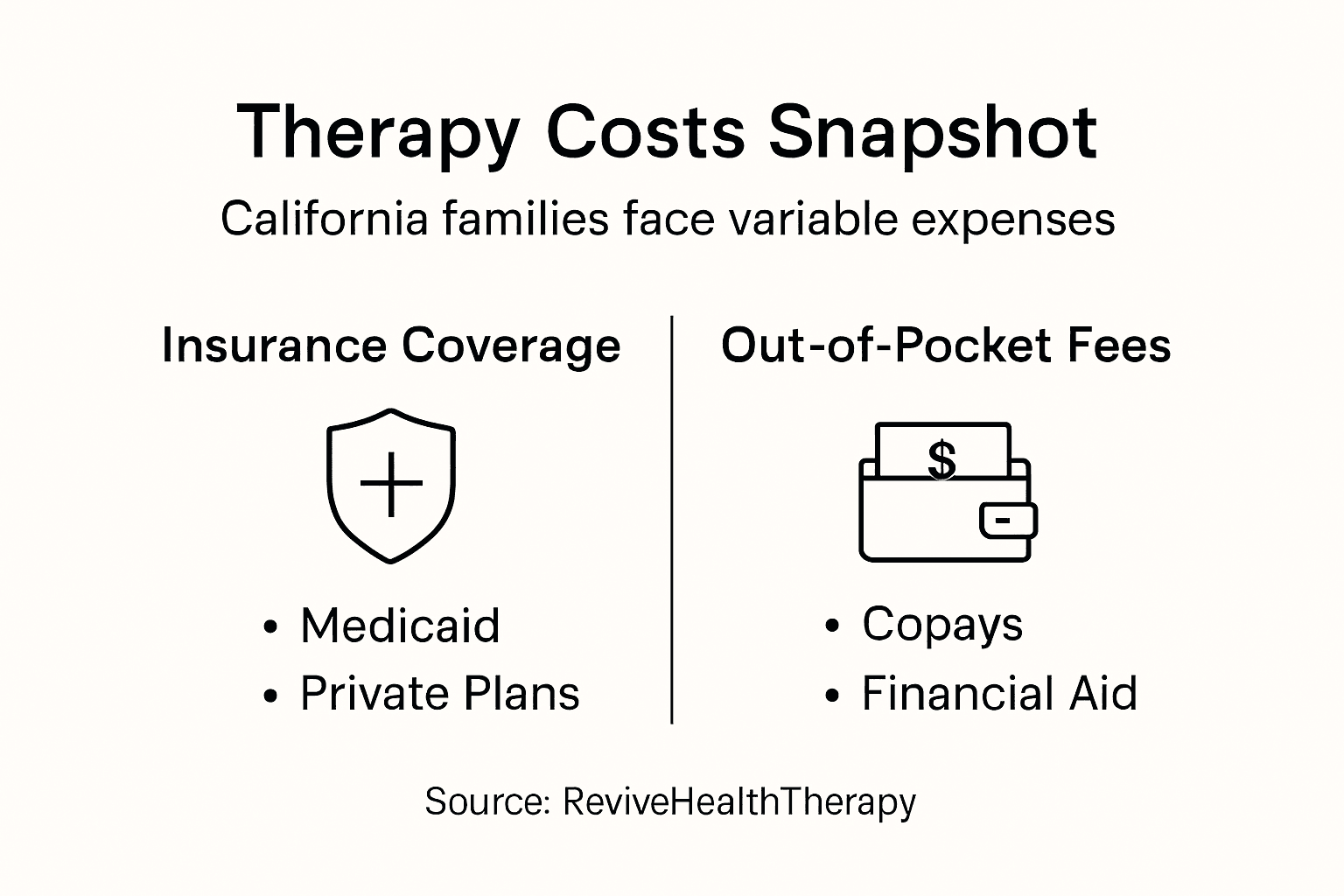
Costs, Out-of-Pocket Fees, and Financial Aid
Mental health treatment costs can be a significant financial burden for California families, making understanding affordable treatment options crucial for accessing necessary care. Therapy expenses can range dramatically, creating potential barriers for families seeking mental health support for children and teens.
The most common out-of-pocket expenses for mental health services include:
- Therapy session copayments
- Annual deductibles
- Coinsurance fees
- Medication costs
- Diagnostic assessment expenses
Financial challenges in mental health treatment are widespread, with out-of-pocket spending creating potential hardships for many families. Some strategies to manage these costs include:
Here’s a summary of typical out-of-pocket costs for mental health care:
| Expense Type | Typical Cost Range | When Paid |
|---|---|---|
| Therapy Copayment | $20–$50 per session | Each therapy visit |
| Annual Deductible | $500–$2,000 annually | First payments of year |
| Coinsurance Fees | 10–30% of total bill | After deductible met |
| Medication | $10–$100 monthly | With each prescription |
| Assessment Fees | $100–$500 per test | At diagnosis stage |
- Investigate sliding scale fee options
- Explore community health center services
- Check university-affiliated clinic rates
- Utilize employee assistance programs
- Seek group therapy alternatives
Financial barriers should never prevent access to essential mental health care.
Pro tip: Always request a detailed cost breakdown from therapy providers and inquire about flexible payment plans or financial assistance programs before starting treatment.
Choosing Providers and Navigating Limitations
Selecting the right mental health provider requires understanding the nuanced landscape of mental health professional types. California families must navigate complex networks of providers, insurance limitations, and specialized expertise to find the most appropriate support for their children and teens.
Mental health professionals typically fall into several key categories:
- Psychiatrists
- Psychologists
- Licensed Clinical Social Workers
- Psychiatric Nurse Practitioners
- Mental Health Counselors
Mental health provider availability significantly impacts families’ ability to access care. Insurance networks often create additional challenges, including:
- Limited in-network provider options
- Complex referral requirements
- Geographic accessibility constraints
- Specialized treatment restrictions
- Prior authorization processes
Navigating mental health provider selection is a critical journey toward healing and support.
Pro tip: Request a detailed credential verification and insurance compatibility check before committing to a specific mental health provider, ensuring they meet your family’s specific therapeutic needs.
Legal Rights and Recent California Legislation
California has been at the forefront of mental health legal protections, with recent legislative advancements significantly expanding patient rights and insurance coverage for mental health services. Senate Bill 855 represents a landmark shift in how mental health care is perceived and accessed across the state.
Key legal protections for California families include:
- Mental health parity requirements
- Mandatory insurance coverage standards
- Crisis care access provisions
- Out-of-network treatment rights
- Enhanced patient protection measures
Behavioral health service coverage now mandates comprehensive support across public and private insurance plans. The legislative landscape now requires insurers to provide equitable mental health services comparable to physical health treatments, with specific focus on:
- Comprehensive diagnostic coverage
- Expanded treatment authorization
- Reduced financial barriers
- Increased provider accountability
- Stronger patient advocacy mechanisms
Legal rights are not just paperwork—they are pathways to healing and support.
Pro tip: Familiarize yourself with the specific mental health parity laws in California, and don’t hesitate to challenge insurance providers if they fail to meet mandated coverage requirements.
Gain Clear Therapy Access Despite Insurance Challenges
Understanding insurance coverage for mental health services can feel overwhelming and discouraging, especially for California families trying to support children and teens through anxiety, depression, or trauma. Common obstacles like limited provider networks, confusing pre-authorization, and unexpected out-of-pocket costs often create barriers to the quality care your family deserves. At ReviveHealthTherapy, we recognize these challenges and offer accessible, evidence-based psychotherapy designed to work with many insurance plans, including support for HSA and FSA options. Our trauma-informed approach with proven methods such as EMDR and CBT helps you navigate mental health care with confidence.
Explore more about our services in the Uncategorized – ReviveHealthTherapy section where we detail flexible therapy options tailored to individual and family needs.

Take control of your family’s mental health journey today by connecting with therapists who understand insurance complexities and prioritize healing. Don’t wait until financial or insurance barriers prevent critical care. Schedule your free 20-minute consultation now at ReviveHealthTherapy and begin accessing the support that truly makes a difference.
Frequently Asked Questions
How can I check my insurance coverage for therapy?
To check your insurance coverage for therapy, contact your insurance provider directly and ask for a detailed breakdown of your mental health service coverage, including in-network providers, copayments, and deductibles.
What types of therapy are typically covered by insurance for children and teens?
Insurance generally covers several therapy modalities for children and teens, including Cognitive Behavioral Therapy (CBT), Dialectical Behavior Therapy (DBT), family therapy sessions, group counseling, and individual psychotherapy.
What should I do if my insurance denies coverage for therapy?
If your insurance denies coverage for therapy, review the denial letter for reasons and contact your insurance provider for clarification. You can also appeal the decision by providing additional information or documentation supporting the need for therapy.
Are there financial assistance options for mental health treatment?
Yes, some options for financial assistance include sliding scale fees, community health services, employee assistance programs, and reduced-cost services offered at university-affiliated clinics.
Recommended
- Why Is Therapy Accessible for Californians Today – ReviveHealthTherapy
- Blogs – ReviveHealthTherapy
- Affordable Therapy: What It Means and Why It Matters – ReviveHealthTherapy
- Child Therapy: Healing Emotional Wounds Early – ReviveHealthTherapy
- California Drug Testing Laws: An Employer and Employee Guide
2 Responses