
TL;DR:
- Proper preparation for a first therapy session involves logistical arrangements, honest self-reflection, and anxiety-management techniques. These steps help reduce stress, foster openness, and set a solid foundation for effective therapy. Overall, being practical, authentic, and calm enhances your initial experience and progress.
Your first therapy session is a foundational step toward understanding yourself, not a test you need to pass. Knowing how to prepare for first session appointments reduces anxiety, improves the quality of your first conversation, and sets the tone for the work ahead. Preparation involves three distinct areas: practical logistics, mental and emotional readiness, and specific techniques to ease anxiety for first meeting situations. This article covers all three, drawing on clinical guidance and evidence-based strategies so you walk in with confidence instead of dread.
How to prepare for your first therapy session: what actually happens
The initial therapy session, formally called an intake or assessment session, follows a predictable structure. Your therapist will introduce themselves, review consent forms, and explain confidentiality boundaries. Typical paperwork includes consent forms and confidentiality agreements that clarify what stays private and what does not. This means you will spend the first portion of the session on logistics, not deep emotional disclosure.
After paperwork, your therapist will ask open-ended questions about what brought you in, what you are currently experiencing, and what you hope to accomplish. These questions are not a quiz. They are designed to help your therapist understand your context and begin building a picture of your needs. You will not be expected to share everything in one sitting.
The session typically covers some personal history, including family background, past experiences, and any relevant medical or mental health context. This is called an intake assessment, and it is standard practice across CBT, EMDR, and trauma-informed approaches. The session is collaborative by design, meaning you can slow down, redirect, or ask questions at any point.
Here is what a typical first session includes:
- A brief introduction and review of the therapist’s approach and policies
- Signing consent and confidentiality forms
- Discussion of your current concerns and what prompted you to seek therapy
- Questions about your personal and family history
- Clarification of your goals and what you hope therapy will accomplish
- Time for your own questions about the therapist’s methods and style
First sessions last 50 to 60 minutes, sometimes longer for intake. Knowing this in advance helps you plan your day and removes one layer of uncertainty.
What to bring to your first session: a practical checklist
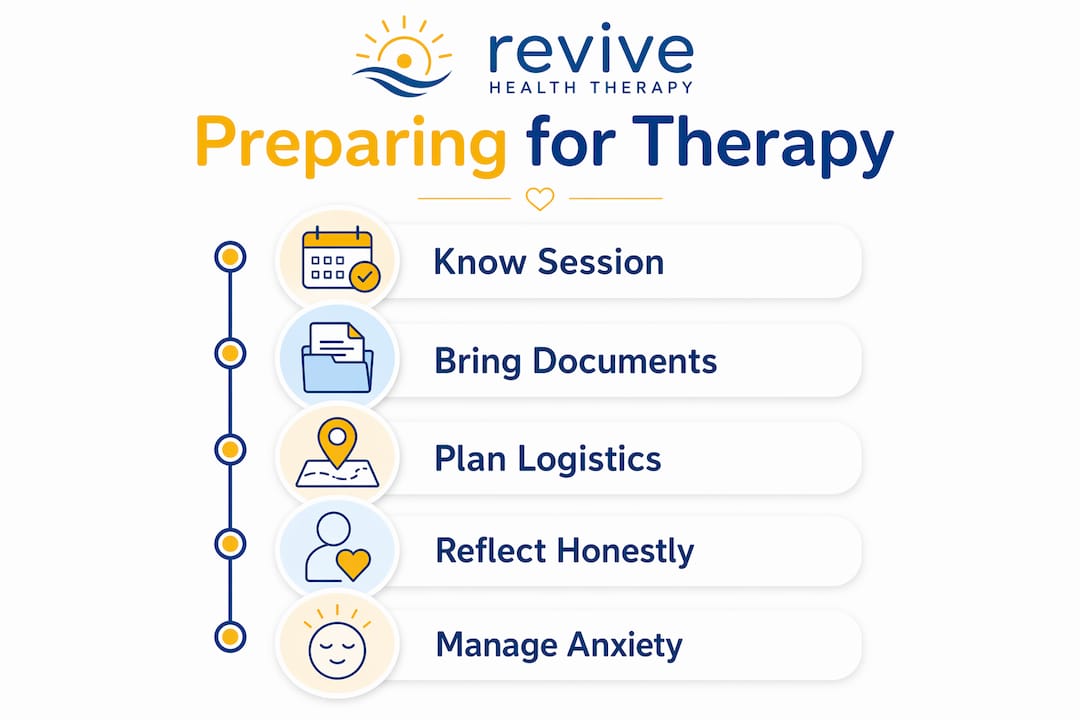
Practical preparation is the fastest way to reduce pre-session stress. Arriving without the right documents or scrambling for directions creates unnecessary tension before the session even begins.

The table below separates what to bring physically versus what to prepare logistically:
| Category | What to prepare |
|---|---|
| Documents | Photo ID, insurance card, medication list with dosages, any referral paperwork |
| Comfort items | Water bottle, tissues, a light layer or sweater if you run cold |
| Technology (telehealth) | Test your camera and microphone the day before; confirm the platform link |
| Timing | Arrive 10 to 15 minutes early to complete paperwork and settle |
| Logistics | Map your route in advance; arrange childcare or parking if needed |
Planning ahead for practical needs like directions, snacks, and childcare avoids the rushing anxiety that spills into the session itself. This is a small investment with a measurable payoff. If your session is via telehealth, find a private, quiet space where you will not be interrupted. A parked car, a bedroom with a locked door, or a private office all work well.
Pro Tip: Write down two or three things you want your therapist to know before you arrive. You do not need to read them aloud, but having them written helps you feel anchored if your mind goes blank.
How to prepare mentally and emotionally before therapy
Mental preparation for therapy starts with one honest question: why are you going? You do not need a polished answer. A rough, honest one is far more useful. Reflecting on your reasons for seeking therapy, even briefly, gives your therapist something real to work with from the first minute.
One of the most common fears people bring into a first session is the worry about saying the wrong thing. Reframe this directly: there is no wrong thing to say in therapy. Your therapist is trained to work with confusion, silence, and incomplete thoughts. Honesty matters far more than clarity. If you are not sure how to start, a short prepared script reduces the freeze response. Something as simple as “I’m not sure where to start, but I’ve been feeling overwhelmed lately” is enough to open the conversation.
Setting realistic expectations also matters. The first session will not resolve your anxiety, heal your trauma, or fix your relationship. It is a starting point. Clinics consistently describe the initial session as foundational rather than a quick fix, and that framing is worth holding onto. Progress in therapy is cumulative, not immediate.
Perfectionism is one of the biggest obstacles to a productive first session. People spend so much energy trying to present themselves well that they withhold the very information their therapist needs. Openness is a strength in this context, not a vulnerability. You are also allowed to ask your therapist questions about their approach, training, and how they typically work. Interviewing your therapist is not rude. It is smart.
Consider building a simple anxiety self-care checklist in the days before your appointment. Consistent sleep, reduced caffeine, and light movement the morning of your session all lower your baseline stress before you walk in.
Practical techniques to ease anxiety before and during the session
Pre-session anxiety is not a sign that therapy is wrong for you. Anxiety in early therapy is a normal protective response from your nervous system, and recognizing it as such takes away some of its power. The goal is not to eliminate nervousness but to bring it down to a manageable level.
Use these steps in the 15 to 30 minutes before your session:
- Practice slow exhale breathing. Inhale for four counts, exhale for six to eight counts. Repeat this for 6 to 10 breaths. A longer exhale activates the parasympathetic nervous system and physically lowers your heart rate.
- Run a 5-4-3-2-1 sensory grounding scan. Name five things you can see, four you can touch, three you can hear, two you can smell, and one you can taste. This technique pulls your attention out of anxious future-thinking and into the present moment.
- Bring a comfort object if it helps. A familiar scent, a smooth stone, or a specific piece of clothing can serve as a physical anchor during moments of emotional intensity.
- Remind yourself that you can pause. You are not required to answer every question immediately or in full.
During the session itself, keep these options in mind:
- Ask for a moment to collect your thoughts if you feel overwhelmed
- Tell your therapist directly if a topic feels too raw to address right now
- Communicate openly if you feel the urge to shut down or leave. Sharing doubts openly during early therapy builds a stronger therapeutic relationship and better outcomes over time
- Plan gentle aftercare for after the session: a walk, a quiet meal, or time alone to decompress
For readers who want a deeper framework for managing anxiety before and between sessions, the mindfulness workflow for anxiety relief from Revivehealththerapy offers a structured, evidence-based approach.
Key takeaways
Preparing well for your first therapy session means combining practical logistics, honest self-reflection, and specific anxiety management techniques before you ever sit down with a therapist.
| Point | Details |
|---|---|
| Session structure is predictable | Expect consent forms, intake questions, and goal-setting before any deep emotional work. |
| Logistics reduce anxiety | Bring your ID, insurance card, and medication list; arrive 10 to 15 minutes early. |
| Honesty beats polish | A rough, honest answer serves your therapist better than a carefully prepared one. |
| Anxiety is normal | Pre-session nervousness is a protective response, not a sign therapy is wrong for you. |
| You control the pace | You can pause, redirect, or ask questions at any point during the session. |
What I tell every first-time therapy client
As a therapist, the most common thing I hear before a first session is some version of “I don’t want to say the wrong thing.” People spend weeks rehearsing how to present themselves, and then walk in so guarded that the session barely scratches the surface. The preparation that actually matters is not about crafting the right narrative. It is about showing up willing to be honest, even when that honesty feels incomplete or messy.
What I have observed consistently is that clients who do a small amount of practical preparation, knowing where they are going, having their documents ready, testing their telehealth link, arrive calmer and more present. That calm translates directly into a more productive first conversation. The logistics are not trivial. They are the foundation that makes emotional openness possible.
The other thing worth saying plainly: your first session is not a performance review. Your therapist is not evaluating whether you are a good candidate for help. They are simply trying to understand you. The more you can let go of the pressure to impress and lean into curiosity about your own experience, the faster the work begins. Therapy is one of the few spaces where being uncertain, confused, or contradictory is genuinely useful. Bring all of it.
If you are considering therapy for a child or teen, the preparation principles are similar but the dynamics differ. The guide on preparing for a child’s first session covers those specifics well.
— Amy
Start your therapy journey with Revivehealththerapy
Revivehealththerapy offers evidence-based psychotherapy across California, with in-person sessions in Walnut Creek and Oakland and secure telehealth available statewide. Whether you are managing anxiety, processing trauma, or working through relationship challenges, the team uses proven approaches including CBT, EMDR, and trauma-informed care to meet you where you are. If you are still weighing whether therapy is right for you, the guide on why seek psychotherapy lays out the evidence clearly. Sliding-scale fees and insurance acceptance, including HSA and FSA plans, make getting started more accessible. Reach out through the contact page to schedule your first session today.
FAQ
What should I say in my first therapy session?
Start with whatever brought you in, even if it feels incomplete. A simple opening like “I’ve been feeling overwhelmed and I’m not sure where to start” gives your therapist enough to work with.
How long does a first therapy session last?
Most first sessions run 50 to 60 minutes, with some intake appointments running slightly longer. Knowing the length in advance helps you plan your schedule and reduces uncertainty.
Is it normal to feel nervous before therapy?
Anxiety before a first session is a normal protective response from your nervous system. Slow exhale breathing and a 5-4-3-2-1 grounding scan are two techniques that bring it down to a manageable level before you begin.
What documents do I need to bring to my first session?
Bring a photo ID, your insurance card, and a list of any current medications with dosages. For telehealth sessions, test your camera and microphone the day before to avoid technical delays.
Can I ask my therapist questions during the first session?
You can and should ask about your therapist’s approach, training, and how they typically structure sessions. Asking questions helps you confirm the fit and gives you a sense of control in an unfamiliar setting.
Recommended
- How to Start Therapy for Emotional Growth in California – ReviveHealthTherapy
- Therapy session structure: Evidence-based approaches explained – Revive Health Therapy
- Therapy in Oakland & Walnut Creek | Revive Health Therapy
- How to Prepare for Child’s First Therapy Session Effectively – ReviveHealthTherapy