
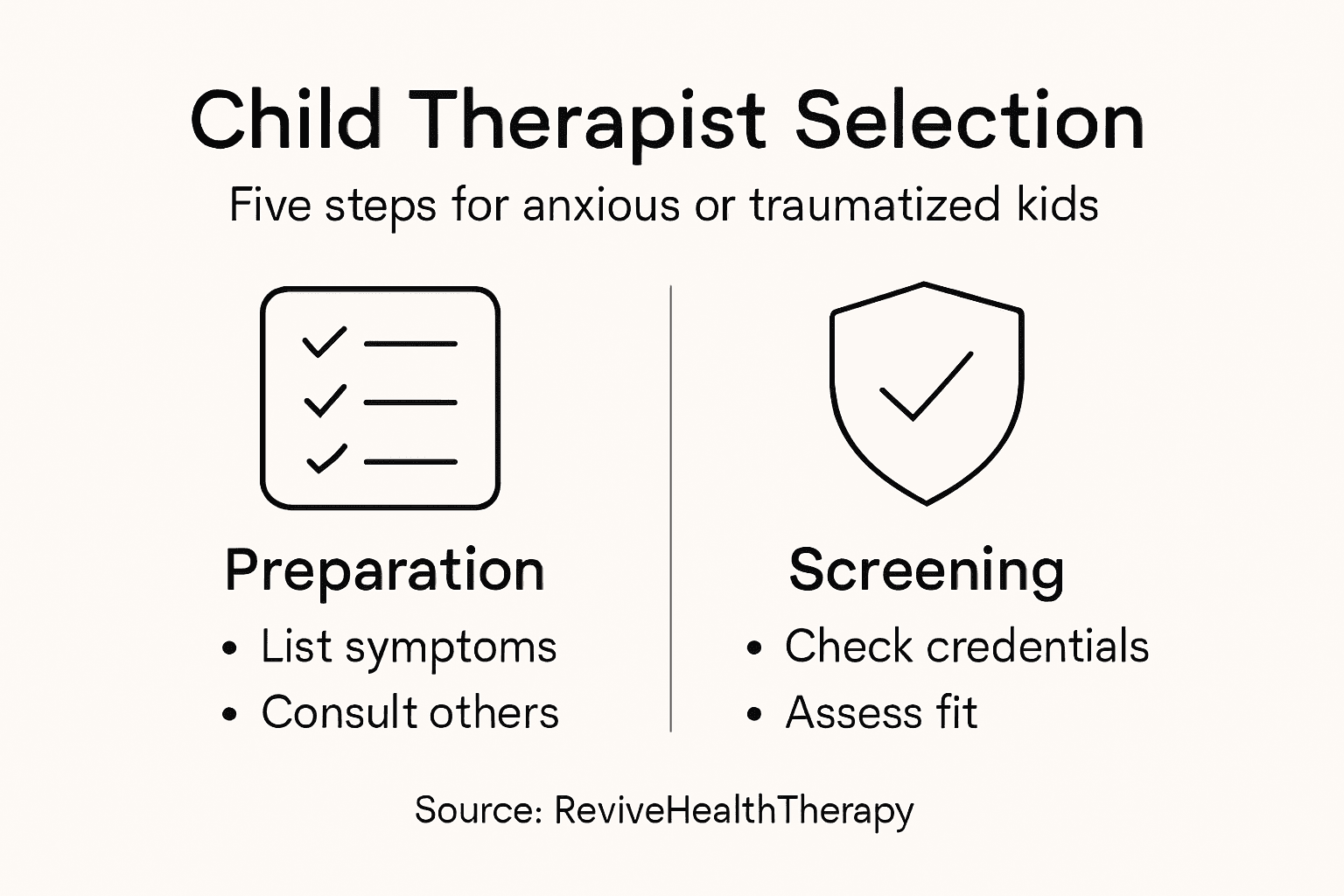
Every parent in California knows how overwhelming it feels to search for trustworthy, affordable mental health support for a child struggling with anxiety or trauma. The path forward starts with understanding your child’s symptoms and knowing that evidence-based child therapy is available from professionals who use proven screening tools and specialized training. This guide walks you through essential steps to assess needs, find qualified therapists, verify methods, and ensure costs fit your budget.
Table of Contents
- Step 1: Assess Your Child’s Specific Needs
- Step 2: Research Qualified Child Therapists In California
- Step 3: Verify Evidence-Based Approaches And Credentials
- Step 4: Evaluate Affordability And Insurance Coverage
- Step 5: Schedule Consultations To Confirm Therapist Fit
Quick Summary
| Key Insight | Explanation |
|---|---|
| 1. Assess Unique Child Needs | Document symptoms, emotional responses, and triggers to understand your child’s specific situation. |
| 2. Research Qualified Therapists | Use reputable databases to find experienced therapists specialized in childhood anxiety and trauma. |
| 3. Verify Credentials and Expertise | Check therapist certifications and treatment methods to ensure they are evidence-based and suitable. |
| 4. Evaluate Affordability Options | Understand insurance coverage and discuss payment options to prevent financial barriers to therapy. |
| 5. Schedule Initial Consultations | Meet potential therapists to assess compatibility and ensure they can effectively address your child’s needs. |
Step 1: Assess your child’s specific needs
Choosing the right therapist starts with understanding your child’s unique emotional landscape. Before scheduling appointments, you’ll want to conduct a careful assessment of their specific anxiety or trauma symptoms, developmental stage, and individual needs.
A comprehensive evaluation involves multiple dimensions. Begin by tracking and documenting your child’s symptoms, behavioral changes, and emotional responses. Key areas to assess include:
- Frequency and intensity of anxiety episodes
- Specific trauma triggers
- Changes in sleep patterns
- Academic or social performance shifts
- Emotional regulation challenges
Professional assessments are crucial for accurate diagnosis. Trauma screening tools provide structured methods to evaluate your child’s experience. These comprehensive evaluations consider not just PTSD symptoms, but the broader context of your child’s mental health and developmental needs.
Professional screenings help map the most effective treatment pathway for your child’s unique situation.
Consider gathering information from multiple sources – school counselors, pediatricians, teachers, and family members can offer valuable insights into your child’s behavioral patterns and emotional state. This multi-perspective approach ensures a more holistic understanding of your child’s needs.
Here’s how different sources contribute to a holistic child assessment:
| Source | Perspective Provided | Unique Benefit |
|---|---|---|
| School Counselors | Academic/social observations | Identify classroom impacts |
| Pediatricians | Physical/mental health | Medical history insight |
| Teachers | Daily behavior patterns | Note learning challenges |
| Family Members | Emotional/home environment | Recognize comfort/triggers |
Pro tip: Keep a detailed journal documenting your child’s symptoms, emotional reactions, and behavioral changes to provide a comprehensive picture during initial therapy consultations.
Step 2: Research qualified child therapists in California
Finding the right child therapist in California requires strategic research and careful evaluation of professional credentials and specialized expertise. Your goal is to identify mental health professionals who have specific training and experience in treating childhood anxiety and trauma.
Start your search by exploring reputable professional resources and specialized databases. Evidence-based clearinghouse databases offer comprehensive information about qualified therapists and treatment approaches specific to child welfare. These resources provide detailed insights into therapists’ training, intervention methods, and professional standards.
Key research strategies include:
- Checking therapist credentials with California licensing boards
- Verifying specialized training in child and adolescent mental health
- Investigating specific expertise in anxiety and trauma treatment
- Reviewing professional certifications and continuing education
- Examining experience with your child’s specific developmental stage
Professional organizations and training institutes can also provide valuable guidance. Mental health training programs help identify therapists who have completed rigorous, evidence-based training in cognitive behavioral therapies for children.
Thorough research is your first step toward finding a compassionate, competent mental health professional for your child.
Consider reaching out to pediatricians, school counselors, and local mental health organizations for personalized recommendations. These professionals often have networks of trusted child therapists specializing in anxiety and trauma treatment.
Pro tip: Create a detailed checklist of your child’s specific needs and use it as a screening tool when interviewing potential therapists to ensure the best possible match.
Step 3: Verify evidence-based approaches and credentials
Validating a child therapist’s professional credentials and treatment methodologies is crucial for ensuring your child receives the most effective, scientifically supported care. Your goal is to identify therapists who demonstrate proven expertise in addressing childhood anxiety and trauma.

Trauma-focused certification programs offer concrete proof of a therapist’s specialized training and commitment to evidence-based practices. These rigorous certifications validate that clinicians have completed advanced training in therapeutic approaches specifically designed to help children process and overcome traumatic experiences.
Key verification steps include:
- Requesting professional certification documentation
- Checking state licensing board records
- Confirming specialized training in child trauma treatment
- Reviewing published research or professional presentations
- Investigating ongoing professional development credentials
Evidence-based guidelines provide critical benchmarks for quality care. Clinical practice guidelines outline recommended assessment and treatment protocols, helping parents understand the standard of care their child should receive.
Compare the main types of evidence-based therapy for childhood anxiety and trauma:
| Therapy Type | Main Treatment Focus | Typical Age Range |
|---|---|---|
| CBT | Thought/emotion patterns | 7-17 years old |
| TF-CBT | Trauma processing | 3-18 years old |
| Play Therapy | Expression through play | 3-10 years old |
| EMDR | Trauma desensitization | 8+ years old |
Professional credentials are more than paperwork – they represent a therapist’s commitment to delivering the highest quality, scientifically supported mental health care.
Don’t hesitate to ask direct questions about a therapist’s training, experience, and treatment approach. Reputable professionals will welcome your inquiries and provide transparent information about their qualifications.
Pro tip: Request a brief consultation to assess the therapist’s communication style and expertise, ensuring they can effectively connect with and support your child’s unique needs.
Step 4: Evaluate affordability and insurance coverage
Navigating the financial aspects of child therapy requires careful planning and strategic research. Your goal is to understand the full spectrum of costs and identify potential ways to make mental health support more accessible for your child.
Therapy cost considerations involve multiple factors beyond the initial session price. Understanding how insurance, copays, and sliding-scale options interact can help you manage expenses while securing quality care for your child’s mental health needs.
Key strategies for managing therapy costs include:
- Verifying your health insurance mental health coverage
- Checking therapist’s in-network status
- Exploring sliding-scale fee options
- Investigating HSA/FSA payment possibilities
- Comparing session rates across different providers
Most insurance plans provide some level of mental health coverage, but the specifics can vary widely. Contact your insurance provider to understand:
- Exact mental health benefit details
- Copayment and deductible requirements
- Number of covered therapy sessions
- Pre-authorization requirements
- Telehealth coverage options
Financial constraints should never prevent a child from receiving necessary mental health support.
Don’t be afraid to have transparent conversations about fees. Many therapists offer flexible payment options or can recommend affordable alternatives that maintain high-quality care.
Pro tip: Request a detailed breakdown of potential costs during your initial consultation and explore multiple payment strategies to find the most sustainable approach for your family.
Step 5: Schedule consultations to confirm therapist fit
Scheduling initial consultations is your opportunity to assess whether a therapist can genuinely connect with your child and address their specific anxiety or trauma needs. Personal compatibility matters as much as professional credentials when selecting the right mental health support.
Consultation calls offer a critical chance to evaluate therapeutic approaches and personal dynamics before committing to ongoing treatment. These preliminary meetings allow both parents and children to ask questions, understand treatment strategies, and gauge emotional comfort.
Key consultation preparation steps include:
- Preparing a list of specific questions about treatment approach
- Noting your child’s specific anxiety or trauma symptoms
- Understanding the therapist’s experience with similar cases
- Observing the therapist’s communication style
- Assessing your child’s initial comfort level
During consultations, pay close attention to:
- How the therapist interacts with your child
- Their ability to explain complex concepts clearly
- Demonstrated empathy and active listening skills
- Transparency about treatment goals and methods
- Willingness to adapt approaches to your child’s needs
The right therapist creates a safe, supportive environment where your child feels heard and understood.
Most reputable therapists offer free or low-cost initial consultations, giving you an opportunity to make an informed decision without significant financial commitment.
Pro tip: Bring your child to the consultation if age-appropriate, and observe their non-verbal reactions and comfort level with the potential therapist.
Finding the Right Support for Your Child’s Anxiety or Trauma
Choosing the right therapist for your child can feel overwhelming especially when you want to ensure they receive compassionate, evidence-based care tailored to their unique needs. This article highlights critical steps like assessing symptoms, verifying credentials, and confirming treatment fit so your child can heal in a safe and supportive environment. If you are facing challenges in locating qualified child therapists who use proven methods such as EMDR and CBT while considering affordability and accessibility, you are not alone.
Discover how Uncategorized – ReviveHealthTherapy can guide you through this process.

Take the next step with a trusted mental health provider dedicated to trauma-informed care and flexible telehealth sessions across California. ReviveHealthTherapy offers a free 20-minute consultation to connect your family with a therapist who truly understands the complexities of childhood anxiety and trauma. Act now to secure personalized support for your child’s emotional wellbeing by filling out this quick form here. Explore compassionate care that puts your child’s healing first.
Frequently Asked Questions
How can I assess my child’s specific needs before choosing a therapist for anxiety or trauma?
Begin by tracking your child’s symptoms and behaviors, such as the frequency of anxiety episodes and changes in sleep patterns. Document these observations, and consult with school counselors or pediatricians for additional insights.
What should I look for when researching qualified child therapists for anxiety and trauma?
Focus on therapists who have specialized training in child mental health and specific experience in treating anxiety and trauma. Check their credentials and explore databases for evidence-based practices related to childhood mental health.
How can I verify a child therapist’s professional credentials and treatment approaches?
Request documentation of their certifications and check with state licensing boards to confirm their qualifications. Ensure they have training in evidence-based approaches specifically designed for children.
What factors should I consider regarding affordability and insurance coverage for child therapy?
Evaluate your health insurance mental health benefits, check if the therapist is in-network, and explore sliding-scale options. Create a detailed list of costs during the initial consultation to better understand your financial commitments.
How can I determine if a therapist is a good fit for my child during initial consultations?
Use the consultations to observe how the therapist interacts with your child and assess their communication style. Prepare specific questions about treatment approaches and take note of your child’s comfort level with the therapist.
What steps should I take if I am unsure about my child’s progress in therapy?
Regularly assess your child’s emotional and behavioral changes and openly communicate these observations during therapy sessions. If concerns persist, consider discussing alternative therapy approaches or seeking a second opinion from another mental health professional.
Recommended
- How to Choose a Therapist in California for Lasting Change – ReviveHealthTherapy
- How to Find a Therapist for Accessible Trauma Care – ReviveHealthTherapy
- NEW CHILDREN’S THERAPY – ReviveHealthTherapy
- 7 Essential Tips for Choosing a Therapist in California – ReviveHealthTherapy
- Voedselintolerantie en gedragsproblemen
3 Responses