
TL;DR:
- Early mental health screening with simple checklists helps California parents identify concerns before crisis.
- Regular use of validated tools like PHQ-9, EPDS, and PSC-35 guides timely intervention.
- Combining screenings with attentive observation and strong relationships offers the best support for families.
Spotting mental health concerns early in yourself or your child is harder than it sounds. Warning signs often look like ordinary stress, a rough week, or just “being a kid.” The good news is that California parents are encouraged to regularly screen both their own and their children’s mental health using evidence-based tools, and a practical checklist makes that process far less overwhelming. This guide walks you through exactly what to look for, which screening tools to use, and what to do when something feels off, all tailored for families living in California.
Table of Contents
- Why every California parent needs a mental health checklist
- Checklist for parents: Monitoring your own mental health
- Checklist for your child: Key signs and tools for every age
- Comparison table: Recommended screening tools for parents and children
- What to do if a screening flags a concern
- A fresh perspective: Going beyond checklists in California mental health
- Next steps: Connect with California’s mental health experts
- Frequently asked questions
Key Takeaways
| Point | Details |
|---|---|
| Screen regularly | Annual and symptom-driven mental health checklists catch issues early for the entire family. |
| Use evidence-based tools | Tools like PHQ-9, EPDS, and PSC-35 provide reliable first-step screenings for parents and children. |
| Act on results | A flagged checklist means it’s time to contact a health professional or use California’s free helplines. |
| Don’t stop at the checklist | Maintain ongoing observation and nurture strong relationships to support true mental health. |
Why every California parent needs a mental health checklist
Most parents do not skip mental health screenings because they do not care. They skip them because life is busy, the warning signs are subtle, and the process feels complicated. A checklist solves all three problems at once. It gives you a clear, repeatable system so that nothing slips through the cracks, even during the most chaotic seasons of parenthood.
The emotional stakes are genuinely high. Consider that 1 in 3 pregnant or postpartum individuals experience symptoms of anxiety or depression. That is not a rare edge case. That is a majority-level concern that touches nearly every community in California. And because parents are the emotional anchors of their families, an unaddressed mental health concern in a caregiver ripples directly into a child’s sense of safety and stability.
Early screening changes outcomes. Behavioral health screening in California is designed to be brief, evidence-based, and capable of identifying needs before they escalate into crisis, while also supporting smooth referrals to the right professionals. Think of it less like a test and more like a smoke detector. You install it before the fire, not during.
California also has specific programs, funding streams, and culturally responsive resources that parents in other states simply do not have access to. Knowing about them means you can use them. Our mental health tips for families and essential tips for Californians cover a lot of this state-specific ground and are worth bookmarking.
Here are the most common reasons parents delay screenings:
- “I thought it was just a phase.”
- “I didn’t know which tool to use or where to find it.”
- “I was worried about what a positive result would mean.”
- “My pediatrician seemed rushed, so I didn’t bring it up.”
A checklist removes the guesswork from every one of those barriers.
Remember: Catching a concern early does not mean something is seriously wrong. It means you are giving your family the best possible chance at well-being.
Pro Tip: Keep a simple journal or notes app entry each month where you rate your stress level and your child’s mood on a scale of 1 to 10. Over time, patterns become visible in ways that in-the-moment observation misses.
Now that you see why parents need a straightforward approach, let’s explore the essential checklist items.
Checklist for parents: Monitoring your own mental health
Parental mental health is not a luxury topic. It is the foundation of family health. Here is a step-by-step checklist you can return to every few months or whenever something feels off.
- Track your mood for two weeks. Are you experiencing frequent sadness, numbness, or bursts of irritability that feel out of proportion to what is happening?
- Assess your sleep. Are you struggling to sleep even when the baby is resting, or sleeping far too much? Sleep disruption unrelated to infant care is a key red flag.
- Notice your connection to your child. Trouble bonding, feeling emotionally distant, or going through the motions without warmth are signs worth paying attention to.
- Complete the PHQ-9 or EPDS. The PHQ-9 (Patient Health Questionnaire, 9 questions) screens for depression in adults. The EPDS (Edinburgh Postnatal Depression Scale) is specifically designed for new and expecting parents. Both tools are brief, validated, and available through your OB, midwife, or primary care provider.
- Check your anxiety level. Persistent worry, racing thoughts, difficulty concentrating, and physical symptoms like chest tightness deserve attention, not dismissal.
- Seek help if your score flags a concern. A PHQ-9 score of 10 or above, or an EPDS score of 10 or above, warrants a conversation with a healthcare provider.
Immediate support options: The National Maternal Mental Health Hotline (1-833-943-5746) is available 24/7. CalHOPE BrightLife Kids offers free mental health coaching for parents of children up to age 12.
Our coping tips resource offers additional strategies for managing day-to-day stress between formal screenings. You can also review state guidance for parents to understand what support California specifically offers.
Pro Tip: If you are a new parent, complete the EPDS at your 1-month, 2-month, and 4-month postpartum checkups. Symptoms do not always appear immediately after birth.
Statistic to know: Postpartum depression affects approximately 1 in 5 mothers and a growing number of fathers and non-birthing parents, yet most cases go undiagnosed without formal screening.
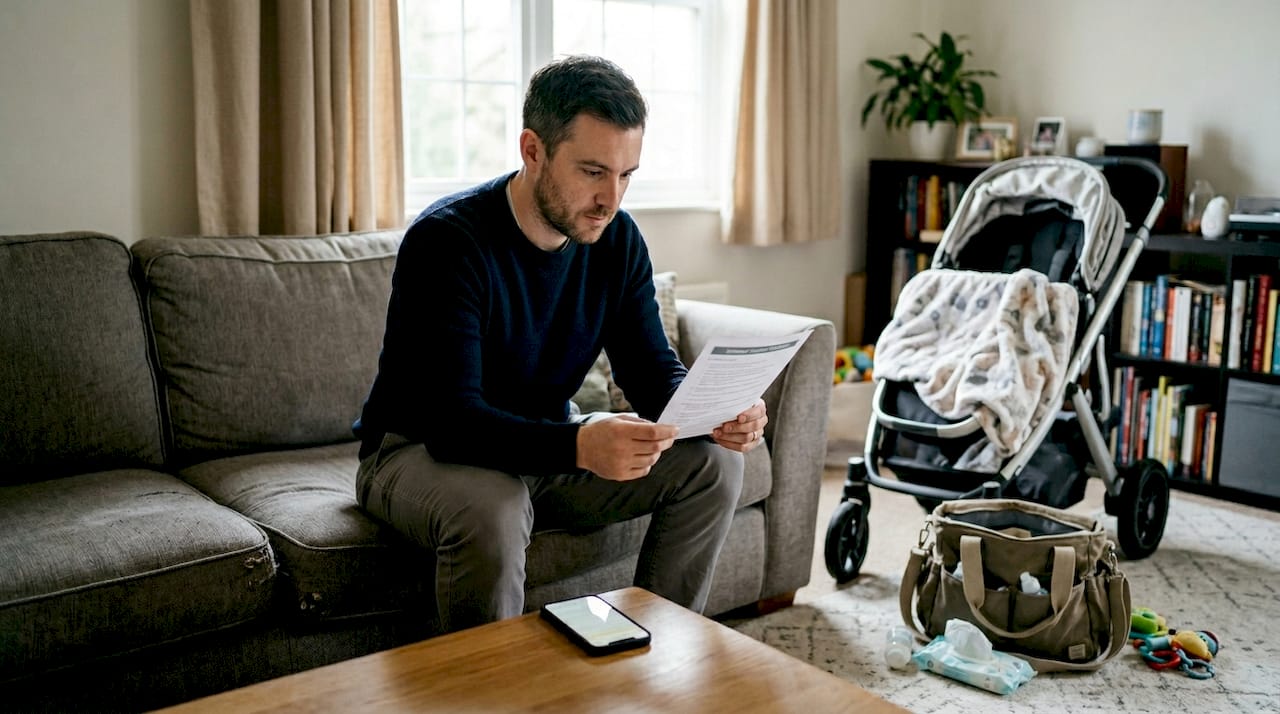
While parents should monitor their own well-being, children’s mental health also requires special attention.
Checklist for your child: Key signs and tools for every age
Children express emotional distress differently depending on their age, temperament, and environment. What looks like misbehavior is often a communication attempt. Here is how to watch for it systematically.
Red flags by developmental stage:
- Under 5: Regression (returning to earlier behaviors like bedwetting), excessive clinginess, loss of speech milestones, persistent tantrums beyond what is typical
- Ages 6 to 12: Falling grades, school refusal, social withdrawal, frequent stomachaches or headaches with no medical cause, expressions of hopelessness
- Teens: Sleep changes, secrecy, pulling away from family and friends, dramatic changes in appetite, statements about feeling worthless
The AAP recommends mental/emotional/behavioral screening beginning at 6 months of age, and caregiver depression screening from the first postpartum month. This is not just a one-time event. It is an ongoing part of well-child care.
Screening tools to know:
For children ages 6 to 18, the PSC-35 parent version is widely used. A score of 28 or above signals the need for further evaluation. For children under 5, the SWYC (Survey of Well-Being of Young Children) and ASQ:SE (Ages and Stages Questionnaire: Social-Emotional) are the go-to broadband screening tools recommended across California.
Keep in mind that scores are a starting point, not a diagnosis. A flagged score means a follow-up conversation with a provider, not a label.
California’s diverse population also means social drivers matter enormously. Trauma, community violence, food insecurity, and racism all show up in children’s emotional and behavioral symptoms. Any screening process should account for context, not just numbers. Our resources on top services for children, anxiety management checklists, and the checklist for teens go deeper on age-specific support.
With the fundamentals and tools organized, compare your family’s needs to these best-practice actions.
Comparison table: Recommended screening tools for parents and children
Use this table to quickly identify which tool fits your situation and what to do with the results.
| Tool | Who it’s for | What it screens | Cutoff score | Where to access |
|---|---|---|---|---|
| PHQ-9 | Adults (parents) | Depression | Score 10+ = follow up | Primary care, OB, telehealth |
| EPDS | New/expecting parents | Postpartum depression and anxiety | Score 10+ = follow up | OB, midwife, pediatrician |
| PSC-35 | Children ages 6 to 18 | Broad emotional and behavioral concerns | Score 28+ = follow up | Pediatrician, school counselor |
| SWYC | Children under 5 | Development, behavior, family risk | Flagged domain = follow up | Pediatrician, WIC, early intervention |
| ASQ:SE | Children under 6 | Social-emotional development | Age-based cutoff = follow up | Pediatrician, early childhood program |
All five tools are recommended by the American Academy of Pediatrics and used throughout California’s health system. Most are free, take under 10 minutes, and can be completed in a waiting room or at home.
If a score meets or exceeds the cutoff, the next step is not panic. It is action. Talk to your child’s pediatrician or your own provider. Bring the completed form with you. Ask for a referral to a licensed mental health professional. For families navigating barriers related to cost, language, or geography, check out our guide on improving mental health accessibility.
With tools and screening options mapped out, the next step is knowing what to do after a checklist highlights a possible concern.
What to do if a screening flags a concern
A positive screening result can feel alarming. But a flag is an invitation to look closer, not a verdict. Here is what to do next.
- Stay calm and collect your observations. Write down specific behaviors, when they started, how often they happen, and any recent stressors in the family.
- Contact your pediatrician or primary care provider. Share the completed screening form. Ask whether a mental health referral is appropriate.
- Request a culturally responsive provider. If your family speaks a language other than English, or if cultural context matters to your child’s experience, ask specifically for someone trained in that background.
- Access immediate support if needed. The National Maternal Mental Health Hotline (1-833-943-5746), CalHOPE BrightLife Kids, and the 988 Suicide and Crisis Lifeline are all free, available around the clock, and do not require insurance.
- Follow up on the referral. Behavioral health screening in California is designed to include referral pathways, but parents sometimes need to advocate for themselves or their child to make sure that referral actually happens.
For complex clinical situations, the Cal-MAP resource connects pediatricians with child psychiatry consultants, speeding up the process of getting the right diagnosis and treatment plan.
California-specific support includes options like Cal-MAP consults for providers, the National Maternal Mental Health Hotline, CalHOPE BrightLife Kids, and the 988 Lifeline, each designed to meet families where they are.
Our guides on choosing a child therapist and therapy steps for children can help you navigate what happens after that first referral.
After understanding response steps, let’s step back and question standard approaches, using California’s diversity and trauma-informed insights.
A fresh perspective: Going beyond checklists in California mental health
Here is something most mental health articles will not tell you: a checklist can miss the most important things.
Screening tools are powerful precisely because they are standardized. But standardization also means they were often designed with a narrow population in mind. A child who scores below the PSC-35 cutoff may still be struggling, especially if trauma, racism, poverty, or community violence are shaping their behavior in ways a 35-item questionnaire cannot fully capture.
The evidence is clear that ongoing observation combined with standardized screening offers the best outcomes for early detection and equity. That means your daily attentiveness as a parent carries real clinical weight. Numbers matter. So does your gut.
Relational health, meaning the quality of connection between a child and their caregiver, is itself a protective factor that no screening tool can fully quantify. A warm, attuned relationship buffers children against a surprising range of mental health risks. Our page on key strategies for youth anxiety speaks to this directly.
Use the checklist as your starting point, not your finish line.
Next steps: Connect with California’s mental health experts
If this checklist has surfaced something worth exploring further, you do not have to figure out the next steps alone.
At Revive Health Therapy, we offer trauma-informed care for children, teens, and parents across California, with in-person sessions in Walnut Creek and Oakland, and secure telehealth statewide. Whether your child needs support for anxiety or behavioral changes, or you are working through your own postpartum experience, our team uses evidence-based approaches like EMDR, CBT, and mindfulness. Explore our teen therapy resources, learn more about trauma-informed therapy, or find a provider near you through Oakland therapy. Sliding-scale fees and insurance accepted.
Frequently asked questions
What are the best mental health screening tools for parents in California?
Top tools include the PHQ-9 and EPDS for adults and the PSC-35, SWYC, or ASQ:SE for children, depending on age. Your pediatrician or OB can administer most of these during a standard visit.
How often should parents use a mental health checklist?
Screen at least annually and any time new or unusual symptoms appear. AAP guidelines recommend annual screenings after age 3 and caregiver screening starting at one month postpartum.
What should parents do if the checklist points to a problem?
Contact a mental health provider, bring your completed screening form, and ask for a referral. Resources like the National Maternal Mental Health Hotline and CalHOPE offer immediate free support while you wait.
Are there free resources for California families?
Yes. CalHOPE, BrightLife Kids, and the 988 Lifeline are all available at no cost and do not require insurance or prior authorization.
Recommended
- Mental health checklist for California teens: strategies & support – Revive Health Therapy
- Mental health tips for families in California 2026 – ReviveHealthTherapy
- Essential anxiety management checklists for CA families – Revive Health Therapy
- 7 Essential Mental Health Tips 2026 for Californians – ReviveHealthTherapy
- Simple ways to boost mental wellness with Ayurveda – Onyx Wellness
One Response