
Every parent faces that moment when big feelings, sudden worries, or lasting changes in their child’s behavior leave them searching for answers. In California, recognizing signs like frequent tantrums, sleep issues, or social withdrawal is the first step toward finding support that truly helps. Creating a foundation of emotional safety and open communication can ease your child’s anxiety about therapy and strengthen their progress at every stage.
Table of Contents
- Step 1: Prepare For Your Child’s Therapy Journey
- Step 2: Communicate With Your Child About Therapy
- Step 3: Collaborate With Therapists For Consistent Support
- Step 4: Monitor Progress And Encourage Emotional Growth
Quick Summary
| Key Point | Explanation |
|---|---|
| 1. Create a Supportive Environment | Prepare your child for therapy by fostering a safe and supportive atmosphere that encourages open engagement during sessions. |
| 2. Communicate Clearly About Therapy | Use age-appropriate language to explain what therapy entails, emphasizing that it is a supportive tool, not a punishment. |
| 3. Collaborate with Therapists | Establish clear communication with your child’s therapist to reinforce their strategies at home and monitor progress effectively. |
| 4. Monitor Emotional Growth | Regularly check in on your child’s feelings and behavior, celebrating small wins to reinforce their progress during therapy. |
| 5. Manage Your Own Emotions | Project confidence and calmness about therapy to alleviate your child’s anxieties and help them feel secure in the process. |
Step 1: Prepare for Your Child’s Therapy Journey
Your first step is understanding what preparation actually means. This isn’t about coaching your child to say certain things or hiding important details from the therapist.
It’s about creating an environment where your child feels supported, safe, and ready to engage in the therapeutic process. Good preparation sets the foundation for effective therapy and helps your child get the most from each session.
Start by recognizing the signs that therapy might benefit your child. Warning signs like frequent tantrums, sleep problems, or social withdrawal should prompt you to seek professional support. You might also notice significant behavioral changes, low self-esteem, or excessive worry across multiple areas of your child’s life.
Here’s what effective preparation includes:
- Collect relevant information about your child’s history, medical background, and any specific concerns
- Document behavioral changes and when they began
- Note any family stressors, transitions, or recent events
- Prepare a list of specific goals you’d like therapy to address
- Gather school reports or previous assessments if available
Having practical guidance on preparing for that first therapy session helps you organize these details and approach the process systematically.
Next, focus on managing your own emotions about therapy. Your child will pick up on your anxiety or hesitation. If you’re nervous about the process, that’s completely normal, but your child benefits when you project confidence and calm acceptance.
Talk openly with your child about what therapy is in age-appropriate language. For younger children, you might say a therapist is someone who helps kids with big feelings. For teens, explain that therapists help people work through challenges and develop coping strategies.
Address any fears your child might have about the therapist, the office, or the process itself. Many kids worry they’re in trouble or that something is wrong with them. Reassure them that therapy is a tool for growth, not punishment.
Avoid putting pressure on your child to “get better” quickly or perform in sessions. Therapy works best when your child feels safe exploring their thoughts without judgment or expectations.
Your preparation creates the foundation. When you approach this thoughtfully, your child enters therapy with less resistance and greater openness to the healing process.
Pro tip: Write down specific examples of concerning behaviors and the situations where they occur before your first appointment, so you can communicate clearly with the therapist instead of relying on memory during that first session.
To better understand the distinct roles in your child’s therapy journey, review this overview:
| Role | Main Responsibilities | Impact on Therapy |
|---|---|---|
| Parent | Supports, organizes, communicates | Provides emotional safety, builds trust |
| Child | Participates, shares, learns skills | Engagement drives progress, shapes outcomes |
| Therapist | Guides, teaches strategies, tracks progress | Professional expertise, customizes support |
| School/Counselors | Share observations, reinforce coping strategies | Extends learnings to new environments |
Step 2: Communicate With Your Child About Therapy
Effective communication sets the tone for your child’s entire therapy experience. What you say and how you say it directly impacts whether your child enters therapy with openness or resistance.
Start by explaining therapy in language your child actually understands. Avoid clinical jargon or adult-focused descriptions. For children ages 5-10, keep it simple: a therapist is someone trained to help kids talk about their feelings and work through tough situations.

For teens, be more direct. Explain that therapy provides tools for managing stress, understanding emotions, and working through challenges. You might say that just like athletes work with coaches to improve performance, therapy helps them strengthen their emotional skills.
Address the actual purpose of therapy in your household. Be honest about why you’re seeking help without shame or blame. Whether your child struggles with anxiety, has experienced trauma, or is navigating family changes, frame it as seeking support, not fixing something broken.
Here’s what to cover in your conversation:
- What a therapist does and how sessions work
- Why you think therapy could help them specifically
- That therapy is confidential, with limited exceptions
- What to expect during the first appointment
- That their feelings about therapy are valid
Use honest, age-appropriate information about their experiences to help them understand why therapy matters. Don’t oversimplify or hide important context.
Answer their questions directly and calmly. Kids worry about strange things sometimes: “Will the therapist tell you everything I say?” or “Am I in trouble?” These concerns deserve straightforward answers, not dismissal.
Maintain a calm, reassuring tone throughout these conversations. Your child will sense your anxiety if you’re nervous about therapy. If you’re uncomfortable with mental health topics, work through that separately so it doesn’t influence how your child perceives the process.
Understanding the therapy goals and type of therapy your child receives helps you have informed conversations at home. When you know what they’re working on, you can reinforce those skills naturally in everyday moments.
Encourage your child to ask questions and share concerns. Let them know therapy is a collaboration where their input matters. This builds buy-in and reduces anxiety about the unknown.
Your calm, honest communication removes the mystery and shame from therapy, helping your child see it as support rather than punishment.
Pro tip: Let your child help choose the therapist’s office location or ask them one small preference about their therapy space, giving them a sense of control that increases their investment in the process.
Here’s a quick comparison of communication approaches for different age groups in therapy:
| Age Group | Recommended Approach | Possible Concerns |
|---|---|---|
| Young Children (5-10) | Simple, supportive language | Fear of being in trouble |
| Preteens | Direct, honest explanations | Worry about confidentiality |
| Teens | Collaborative, empower autonomy | Resistance or embarrassment |
Step 3: Collaborate With Therapists for Consistent Support
Therapy works best when you and the therapist function as a team with shared goals. This collaboration transforms isolated sessions into a comprehensive support system that extends beyond the therapist’s office.
Start by establishing clear communication channels with your child’s therapist. Ask how they prefer to be contacted, how often you can expect updates, and what information is appropriate to share. Different therapists have different policies, so clarify these boundaries early.
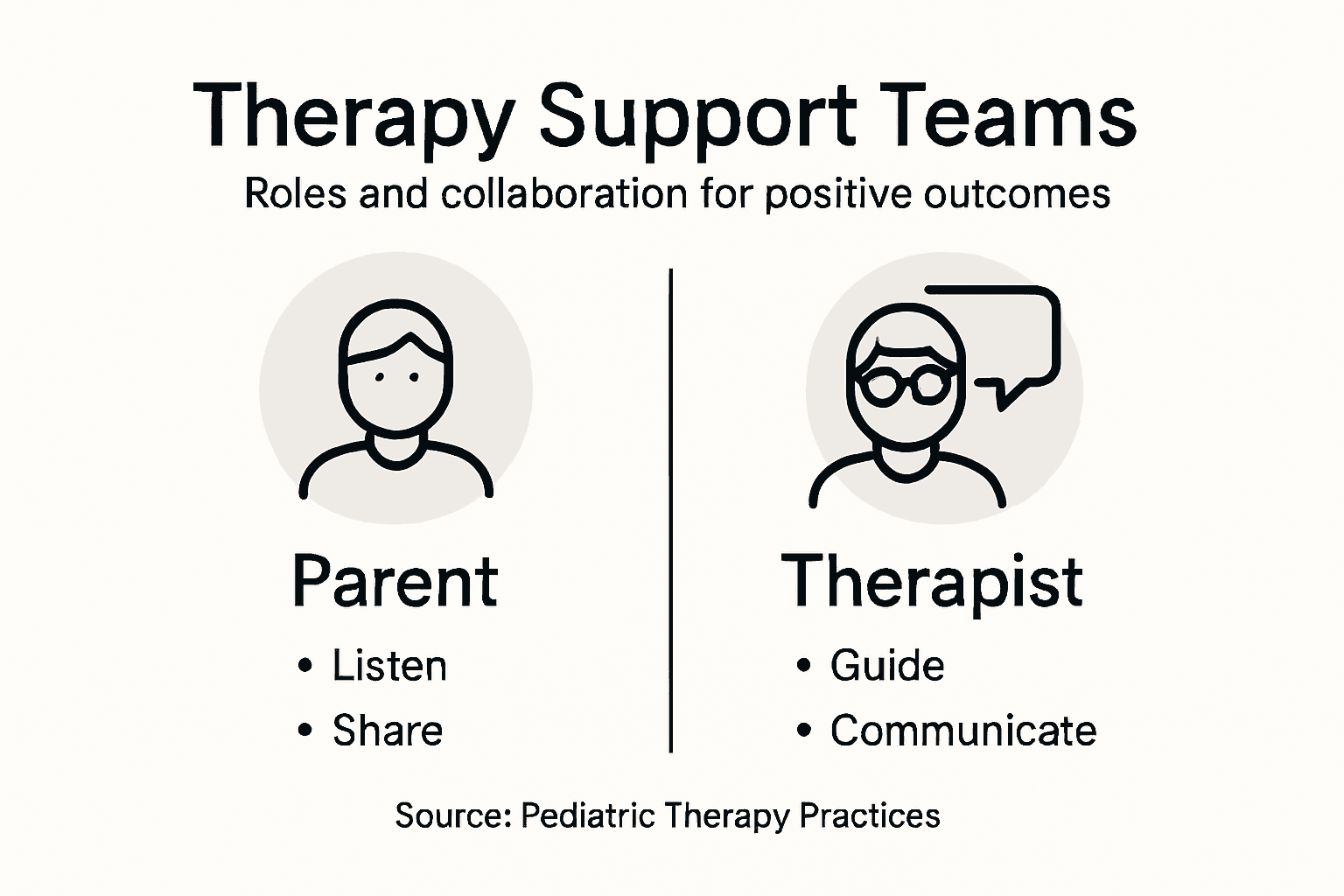
Understand the specific therapy goals the therapist is working toward. Effective therapy requires understanding your child’s therapy goals so you can reinforce progress at home. Ask your therapist what skills or strategies they’re teaching your child, then look for opportunities to practice those strategies in real-life situations.
Your role at home is equally important. Here’s what consistent support looks like:
- Reinforce therapeutic strategies in everyday moments
- Notice and acknowledge progress, no matter how small
- Report behavioral changes or concerns to the therapist
- Help your child complete any homework assignments from therapy
- Maintain stability and routine between sessions
- Follow through on recommendations without judgment
Parent involvement in therapy varies by age but is crucial for success. For younger children, your participation may include attending sessions. For teens, your involvement might look more like homework support and check-ins about their week.
Don’t hesitate to ask questions during sessions or through email. What does this exercise actually accomplish? How should I respond if my child resists the strategy? These questions show you’re invested in the process.
Balance supportive involvement with respecting your child’s privacy. Your child needs to feel they have a confidential space with the therapist. You’re not trying to extract information or monitor every detail, but rather stay informed enough to provide consistent reinforcement.
Report both progress and setbacks honestly. If your child struggled with an assignment or you noticed increased anxiety, tell the therapist. This information helps them adjust treatment and identify patterns you might miss alone.
When you align your approach at home with what the therapist is doing in sessions, you create momentum that accelerates your child’s healing and growth.
Pro tip: Keep a simple weekly log of behavioral observations and moments when your child used coping strategies, giving the therapist concrete examples to reference instead of relying on general impressions.
Step 4: Monitor Progress and Encourage Emotional Growth
Monitoring your child’s progress in therapy isn’t about surveillance. It’s about staying attuned to shifts in their emotional health and celebrating the small wins that add up to meaningful change.
Start by establishing a baseline before therapy begins. What does your child’s behavior look like now? How do they handle frustration, anxiety, or disappointment? Having this reference point helps you notice genuine progress over weeks and months.
Regularly check in with your child about their feelings and experiences. Ask open-ended questions that invite reflection rather than yes-or-no answers. Instead of “Did therapy help?” try “What was something you learned about yourself this week?”
Observe behavioral changes in real life. Progress in therapy often shows up in subtle ways. Notice whether your child is sleeping better, eating more regularly, or using coping strategies you’ve discussed together. Monitoring includes observing behavioral changes and ensuring healthy habits like sleep and nutrition to support emotional growth.
Here’s what to track without becoming obsessive:
- Emotional regulation in daily situations
- School performance and peer relationships
- Sleep and appetite patterns
- Willingness to try new coping strategies
- Reduction in anxiety, anger, or withdrawal behaviors
- Increased confidence or self-advocacy
Validate the progress you see. When your child uses a breathing technique during stress or talks through a problem instead of shutting down, acknowledge it. These moments reinforce learning and build momentum.
Listen attentively when your child opens up about therapy or their feelings. Put your phone away, maintain eye contact, and resist the urge to immediately problem-solve. Sometimes children just need to be heard.
Promote emotional understanding and coping skills by engaging with teachers and counselors for additional resources and support. Different settings provide different opportunities for growth.
Remember that progress isn’t always linear. Some weeks bring visible breakthroughs. Other weeks feel flat or even like regression. Healing isn’t a straight line, and patience matters tremendously during slower periods.
Your consistent observation and genuine celebration of progress, no matter how small, reinforces your child’s commitment to their own emotional growth.
Pro tip: Create a simple progress tracker where you note one observation each week, allowing you to look back and recognize patterns and improvements that might not be obvious day-to-day.
Empower Your Child’s Therapy Journey With Expert Support
Supporting your child through therapy can feel overwhelming when you want the best results. This article highlights the importance of preparation, honest communication, and collaboration to create a safe environment where your child can grow emotionally and overcome challenges such as anxiety or trauma. If you are seeking trauma-informed, evidence-based care that integrates approaches like CBT and mindfulness tailored for children, ReviveHealthTherapy offers trusted support designed to meet these exact needs.

Take the first step today by connecting with experienced therapists who prioritize clear communication and consistent care. Explore insights from our Uncategorized – ReviveHealthTherapy page and reach out via our contact page to schedule a session that fits your family’s lifestyle. Your child’s emotional growth deserves compassionate, expert guidance now.
Frequently Asked Questions
How can I effectively prepare my child for therapy?
Creating a supportive environment is essential for effective therapy. Gather relevant information about your child’s history, document behavioral changes, and outline specific therapy goals. This preparation helps both you and your child enter the therapy process with clarity and focus.
What should I talk to my child about before their first therapy session?
Discussing therapy openly can help reduce any anxiety your child might have. Use age-appropriate language to explain the therapist’s role and the purpose of therapy, emphasizing that it’s a safe space for growth and support. Reassure your child that their feelings about therapy are valid and important.
How can I collaborate with my child’s therapist effectively?
Establish clear communication channels with your child’s therapist to ensure a collaborative approach. Ask how often you can expect updates and what information you should share. Consistent collaboration reinforces the therapeutic strategies being taught during sessions, maximizing the support your child receives.
What signs should I monitor to assess my child’s progress in therapy?
Focus on observing emotional regulation, school performance, and social interactions. Note improvements in sleep patterns and willingness to use coping strategies, along with any confidence boosts. Regularly acknowledge these small wins to motivate your child and keep them engaged with their therapeutic journey.
How can I support my child’s emotional growth while they are in therapy?
Encourage open conversations about feelings and experiences related to therapy. Validate their emotions and celebrate even minor progress to reinforce their commitment to emotional growth. Create a simple progress tracker to document observations weekly, helping you recognize patterns over time.
Recommended
- How to Prepare for Child’s First Therapy Session Effectively – ReviveHealthTherapy
- 7 Types of Child Therapy Every Parent Should Know About – ReviveHealthTherapy
- NEW CHILDREN’S THERAPY – ReviveHealthTherapy
- Child Therapy: Healing Emotional Wounds Early – ReviveHealthTherapy
- Szülinapi Tortadíszítés ötletek Gyerekeknek Lépésről Lépésre
One Response