
A panic attack is a sudden, intense surge of fear with sharp physical symptoms that peaks within minutes, often without warning. An anxiety attack is a nonclinical term for a slower buildup of worry-driven symptoms that can stretch over hours. Both respond well to treatment. If episodes keep recurring or start disrupting your work, sleep, or relationships, that’s your signal to talk to a professional.
TL;DR:
- Panic attacks typically peak within ten minutes and often occur suddenly without warning, while anxiety episodes build gradually around a specific stressor.
- Physical symptoms such as a racing heart and sweating are common in both, but panic attacks often include sensations of detachment and fear of dying.
- Biological factors like a reactive nervous system and psychological history of trauma or worry increase the likelihood of recurrent panic or anxiety episodes.
- Emergency symptoms such as chest pain, fainting, or shortness of breath lasting over several minutes should prompt immediate medical evaluation.
- Cognitive behavioral therapy combined with medication and self-management strategies can significantly reduce long-term symptoms and prevent relapse.
Table of Contents
- Panic Attack vs Anxiety Attack: The Clinical Definitions
- Panic vs Anxiety Symptoms: A Side-by-Side Comparison
- What Causes Panic Attacks and Anxiety Episodes?
- How Do Doctors Diagnose Panic and Anxiety Disorders?
- Treatment for Anxiety Attacks and Panic Attacks
- What to Do During a Panic or Anxiety Attack
- Living With Panic or Anxiety Long Term
- A Clinician’s Note on Panic and Anxiety
- Getting Support From Revivehealththerapy
- Where to Learn More
- Sources
Panic Attack vs Anxiety Attack: The Clinical Definitions
The term “panic attack” has a real clinical definition. The DSM-5-TR describes it as an abrupt surge of intense fear or discomfort that reaches its peak within minutes, accompanied by at least four symptoms from a specific list, things like a racing heart, sweating, trembling, chest pain, or a fear of losing control. Clinicians diagnose panic attacks against this exact criteria set. It’s a recognized clinical event, not a vague descriptor.
“Anxiety attack,” by contrast, is not in the DSM at all. It’s a phrase people use to describe a gradual buildup of worry, tension, and physical unease, often tied to a specific stressor, a deadline, a conflict, a health scare, that intensifies over time. According to the Cleveland Clinic, clinicians treat these symptoms under the umbrella of a recognized anxiety disorder, like generalized anxiety disorder or social anxiety disorder, rather than as their own diagnosis.
Here’s where it gets confusing for most people: the two can overlap. Someone with generalized anxiety disorder might have a slow-building anxious episode that suddenly spikes into something that looks and feels exactly like a panic attack. Your body doesn’t always draw a clean line between the two categories, even when the diagnostic manual does.
Panic vs Anxiety Symptoms: A Side-by-Side Comparison
Both experiences share a lot of the same physical territory, which is exactly why people mix them up. A racing heart, sweating, shortness of breath, dizziness, tingling hands, and a tight chest show up in both. What separates them is speed, intensity, and the mental experience layered on top.
Panic attacks tend to hit like a wave that peaks almost immediately. The Cleveland Clinic notes that panic attacks typically peak within about ten minutes and often include a sense of unreality or detachment from your surroundings, along with a genuine fear that you’re dying or losing your mind. Anxiety attacks build more slowly, stay tethered to a specific worry, and can drag on for a longer stretch without ever reaching that same physical crescendo.
Use this quick checklist to map what you experienced:
- Did it come out of nowhere, with no obvious trigger? That leans panic.
- Did it build gradually around a specific worry (a bill, a conversation, a deadline)? That leans anxiety.
- Did it peak and fade within 10 to 30 minutes? Panic attacks tend to peak within a short period and then fade.
- Did you feel detached from reality or convinced something catastrophic was happening physically? That’s a hallmark of panic, not typical anxiety.
Timing is the most reliable tell. MedicalNewsToday points out that panic attacks often start abruptly and intensely, sometimes with no clear trigger at all, while anxiety-related episodes usually track a recognizable stressor and unfold more gradually.
What Causes Panic Attacks and Anxiety Episodes?
Biology loads the gun. Some people inherit a more reactive autonomic nervous system, meaning their amygdala, the brain’s threat detector, fires faster and harder in response to stress. That heightened sensitivity means physical sensations like a slightly elevated heart rate can get misread as an emergency, kicking off a fight-or-flight cascade that feels wildly disproportionate to the actual moment.
Psychological history plays a major role too. A background of trauma, chronic worry, or specific phobias primes the brain to interpret normal bodily sensations, a flutter in your chest, a wave of lightheadedness, as danger signals rather than noise. This kind of catastrophic misreading of physical symptoms is one of the most common mechanisms behind recurring panic attacks.
Situational and substance triggers matter just as much. Caffeine, stimulant medications, certain decongestants, and withdrawal from alcohol or sedatives can all provoke panic-like symptoms directly. For neurodivergent individuals, sensory overload, too much noise, light, or unpredictability, can trigger a similar physiological spike. Cumulative life stress also raises your baseline anxiety over time, and Nationwide Children’s notes that early intervention can prevent that baseline from escalating into full panic disorder or agoraphobia.
One practical note: if symptoms are new, unusually severe, or came with chest pain that doesn’t fit your usual pattern, get a medical evaluation first. Panic attacks can closely mimic cardiac or thyroid events, and ruling those out matters before assuming it’s anxiety.
How Do Doctors Diagnose Panic and Anxiety Disorders?
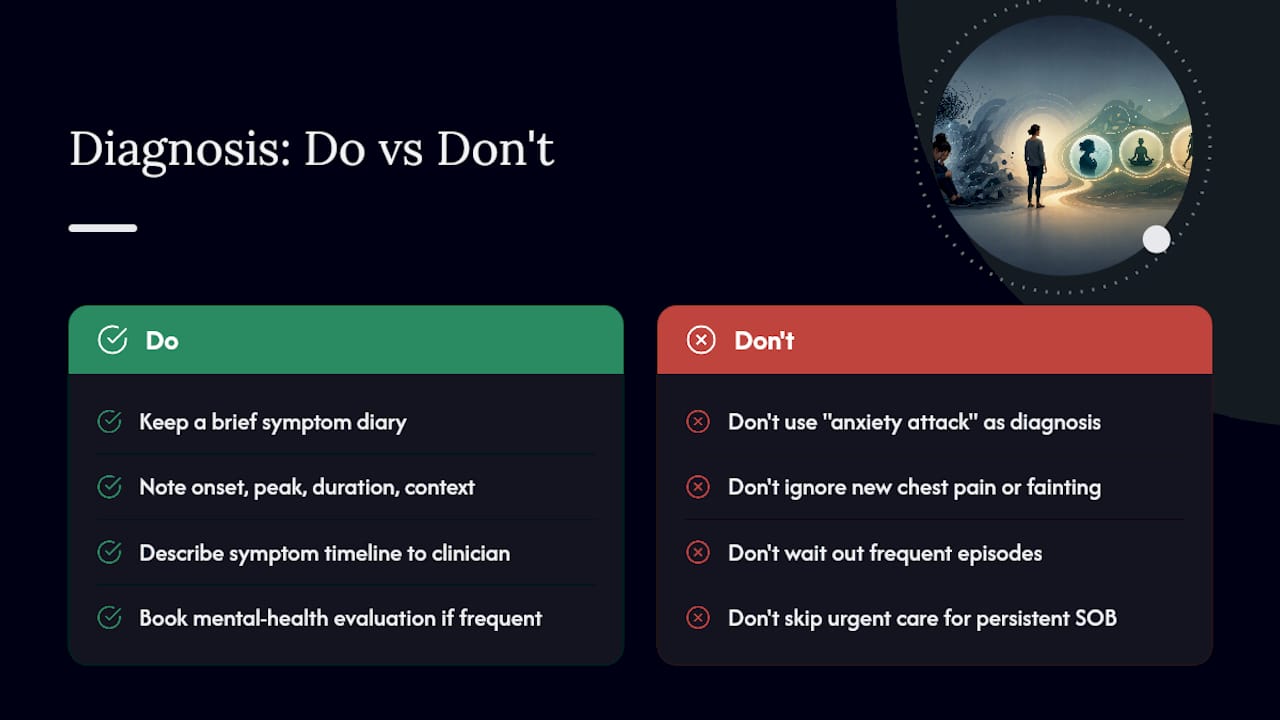
Diagnosis starts with a clinical interview, not a blood test. A clinician will walk through the timeline of your symptoms, what preceded the episode, how fast it peaked, and how long it lasted, and compare that against DSM-5-TR criteria. If you’re having recurrent, unexpected panic attacks along with ongoing worry about having more of them, that pattern points toward panic disorder specifically.
Because “anxiety attack” isn’t a formal diagnosis, clinicians instead evaluate whether your symptoms fit a recognized anxiety disorder, generalized anxiety disorder, social anxiety disorder, or something more specific. Keeping a brief symptom diary, noting onset, peak, duration, and context, genuinely speeds up an accurate diagnosis and helps your clinician build the right treatment plan from the first visit.
Some symptoms need emergency attention before any therapy conversation happens. Chest pain that’s new or different, fainting, or shortness of breath that doesn’t ease up after several minutes warrants a trip to urgent care or an ER, since panic attacks can closely mimic a heart attack. If episodes are frequent but not medically dangerous, that’s your cue to schedule a mental health evaluation rather than wait it out.
Treatment for Anxiety Attacks and Panic Attacks
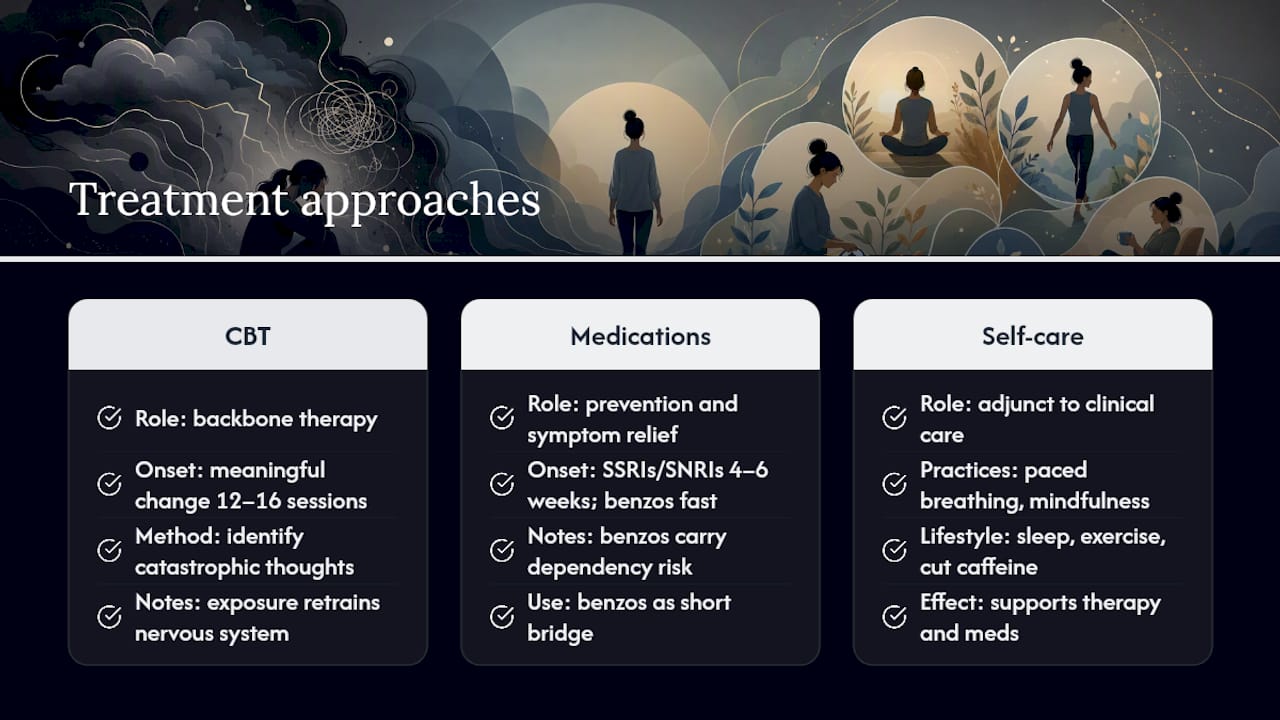
Cognitive behavioral therapy is the backbone of treatment for both. CBT works by identifying the specific thoughts that catastrophe-ize physical sensations, and exposure-based approaches gradually retrain your nervous system to tolerate those sensations without triggering a full spiral. The National Institute of Mental Health lists CBT as a first-line psychotherapy for panic disorder, and most people notice meaningful reduction in frequency and severity within 12 to 16 weekly sessions. You can read more about how different therapy modalities for anxiety work together in practice.
Medication has a role too, though the timelines differ by class. SSRIs and SNRIs are typically used for longer-term prevention and take four to six weeks to show real benefit. Short-term benzodiazepines can ease acute symptoms fast, but they carry dependency risk with extended use, which is why most prescribers treat them as a bridge rather than a long-term solution.
Self-management fits alongside professional care, not instead of it. Paced breathing, mindfulness practice, consistent sleep, regular exercise, and cutting back on caffeine all show real support as adjuncts to clinical treatment for anxiety and panic symptoms. A step-by-step CBT approach combined with medication, when a prescriber recommends it, tends to outperform either one alone for moderate to severe cases.
What to Do During a Panic or Anxiety Attack
When an attack hits, the goal is to interrupt the spiral before it peaks. Follow these steps in order:
- Ground yourself. Name five things you see, four you can touch, three you hear, two you smell, one you taste. This pulls your attention out of the fear loop and back into the room.
- Breathe with a longer exhale. Inhale for four counts, hold for four, exhale for six. The extended exhale signals your nervous system to downshift out of fight-or-flight.
- Adjust your body. Sit down if you can, loosen tight clothing, sip water. Repeat a short script to yourself: “This will peak and pass. I can breathe. I’m safe right now.”
- Escalate if it doesn’t ease. If symptoms don’t start easing after 20 to 30 minutes, or if you develop new chest pain or fainting, treat it as a medical situation and seek emergency care.
Pro Tip: Practice your grounding script during a calm moment, not just mid attack. Rehearsing it when your nervous system isn’t flooded makes it dramatically easier to recall when you actually need it. For more structured techniques, this practical coping guide walks through additional options.
Living With Panic or Anxiety Long Term
The outlook here is genuinely good. Panic disorder and anxiety disorders respond well to treatment, and most people see substantial symptom reduction with consistent therapy, medication when appropriate, or both. The trap to avoid is avoidance itself: skipping places, situations, or activities that might trigger an attack feels protective in the moment but reinforces the fear long term.
Behavioral strategies that gradually reintroduce avoided situations, paired with occasional booster therapy sessions after your main treatment ends, cut relapse risk significantly according to guidance from Nationwide Children’s. Sleep consistency, regular movement, and continued practice of the breathing and grounding skills you learned in therapy keep your baseline lower between episodes. If symptoms worsen or you’re having thoughts of self-harm, contact a crisis line or emergency services immediately rather than waiting for your next scheduled appointment.
A Clinician’s Note on Panic and Anxiety
If you’ve ever wondered whether what you felt “counts” as a real panic attack, it does, and you don’t need a perfect DSM match to deserve support. Evidence-based therapies such as CBT, EMDR, and mindfulness approaches are available both in person in the Bay Area and through secure telehealth statewide. A first session usually covers your symptom history, triggers, and goals, nothing more intense than that. Sliding-scale fees and insurance, including HSA and FSA, make starting that conversation more realistic than most people expect.
— Amy
Getting Support From Revivehealththerapy
Reading about the difference between panic and anxiety attacks is useful, but it doesn’t replace a clinician who can actually assess your pattern and build a plan around it. CBT, EMDR, and mindfulness based therapy are offered in person in Oakland, Walnut Creek, and San Francisco or via secure telehealth anywhere in California, with sliding-scale fees and insurance acceptance to help make ongoing care more accessible.
Your first session focuses on your symptom timeline: when episodes started, how they unfold, and what’s already helped or hasn’t. Before booking, it helps to jot down when your attacks tend to happen, what symptoms show up most, and any patterns you’ve noticed with sleep, caffeine, or stress. If panic or anxiety has started interfering with work, sleep, or relationships, that’s reason enough to stop managing it alone. You can learn why starting psychotherapy tends to pay off faster than people expect, or go ahead and book a session to get a plan built around your specific pattern.
Where to Learn More
- Cleveland Clinic: clarifies DSM status and diagnostic labeling.
- NIMH: overview of panic disorder treatment options.
- MedicalNewsToday: onset and trigger differences explained.
- SAMHSA’s National Helpline: free, confidential crisis support and treatment referrals.
This article is general information, not a substitute for advice from a qualified doctor. Consult a qualified healthcare professional about your own circumstances before acting on anything here.
Sources
- Panic attack vs anxiety attack: What is the difference?
- Panic Attacks & Panic Disorder: Causes, Symptoms & Treatment
- What’s The Difference Between a Panic Attack and an Anxiety Attack?
- Panic Disorder: What You Need to Know