
Everyday life in California can feel overwhelming when anxiety or depression makes trauma recovery seem out of reach. The impact of trauma is not always visible, yet it touches every part of your body and mind. Finding affordable, evidence-based care like Cognitive Behavioral Therapy or Eye Movement Desensitization and Reprocessing opens a real path to healing. This guide highlights why understanding the phases of recovery and choosing the right therapy can make the journey safer and more effective, putting you back in control.
Table of Contents
- Defining Trauma Recovery And Therapy’s Role
- Types Of Trauma And Common Reactions
- Evidence-Based Therapies For Trauma Recovery
- How Emdr, Cbt, And Mindfulness Work
- Choosing The Right Approach And Therapist
- Barriers, Costs, And Access To Trauma Therapy
Key Takeaways
| Point | Details |
|---|---|
| Trauma Recovery is a Journey | Recovery from trauma involves gradual reconnection of the brain, body, and emotions, rather than a single event. Therapy plays a crucial role in guiding this process safely. |
| Therapy Must Focus on Safety | Establishing a foundation of safety is essential for effective trauma recovery, requiring a stable therapeutic relationship and self-regulation skills. |
| Evidence-Based Therapies are Key | Approaches like Cognitive Behavioral Therapy (CBT) and Eye Movement Desensitization and Reprocessing (EMDR) are proven methods that aid in processing trauma. |
| Finding the Right Therapist Matters | The therapeutic alliance is crucial for recovery; selecting a therapist with relevant experience and a compatible approach significantly affects healing outcomes. |
Defining Trauma Recovery and Therapy’s Role
Trauma recovery isn’t a single event or moment of “getting over it.” It’s a deeply personal journey where your brain, body, and emotions gradually reconnect and heal. When trauma happens, your nervous system gets stuck in a protective response mode, constantly scanning for danger even when you’re safe. Recovery means moving out of that survival state and rebuilding your sense of security in the world.
Therapy serves as the structured path that guides this healing. Rather than trying to push traumatic memories away or force yourself to move on, evidence-based therapy approaches help you process what happened in a controlled, safe environment. Trauma recovery involves distinct phases, beginning with establishing safety and gradually moving through remembrance, processing grief, and ultimately reconnecting with yourself and your relationships. This isn’t linear. You might find yourself moving between phases, and that’s completely normal.
The foundation of all effective trauma recovery is safety. Think of it like rebuilding a house after an earthquake: before you can redecorate or fix the interior, the foundation must be solid. Therapy creates that foundation by helping you develop physical, emotional, and relational safety through consistent, predictable therapeutic relationships. A skilled therapist becomes a stable presence you can trust, someone who helps your nervous system learn that recovery is possible. During this phase, you’ll develop practical self-regulation skills like grounding techniques and breathing exercises that give you tools to manage overwhelming emotions when they arise.
Once that foundation is established, therapy approaches like Cognitive Behavioral Therapy (CBT) and Eye Movement Desensitization and Reprocessing (EMDR) help you process the trauma itself. These aren’t about reliving the trauma or forcing yourself to “get over it.” Instead, they’re about updating how your brain stores the traumatic memory so it no longer feels like an active threat. The goal is straightforward: transform a traumatic memory from something that controls your present into something you can remember without being hijacked by fear and panic.
Pro tip: If you’re beginning your recovery journey, prioritize finding a therapist trained in trauma-informed care who specializes in evidence-based methods like EMDR or CBT, as the quality of your therapeutic relationship directly impacts your healing outcomes.
Types of Trauma and Common Reactions
Trauma doesn’t come in just one flavor. What triggers a severe response in one person might look different for someone else, but the underlying impact on your nervous system follows recognizable patterns. Trauma can stem from combat experiences, physical or sexual assault, serious accidents, natural disasters, sudden loss, or even witnessing violence. In California, you might encounter survivors dealing with wildfire trauma, car accidents on crowded freeways, or workplace violence. The specifics vary, but your body’s alarm system responds in remarkably similar ways across different trauma types.
When trauma happens, your brain shifts into survival mode. This triggers common emotional and physical stress reactions that can feel confusing or frightening. You might experience intense fear that lingers long after the danger has passed, or anxiety that shows up without obvious warning. Many people describe a sense of detachment, like they’re watching their life from outside their body. Physically, your heart races, your muscles tense, and you might feel constantly on edge. These aren’t signs of weakness or failure. Your nervous system is doing exactly what it was designed to do: protect you from perceived danger.

Beyond the immediate physical responses, trauma often creates psychological patterns that stick around. Flashbacks transport you back to the traumatic moment as if it’s happening right now. Irritability surfaces unexpectedly, making you snap at people you care about. You might find yourself avoiding places, people, or situations that remind you of what happened, which can gradually shrink your world and increase isolation. Sleep becomes difficult. Concentration falters at work or school. Some people experience emotional numbness, where they feel disconnected from joy, sadness, or anything in between. Others swing between emotional extremes. Your relationships might suffer as you withdraw or struggle to trust.
The critical thing to understand is that these reactions are normal responses to abnormal events. Your brain isn’t broken. It’s responding logically to what it perceives as ongoing threat. This is exactly why therapy matters. When you work with a trained trauma therapist, they help your nervous system understand that you’re safe now, and they teach you how to process what happened so these reactions gradually fade. Recovery starts with recognizing that what you’re experiencing makes sense given what you’ve been through.
Pro tip: Keep a simple record of your trauma reactions for a week before seeking therapy, noting what triggers your anxiety or flashbacks; this information helps your therapist understand your specific patterns and tailor treatment more effectively.
Evidence-Based Therapies for Trauma Recovery
Not all therapy approaches work equally well for trauma. When you’re looking for help, you want methods backed by solid research that show real results. The good news is that decades of clinical practice and scientific study have identified specific therapeutic approaches that consistently help people move through trauma and reclaim their lives. These aren’t experimental or unproven techniques. They’re established methodologies that have been tested on thousands of people across different trauma types.
Cognitive Behavioral Therapy (CBT) and Related Approaches
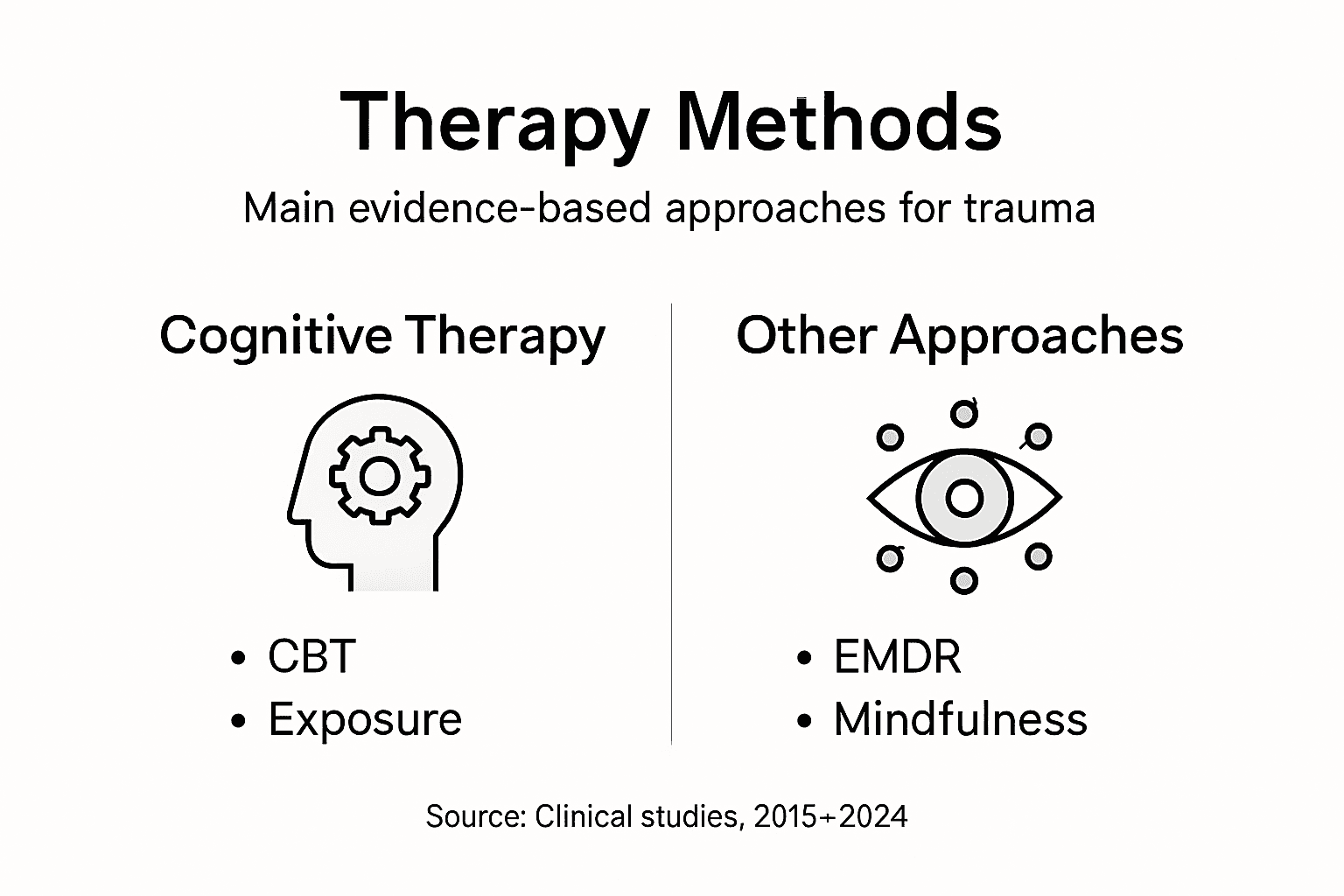
Cognitive behavioral therapy stands as one of the most thoroughly researched trauma treatments available. The core idea is straightforward: trauma changes how you think about yourself, other people, and the world. CBT helps you identify and gently challenge these distorted thoughts while teaching you practical coping skills. Trauma-focused cognitive behavioral therapy, a specialized version for trauma survivors, combines CBT techniques with structured exposure to traumatic memories in a safe, controlled way. Similarly, cognitive processing therapy focuses on how trauma has changed your beliefs about safety, trust, and control. Research shows that cognitive processing therapy, prolonged exposure therapy, and trauma-focused cognitive behavioral therapy have the strongest evidence for treating PTSD and trauma-related symptoms. These approaches work across a broad range of symptoms and outcomes, which matters because trauma affects people differently.
Eye Movement Desensitization and Reprocessing (EMDR)
EMDR therapy operates differently from talk-based approaches, though it’s equally grounded in evidence. During EMDR, your therapist guides you to process traumatic memories while your eyes follow a rhythmic side-to-side movement. This bilateral stimulation appears to help your brain reprocess traumatic memories so they lose their emotional charge. You’re not talking through the trauma in detail. Instead, your brain is updating how it stores the memory. Studies consistently show that EMDR and cognitive behavioral therapy significantly reduce PTSD symptoms, depression, and anxiety. Many California therapists find EMDR particularly effective for clients who struggle with talk-based therapy or who need faster symptom relief.
Why Multiple Approaches Matter
Your recovery journey is unique. What works beautifully for one person might not resonate with another. A skilled trauma therapist will conduct a thorough assessment and work with you to choose the approach that fits your specific situation, your preferences, and your life circumstances. Some people benefit from combining approaches. Others find that starting with one method and potentially adding another creates the strongest healing path. The research consistently shows that when these evidence-based therapies are delivered by trained clinicians, they create measurable improvement in symptoms and quality of life.
Pro tip: Ask potential therapists which evidence-based trauma approaches they specialize in and request their experience level with at least two different modalities, as therapist expertise and comfort with the method directly impacts treatment success.
How EMDR, CBT, and Mindfulness Work
Understanding how different trauma therapies work helps you know what to expect and why your therapist chooses a particular approach. Each method targets trauma through different mechanisms, but all share the goal of helping your brain process what happened so it no longer controls your present.
EMDR: Reprocessing Through Bilateral Stimulation
EMDR operates on a principle that might sound unusual at first. During EMDR sessions, EMDR therapy facilitates trauma recovery by encouraging clients to focus on traumatic memories while engaging in bilateral sensory stimulation, which reduces the vividness and emotional impact of these memories. Your therapist guides your eyes back and forth while you recall the traumatic event. Some therapists use tapping or sounds instead of eye movements. What matters is the bilateral stimulation happening while your brain is accessing the traumatic memory. This combination appears to activate your brain’s natural healing processes. The memory itself doesn’t disappear, but it changes. The emotional charge diminishes. The vividness fades. Instead of feeling like it’s happening now, the memory becomes something you recall as something that happened in the past. EMDR follows an eight-phase protocol designed to carefully prepare you, process the memory, and integrate the healing into your daily life.
CBT: Changing Thoughts, Behaviors, and Responses
Cognitive behavioral therapy takes a different route. Trauma rewires your thinking patterns. You might believe “I’m not safe” or “People can’t be trusted” or “I’m broken.” These thoughts feel absolutely true because your traumatic experience seemed to prove them. CBT helps you examine these beliefs carefully. Your therapist doesn’t tell you to think positively or just get over it. Instead, you gather evidence together. You test your beliefs against reality. Gradually, you develop more balanced thoughts. Alongside this cognitive work, CBT includes behavioral changes. If trauma has made you avoid certain places or activities, your therapist helps you gradually face these situations in a controlled way. This exposure teaches your nervous system that these situations aren’t actually dangerous. The combination of changing thoughts and changing behaviors creates lasting improvement.
Mindfulness: Building Present-Moment Awareness
Mindfulness works differently still. Rather than changing thoughts or processing memories, mindfulness meditation and practices enhance mental well-being by cultivating present-moment awareness and emotional regulation. When trauma keeps pulling your attention to the past or worries about the future, mindfulness gently anchors you to what’s happening right now. In this moment, you’re safe. Your therapist teaches you to notice thoughts and feelings without judgment, letting them pass like clouds. Over time, this practice reduces anxiety and builds resilience. Mindfulness integrated with cognitive behavioral therapy combines acceptance strategies with cognitive restructuring, creating a more comprehensive approach that addresses both how you think and how you relate to your thoughts.
Here’s a quick comparison of three major trauma therapies and their unique features:
| Therapy Type | Main Mechanism | Best For | Typical Session Focus |
|---|---|---|---|
| EMDR | Bilateral sensory stimulation | Processing traumatic memories | Memory recall with guided eye movement |
| CBT | Challenging thought patterns | Negative beliefs, avoidance | Thought analysis, behavioral experiments |
| Mindfulness | Present-moment awareness | Anxiety, emotional regulation | Meditation, nonjudgmental observation |
Pro tip: Ask your therapist how they combine these approaches or whether they recommend starting with one method before adding another, since many California trauma therapists use integrated protocols tailored to your specific symptoms and preferences.
Choosing the Right Approach and Therapist
Finding the right therapist for trauma recovery isn’t like picking a restaurant from online reviews. This is one of the most important decisions you’ll make for your healing journey, and it deserves careful thought. The good news is that knowing what to look for makes the process manageable and increases your chances of finding someone who can genuinely help you move through your trauma.
What Makes a Therapist Right for You
Start by getting clear on your own needs. Are you dealing with anxiety that spikes without warning? Depression that makes getting out of bed feel impossible? Intrusive memories that hijack your focus? Different therapists specialize in different presentations of trauma. Next, consider which therapeutic approach resonates with you. Some people prefer the structured, practical focus of CBT. Others feel drawn to EMDR’s approach of processing without extensive talking. Still others want mindfulness woven throughout their therapy. Choosing the right therapist involves clarifying personal needs, understanding therapy types, and considering practical factors, including cost and scheduling. But here’s what research emphasizes most: the relationship between you and your therapist matters enormously. This is called the therapeutic alliance, and it’s not a soft skill. It’s a core component of treatment success. You need someone you trust, someone who feels safe to be vulnerable with, someone who understands trauma’s impact without judgment.
Practical Screening Questions
When you contact a potential therapist, ask directly about their experience with trauma. Specifically, how many trauma clients have they worked with? What percentage of their practice is trauma-focused? How many years have they been doing this work? Ask which evidence-based approaches they use. Ask whether they’ve received specialized training in EMDR or CBT or whichever method interests you. In California, verify that they’re licensed as a Licensed Marriage and Family Therapist (LMFT), Licensed Clinical Social Worker (LCSW), or Licensed Professional Counselor (LPC). Ask about their sliding scale fees or insurance acceptance, since individual therapy is only helpful if you can actually afford it. Some therapists offer telehealth options, which matters if you live in a rural area or have mobility challenges.
The First Session Matters
Your first session is as much about you evaluating the therapist as it is about them assessing you. Pay attention to how the therapist listens. Do they interrupt? Do they seem genuinely curious about your experience? Do they move too quickly into treatment recommendations, or do they take time to understand your specific situation? For complex trauma, personalized phased interventions with strong relational focus are essential, meaning your therapist should tailor their approach to you rather than forcing you into a one-size-fits-all model. Trust your gut. If something feels off, it’s worth exploring another option. Trauma recovery requires you to rebuild trust in yourself and others. Your therapy relationship should strengthen that trust, not undermine it.
Pro tip: Schedule consultations with 2-3 therapists before committing to one, asking the same questions each time so you can compare their responses and how comfortable you feel with each person before beginning treatment.
Barriers, Costs, and Access to Trauma Therapy
Knowing that therapy works is one thing. Actually getting access to it is another. In California and across the United States, significant barriers prevent people from receiving the trauma care they need. Understanding these obstacles helps you navigate them and find solutions that work for your situation.
The Cost Reality
Money remains the biggest barrier for most people. A single therapy session typically costs between 100 and 250 dollars when paying out of pocket, and trauma recovery usually requires sustained treatment. That’s not a few sessions. That’s months or years of weekly appointments. For someone already struggling with anxiety and depression, the financial burden feels impossible. Insurance helps, but many plans have high deductibles, require pre-authorization for mental health services, or limit the number of covered sessions. If you’re self-employed or work part-time without benefits, insurance might not be an option at all. Some therapists offer sliding scale fees based on income, but these spots fill quickly. Others accept HSA and FSA accounts, which provides some relief if you have access to those benefits. The reality is that cost creates a two-tiered mental health system: those who can afford therapy get it, and those who cannot often suffer in silence.
Systemic and Practical Barriers
Beyond cost, multiple barriers to implementing trauma-informed care exist in healthcare settings, including limited financial and staffing resources, resistance to change, and insufficient leadership engagement. These organizational issues mean that even when funding exists, trauma-informed therapy services remain understaffed and underfunded. In rural California areas, finding a trauma-specialized therapist might mean driving an hour or more. Waitlists stretch for months. Stigma still exists. Some people fear judgment or worry that seeking therapy means something is fundamentally wrong with them. Cultural and language barriers complicate access. If English isn’t your first language, finding a therapist who speaks your language and understands your cultural context becomes exponentially harder. Digital tools and culturally adapted interventions show promise in expanding access to effective trauma treatments, particularly for communities historically underserved by mental health systems.
Practical Solutions in California
Despite these barriers, California has created some solutions worth pursuing. Many therapists now offer telehealth, which eliminates transportation barriers and expands options beyond your immediate geographic area. Community mental health centers often provide sliding scale services specifically for low-income individuals. Some insurance plans cover telehealth at the same rate as in-person sessions. Universities with psychology programs sometimes offer therapy at reduced costs through training clinics. If you’re military or a veteran, benefits often cover trauma-focused therapy. Nonprofits and crisis organizations sometimes offer free or low-cost support groups and preliminary counseling that can be a starting point. Finding accessible trauma care requires knowing what resources exist in your area, and it’s worth spending time researching options specific to your situation.
See how therapy access barriers differ and which solutions exist in California:
| Barrier Type | Typical Challenge | Available California Solutions | Who Benefits Most |
|---|---|---|---|
| Financial | High session costs | Sliding scale, university clinics | Low-income individuals |
| Geographic | Lack of local specialists | Telehealth, community centers | Rural residents |
| Cultural/Language | Language or cultural mismatch | Multilingual therapists, adapted programs | Non-English speakers |
Pro tip: Contact 3-4 nonprofit mental health organizations in your county first, as they often have the most accurate information about sliding scale providers, community resources, and insurance coverage options before privately searching for individual therapists.
Take the Next Step in Your Trauma Recovery Journey with Expert Support
Understanding how trauma reshapes your thoughts, emotions, and body is only the first part of healing. If you find yourself struggling with anxiety, flashbacks, or emotional overwhelm due to trauma, it is crucial to connect with a therapist who offers evidence-based therapies like EMDR, CBT, and mindfulness to rebuild your sense of safety and wellbeing. At ReviveHealthTherapy, we specialize in trauma-informed care tailored to your unique recovery needs while respecting your pace.

Don’t wait to regain control over your life. Explore our Uncategorized – ReviveHealthTherapy resources to learn more about trauma impacts and treatment options. When you are ready, start with a free 20-minute consult to discuss your specific concerns and treatment preferences with a licensed therapist at ReviveHealthTherapy. Your healing deserves real expertise and compassionate care designed to help you overcome the barriers holding you back. Take that important first step today.
Frequently Asked Questions
What is trauma recovery and how does therapy play a role in it?
Trauma recovery is a personal journey of healing where the brain, body, and emotions reconnect after a traumatic experience. Therapy guides this process by providing a safe environment to process traumatic memories and develop coping skills, helping individuals move from a state of survival to one of security.
What types of therapies are effective for trauma recovery?
Evidence-based therapies like Cognitive Behavioral Therapy (CBT) and Eye Movement Desensitization and Reprocessing (EMDR) are effective for trauma recovery. CBT helps challenge distorted thoughts related to trauma, while EMDR uses bilateral stimulation to reprocess traumatic memories, reducing their emotional charge.
How long does trauma therapy usually take to show results?
The duration of trauma therapy varies based on individual experiences and therapeutic approaches. Some individuals may start feeling relief after a few sessions, while others may require months or longer for substantial progress. Consistency in attending sessions plays a critical role in recovery.
How can I find a trauma-informed therapist?
To find a trauma-informed therapist, clarify your needs and research their experience with trauma-focused treatments. It’s important to ask about their specialized training in evidence-based methods like CBT or EMDR and ensure you feel comfortable with their approach to therapy.
Recommended
- How to Find a Therapist for Accessible Trauma Care – ReviveHealthTherapy
- Role of Mindfulness in Therapy: Real Impact on Anxiety and Depression – ReviveHealthTherapy
- Therapy for Teens: Building Self-Growth and Resilience – ReviveHealthTherapy
- New individual therapy – ReviveHealthTherapy
- trauma test free: Powerful Childhood & Adult 4 Trauma Self
5 Responses