
Every California parent knows how quickly anxiety can disrupt a teenager’s everyday life, turning simple routines into uphill battles. With the rise in teen anxiety since the COVID-19 pandemic, families face a new urgency to find real solutions that work. This guide spotlights affordable, evidence-based therapy options like CBT and EMDR, offering practical insights to help your teen build lasting emotional strength and confidence.
Table of Contents
- Defining Teen Anxiety And Therapy Approaches
- Types Of Teen Anxiety Disorders Explained
- Evidence-Based Therapies: Cbt, Emdr, Mindfulness
- How Therapy Works For Teens In California
- Costs, Insurance, And Accessibility For Families
- Common Barriers And Mistakes To Avoid
Key Takeaways
| Point | Details |
|---|---|
| Understanding Teen Anxiety | Teen anxiety is a complex condition manifested by persistent worry and can significantly disrupt daily life. Early intervention is crucial to minimize long-term effects. |
| Effective Therapy Approaches | Evidence-based strategies like Cognitive Behavioral Therapy, Group Therapy, and Mindfulness Techniques provide comprehensive support tailored to teens. |
| Recognition of Anxiety Disorders | Identifying specific anxiety disorders is essential for tailored therapeutic interventions, as symptoms differ widely among adolescents. |
| Financial Considerations | Families should explore insurance options and community resources to find affordable mental health support for their teenagers. |
Defining Teen Anxiety and Therapy Approaches
Teenagers today are experiencing unprecedented levels of psychological stress, with anxiety becoming an increasingly prevalent mental health challenge. Teen anxiety is more than typical adolescent nervousness – it represents a complex emotional state characterized by persistent worry, heightened fear responses, and significant disruptions to daily functioning.
Research indicates that anxiety disorders among teens have dramatically increased in recent years, particularly in the aftermath of the COVID-19 pandemic. According to a systematic review protocol on psychoeducational interventions, early intervention and targeted therapeutic approaches can substantially mitigate anxiety’s long-term impact.
Effective therapy approaches for teen anxiety typically involve multiple evidence-based strategies:
- Cognitive Behavioral Therapy (CBT): Helps teens identify and restructure negative thought patterns
- Group Therapy: Provides peer support and shared learning environments
- Mindfulness Techniques: Teaches emotional regulation and stress management skills
- Family Systems Therapy: Involves family dynamics in treatment and support
The goal of these therapeutic interventions is not merely symptom reduction but comprehensive emotional skill-building. Anxiety intervention techniques focus on developing assertive communication, establishing healthy boundaries, and reinforcing personal values.
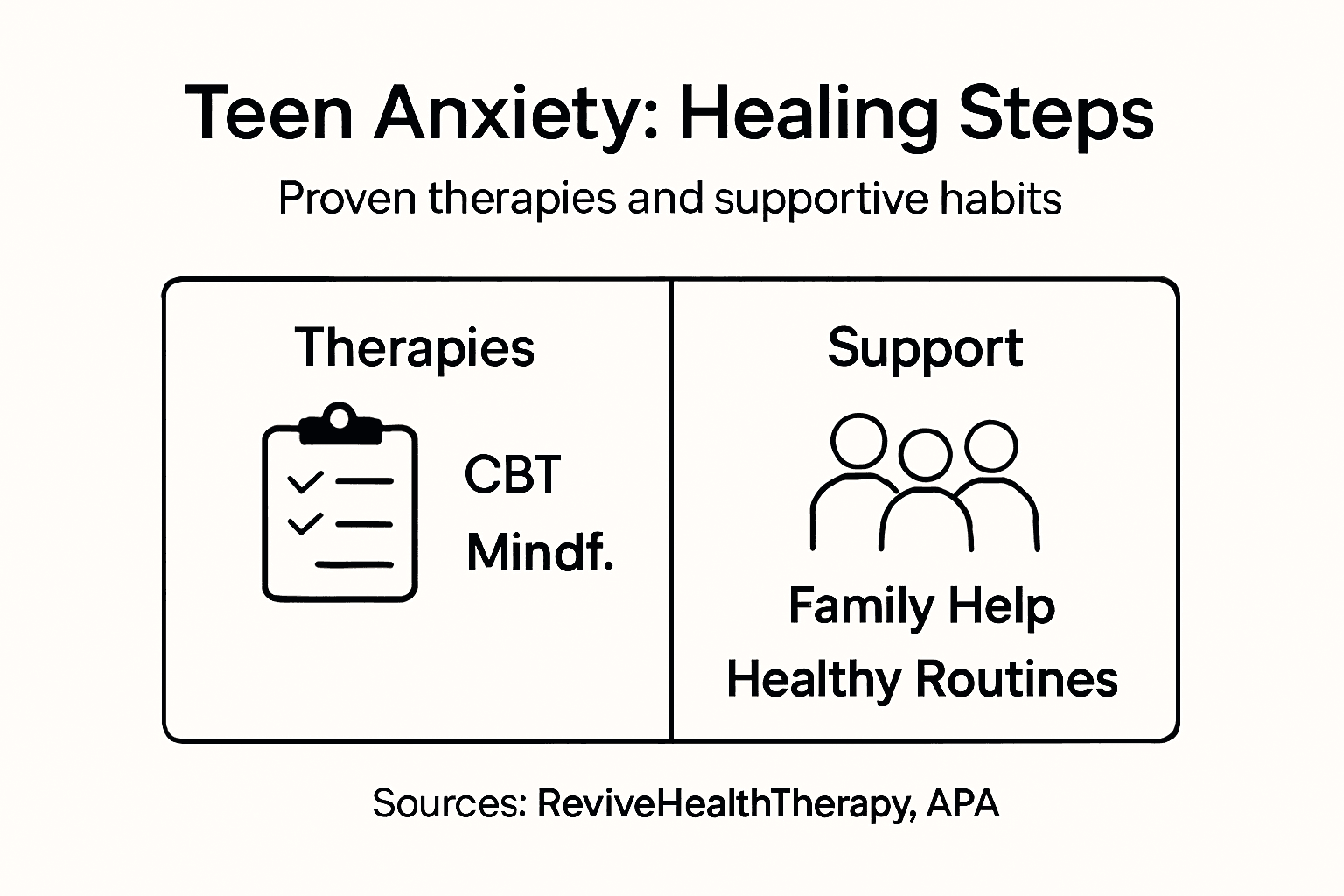
Here’s how the main therapy approaches for teen anxiety compare:
| Therapy Approach | Focus Area | Typical Setting | Best For |
|---|---|---|---|
| Cognitive Behavioral Therapy | Changing negative thought patterns | Individual sessions | Persistent anxious thoughts |
| Group Therapy | Peer support and shared learning | Group environments | Teens seeking connection |
| Mindfulness Techniques | Emotional regulation and relaxation | Class or one-on-one | Stress and overwhelm |
| Family Systems Therapy | Improving family dynamics | Family sessions | Family conflict impact |
Therapeutic Goals for Teen Anxiety Treatment:
- Identify underlying anxiety triggers
- Develop healthy coping mechanisms
- Build emotional resilience
- Restore academic and social functioning
Effective teen anxiety treatment requires a holistic, personalized approach that addresses individual psychological needs and environmental factors.
Pro tip: Work collaboratively with your teenager to select a therapy approach that feels comfortable and engaging for them, ensuring higher treatment success rates.
Types of Teen Anxiety Disorders Explained
Anxiety disorders are complex psychological conditions that manifest differently in teenagers, creating unique challenges for diagnosis and treatment. Specific anxiety disorders impact adolescents through various debilitating symptoms that disrupt daily functioning and emotional well-being.
The primary types of teen anxiety disorders include:
- Generalized Anxiety Disorder (GAD): Characterized by persistent and excessive worry about multiple life areas
- Social Anxiety Disorder: Intense fear of social interactions and potential judgment
- Panic Disorder: Recurring unexpected panic attacks with physical symptoms
- Specific Phobias: Extreme fear responses to particular objects or situations
- Separation Anxiety Disorder: Intense fear of being separated from attachment figures
Diagnostic Characteristics of Teen Anxiety Disorders:
- Persistent and excessive worry lasting six months or longer
- Significant impairment in academic, social, or personal functioning
- Physical symptoms like rapid heartbeat, sweating, and trembling
- Avoidance of anxiety-triggering situations
Teenagers experiencing anxiety symptoms common to multiple disorders often struggle with overlapping manifestations that require nuanced therapeutic approaches. Understanding these distinctions helps mental health professionals develop targeted intervention strategies.
The following table summarizes different types of teen anxiety disorders and their key challenges:
| Disorder Type | Main Challenge | Common Symptoms |
|---|---|---|
| Generalized Anxiety Disorder | Ongoing, wide-ranging worries | Trouble relaxing, tension |
| Social Anxiety Disorder | Fear of negative judgment | Avoidance, blushing |
| Panic Disorder | Unexpected panic attacks | Heart palpitations, dizziness |
| Specific Phobias | Extreme fear of one subject | Irrational avoidance |
| Separation Anxiety Disorder | Distress when apart from loved ones | Clinginess, nightmares |
Accurate diagnosis is critical, as each anxiety disorder requires a unique therapeutic approach tailored to the specific symptom profile and individual needs.
Pro tip: Work closely with a mental health professional to conduct comprehensive assessments that differentiate between anxiety disorder types and develop personalized treatment plans.
Evidence-Based Therapies: CBT, EMDR, Mindfulness
Treatment for teen anxiety has evolved significantly, with several evidence-based therapeutic approaches offering hope and healing. Cognitive behavioral therapy alters brain activity in profound ways, providing a scientifically validated approach to managing adolescent mental health challenges.
Three primary evidence-based therapies stand out for treating teen anxiety:
- Cognitive Behavioral Therapy (CBT): Focuses on identifying and restructuring negative thought patterns
- Eye Movement Desensitization and Reprocessing (EMDR): Helps process traumatic memories and reduce anxiety triggers
- Mindfulness-Based Interventions: Teaches emotional regulation and stress management skills
Key Benefits of Evidence-Based Anxiety Therapies:
- Scientifically proven effectiveness
- Personalized treatment approaches
- Long-term coping skill development
- Neurological and psychological healing
Mindfulness practices have shown remarkable potential, with school-based mindfulness training demonstrating significant improvements in adolescent emotional regulation and anxiety reduction. These approaches provide teens with practical tools to understand and manage their anxiety symptoms.
Effective therapy is not about eliminating anxiety, but teaching teenagers how to navigate and respond to their emotional experiences constructively.
Pro tip: Encourage your teenager to actively participate in therapy selection, ensuring they feel comfortable and engaged with the chosen therapeutic approach.
How Therapy Works for Teens in California
Navigating teen mental health support in California requires understanding the comprehensive landscape of therapeutic interventions. School-based mental health services play a critical role in early identification and intervention for adolescent anxiety across diverse communities.
Therapy for teens in California typically follows a structured, multi-dimensional approach:
- Initial Assessment: Comprehensive evaluation of individual psychological needs
- Personalized Treatment Planning: Tailored therapeutic strategies based on specific symptoms
- Collaborative Care Model: Involving parents, schools, and mental health professionals
- Flexible Service Delivery: Options including in-person, telehealth, and school-based counseling
Key Components of Teen Therapy in California:
- Confidential and age-appropriate therapeutic environments
- Evidence-based intervention techniques
- Culturally sensitive treatment approaches
- Holistic support addressing mental, emotional, and social dimensions
California’s mental health system offers multi-tiered treatment programs designed to meet varying levels of adolescent mental health needs. These range from outpatient counseling to intensive support programs, ensuring comprehensive care for teens experiencing anxiety.
Effective teen therapy is not about fixing problems, but empowering adolescents with tools to understand and manage their emotional experiences.
Pro tip: Research local mental health resources and insurance coverage options to maximize accessible, affordable therapy support for your teenager.

Costs, Insurance, and Accessibility for Families
Navigating the financial landscape of teen mental health treatment can feel overwhelming for California families seeking anxiety therapy. Mental health insurance coverage varies widely, requiring careful investigation to understand available resources and potential out-of-pocket expenses.
Key financial considerations for teen therapy include:
- Insurance Plan Types: Private insurance, Medicaid, Medicare, and employer-sponsored plans
- Coverage Variations: Different co-pays, session limits, and provider network restrictions
- Sliding Scale Options: Income-based fee structures for families with limited resources
- Telehealth Alternatives: Often more affordable and flexible therapy delivery methods
Financial Support Strategies for Teen Therapy:
- Verify specific mental health benefits in your insurance policy
- Explore school-based counseling programs
- Investigate local community mental health centers
- Consider telehealth options for cost-effective treatment
For families with Medicare-covered dependents, outpatient mental health services provide comprehensive support options, including individual and group psychotherapy, psychiatric evaluations, and medication management.
Affordable mental health care is not a luxury but a fundamental right for families seeking support for their teenagers.
Pro tip: Contact your insurance provider directly to request a detailed breakdown of mental health coverage, including specific anxiety treatment benefits and any pre-authorization requirements.
Common Barriers and Mistakes to Avoid
Parents and educators often encounter significant challenges when addressing teen anxiety, with many unintentionally perpetuating harmful patterns. Adolescent anxiety barriers can emerge from well-intentioned but misguided approaches that inadvertently increase psychological distress.
Common mistakes families frequently make include:
- Minimizing Symptoms: Dismissing anxiety as ‘just a phase’
- Avoiding Difficult Conversations: Not creating safe spaces for open dialogue
- Inconsistent Support: Providing sporadic rather than consistent emotional assistance
- Lack of Professional Guidance: Attempting to manage complex anxiety independently
Critical Mistakes to Prevent:
- Ignoring early warning signs of anxiety
- Expecting teens to ‘just get over it’
- Forcing social interactions without support
- Criticizing anxiety-related behaviors
Understanding mental health identification challenges is crucial for parents seeking to support their teenagers effectively. Many barriers stem from societal stigma, limited mental health education, and misunderstandings about adolescent emotional development.
Effective support requires patience, empathy, and a commitment to understanding your teenager’s unique emotional landscape.
Pro tip: Create a judgment-free environment at home where your teenager feels safe discussing their emotions without fear of criticism or dismissal.
Take Confident Steps Toward Healing Teen Anxiety Today
Understanding the complex nature of teen anxiety and its varied disorders is the first step in providing your teenager with effective support and healing. Youth struggling with persistent worries, social fears, or panic attacks need more than just reassurance — they require evidence-based, trauma-informed therapy tailored to their unique experiences. At ReviveHealthTherapy, we specialize in empowering teens through proven methods like CBT, EMDR, and mindfulness to build emotional resilience and restore daily functioning.

Explore our Uncategorized – ReviveHealthTherapy for insights and resources focused on adolescent mental wellness. If you are ready to provide your teen with personalized care and compassionate guidance, start by filling out this quick form for your free 20 min consultation with a therapist. Take control of your teenager’s mental health journey now and unlock the tools they need for lasting growth and healing.
Frequently Asked Questions
What are the signs that my teenager may be experiencing anxiety?
Common signs of anxiety in teenagers include persistent worry, trouble relaxing, physical symptoms like rapid heartbeat and trembling, social avoidance, and difficulty in academic or personal functioning.
How can therapy help teens with anxiety disorders?
Therapy, particularly evidence-based approaches like Cognitive Behavioral Therapy (CBT) and mindfulness techniques, helps teens identify negative thought patterns, develop coping strategies, and build emotional resilience, ultimately improving their ability to manage anxiety.
What types of therapy are effective for treating teen anxiety?
Effective therapies for teen anxiety include Cognitive Behavioral Therapy (CBT), Eye Movement Desensitization and Reprocessing (EMDR), mindfulness-based interventions, and family systems therapy, each targeting specific aspects of anxiety management.
How can parents support their teenager in therapy for anxiety?
Parents can support their teenager by creating a judgment-free environment for open discussions about emotions, collaborating on therapy choices, being consistent in emotional support, and seeking professional guidance when needed.
Recommended
- 7 Types of Therapy for Anxiety and How They Can Help You – ReviveHealthTherapy
- Therapy for Teens: Building Self-Growth and Resilience – ReviveHealthTherapy
- Teen Therapy: Key Benefits for California Families – ReviveHealthTherapy
- Therapy for Teens: Key Approaches and Real Impact – ReviveHealthTherapy
3 Responses