
Watching your teenager struggle with anxiety can feel overwhelming, especially when you’re unsure how to help effectively. Many parents in California face this challenge, searching for reliable strategies that actually work. This guide walks you through evidence-based therapeutic approaches specifically designed for teen anxiety, from recognizing early warning signs to implementing proven treatment methods. You’ll discover practical steps to support your teen’s mental health journey, including how to select qualified therapists, engage your teen in treatment, and reinforce coping skills at home. Whether you’re just beginning to notice concerning behaviors or seeking to enhance current treatment, these strategies will equip you with the knowledge and confidence to make a meaningful difference in your teen’s wellbeing.
Table of Contents
- Key takeaways
- Recognizing and understanding teen anxiety
- Preparing to manage your teen’s anxiety effectively
- Step-by-step guide to managing teen anxiety with proven therapies
- Troubleshooting common challenges in teen anxiety management
- Supporting your teen’s mental health journey with professional help
- Frequently asked questions
Key Takeaways
| Point | Details |
|---|---|
| Early identification matters | Recognizing signs of anxiety early improves treatment outcomes and helps tailor targeted support. |
| CBT is gold standard | Cognitive behavioral therapy is the gold standard for treating teen anxiety. |
| Family and professional support | Involving families and qualified clinicians improves adherence and treatment effectiveness. |
| Telehealth increases access | Telehealth options expand access to high quality care for California teens. |
Recognizing and understanding teen anxiety
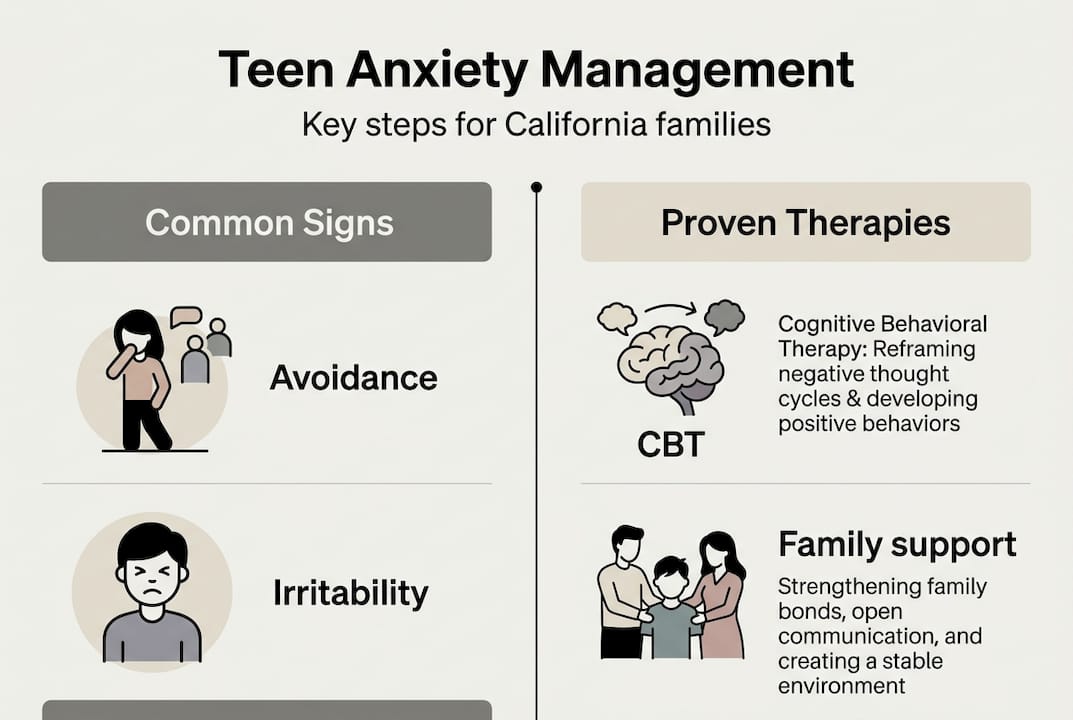
Identifying anxiety in teenagers requires careful attention because symptoms often disguise themselves as typical adolescent behavior. Your teen might display excessive worry about school performance, social situations, or future events that seems disproportionate to actual circumstances. Physical manifestations include frequent headaches, stomach problems, sleep disturbances, and unexplained fatigue. Behavioral changes like avoiding previously enjoyed activities, withdrawing from friends, or showing increased irritability signal potential anxiety issues.
Understanding what triggers your teen’s anxiety helps you provide targeted support. Common triggers include academic pressure, social media comparisons, peer relationships, family conflicts, and major life transitions. Some teens experience generalized anxiety affecting multiple life areas, while others face specific phobias or social anxiety limited to particular situations. Early identification of anxiety signs improves treatment outcomes for teens, making your role as an observant parent crucial.
Recognizing anxiety types matters because treatment approaches vary. Generalized anxiety disorder involves persistent worry across situations, social anxiety centers on fear of judgment in social settings, and panic disorder includes sudden intense fear episodes. Separation anxiety, though less common in teens, can emerge during transitions like starting college. Each type responds differently to therapeutic interventions.
Pro Tip: Keep a simple journal noting when your teen seems most anxious, what situations preceded the anxiety, and how they responded. This pattern recognition helps therapists develop more targeted treatment plans and gives you concrete examples to discuss during initial consultations.
Many parents mistake anxiety symptoms for laziness, defiance, or typical teenage moodiness. Your teen refusing to attend social events might reflect social anxiety rather than antisocial tendencies. Academic struggles could stem from anxiety-induced concentration problems rather than lack of effort. Understanding these distinctions prevents miscommunication and helps you respond with appropriate support instead of frustration.
Preparing to manage your teen’s anxiety effectively
Before starting any intervention, invest time researching evidence-based therapeutic approaches proven effective for adolescent anxiety. Cognitive behavioral therapy stands out as the gold standard, teaching teens to identify thought patterns driving anxiety and develop healthier responses. Family therapy addresses communication patterns and family dynamics contributing to anxiety. Individual therapy provides a safe space for teens to explore feelings without parental presence, which some adolescents need for full honesty.
Understanding types of teen therapy every parent should know empowers you to make informed decisions about which approach suits your teen best. Dialectical behavior therapy helps teens struggling with emotional regulation alongside anxiety. Exposure therapy gradually introduces anxiety-triggering situations in controlled settings, building confidence through successful experiences. Mindfulness-based approaches teach present-moment awareness, reducing worry about future events.
Preparing your teen psychologically for therapy involvement requires honest, supportive conversation. Explain that therapy isn’t punishment but rather skill-building similar to athletic training or music lessons. Address common misconceptions like “therapy means I’m crazy” by normalizing mental health care as routine maintenance for emotional wellbeing. Share that many successful adults use therapy to manage stress and anxiety effectively.
Pro Tip: Frame therapy as gaining a personal coach for life skills rather than fixing something broken. This positive framing reduces stigma and increases teen buy-in, especially for adolescents worried about peer judgment if friends discover they’re in therapy.
Setting realistic expectations prevents disappointment and premature treatment abandonment. Anxiety management represents a gradual process, not an overnight fix. Initial sessions focus on building therapeutic relationships and assessment rather than immediate symptom relief. Noticeable improvement typically emerges after four to eight sessions, with full benefits developing over several months. Understanding this timeline helps you and your teen maintain commitment during early stages when progress feels slow.
Gather practical information before starting therapy. Research therapists specializing in adolescent anxiety within reasonable distance or offering telehealth services. Verify insurance coverage and out-of-pocket costs to avoid financial surprises. Prepare questions about therapeutic approaches, session frequency, expected duration, and how parents stay informed while respecting teen confidentiality. This preparation demonstrates your commitment and models the organizational skills helpful for anxiety management.

Step-by-step guide to managing teen anxiety with proven therapies
Start by identifying qualified teen therapists in California through multiple channels. Ask your pediatrician for referrals, as medical professionals often maintain networks of trusted mental health providers. Contact your insurance company for in-network therapists specializing in adolescent anxiety. Search online directories filtering for teen anxiety expertise, California licensure, and preferred therapeutic approaches. Read reviews from other parents while recognizing that therapeutic fit varies individually.
Schedule initial consultations with two or three therapists before committing. Many providers offer brief phone conversations helping you assess compatibility. During these calls, ask about their experience treating teen anxiety, therapeutic approaches used, typical treatment duration, and how they involve parents. Notice whether the therapist communicates clearly and seems genuinely interested in your teen’s specific situation. Trust your instincts about whether this person could build rapport with your adolescent.
Attend the first assessment session together, then allow your teen private time with the therapist. This initial meeting establishes treatment goals, assesses anxiety severity, and begins building the therapeutic relationship. Structured therapy engagement significantly reduces anxiety symptoms in teens, making consistent attendance crucial. Collaborate with the therapist to set specific, measurable goals like “attend three social events monthly without panic attacks” rather than vague aims like “feel less anxious.”
Support consistent therapy attendance by treating sessions as non-negotiable appointments similar to medical checkups. Build sessions into your family schedule, arranging transportation and clearing conflicts in advance. If your teen resists attending, explore underlying concerns like fear of vulnerability or worry about confidentiality rather than forcing compliance. Sometimes resistance signals poor therapeutic fit requiring a provider change.
Reinforce skills learned in therapy through daily home practice. Ask your teen to share one coping strategy they’re working on without pressuring them to reveal session details. Practice techniques together like deep breathing exercises, progressive muscle relaxation, or mindfulness meditation. Create a calm space at home where your teen can use these skills when anxiety emerges. Your participation normalizes the process and strengthens skill retention.
| Step | Action | Timeline |
|---|---|---|
| 1 | Research and contact therapists | Week 1-2 |
| 2 | Complete initial consultations | Week 2-3 |
| 3 | Attend first assessment session | Week 3-4 |
| 4 | Establish regular session schedule | Week 4 onward |
| 5 | Implement home practice routine | Week 5 onward |
| 6 | Review progress with therapist | Month 2-3 |
Monitor progress through regular check-ins with the therapist, respecting your teen’s confidentiality while staying informed about treatment direction. Most therapists schedule periodic parent sessions discussing progress, home strategies, and any concerning patterns. Track observable changes like improved sleep, increased social engagement, better academic performance, or reduced physical complaints. Celebrate small victories, recognizing that anxiety management involves gradual improvement with occasional setbacks.
Communicate regularly with your teen’s therapist about any significant life changes, family stressors, or concerning behaviors emerging between sessions. This information helps therapists adjust treatment approaches and address new challenges promptly. Maintain open dialogue with your teen about their therapy experience without demanding session details, asking general questions like “Is therapy feeling helpful?” or “Do you feel comfortable with your therapist?”
Pro Tip: Create a simple rating system where your teen scores their anxiety level daily on a scale of one to ten. This objective tracking reveals patterns, shows progress over time, and provides concrete data for therapy discussions, making abstract feelings more manageable and measurable.
Troubleshooting common challenges in teen anxiety management
Teenagers resist therapy for numerous valid reasons beyond simple defiance. Privacy concerns top the list, with teens fearing therapists will share everything with parents or that confidentiality doesn’t truly exist. Some adolescents feel stigmatized by needing mental health support, worried about peer judgment if friends discover they’re in therapy. Others experienced negative past therapy encounters, creating reluctance to try again. Timing issues matter too, as teens juggling academic pressure, extracurriculars, and social lives may view therapy as another overwhelming obligation.
Address resistance through open conversation validating their concerns while explaining therapy benefits. Clarify confidentiality rules, explaining that therapists only share information when safety concerns arise. Emphasize that therapy teaches practical skills applicable beyond anxiety management, like communication techniques and stress management benefiting all life areas. Offer choices within boundaries, like selecting their therapist or choosing between in-person and telehealth sessions, giving teens agency in their treatment.
Maintain engagement and motivation through consistent encouragement without pressure. Acknowledge that therapy requires effort and vulnerability, praising your teen’s willingness to participate. Avoid interrogating them about session content, which feels invasive and discourages openness. Instead, express general support like “I’m proud you’re working on this” or “I notice you seem calmer lately.” Connect therapy skills to their interests, like an athlete using visualization techniques or a musician applying breathing exercises before performances.
Recognize when changing therapeutic approaches becomes necessary. If your teen shows no improvement after three months of consistent attendance, discuss alternative methods with the therapist. Poor therapeutic fit, where your teen doesn’t connect with the provider despite their qualifications, justifies finding a new therapist. Sometimes anxiety worsens temporarily as teens confront difficult emotions, but sustained deterioration requires treatment adjustment. Trust your parental instincts combined with professional guidance when making these decisions.
| Challenge | Solution | When to Implement |
|---|---|---|
| Therapy resistance | Validate concerns, offer choices, clarify confidentiality | Before starting or at first signs of reluctance |
| Lack of progress | Discuss alternative approaches with therapist | After 3 months without improvement |
| Poor therapeutic fit | Research new providers, schedule consultations | When teen consistently expresses discomfort |
| Family communication issues | Engage in family therapy sessions | When anxiety links to family dynamics |
| Skill practice avoidance | Make practice collaborative and brief | As soon as home practice begins |
Family therapy improves communication patterns and support systems crucial for teen anxiety management. Parental involvement and adaptive strategies help overcome therapy resistance while strengthening family relationships. These sessions address how family dynamics contribute to or alleviate anxiety, teaching everyone more effective communication and conflict resolution skills. Parents learn to provide support without enabling avoidance behaviors, a delicate balance essential for long-term anxiety management.
Handle setbacks with patience and perspective, recognizing that anxiety management rarely follows a straight upward trajectory. Stressful periods like exams, social conflicts, or family changes may temporarily increase anxiety despite ongoing treatment. View setbacks as learning opportunities, helping your teen identify what triggered the regression and which coping skills proved most helpful. Avoid catastrophizing temporary struggles as treatment failure, which undermines your teen’s confidence and motivation.
Supporting your teen’s mental health journey with professional help
Navigating teen anxiety becomes significantly easier with professional guidance tailored to your family’s specific needs. Revive Health Therapy offers comprehensive teen therapy services throughout California, specializing in evidence-based approaches like cognitive behavioral therapy, mindfulness techniques, and trauma-informed care. Their therapists understand the unique challenges California teens face, from academic pressure to social media impacts, providing culturally relevant support that resonates with adolescents.

Understanding why seek psychotherapy in California helps you recognize the value of professional mental health support beyond what well-meaning parents can provide alone. Licensed therapists bring specialized training in anxiety disorders, offering objective perspectives and proven techniques that family members cannot replicate. Their experience with numerous teen clients provides insights into what works across different personalities and anxiety types.
Geographic barriers no longer limit access to quality mental health care thanks to secure online therapy in California. Telehealth sessions provide the same therapeutic benefits as in-person meetings while offering scheduling flexibility and eliminating travel time. This convenience particularly helps busy families and teens uncomfortable with office visits, removing common obstacles to consistent treatment engagement.
Frequently asked questions
How can I tell if my teen’s anxiety needs professional help?
Watch for anxiety that persists beyond two weeks, interferes with daily functioning like school attendance or social relationships, or causes significant distress for your teen. Signs like persistent anxiety impacting daily life indicate need for professional help. Physical symptoms without medical explanation, avoidance of normal activities, or expressions of hopelessness warrant immediate professional evaluation.
What’s the difference between normal teen stress and anxiety disorder?
Normal stress relates to specific situations and resolves once the stressor passes, like nervousness before a test that disappears afterward. Anxiety disorders involve excessive, persistent worry disproportionate to circumstances, continuing even when no clear stressor exists. The intensity, duration, and impact on functioning distinguish clinical anxiety from typical adolescent stress.
How long does teen anxiety therapy typically take?
Most teens notice improvement within two to three months of consistent weekly therapy, though full treatment often spans six to twelve months. Severity of anxiety, therapeutic approach used, and teen engagement all influence duration. Some teens benefit from shorter interventions, while others require longer support, making individual assessment essential.
Can I attend therapy sessions with my teenager?
Initial assessment sessions typically include parents, but ongoing therapy usually occurs privately to build trust and encourage teen openness. Therapists schedule periodic parent sessions to discuss progress and home strategies while maintaining teen confidentiality. This balance respects adolescent autonomy while keeping parents appropriately informed and involved.
What if my teen refuses to go to therapy?
Explore the reasons behind refusal through calm conversation, addressing specific concerns like privacy fears or scheduling conflicts. Offer compromises like trying three sessions before deciding or choosing their preferred therapist. If refusal persists despite reasonable accommodations, consider whether family therapy might provide an easier entry point to mental health support.
Recommended
- Manage anxiety with proven therapies in California 2026 – Revive Health Therapy
- Start teen counseling in California: 2026 parent guide – ReviveHealthTherapy
- Therapy for Teen Anxiety: Proven Steps to Healing – ReviveHealthTherapy
- Teen Therapy: Key Benefits for California Families – ReviveHealthTherapy
- Holistic Health Clinic in Santa Monica – Reimagining Mental Health