
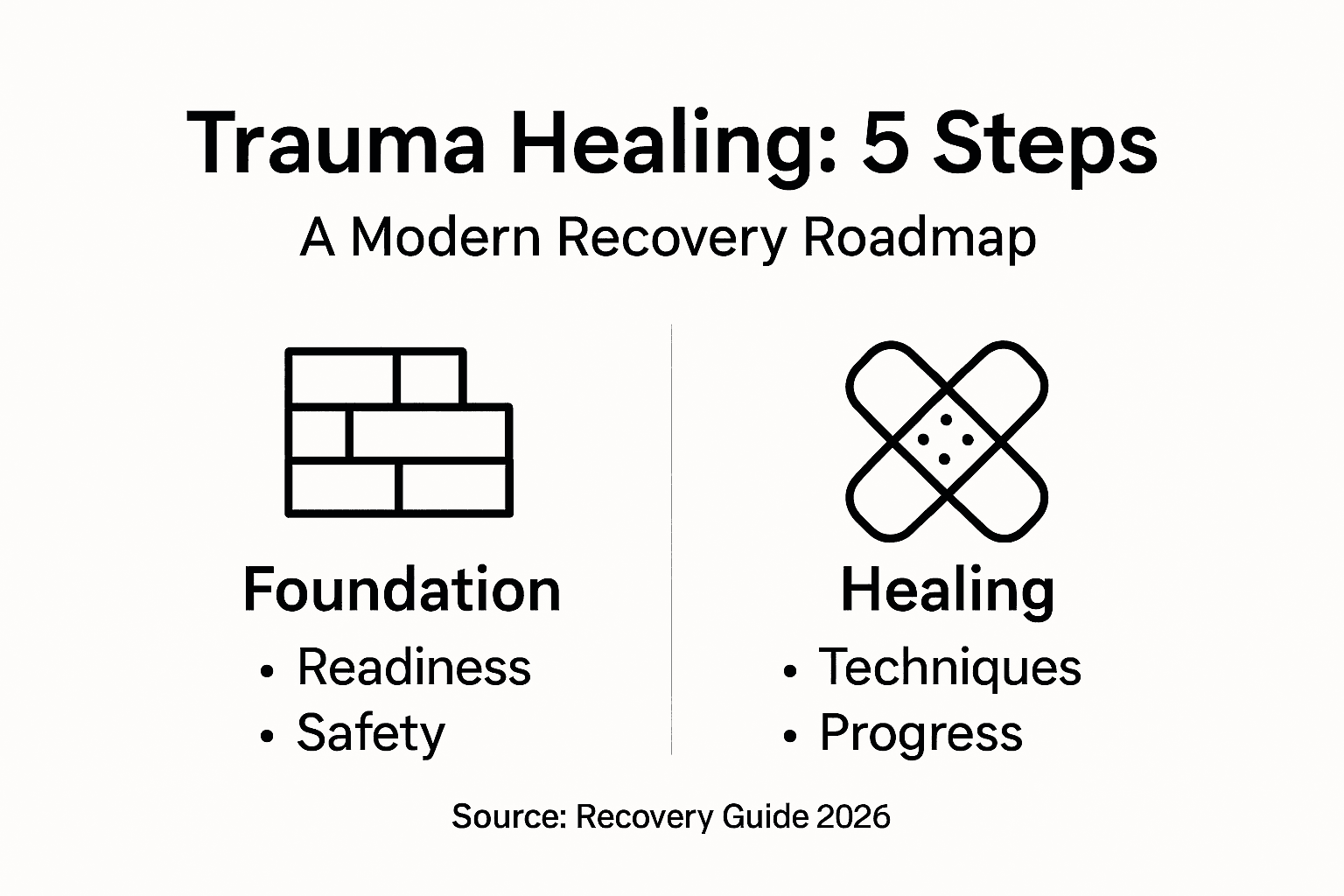
Starting the path to trauma recovery can feel like a big step, especially when anxiety and old wounds make daily life difficult. Californians searching for evidence-based healing want more than talk—they want real change, safety, and support. Approaching trauma with structured steps like assessing readiness, focusing on a safe environment, and choosing evidence-based techniques such as EMDR gives you the power to build lasting resilience while honoring your unique journey toward healing.
Table of Contents
- Step 1: Assess Readiness for Trauma Healing
- Step 2: Establish a Safe and Supportive Environment
- Step 3: Implement Evidence-Based Healing Techniques
- Step 4: Monitor Progress and Adjust Strategies
- Step 5: Sustain Recovery with Ongoing Support
Quick Summary
| Main Insight | Clarification |
|---|---|
| 1. Assess Your Readiness for Healing | Understand your capacity and commitment to engage with trauma recovery before beginning, ensuring you have stability and a support system in place. |
| 2. Create a Safe Environment | Establish a physical and emotional space that feels secure to facilitate your healing process. This includes minimizing stressors and setting boundaries. |
| 3. Use Evidence-Based Techniques | Engage in scientifically validated therapies like EMDR, CBT, or DBT to effectively address trauma symptoms and ensure meaningful recovery progress. |
| 4. Track Your Progress | Monitor your healing by establishing specific goals and a tracking system to recognize changes over time and discuss them with your therapist. |
| 5. Maintain Ongoing Support | Recovery is continuous; establish regular therapy connections and a supportive network to sustain your progress and effectively manage setbacks. |
Step 1: Assess Readiness for Trauma Healing
Before diving into trauma recovery, you need to honestly evaluate whether you’re prepared to engage with this work. Readiness isn’t about feeling completely stable or having all your emotions figured out—it’s about understanding your current capacity and commitment.
Start by checking your baseline stability. You don’t need to be in perfect shape, but you should have basic functioning in place. Can you manage daily tasks like eating, sleeping, and hygiene? Do you have a safe living environment? Are you currently in crisis or experiencing active danger? If you’re in immediate danger, prioritize safety first through crisis support before beginning deeper trauma work.
Assess your support system. Healing from trauma is rarely a solo journey. Identify who’s in your corner—trusted friends, family, a partner, or community members. Strong relationships matter more than you might realize. Research shows that multidimensional resilience improves recovery outcomes, and your support network is a critical part of that equation.
Evaluate your emotional readiness. Ask yourself these questions:
- Am I willing to face difficult memories and emotions?
- Do I have time to commit to therapy or recovery work?
- Can I handle temporary discomfort as part of healing?
- Am I open to trying evidence-based approaches like EMDR or CBT?
- Do I have resources for therapy, whether through insurance, sliding-scale fees, or telehealth options?
Consider your current stress levels and coping strategies. If you’re already overwhelmed by work, relationships, or other life demands, adding intensive trauma work might feel impossible. That’s valuable information. You may benefit from building resilience through individual therapy first, which can prepare you for deeper trauma processing.
Check your physical health. Sleep deprivation, substance use, and untreated medical conditions can interfere with healing. You don’t need perfect health, but being aware of these factors helps you set realistic expectations.
Your readiness isn’t fixed—it can grow as you stabilize and build skills, but starting from an honest baseline gives you the best foundation for real progress.
Once you’ve assessed these areas, you’ll have a clearer picture of where you stand. If you’re feeling stuck or uncertain, a therapist can help you evaluate readiness more deeply and identify what needs attention first.
Pro tip: Write down your honest answers to the readiness questions above—don’t overthink it. This simple self-assessment becomes a baseline you can look back on as you progress through recovery.
Step 2: Establish a Safe and Supportive Environment
Your healing environment matters just as much as the therapy itself. Creating a space where you feel physically and emotionally safe reduces stress and helps your nervous system settle enough to do real recovery work.

Start with physical safety. Your space doesn’t need to be perfect, but it should feel secure. Lock your doors, minimize disruptive noise, and keep your healing space separate from chaos if possible. If you live in an unstable housing situation, address that first through local resources. A predictable, calm physical environment helps prevent re-traumatization and allows your body to relax enough for healing.
Build emotional safety by removing pressure and judgment. This means creating an atmosphere where you can be honest about your struggles without fear of criticism. If you’re working with a therapist, they should embody compassionate listening and trust building, which are essential for trauma recovery.
Curate your social environment. Spend time with people who understand trauma and support your healing without pressure. Some relationships energize you; others drain you. Be selective.
Consider these practical steps:
- Remove or limit contact with people who minimize your trauma or make you feel unsafe
- Find at least one person you can be fully honest with
- Establish routines that feel grounding and predictable
- Create small comfort rituals (tea, music, journaling, walks)
- Set boundaries around discussions of your trauma
To enhance psychological safety and reduce triggering situations, identify your specific triggers and plan accordingly. If certain topics, times of day, or activities activate your trauma response, you can structure your environment to avoid unnecessary activation while you’re building coping skills.
Remember that safety is both internal and external. You’re working to calm your nervous system while also removing external threats. Both matter.
A safe environment doesn’t eliminate discomfort during healing—it just means you feel supported while facing it.
Your California location offers several advantages for this work. Telehealth options mean you can access therapy from your safest space, and sliding-scale fees reduce financial stress that would undermine your healing.
Pro tip: Before each therapy session or healing work, spend five minutes in your safe space noticing what feels calm—a specific chair, a window view, a blanket—and anchor yourself there mentally when emotions get intense.
Step 3: Implement Evidence-Based Healing Techniques
Not all healing approaches are created equal. This step focuses on techniques backed by rigorous research and proven to reduce trauma symptoms. You’re moving from preparation into active recovery work.
Understand what evidence-based means. These are therapies tested through scientific research, validated across multiple studies, and shown to produce lasting results. Your time and money matter too much to waste on unproven methods. The most effective approaches for trauma include EMDR, cognitive behavioral therapy (CBT), and dialectical behavior therapy (DBT).
Start by identifying which approach resonates with you. Trauma-focused cognitive behavioral therapy helps you process traumatic memories by changing thought patterns tied to your trauma. EMDR uses bilateral stimulation (eye movements or tapping) to help your brain reprocess traumatic experiences. DBT combines CBT with mindfulness and acceptance techniques, especially helpful if you struggle with emotional regulation.
Here’s a quick comparison of common evidence-based trauma therapies to help you choose which might fit your needs:
| Therapy Type | Main Focus | Typical Duration | Best For |
|---|---|---|---|
| EMDR | Reprocessing traumatic memories | 8–12 sessions | Single-event trauma |
| CBT | Changing trauma-related thoughts | 12–16 sessions | Negative thinking, anxiety |
| DBT | Mindfulness and emotion regulation | Ongoing; weekly | Emotional instability, self-harm |
Work with a qualified therapist who specializes in your specific needs. Californian options include sliding-scale fees and telehealth access, making evidence-based care more affordable than ever. A trained professional can assess your trauma presentation and recommend the best approach for you.
Here’s how to get started:
- Research therapists experienced in your chosen modality
- Ask about their training and credentials in trauma therapy
- Discuss which technique fits your comfort level and goals
- Start with a trial period to assess fit and progress
- Be patient—healing unfolds over weeks and months, not days
Personalized treatment plans adjusted to your individual needs produce better outcomes than one-size-fits-all approaches. Your therapist should check in regularly about what’s working and adjust as needed.
Expect some discomfort during this phase. Processing trauma means touching painful material, but in a structured, supported way. That temporary discomfort leads to lasting relief.
Evidence-based techniques work because they’re grounded in how trauma actually affects your brain—and how to help it heal.
Many people see noticeable improvement within 8 to 12 sessions, though complex trauma may take longer. Track your progress in a journal to notice shifts you might otherwise miss.
Pro tip: Before starting a new technique with your therapist, write down three specific symptoms you want to improve—nightmares, anxiety in crowds, or emotional numbness—so you can measure real progress instead of relying on how you feel day to day.
Step 4: Monitor Progress and Adjust Strategies
Healing isn’t linear. Some weeks you’ll feel dramatically better; others you’ll feel stuck. Tracking your progress helps you see real change and signals when your therapist needs to adjust your approach.
Start by defining what progress looks like for you. This is personal. For some, it’s sleeping through the night without nightmares. For others, it’s handling crowds without panic or feeling emotions without shutting down. Write down 3-5 specific, measurable goals tied to your trauma symptoms.
Use a simple tracking system. You don’t need anything fancy—a journal, a notes app, or a spreadsheet works fine. Rate key symptoms daily or weekly on a scale of 1 to 10. Track sleep quality, anxiety levels, emotional numbness, avoidance behaviors, or whatever matters most to your recovery.
Review this summary of effective progress monitoring methods for trauma recovery:
| Monitoring Method | Key Advantage | Potential Limitation |
|---|---|---|
| Symptom Tracking Journal | High personal insight | May lack objectivity |
| Digital Apps for Mood | Easy data visualization | Privacy concerns |
| Therapist Progress Reviews | Professional perspective | Limited to session times |
| Self-Assessment Scales | Quantifiable results | Requires regular updating |
Ongoing monitoring of symptom changes helps therapists fine-tune your treatment. Share your tracking data with your therapist. They’ll look for patterns you might miss and decide if your current approach is working or needs adjustment.
Watch for these signs:
- Noticeable reduction in trigger intensity or frequency
- Better ability to feel emotions without getting overwhelmed
- Improved sleep, appetite, or concentration
- More time without intrusive thoughts or flashbacks
- Increased willingness to do things you’ve been avoiding
If you’re not seeing progress after 6 to 8 weeks, something needs to change. Maybe your therapist should adjust treatment intensity or technique. Maybe you need a different modality entirely. Progress stalling isn’t failure—it’s data.
Be honest with your therapist about what’s working and what isn’t. The therapeutic relationship is collaborative. Your feedback drives better outcomes.
Real progress sometimes feels invisible because you’re so close to it. That’s why tracking matters—you’ll see patterns your emotions miss.
Remember that California-based telehealth options mean you can discuss progress updates whenever you notice shifts, not just at scheduled appointments.
Pro tip: Take a baseline “before” snapshot of your top three symptoms this week, then review it monthly—you’ll often see improvement you forgot about when comparing yourself only to yesterday.
Step 5: Sustain Recovery with Ongoing Support
Healing doesn’t end when your initial therapy concludes. Real recovery is an ongoing process that requires sustained attention, community, and professional support. This step focuses on building the infrastructure to maintain your progress long-term.
Understand that recovery is continuous. You’re not aiming for a finish line where trauma disappears forever. You’re building a life where trauma has less power over you and you know how to manage it when it surfaces. That’s sustainable recovery.
Maintain regular connection with your therapist. Even after intensive treatment ends, periodic check-ins catch problems early. Some people return monthly; others quarterly. Discuss with your therapist what makes sense for your needs. Think of it like physical health—preventive care beats crisis intervention.
Ongoing professional treatment and social support are proven to sustain improvements and prevent relapse. You don’t need constant weekly sessions once you’ve stabilized, but ongoing access matters.
Build your sustainable support network. Recovery isn’t solo work. Cultivate relationships with people who understand trauma or at least respect your process. This might include therapists, support groups, trusted friends, family members, or online communities of people in recovery.
Here’s what ongoing support looks like:
- Regular therapy check-ins (monthly or quarterly)
- A trusted person you can reach out to during tough moments
- Continued practice of coping skills you learned
- Participation in support groups or communities
- Lifestyle habits that support mental health (sleep, movement, connection)
- Quick access to crisis resources if needed
Recovery is a self-directed process of improving wellness and quality of life where you maintain agency and empowerment. You’re not dependent on your therapist forever—you’re building your own resilience while knowing help is available.
Plan ahead for potential setbacks. Life happens. Anniversaries of trauma, major stressors, or unexpected events can trigger old symptoms. That’s normal. Know who to contact and what grounding techniques work for you.
Sustained recovery isn’t perfection—it’s showing up for yourself consistently and reaching out when you need help.
Affordable California-based telehealth means you can maintain consistent support without the burden of expensive ongoing therapy. Use the resources available to you strategically.
Pro tip: Schedule your next therapy appointment before leaving the current one, so you don’t drift away from support when life gets busy—consistency matters more than intensity once you’re stable.
Take Charge of Your Healing Journey with Expert Trauma Support
Healing trauma can feel overwhelming as you face difficult memories and strive to build a safe environment where lasting recovery is possible. If you are ready to move from self-assessment and preparation to evidence-based therapy and sustained progress, you do not have to navigate this path alone. At ReviveHealthTherapy, we specialize in trauma-informed care tailored to your unique needs, offering proven methods like EMDR and CBT to help calm your nervous system and reduce the power of trauma in your life.
Explore how our compassionate therapists can guide you through every step of trauma recovery with flexible options including in-person sessions in Walnut Creek or Oakland and secure telehealth across California. Take the next step now by visiting our Uncategorized – ReviveHealthTherapy page to learn more about our approach, or get started immediately by contacting us through ReviveHealthTherapy Contact. You deserve accessible, affordable healing with support that meets you where you are.
Frequently Asked Questions
What does readiness for trauma healing involve?
Readiness for trauma healing involves evaluating your baseline stability, support system, emotional readiness, current stress levels, and physical health. Start by honestly assessing whether you can manage daily tasks and are willing to face difficult emotions.
How can I create a safe and supportive environment for trauma recovery?
To create a safe environment for trauma recovery, focus on establishing physical safety by minimizing chaos and ensuring security in your living space. Additionally, foster emotional safety by removing judgment and pressure, which can help you engage more openly in the healing process.
What are some effective evidence-based techniques for trauma healing?
Effective evidence-based techniques for trauma healing include Eye Movement Desensitization and Reprocessing (EMDR), Cognitive Behavioral Therapy (CBT), and Dialectical Behavior Therapy (DBT). Research each therapy method to find one that resonates with you and discuss your options with a qualified therapist.
How can I monitor my progress during trauma recovery?
You can monitor your progress by defining specific, measurable goals related to trauma symptoms and using a simple tracking system to rate these symptoms regularly. Consider using a journal or notes app to document changes in your symptoms, as this data can help you and your therapist adjust strategies effectively.
What ongoing support should I seek after initial trauma therapy?
After initial trauma therapy, seek ongoing support by maintaining regular check-ins with your therapist and building a support network of trusted individuals. Schedule monthly or quarterly sessions, and engage with communities that respect your healing journey to help sustain your recovery.
How do I prepare for potential setbacks during my healing process?
To prepare for potential setbacks during your healing process, identify specific triggers and establish coping strategies in advance. Create a list of grounding techniques and supportive contacts to reach out to when you encounter challenges, ensuring that you are well-equipped to manage difficult times.
2 Responses