
Choosing the right therapy can feel overwhelming when you’re struggling with anxiety, depression, or trauma. California offers numerous evidence-based approaches, but understanding how EMDR, CBT, and mindfulness work helps you make informed decisions about your mental health care. This guide clarifies these proven therapeutic modalities and shows you how to access affordable, effective treatment tailored to your specific needs.
Table of Contents
- Understanding EMDR: Mechanism And Application
- Exploring CBT: Mechanism And Effectiveness
- Mindfulness In Mental Health: How It Works
- Affordability And Access: Sliding Scale And Insurance Options
- Comparing Therapeutic Modalities: Strengths And Best Uses
- Practical Application: Choosing The Right Therapy Modality
- Get Accessible, Evidence-Based Therapy In California Today
- Frequently Asked Questions
Key takeaways
| Point | Details |
|---|---|
| Modality differences matter | EMDR targets trauma recovery, CBT addresses anxiety and depression, and mindfulness enhances emotional regulation. |
| Trauma-informed care improves outcomes | Safety-focused approaches increase therapy effectiveness and build trust between client and therapist. |
| Affordability increases access | Sliding scale fees reduce costs up to 70%, while insurance acceptance and telehealth expand therapy reach statewide. |
| Structured selection boosts success | Using decision frameworks improves treatment adherence by 35% and patient satisfaction by 40%. |
| Evidence-based approaches work | Research-backed therapies deliver measurable symptom reduction and lasting mental health improvements. |
Introduction to therapeutic modalities
Therapeutic modalities are structured, evidence-based approaches designed to treat specific mental health conditions through proven techniques. Understanding these methods helps you choose therapy that matches your symptoms and personal preferences, significantly improving your chances of successful treatment outcomes.
California mental health providers commonly use three primary evidence-based modalities:
- Eye Movement Desensitization and Reprocessing (EMDR) for trauma processing
- Cognitive Behavioral Therapy (CBT) for anxiety and depression management
- Mindfulness-based therapy for emotional regulation and stress reduction
These approaches target different conditions and work through distinct mechanisms. EMDR focuses on processing traumatic memories, CBT restructures negative thought patterns, and mindfulness builds present-moment awareness. Each modality has strong research backing its effectiveness for specific symptoms.
Knowing which therapy addresses your primary concerns prevents wasted time and frustration. When you understand how each approach works, you can advocate for treatment that fits your mental health goals. This knowledge also helps you recognize when therapy isn’t progressing as expected, allowing you to adjust your approach.
The following sections detail each modality’s mechanisms, evidence base, and best use cases. You’ll learn practical ways to evaluate which therapy suits your situation, considering both clinical effectiveness and personal fit. Understanding these distinctions empowers you to make confident choices about your mental health care journey.
Understanding EMDR: mechanism and application
Eye Movement Desensitization and Reprocessing (EMDR) stands out as a specialized trauma therapy using bilateral stimulation to help your brain process distressing memories. During sessions, you follow the therapist’s hand movements or listen to alternating sounds while recalling traumatic events, allowing your brain to reprocess these experiences adaptively.
EMDR uses bilateral stimulation to facilitate adaptive information processing and significantly reduces PTSD symptoms. Research shows EMDR produces measurable improvements in trauma symptoms, often requiring fewer sessions than traditional talk therapy. The method targets how traumatic memories are stored in your brain, helping transform their emotional impact.
The trauma-informed framework within EMDR prioritizes safety and trust throughout treatment. Your therapist ensures you feel grounded and in control before processing difficult memories. This approach recognizes how trauma affects your nervous system and uses specific techniques to maintain emotional stability during sessions.
EMDR works particularly well for:
- Complex PTSD from childhood trauma or multiple traumatic events
- Single-incident trauma like accidents or assaults
- Anxiety rooted in past traumatic experiences
- Intrusive memories that disrupt daily functioning
The role of therapy in trauma recovery becomes especially clear with EMDR’s targeted approach. You don’t need to discuss traumatic details extensively, making it suitable if talking about trauma feels too overwhelming. The bilateral stimulation activates both brain hemispheres, facilitating natural healing processes.
Most clients notice symptom reduction within 6 to 12 sessions, though complex trauma may require longer treatment. EMDR’s structured eight-phase protocol ensures thorough preparation before memory processing begins. This careful approach prevents retraumatization while effectively addressing the root causes of your symptoms.

Exploring CBT: mechanism and effectiveness
Cognitive Behavioral Therapy (CBT) teaches you to identify and change negative thought patterns that fuel anxiety and depression. This structured approach connects your thoughts, feelings, and behaviors, showing how changing one element improves the others. CBT’s active, problem-solving focus makes it highly effective for mood and anxiety disorders.
The CBT process follows clear steps:
- Identify automatic negative thoughts triggering distress
- Examine evidence supporting or contradicting these thoughts
- Replace distorted thinking with balanced, realistic perspectives
- Practice new thought patterns through homework assignments
- Build behavioral strategies to reinforce cognitive changes
Research consistently demonstrates CBT’s effectiveness for anxiety disorders, depression, and panic attacks. You typically see measurable symptom improvement within 12 to 16 weeks of weekly sessions. The therapy requires active participation between sessions as you practice new skills in real-world situations.
CBT adapts well across diverse populations and settings. Therapists can modify techniques for children, teens, adults, and older adults. The approach works in individual, group, or online formats, making it accessible regardless of your location or schedule. Its structured nature also allows progress tracking through specific goals and metrics.
Understanding why seek psychotherapy becomes clearer when you see CBT’s practical tools for daily life. You learn concrete skills like thought records, behavioral activation, and exposure techniques. These methods give you lasting tools to manage symptoms independently after therapy ends.
CBT’s collaborative approach means you and your therapist work as a team. You set agenda items for each session and receive clear explanations of treatment rationale. This transparency helps you understand why specific techniques work and how to apply them effectively.
Mindfulness in mental health: how it works
Mindfulness-based therapy goes beyond simple relaxation, training your brain to observe thoughts and emotions without judgment or reactivity. This structured practice builds awareness of present-moment experience, creating space between feelings and your responses to them. The mechanism involves strengthening neural pathways that support emotional regulation.
Mindfulness is a structured practice enhancing awareness and emotional regulation with strong evidence beyond relaxation. Research shows mindfulness produces effect sizes of 0.5 to 0.7 for emotional regulation improvements, meaning measurable changes in how you manage difficult feelings. These aren’t just subjective improvements but demonstrable shifts in brain activity and stress response.
Key mindfulness mechanisms include:
- Attention training that reduces rumination and worry
- Acceptance skills that decrease struggle with uncomfortable emotions
- Body awareness connecting physical sensations to emotional states
- Non-judgmental observation reducing self-criticism
Mindfulness works exceptionally well as an adjunct to trauma and anxiety therapies. When combined with EMDR or CBT, mindfulness skills help you stay grounded during difficult therapeutic work. The practice builds your capacity to tolerate distress, making it easier to face anxiety-provoking situations or process traumatic memories.
Pro Tip: Practice mindfulness for 10 minutes daily outside therapy sessions to strengthen skills and accelerate progress. Consistency matters more than duration when building awareness habits.
You can integrate mindfulness into daily activities like eating, walking, or washing dishes. These informal practices make the approach accessible even with busy schedules. The skills become automatic with regular use, providing lasting emotional regulation improvements that extend well beyond formal therapy.
Affordability and access: sliding scale and insurance options
Financial barriers prevent many Californians from accessing needed mental health care, but sliding scale fees and insurance options significantly improve affordability. Understanding these models helps you find therapy that fits your budget while maintaining quality care standards.
Sliding scale fees adjust therapy costs based on your income, reducing session rates by 30% to 70% for lower-income clients. Therapists determine your rate through a simple financial assessment, ensuring therapy remains accessible regardless of your economic situation. This model allows you to receive the same evidence-based treatment as full-rate clients.
Insurance acceptance expands access through:
- Major medical insurance plans covering therapy sessions
- Health Savings Account (HSA) and Flexible Spending Account (FSA) eligibility
- Out-of-network benefits allowing reimbursement for licensed therapists
- Parity laws requiring mental health coverage equal to medical care
Affordability directly impacts therapy outcomes. When cost isn’t prohibitive, you’re more likely to attend consistent sessions and complete recommended treatment courses. Research shows clients using sliding scale therapy affordability options have 45% higher treatment completion rates compared to those struggling with full fees.
Telehealth therapy removes geographic and time barriers while reducing costs. You eliminate commute time and expenses, making sessions fit more easily into work schedules. California’s statewide insurance and therapy impact in California includes telehealth coverage parity, ensuring online sessions receive the same insurance benefits as in-person visits.
Understanding therapy accessibility in California means exploring all available payment options. Many therapists offer free consultations to discuss financial arrangements before committing to treatment. This transparency allows you to make informed decisions about affordable, quality mental health care.
Comparing therapeutic modalities: strengths and best uses
Choosing between therapeutic approaches becomes clearer when you understand their distinct strengths and optimal applications. This comparison helps you match modalities to your specific symptoms and treatment goals.
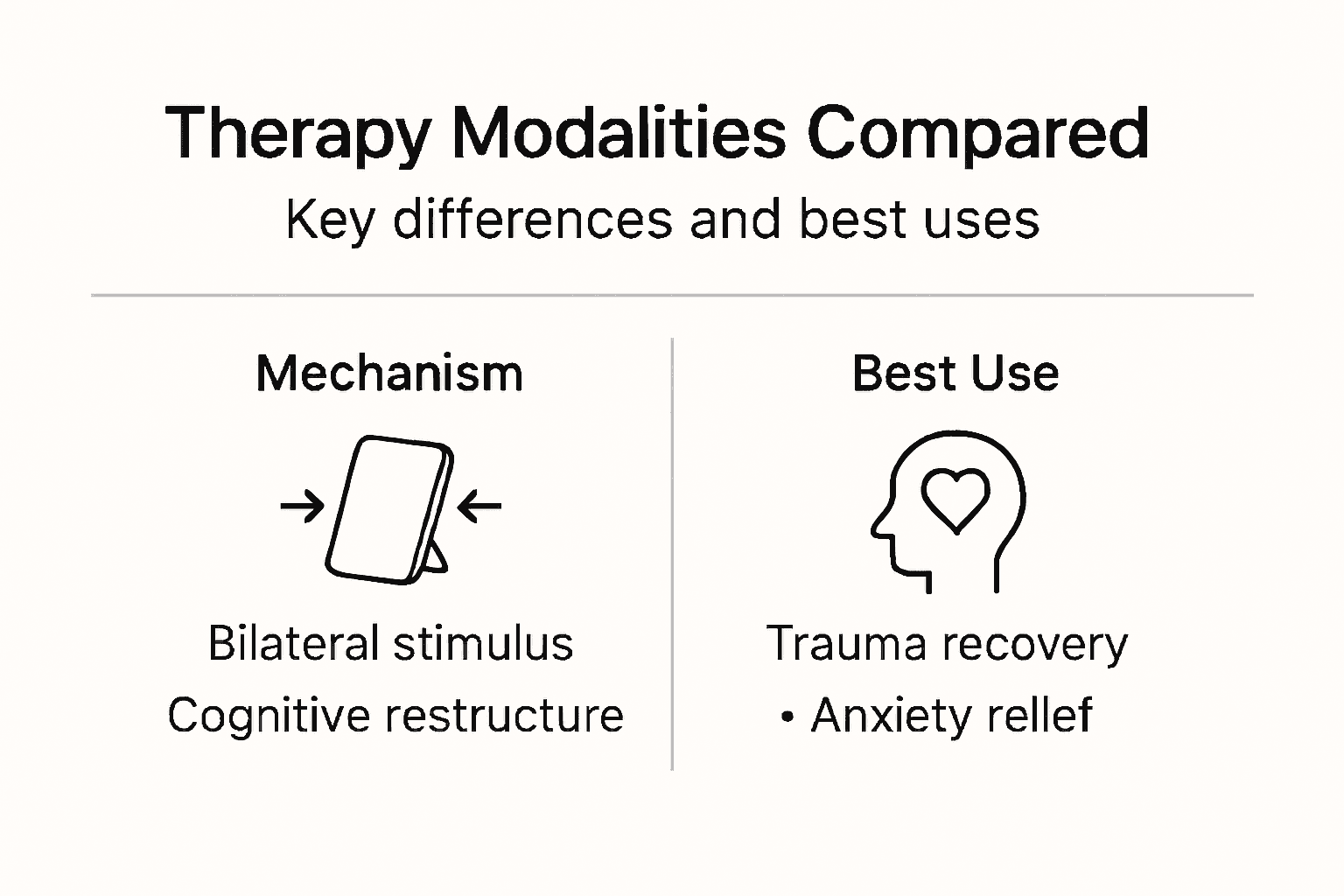
| Modality | Primary Mechanism | Best For | Typical Duration | Evidence Strength |
|---|---|---|---|---|
| EMDR | Bilateral stimulation and memory reprocessing | Trauma, PTSD, trauma-rooted anxiety | 6-12 sessions | Very Strong |
| CBT | Cognitive restructuring and behavior change | Anxiety, depression, panic, OCD | 12-16 weeks | Very Strong |
| Mindfulness | Attention training and acceptance | Emotional regulation, stress, adjunctive use | Ongoing practice | Strong |
EMDR excels when traumatic experiences drive your symptoms. If intrusive memories, flashbacks, or hypervigilance dominate your experience, EMDR’s targeted trauma processing offers the most direct path to relief. The approach works faster than traditional talk therapy for trauma-specific symptoms.
CBT provides the strongest evidence base for anxiety and depression not primarily rooted in trauma. When negative thought patterns, avoidance behaviors, or mood symptoms interfere with daily life, CBT’s structured skill-building approach delivers measurable results. The therapy gives you concrete tools you’ll use long after treatment ends.
Mindfulness functions best as an adjunctive approach rather than standalone treatment. Combining mindfulness with EMDR or CBT enhances outcomes by improving your ability to stay present during difficult therapeutic work. The practice also provides daily skills for managing stress between sessions.
Some situations benefit from combined approaches. Trauma survivors often use EMDR for memory processing while practicing mindfulness for daily emotional regulation. Anxiety sufferers might combine CBT’s cognitive techniques with mindfulness’s acceptance strategies. Your therapist can help design an integrated approach matching your needs.
Consider personal fit alongside clinical evidence. Some people prefer CBT’s structured, logical approach, while others respond better to EMDR’s less verbal process. Your learning style, communication preferences, and comfort with different techniques all influence treatment success.
Practical application: choosing the right therapy modality
Selecting the most effective therapy requires evaluating your symptoms, history, and personal preferences through a structured decision process. This framework ensures you choose treatment with the highest likelihood of success.
Follow these evaluation steps:
- Assess your primary symptoms and their severity using specific examples from daily life
- Identify any trauma history that might underlie current mental health struggles
- Consider practical factors like insurance coverage, location, and scheduling flexibility
- Reflect on your learning style and communication preferences in therapeutic settings
- Discuss these factors with potential therapists during consultation calls
Using decision frameworks improves treatment adherence by 35% and patient satisfaction by 40%. When you actively participate in therapy selection rather than accepting the first available option, you invest more fully in the treatment process. This engagement directly translates to better outcomes.
Your symptom profile guides initial modality choice. Persistent intrusive memories or hypervigilance suggest EMDR as a starting point. Chronic worry, negative thinking patterns, or avoidance behaviors point toward CBT. Difficulty managing emotions across various situations indicates mindfulness-based approaches as a valuable component.
Pro Tip: During your first session, discuss specific treatment expectations and timeline with your therapist to ensure aligned goals and realistic progress markers.
Trauma-informed needs matter even if trauma isn’t your primary concern. Past adverse experiences affect how you respond to therapy, making trauma-sensitive approaches beneficial across various symptoms. Ask potential therapists about their trauma-informed training and how they create safe therapeutic environments.
Learning how to choose a therapist in California involves considering both modality expertise and personal rapport. The strongest evidence-based approach won’t work if you don’t feel comfortable with your therapist. Trust your instincts about therapeutic fit while prioritizing training in your needed modality.
Reassess your therapy choice if you don’t notice progress within the expected timeframe. Lack of improvement might signal a need for different modalities or a therapist with specialized training. Effective therapy produces measurable changes, so stagnation warrants open discussion about alternative approaches.
Get accessible, evidence-based therapy in California today
Understanding therapeutic modalities empowers you to seek treatment that truly addresses your mental health needs. ReviveHealthTherapy offers specialized, evidence-based care for anxiety, depression, and trauma throughout California, combining proven approaches with affordable access.
Our trauma-informed therapists provide EMDR therapy in California for trauma processing, CBT for anxiety and depression management, and mindfulness-based techniques for emotional regulation. We accept insurance, offer sliding scale fees, and provide secure online therapy in California statewide, removing barriers to quality mental health care.
Whether you’re in Walnut Creek, Oakland, or anywhere across California, we’ll help you find the right therapeutic approach for your unique situation. Our personalized matching process considers your symptoms, preferences, and practical needs to connect you with effective treatment. Discover why seek psychotherapy and take the first step toward lasting mental wellness today.
Frequently asked questions
What is the difference between EMDR and CBT?
EMDR focuses on reprocessing traumatic memories through bilateral stimulation, while CBT restructures negative thought patterns through cognitive techniques. EMDR works faster for trauma-specific symptoms, typically requiring 6 to 12 sessions, whereas CBT addresses broader anxiety and depression over 12 to 16 weeks. Choose EMDR when trauma drives your symptoms and CBT when negative thinking patterns dominate your experience.
How does sliding scale therapy work in California?
Sliding scale fees adjust therapy costs based on your household income and size, reducing session rates by 30% to 70% for lower-income clients. You complete a brief financial assessment with your therapist, who then determines your rate within their sliding scale range. This ensures you receive the same quality, evidence-based treatment as full-rate clients while maintaining financial accessibility.
Is telehealth therapy as effective as in-person sessions?
Research shows telehealth therapy produces equivalent outcomes to in-person treatment for anxiety, depression, and many other conditions. The key factors for success remain the same: evidence-based approaches, skilled therapists, and your active engagement. Some trauma processing techniques work better in person, so discuss your specific needs during your consultation to determine the best format.
How long does CBT typically take to show results?
Most people notice measurable improvement within 4 to 6 weeks of weekly CBT sessions, with significant symptom reduction by 12 weeks. Complete treatment courses usually last 12 to 16 weeks, though complex cases may require longer therapy. The timeline depends on symptom severity, consistent session attendance, and your practice of skills between appointments.
Why is trauma-informed care important in therapy?
Trauma-informed care recognizes how past adverse experiences affect your nervous system, emotional responses, and ability to trust others. This approach prioritizes safety, choice, and empowerment throughout treatment, preventing retraumatization and building stronger therapeutic relationships. Even if trauma isn’t your primary concern, trauma-sensitive practices improve outcomes by creating a more supportive healing environment.
4 Responses