
TL;DR:
- Mental clarity, a focus-driven and organized state of awareness, is essential for reducing anxiety and improving emotional well-being. Evidence-supported practices like mindfulness, CBT, and consistent sleep habits build lasting mental clarity through structured, sustained effort. Combining therapy, mindfulness, and lifestyle changes offers the most effective path for achieving and maintaining clear, adaptive thinking.
Clarity is defined as the state of having focused, unobstructed mental and emotional awareness that allows you to think, feel, and respond without the fog of chronic anxiety. When that fog lifts, you make better decisions, regulate your emotions more effectively, and experience measurable reductions in anxiety symptoms. The tools that produce this state are not abstract or philosophical. Mindfulness-Based Interventions (MBIs), Cognitive-Behavioral Therapy (CBT), and consistent sleep habits are the three evidence-backed pillars that research in 2026 confirms as the most reliable paths to sustained mental clarity and emotional well-being.
What is clarity of thought and why does it matter for anxiety?
Mental clarity, the clinical concept sometimes called cognitive and emotional coherence, is not simply the absence of stress. It is an active state in which your attention is focused, your thoughts are organized, and your emotional responses are proportionate to what is actually happening around you. For adults living with anxiety, this state feels elusive because anxiety hijacks attentional resources, floods the mind with worst-case scenarios, and keeps the nervous system in a low-grade state of alarm.
The importance of clarity for anxiety relief is direct and measurable. When your mind is clear, the prefrontal cortex, the brain region responsible for rational thought and emotional regulation, can do its job without being overwhelmed by the amygdala’s threat signals. This is not metaphor. It is the neurological basis for why evidence-based therapies target thought patterns and awareness rather than simply telling people to “calm down.”
Achieving clarity also matters for your relationships, your work, and your physical health. Chronic anxiety without mental clarity tends to produce avoidance behaviors, communication breakdowns, and sleep disruption, each of which feeds back into greater anxiety. Breaking that cycle requires deliberate, structured practice, not willpower alone.
How does mindfulness build mental clarity and reduce anxiety?
Mindfulness training is the most extensively studied non-pharmacological approach to building mental clarity in adults with anxiety. A systematic review of 30 randomized controlled trials involving more than 24,000 participants found that MBIs produce an overall effect size of Hedges’ g = −0.45, with a stronger anxiety-specific effect of g = −0.56. That is a moderate to strong clinical result, comparable to many medication effects, without the side effects.
The mechanism behind this is more specific than most people realize. Mindfulness does not work primarily by relaxing you. A 2026 randomized controlled trial found that mindfulness changes your relationship to anxious thoughts and bodily sensations rather than eliminating them. This process, called decentering, allows you to observe a worried thought without being controlled by it. You recognize “this is a thought” rather than “this is reality,” and that shift alone disrupts the worry-tension cycle that keeps anxiety locked in place.
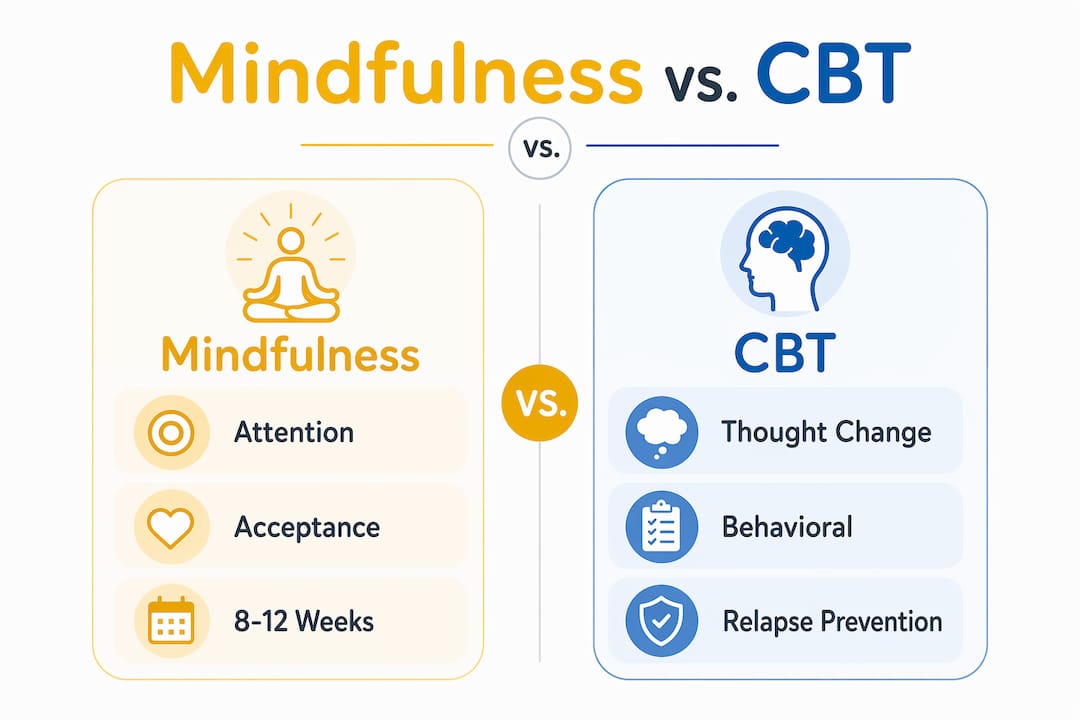
The same 2026 trial, which enrolled 106 adults with generalized anxiety disorder (GAD), found that an 8-week structured MBI used alongside medication produced significant reductions on clinical anxiety scales, along with improvements in sleep, cognition, and psychosocial well-being. The key word is structured. Attending a single meditation class or using a wellness app sporadically does not produce these results.
Key elements that make a mindfulness program effective for clarity and focus include:
- Daily formal practice, such as body scans or breath-focused meditation, for at least 20 to 30 minutes
- Informal practice woven into daily activities, like mindful eating or mindful walking
- Audio recordings and practice logs to support consistency between sessions
- Gratitude components, which the meta-analysis found enhance emotional benefits beyond mindfulness alone
- Group facilitation to provide accountability and shared learning
Pro Tip: Research confirms that 8 to 12-week programs yield stronger symptom reductions than shorter formats. If you are starting a mindfulness practice, commit to a full structured program rather than a two-week trial. The dose matters.
You can learn more about how this works in practice at Revivehealththerapy’s guide on mindfulness for anxiety.
How does CBT help you achieve clarity of thought for anxiety?
Cognitive-Behavioral Therapy is the most effective psychotherapy modality for generalized anxiety disorder, and it works by directly targeting the distorted thought patterns that block mental clarity. The Merck Manual identifies CBT as the preferred psychotherapeutic approach for GAD, often combined with medication and relaxation techniques, with symptom improvement typically appearing within 3 to 6 weeks of consistent treatment.
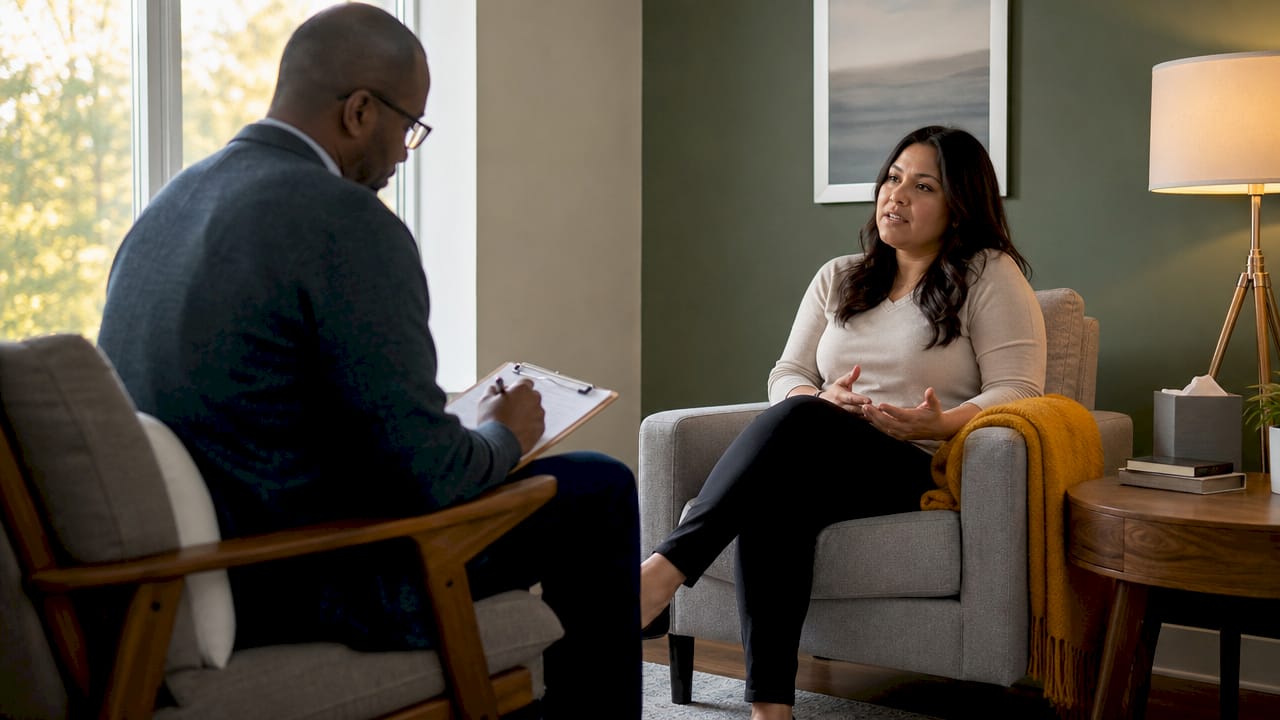
CBT gives you a structured framework for examining anxious thoughts, testing whether they are accurate, and replacing them with more realistic appraisals. This is not positive thinking. It is a disciplined cognitive skill that, once learned, becomes automatic. The result is a mind that defaults to clarity rather than catastrophe.
Here is how CBT produces clearer thinking in practice:
- Thought records help you identify automatic negative thoughts and examine the evidence for and against them
- Behavioral experiments test anxious predictions against real-world outcomes, weakening their grip over time
- Relaxation techniques such as progressive muscle relaxation reduce the physical tension that amplifies anxious thinking
- Exposure exercises reduce avoidance behaviors that maintain anxiety and cloud judgment
- Psychoeducation reframes anxiety symptoms as treatable conditions rather than signs of personal failure
That last point deserves emphasis. CBT’s clinical framework reassures patients by treating anxiety as a learned pattern that can be unlearned, not a character flaw. That reframe alone reduces shame and opens the door to genuine progress.
Mindfulness vs. CBT: which produces more clarity?
| Approach | Primary mechanism | Time to effect | Best suited for |
|---|---|---|---|
| Mindfulness (MBI) | Decentering, acceptance, attention training | 8 to 12 weeks | Ongoing emotional regulation and stress reduction |
| CBT | Cognitive restructuring, behavioral change | 3 to 6 weeks | Targeted thought pattern correction and relapse prevention |
| Combined approach | Synergistic cognitive and attentional change | 6 to 12 weeks | Sustained clarity and long-term anxiety management |
The combined approach consistently outperforms either method alone. Revivehealththerapy’s step-by-step CBT guide walks California adults through exactly how this works in a clinical setting.
Pro Tip: CBT’s real advantage is not just symptom relief. The Merck Manual emphasizes that CBT builds relapse prevention skills, meaning the clarity you gain does not disappear when therapy ends. Prioritize a therapist who explicitly teaches these skills, not just one who helps you feel better in session.
Does sleep quality actually affect mental clarity?
Sleep is not a passive recovery state. It is the period during which your brain consolidates memories, clears metabolic waste, and resets the attentional systems that produce clarity of thought the next day. Harvard Health research ties regular undersleep directly to lower scores on mental function tests, with the effects accumulating over time rather than resolving after a single good night.
The recommended target is 7 to 8 hours per night, but the consistency of your sleep schedule matters as much as the total hours. Harvard Health data shows that habitual sleep quality is what protects cognitive function, not occasional recovery nights after a week of poor sleep. You cannot bank sleep on weekends and expect clear thinking on Wednesday.
Here are the most evidence-supported steps for improving sleep to support mental clarity:
- Set a fixed wake time seven days a week, including weekends, to anchor your circadian rhythm.
- Limit screen exposure for 60 minutes before bed, since blue light suppresses melatonin and delays sleep onset.
- Keep your bedroom cool and dark, ideally between 65 and 68 degrees Fahrenheit, which supports deeper sleep stages.
- Avoid caffeine after 2 p.m., as caffeine has a half-life of approximately five hours and disrupts sleep architecture even when you feel unaffected.
- Use a wind-down routine of 20 to 30 minutes that includes a calming activity such as reading, light stretching, or a brief mindfulness practice.
Beyond sleep, nutrition, regular physical exercise, and social engagement each contribute to the cognitive baseline from which clarity operates. Adults who combine consistent sleep with aerobic exercise three to four times per week report measurably better mood regulation and attentional focus, both of which are prerequisites for sustained clarity and focus. For practical tips on managing anxiety naturally alongside these habits, Mastering Conflict’s guide offers useful complementary strategies.
How to gain clarity by combining therapy, mindfulness, and lifestyle
No single intervention produces lasting mental clarity on its own. The most durable outcomes come from combining CBT, mindfulness practice, and lifestyle habits into a structured, ongoing approach. This is not about doing everything at once. It is about building a foundation layer by layer so that each element reinforces the others.
The synergy between CBT and mindfulness is well-documented. CBT changes what you think; mindfulness changes how you relate to your thoughts. Together, they address both the content and the process of anxious thinking, which is why combined treatment plans are now standard clinical guidance for GAD. Medication, when appropriate, serves as an adjunct that reduces symptom intensity enough for therapy to take hold, but relying on medication alone often leads to incomplete clarity and higher relapse risk.
Practical principles for sustaining clarity over time include:
- Start with one structured program, either an 8-week MBI or a CBT course, before adding additional elements
- Track your practice using a simple log or app to identify patterns in what helps and what does not
- Schedule follow-up sessions with a therapist even after initial symptom relief, since maintenance sessions prevent relapse
- Build social support into your routine, since isolation amplifies anxiety and erodes clarity faster than almost any other factor
- Set realistic timelines, expecting gradual improvement over weeks rather than transformation in days
Pro Tip: Longer mindfulness interventions with structured daily practice yield more stable attentional and emotional regulation than shorter programs. If you feel like your clarity is plateauing, the answer is usually more consistency, not a different technique.
Key takeaways
Mental clarity is not a personality trait. It is a trainable state produced by specific, evidence-based practices that directly reduce anxiety and improve emotional well-being.
| Point | Details |
|---|---|
| Mindfulness produces measurable clarity | Structured 8 to 12-week MBIs reduce anxiety with effect sizes comparable to medication. |
| CBT rewires anxious thought patterns | CBT produces clarity by restructuring distorted thinking and building relapse prevention skills. |
| Sleep consistency is non-negotiable | Habitual 7 to 8 hours of sleep protects the cognitive function that clarity depends on. |
| Combined approaches outperform single methods | Pairing CBT with mindfulness addresses both thought content and thought process simultaneously. |
| Gradual progress is real progress | Sustainable clarity builds over weeks and requires structured practice, not willpower alone. |
What I’ve learned about clarity that most articles won’t tell you
Working within mental health care, I have seen one pattern repeat itself more than any other: people come in expecting clarity to feel like a sudden arrival. They imagine waking up one morning and finding that the mental fog is simply gone. That is not how it works, and believing it does sets people up to abandon practices that are actually working.
The research on mindfulness is unambiguous on this point. The shift toward acceptance and metacognitive distance from anxious thoughts is a skill that develops through repetition, not insight. You do not understand your way to clarity. You practice your way there.
What I find most underappreciated is the role of structure itself. The adults I see make the most progress are not necessarily the ones with the most severe symptoms or the most motivation. They are the ones who show up consistently, keep their sleep schedule, attend their sessions, and do their between-session practice. Clarity in communication with a therapist, clarity in tracking your own patterns, and clarity about what you are actually trying to change all matter as much as the specific technique you use.
The other thing worth saying plainly: if you have been struggling with anxiety for months or years, you are not broken and you are not beyond help. CBT’s clinical framing of anxiety as a treatable condition rather than a personal weakness is not just therapeutic spin. It is accurate. The evidence is strong, the tools are available, and professional guidance makes a measurable difference in how quickly and completely you recover.
— Amy
Ready to find clarity with professional support?
If you have been reading this and recognizing your own experience in the research, that recognition is worth acting on. Revivehealththerapy provides evidence-based psychotherapy services across California, including CBT, EMDR, and mindfulness-integrated therapy, available both in-person in Walnut Creek and Oakland and via secure telehealth statewide.
Sliding-scale fees and insurance acceptance, including HSA and FSA plans, make professional support accessible regardless of your income level. Whether you are managing generalized anxiety, processing trauma, or simply trying to think more clearly and feel more grounded, Revivehealththerapy’s licensed therapists are trained in the exact approaches this article covers. Explore why psychotherapy works and take the first step toward lasting clarity and emotional well-being. You can also review California’s 2026 psychotherapy options to find the right fit for your needs.
FAQ
What is mental clarity and how does it reduce anxiety?
Mental clarity is the state of focused, organized cognitive and emotional awareness that allows you to respond to situations without being overwhelmed by anxious thoughts. When clarity is present, the brain’s rational processing centers can override the anxiety response more effectively.
How long does it take to achieve clarity through mindfulness?
Structured mindfulness programs lasting 8 to 12 weeks produce the strongest reductions in anxiety and improvements in clarity, according to a systematic review of 30 randomized controlled trials. Shorter or inconsistent practice produces significantly weaker results.
Is CBT or mindfulness better for mental clarity?
CBT and mindfulness target different mechanisms, with CBT restructuring thought content and mindfulness changing how you relate to thoughts. Combined treatment plans consistently outperform either approach alone for sustained clarity and anxiety relief.
Can poor sleep cause mental fog and anxiety?
Yes. Harvard Health research links habitual undersleep directly to lower cognitive function test scores and impaired memory consolidation, both of which worsen anxiety and reduce mental clarity over time.
Do I need a therapist to gain mental clarity, or can I do it alone?
Self-directed mindfulness and sleep improvements help, but structured therapy with a trained clinician produces faster and more durable results, particularly for adults with generalized anxiety disorder. Professional guidance also reduces the risk of relapse once symptoms improve.