
TL;DR:
- Most beauty routines fail because of misguided approaches rather than product choices, emphasizing the importance of science-backed, consistent practices. Applying skincare from thin to thick textures, starting retinoids gradually, and always using high-SPF sunscreen are essential for skin health and anti-aging. Building simple, sustainable routines that integrate wellness and mental health support yields the best long-term results.
Most beauty routines fail not because of the wrong products, but because of the wrong approach. You have probably seen advice that contradicts itself, product lines promising miracles in seven steps, and trends that disappear before you finish the bottle. Real beauty, in the dermatological sense of healthy, resilient skin and a sustainable self-care practice, comes from understanding a small number of science-backed principles and applying them consistently. This guide cuts through the noise and gives you exactly that.
Table of Contents
- Key takeaways
- The beauty basics backed by dermatology
- How to use retinoids without wrecking your skin
- Sunscreen: the most effective anti-aging step you own
- 2026 beauty trends worth knowing
- My honest take on building a beauty routine that lasts
- Your skin and your mind both deserve support
- FAQ
Key takeaways
| Point | Details |
|---|---|
| Layer products correctly | Apply skincare from thinnest to thickest texture so each product actually absorbs. |
| Start retinoids slowly | Begin twice weekly and build over 8 to 12 weeks to avoid irritation and give up. |
| Sunscreen is non-negotiable | SPF 30 or higher daily prevents up to 80% of visible facial aging. |
| Simpler routines win | Three to five well-chosen products used daily beat a ten-step routine done occasionally. |
| Wellness supports results | Sleep, hydration, and mental health directly affect how your skin looks and behaves. |
The beauty basics backed by dermatology
A great-looking complexion does not come from owning forty products. It comes from using the right ones in the right order, every single day. Dermatologists consistently point to three non-negotiable morning steps: cleansing, moisturizing, and applying SPF 30 or higher sunscreen as your final layer.
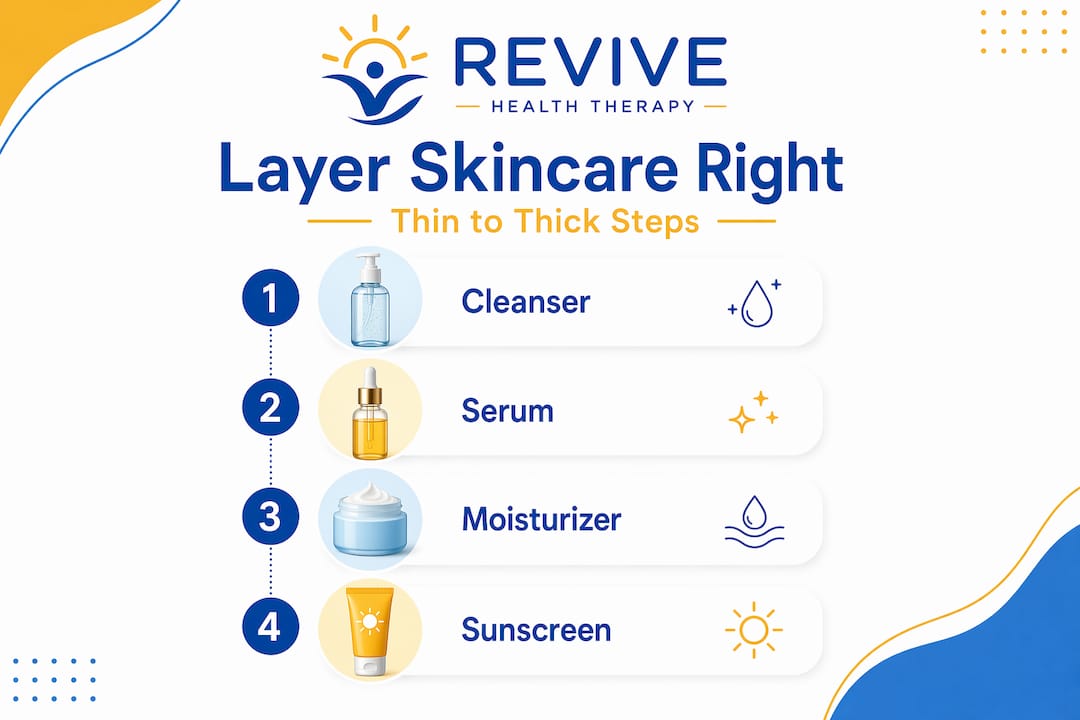
The logic behind product layering is straightforward. Thin to thick texture is the rule. Toners, essences, and serums go on first because their small molecules need direct contact with skin to work. Heavier creams and SPF go on last to lock everything in. If you apply a thick moisturizer before your vitamin C serum, you have essentially built a wall that keeps the active ingredient out.
Timing matters more than most people realize. Waiting 10 to 30 seconds between lighter products lets them absorb before the next layer goes on. For heavier creams, give it one to three minutes. This is not just patience for its own sake. Stacking wet layers too quickly dilutes actives and reduces how well each one penetrates.
One of the most underrated skincare routine tips is this: consistent 3 to 5 products used daily outperform a complex ten-step routine done sporadically. Complexity breeds inconsistency. Pick a cleanser, a vitamin C serum for mornings, a moisturizer, and an SPF. That four-product morning routine, done every day, will produce better results than any elaborate regimen you abandon after two weeks.
Pro Tip: Apply your vitamin C serum to slightly damp skin right after cleansing. The water on your skin’s surface helps the serum spread more evenly and absorb faster.
How to use retinoids without wrecking your skin
Retinoids are the single most evidence-backed category of topical ingredient in dermatology. They improve skin texture, reduce the appearance of fine lines, treat acne, and speed up cell turnover. The reason most people fail with them is not that retinoids do not work. It is that they start too fast.
Here is a protocol built from clinical guidance that gives your skin a real chance to adapt:
- Start twice weekly. Apply a pea-sized amount on dry skin two nights a week for the first two to three weeks. This is not optional. Starting nightly from day one is the most common mistake.
- Progress to every other night. Once your skin tolerates twice-weekly application without flaking or significant redness, move to every other night for three to four weeks.
- Build toward nightly. After eight to twelve weeks total, gradually increase frequency toward nightly use. Not everyone needs to get there; every-other-night long-term is still highly effective.
- Use the sandwich method. Apply moisturizer first, let it absorb, then apply the retinoid, and follow with another layer of moisturizer. The retinoid sandwich technique reduces irritation symptoms by around 70% without blunting the ingredient’s effectiveness.
- Pause if your barrier breaks. Stinging, peeling that goes beyond mild flaking, or a raw feeling means your skin barrier is compromised. Stop the retinoid for five to seven days, focus on a gentle cleanser and rich moisturizer, and reintroduce at a lower frequency.
One thing that surprises most first-time users: retinoid full benefits take three to six months of consistent nightly use to appear. Initial purging, where congestion temporarily worsens, is normal. Quitting in week four because you do not see results is quitting before the finish line.
Retinoids also increase photosensitivity significantly. Because retinoids thin the outer skin layers, any skipped sunscreen session risks hyperpigmentation and real sun damage. Daily broad-spectrum SPF is not optional when you are using a retinoid. It is part of the protocol.

Pro Tip: Apply your retinoid only to completely dry skin, not damp skin. Moisture on the surface accelerates absorption and increases irritation risk, especially for beginners.
Sunscreen: the most effective anti-aging step you own
No serum, no supplement, and no facial treatment delivers results comparable to consistent sunscreen use. Sunscreen protects against 80% of visible facial aging. That is not marketing language. That figure comes from dermatological research on UV-driven collagen breakdown and pigmentation.
Most people underuse sunscreen in two ways: they apply too little, and they do not reapply. A quarter-sized amount covers your face adequately. Add a bit more for ears, neck, and the backs of your hands, which age visibly and are almost always neglected. Reapplication matters every two hours if you are outdoors or sitting near a window for extended periods.
Here is what to know about formula types:
- Creams offer the most coverage and are best for dry or mature skin. They are also easiest to apply in the correct amount.
- Sticks work well for quick reapplication over makeup, especially around the eyes and hairline.
- Sprays are convenient but often lead to inadequate coverage because users spray too briefly. If you use a spray, rub it in after applying.
For oily skin, look for oil-free, mattifying SPF formulas. For darker skin tones, mineral sunscreens with tinted or micronized zinc oxide avoid the white cast that older mineral formulas left behind. For sensitive skin, mineral (physical) SPF with zinc oxide or titanium dioxide causes far less irritation than chemical filters.
One more thing worth knowing: the SPF in your foundation or concealer does not provide meaningful protection. Makeup SPF typically adds a layer of SPF 10 to 15 at most, and you would need to apply five times the normal makeup amount to hit the labeled SPF number. Always apply a dedicated skin health guide sunscreen underneath.
Pro Tip: Keep a sunscreen stick at your desk or in your bag for midday reapplication. Barrier use drops sharply when reapplication requires significant effort.
2026 beauty trends worth knowing
The dominant theme in this year’s makeup landscape is high impact with low effort. 2026 makeup trends favor shimmery metallic eyeshadows, waterline eyeliners, natural matte complexions, high blush placement on the temples, lived-in smoky eyes, and glossy lips. The common thread is that each of these looks can be built quickly, which aligns with how most people actually get ready in the morning.
A few specific product categories worth watching:
- Cream-to-powder eyeshadows apply in seconds with a finger and stay put without primer, which makes them a practical choice for everyday wear.
- Hybrid lip products that behave like a balm but deliver the color payoff of a lipstick have moved from niche to mainstream.
- High blush placement is a continuation of the trend from prior years, but in 2026 it has moved further toward the temples for a more sun-kissed effect.
The effortless makeup trend is particularly well-suited for busy people because metallic accents and glossy lips require only one to two products to achieve.
Here is a quick comparison to help you decide which trends fit your current routine:
| Trend | Effort level | Skin-friendly? | Best for |
|---|---|---|---|
| Metallic eyeshadow | Low | Yes | All skin types |
| High blush placement | Low | Yes | Oval and round face shapes |
| Glossy lips | Very low | Yes, with hydrating formula | Dry or normal lips |
| Lived-in smoky eye | Moderate | Yes, with non-irritating liner | Evening or weekend wear |
| Matte complexion | Low | Choose breathable formulas | Oily or combination skin |
Integrating wellness with your appearance practice also pays off in visible ways. Quality sleep supports skin repair. Staying hydrated keeps your barrier function intact. Mindfulness practice, yoga and wellness accessories and breathwork reduce the stress hormones that contribute to breakouts and dullness. These are not soft lifestyle suggestions. They are factors with direct, measurable effects on skin health.
Pro Tip: Before chasing a new trend, check whether it requires skipping or layering over your sunscreen. If a trend step belongs before SPF in your routine, it is fine. If it replaces SPF, skip the trend.
My honest take on building a beauty routine that lasts
I have noticed something consistent in talking to people about their skincare habits: the routines that get abandoned are almost always the complicated ones. Not because the products were wrong, but because the system was unsustainable from day one.
What I have found actually works is treating your routine the way you treat brushing your teeth. Short, automatic, non-negotiable. When I simplified my own morning routine to four steps, cleanser, vitamin C, moisturizer, and SPF, my results improved because I stopped skipping days.
The retinoid piece trips people up more than anything else. Patience is genuinely hard when you are waiting three to six months for visible change while dealing with initial irritation. I think the biggest mindset shift is understanding that the purging phase is evidence the ingredient is working, not evidence that it is wrong for you. Going slow is not timidity. It is strategy.
Here is the part that rarely gets mentioned: your mental and emotional state shows up on your skin. Chronic stress, disrupted sleep, and unaddressed anxiety all affect cortisol levels, which directly affect inflammation and sebum production. I work in a space where mental wellness and physical health intersect constantly, and I see how much easier it becomes to maintain any self-care habit, beauty included, when your emotional foundation is stable. That connection is real, and it deserves more attention than it gets in most beauty content.
Build routines you can actually keep. Customize them to your skin, your schedule, and your life. No formula works for everyone.
— Amy
Your skin and your mind both deserve support
Self-care does not start and end at the bathroom mirror. The mental state you bring to your daily routine shapes whether that routine happens at all, and how you feel when you look in the mirror afterward.

At Revivehealththerapy, we understand the connection between mental wellness and consistent self-care. When anxiety, depression, or chronic stress take over, even the simplest habits become hard to maintain. Our evidence-based services, including CBT, EMDR, and mindfulness-based therapy, are designed to support your overall wellbeing, which includes the energy and stability it takes to show up for yourself every day. If you are curious about what psychotherapy can offer your life, or want to explore mental health services for adults in California, Revivehealththerapy offers in-person and telehealth options with sliding-scale fees and insurance support.
FAQ
What is the correct order for a basic beauty routine?
Apply products from thinnest to thickest texture: cleanser first, then serum, then moisturizer, then sunscreen last in the morning. Waiting 10 to 30 seconds between lighter layers helps each product absorb properly.
How do I start using retinoids without irritation?
Begin with twice-weekly application on dry skin and build slowly over 8 to 12 weeks. Using the sandwich method, moisturizer before and after the retinoid, reduces irritation by around 70% without reducing effectiveness.
How much sunscreen should I apply to my face?
Use about a quarter-sized amount for your face and add more for your neck, ears, and hands. Reapply every two hours when outdoors or near windows for consistent protection.
Do beauty trends in 2026 work with a skincare routine?
Most current trends, including metallic eyeshadows, glossy lips, and high blush, apply on top of or alongside your skincare steps without disrupting them. Always apply sunscreen before any makeup, since makeup SPF alone does not provide adequate protection.
Can mental health affect how my skin looks?
Yes. Chronic stress raises cortisol levels, which increases inflammation and sebum production, contributing to breakouts and dullness. Managing stress through sleep, mindfulness, or therapy supports more consistent self-care and better skin outcomes over time.