
Choosing the best therapy for anxiety or trauma can feel overwhelming when cost and compatibility matter as much as results. Many California adults search for evidence-based practices that address personal challenges while fitting within their budget and lifestyle. If you want guidance on evaluating therapy types, clarifying your needs, and finding an approach that truly aligns with your goals, you are in the right place.
Table of Contents
- Step 1: Clarify Your Therapy Goals And Personal Needs
- Step 2: Research Evidence-Based Therapy Types And Approaches
- Step 3: Compare Potential Therapy Options For Your Situation
- Step 4: Assess Affordability, Accessibility, And Provider Fit
- Step 5: Verify Therapy Choice Matches Your Needs And Preferences
Quick Summary
| Key Insight | Explanation |
|---|---|
| 1. Clarify Your Therapy Goals | Identify specific challenges and desired outcomes to guide your therapeutic journey effectively. Document measurable goals for better focus and progress. |
| 2. Research Evidence-Based Therapies | Focus on therapy approaches scientifically validated through studies, ensuring your treatment is credible and effective for your needs. |
| 3. Compare Therapy Options Thoroughly | Evaluate different therapy approaches based on their effectiveness, duration, cost, and therapist qualifications using a detailed comparison matrix. |
| 4. Assess Affordability and Accessibility | Consider financial costs, location, and therapist fit to ensure sustainable and convenient access to your therapy sessions. |
| 5. Verify Ongoing Treatment Alignment | Continuously assess whether your therapy meets your evolving needs by tracking progress and maintaining open communication with your therapist. |
Step 1: Clarify your therapy goals and personal needs
Choosing the right therapy is like creating a personalized roadmap for your mental health journey. The process begins with understanding exactly what you want to achieve and what challenges you’re experiencing.
To effectively clarify your therapy goals, start by conducting a comprehensive personal mental health assessment. This involves deep self-reflection on several key areas:
- Identifying specific challenges you want to address (anxiety, trauma, relationship issues)
- Understanding your current emotional state
- Determining desired outcomes for personal growth and healing
- Recognizing your strengths and support systems
Consider documenting your goals with specific, measurable intentions. For instance, instead of a vague goal like “feel better,” aim for concrete objectives such as:
- Develop healthier stress management techniques
- Improve communication in personal relationships
- Process unresolved childhood trauma
- Build more consistent emotional regulation skills
Your therapy goals should reflect your unique needs and create a clear pathway toward meaningful personal transformation.
Professional mental health providers can help guide this goal-setting process, offering insights into treatment approaches tailored to individual needs that align with your specific circumstances and developmental stage.
Pro tip: Write down your therapy goals and be prepared to discuss them openly with your potential therapist during initial consultations.
Step 2: Research evidence-based therapy types and approaches
Navigating the world of mental health treatments requires a strategic approach to understanding which therapies have proven scientific effectiveness. Your goal is to explore evidence-based practices in mental health counseling that offer the most reliable path to healing.
When researching therapy types, focus on approaches that have been rigorously validated through scientific methods. Look for treatments supported by:
- Randomized controlled trials
- Systematic review studies
- Meta-analysis research
- Peer-reviewed psychological journals
Some widely recognized evidence-based therapy approaches include:
- Cognitive Behavioral Therapy (CBT)
- Dialectical Behavior Therapy (DBT)
- Eye Movement Desensitization and Reprocessing (EMDR)
- Acceptance and Commitment Therapy (ACT)
- Mindfulness-Based Stress Reduction (MBSR)
Scientific validation doesn’t just mean statistical significance—it means finding an approach that genuinely supports your unique mental health journey.
Consider exploring therapy options specifically tailored to anxiety and depression, as these are common concerns with well-researched treatment protocols. Cross-reference multiple sources and consult professional mental health practitioners to understand which approaches might work best for your specific needs.

Pro tip: Request research summaries or clinical outcome data from potential therapists to understand the empirical support behind their preferred treatment approaches.
Step 3: Compare potential therapy options for your situation
Comparing therapy options is like creating a personalized mental health roadmap tailored to your unique challenges and goals. Your mission is to carefully evaluate different therapy approaches and their treatment effectiveness.
To effectively compare therapy options, create a comprehensive comparison matrix that considers multiple critical factors:
- Specific therapeutic approach
- Proven effectiveness for your particular concerns
- Treatment duration and intensity
- Cost and insurance coverage
- Therapist’s specialization and experience
Key therapy approaches to compare include:
Here is a quick overview of how major therapy approaches compare on critical selection factors:
| Therapy Approach | Typical Duration | Main Focus | Ideal For |
|---|---|---|---|
| Cognitive Behavioral Therapy | 12-20 sessions | Thought patterns and behaviors | Anxiety, depression, stress |
| Psychodynamic Therapy | Months to years | Unconscious motivations | Relationship issues, self-awareness |
| Humanistic Therapy | Flexible | Personal growth | Self-esteem, life transitions |
| Family Systems Therapy | Several months | Family interactions | Family conflict, couples counseling |
| Dialectical Behavior Therapy | 16-24 weeks | Emotional regulation skills | Mood disorders, trauma recovery |
- Cognitive Behavioral Therapy (best for structured problem-solving)
- Psychodynamic Therapy (ideal for understanding deep-rooted patterns)
- Humanistic Therapy (focuses on personal growth and self-actualization)
- Family Systems Therapy (addresses relational dynamics)
- Dialectical Behavior Therapy (exceptional for emotional regulation)
Not all therapy approaches work equally well for everyone—your unique needs determine the most effective path.
Consider exploring therapy types designed for adult mental wellness and schedule initial consultations to discuss which approach resonates most with your personal healing journey. Pay attention to how comfortable you feel with the therapist and the proposed treatment methodology.
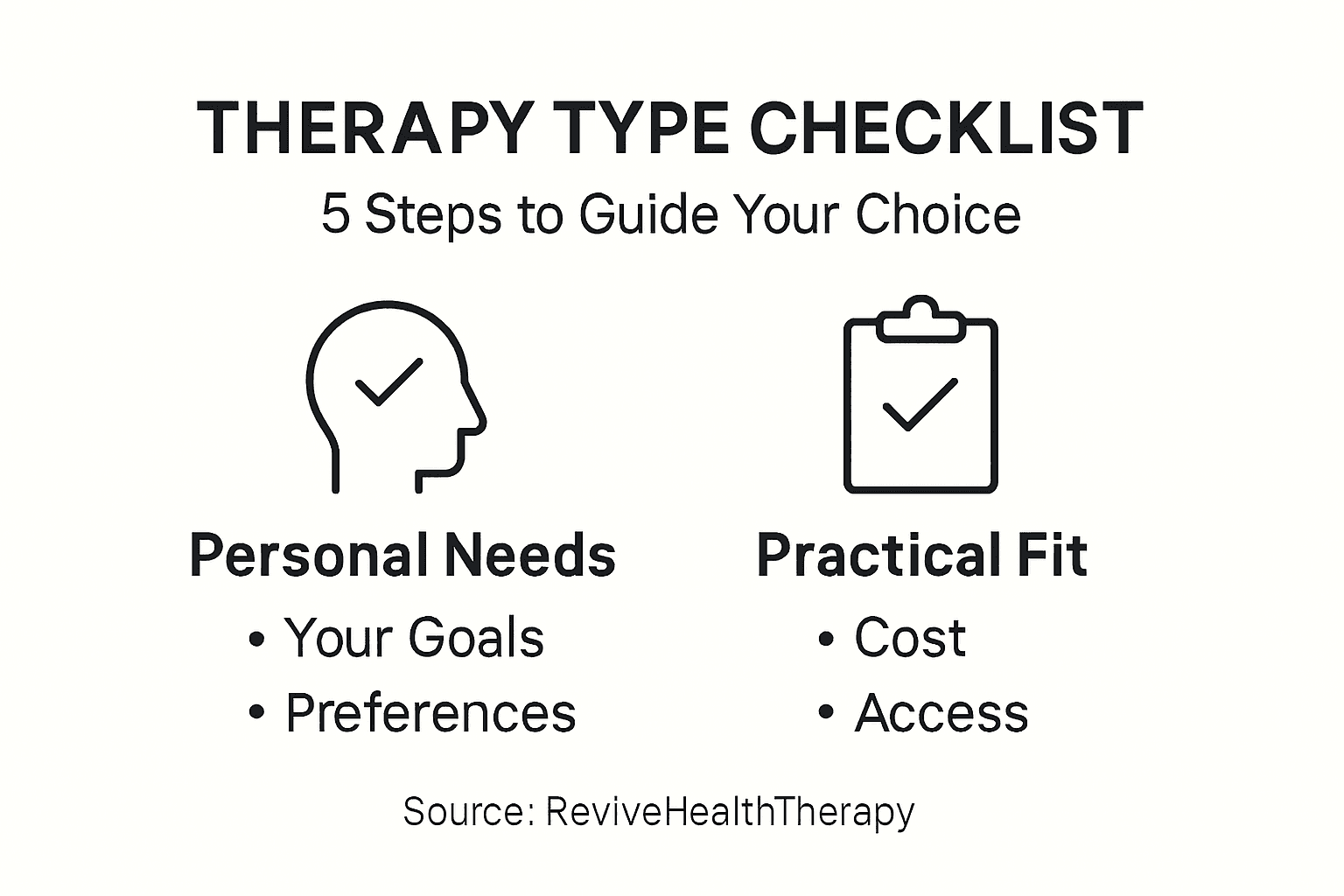
Pro tip: Create a personal “therapy compatibility” checklist with your top three therapeutic goals to help guide your selection process and communicate effectively with potential therapists.
Step 4: Assess affordability, accessibility, and provider fit
Finding the right therapy involves more than just selecting an approach—it requires carefully evaluating key factors that impact your mental health treatment. Your goal is to balance practical considerations with finding a therapeutic relationship that genuinely supports your healing journey.
When assessing potential therapy providers, consider these critical evaluation criteria:
- Total treatment cost and insurance compatibility
- Geographic location and session accessibility
- Therapist’s specialization and professional credentials
- Scheduling flexibility
- Telehealth and remote session options
Break down your assessment into specific comparison points:
- Financial considerations
- Logistical accessibility
- Therapeutic expertise
- Personal comfort and communication style
- Long-term treatment sustainability
The most effective therapy isn’t just about technique—it’s about finding a genuine human connection that supports your unique path to wellness.
Prepare a comprehensive guide to understanding affordable therapy options that meets your budgetary constraints while maintaining high-quality care. Remember that investing in your mental health is a crucial step toward personal growth and emotional resilience.
Use this summary to track important factors when evaluating therapy affordability and access:
| Factor | Why It Matters | Practical Tip |
|---|---|---|
| Cost & Insurance | Impacts long-term sustainability | Ask about sliding scale fees |
| Location & Accessibility | Affects session consistency | Explore telehealth options |
| Therapist Credentials | Ensures professional quality | Check licenses and certifications |
| Scheduling Flexibility | Supports ongoing commitment | Confirm evening/weekend hours |
Pro tip: Schedule initial 15-minute consultations with multiple therapists to assess their approach, communication style, and overall fit before committing to long-term treatment.
Step 5: Verify therapy choice matches your needs and preferences
Confirming that your selected therapy aligns perfectly with your personal goals requires thoughtful evaluation and continuous assessment of treatment effectiveness. Your therapeutic journey is dynamic, demanding ongoing reflection and potential adjustments.
Establish a comprehensive verification process that ensures your therapy remains responsive to your evolving needs:
- Tracking personal progress
- Monitoring emotional responses
- Assessing goal achievement
- Evaluating therapist compatibility
- Remaining open to alternative approaches
Implement a systematic approach to verify therapy alignment:
- Schedule regular self-check-ins
- Maintain an honest dialogue with your therapist
- Document your emotional and behavioral changes
- Review initial treatment goals periodically
- Be willing to request modifications
Your therapeutic path is not a fixed route but a flexible journey of personal discovery and healing.
Consider exploring expert guidelines for choosing the right therapist to validate your selection process and ensure continued personal growth. Trust your instincts and remain proactive about your mental health treatment.
Pro tip: Create a quarterly personal therapy effectiveness journal to track your progress, emotional shifts, and therapeutic insights.
Find the Right Therapy to Match Your Unique Mental Health Needs
Choosing the right therapy can feel overwhelming when you face personal challenges like anxiety, trauma, or relationship struggles. This article breaks down how to clarify your goals, compare evidence-based therapy types, and assess affordability and accessibility. If you want to move beyond confusion and take control of your healing journey, understanding these key steps is essential.
At ReviveHealthTherapy, we specialize in trauma-informed, evidence-based care using methods like EMDR, CBT, and mindfulness that directly address the goals you set for yourself. Whether you need in-person support in Walnut Creek or Oakland, or prefer secure telehealth sessions across California, we make therapy accessible and affordable with sliding-scale fees and insurance options. If you are ready to explore therapy types tailored for your mental health goals, start by visiting our Uncategorized – ReviveHealthTherapy page to learn more about diverse approaches and expert guidance.

Take the first step towards healing by scheduling your free 20-minute consultation. Our team will help you clarify your goals, explore evidence-based options, and find a therapist who fits your needs. Don’t wait to prioritize your mental wellness. Fill out this quick form now at https://revivehealththerapy.com/fill-out-this-quick-form-for-your-free-20-min-consultation-with-a-therapist-3 and start your personalized therapy journey today.
Frequently Asked Questions
How can I clarify my therapy goals before starting treatment?
Start by conducting a personal mental health assessment to identify specific challenges and desired outcomes. Write down your goals—such as improving relationships or managing stress—and discuss them openly with your potential therapist during initial consultations.
What should I consider when researching different therapy types?
Focus on evidence-based therapies that have proven effectiveness for your specific concerns. Look for approaches supported by scientific research, such as Cognitive Behavioral Therapy or Dialectical Behavior Therapy, and cross-reference information from multiple reputable sources.
How do I compare therapy options to find the best fit?
Create a comparison matrix that evaluates the therapeutic approach, cost, duration, therapist specialization, and proven effectiveness for your needs. Use this matrix to assess different therapist profiles and determine which practitioners align with your personalized goals.
What factors should I assess regarding affordability and accessibility of therapy?
Consider the total treatment cost, insurance compatibility, therapist location, and whether telehealth options are available. Investigate sliding scale fees or community mental health resources to ensure you find a solution that fits within your budget.
How do I verify that my chosen therapy aligns with my mental health needs?
Regularly assess your progress by documenting emotional responses and goal achievements. Maintain an ongoing dialogue with your therapist and remain open to adjustments based on your evolving needs; aim to review your progress at least every few months.
Recommended
- How to Choose a Therapist in California for Lasting Change – ReviveHealthTherapy
- 7 Essential Tips for Choosing a Therapist in California – ReviveHealthTherapy
- 7 Types of Therapy for Anxiety and How They Can Help You – ReviveHealthTherapy
- Why Seek Psychotherapy: Transforming Mental Wellness – ReviveHealthTherapy
- Understanding What is Mental Fitness for Better Well-Being – Real Healthy Haven
3 Responses