
TL;DR:
- A mom squad is a supportive group of mothers that offers friendship, emotional help, and practical resources. These communities counteract postpartum isolation and promote mental wellness through regular, authentic connections. Different formats, from free nonprofits to paid memberships, provide diverse ways for mothers to build meaningful relationships and find support suited to their needs.
A mom squad is a dedicated group of mothers who provide each other with friendship, emotional support, and practical resources through the shared challenges of parenthood. Unlike casual acquaintances at the school gate, a true supportive mom community shows up consistently, holds space for real feelings, and fills the gaps that parenting books never cover. Groups like the Inspirational Mom Squad, which supports over 2,000 members with emergency aid, food, and recovery assistance, prove that these networks go far beyond coffee dates. Whether you find your mom friends group through a neighborhood app, a church, or a paid subscription community, the structure matters less than the authenticity inside it.
How does a mom squad support mental health and emotional wellness?
Isolation is one of the least-discussed risks of early motherhood. A mom squad directly counters that by creating regular, reliable human contact at a time when many mothers feel cut off from their pre-baby identities. The mental health benefits for moms of consistent peer support are well-documented, ranging from reduced anxiety to stronger emotional resilience.
Peer support within a mom community works because it normalizes struggle. When another mother says she cried in the car after drop-off, the listener stops feeling broken and starts feeling understood. That shift from shame to solidarity is a genuine psychological mechanism, not just a feel-good moment.
The format of connection matters too. Groups that pair digital check-ins with in-person meetups improve emotional wellness and build accountability in ways that virtual-only groups cannot replicate. A text thread keeps the connection alive between meetups, but the in-person hug after a hard week does something a screen cannot.
Key mental health benefits a strong mom community delivers:
- Reduced isolation: Regular contact breaks the cycle of postpartum loneliness.
- Stress relief: Sharing parenting frustrations with peers lowers cortisol more effectively than venting alone.
- Emotional resilience: Witnessing how other mothers handle hard seasons builds your own coping toolkit.
- Accountability: Knowing someone expects you at Thursday’s walk makes it harder to cancel on yourself.
- Identity reinforcement: A mom friends group reminds you that you are a whole person, not just a caregiver.
Pro Tip: If your group meets digitally most of the time, schedule one mandatory in-person gathering per month. The shift from screen to face-to-face deepens trust faster than any number of voice notes.
What types of mom squads and activities are available today?
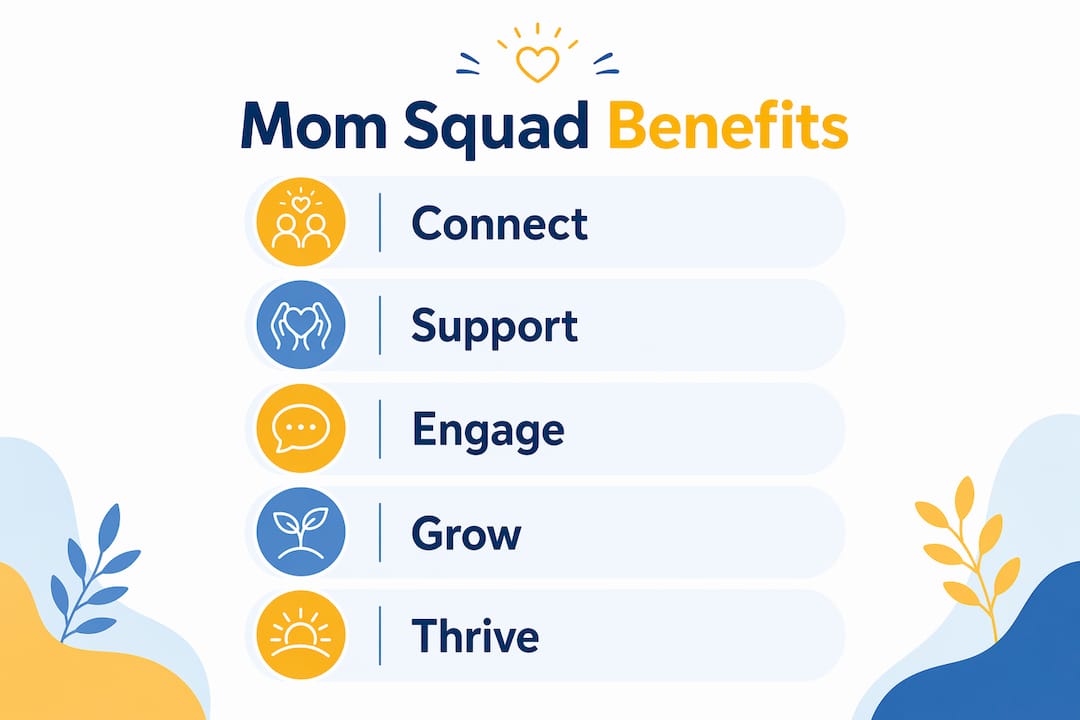
The range of formats available to mothers is wider than most realize. From nonprofit emergency networks to curated subscription communities, there is a model for nearly every lifestyle and budget.
| Format | Cost | What it offers |
|---|---|---|
| Nonprofit/volunteer groups (e.g., Inspirational Mom Squad) | Free | Emergency aid, food, clothing, recovery support, social connection |
| Subscription communities (e.g., Social Society) | ~$17/month | 2–4 curated social experiences plus a private digital community |
| Drop-in play-based groups | $10/session | Low-pressure socialization for moms and children ages 0–2 |
| MOMS Club chapters | Low/free | Inclusive long-term friendship groups organized locally |
| Library or community center meetups | Free | Informal gatherings, story times, and parenting workshops |
Drop-in play groups are particularly effective for mothers with infants and toddlers. Monthly playtimes at Little Words Studio create open-ended play for children ages 0–2 while giving mothers relaxed, unstructured social time. The $10 per session cost removes the financial commitment barrier that stops many mothers from trying a new group.
Subscription-based communities like Social Society take a different approach. The $17 per month fee covers access to 2–4 organized social experiences and a private digital space. That structure suits mothers who want curated activities rather than self-organized meetups.
Activities that work well across most formats include:
- Stroller walks in local parks
- Mom-only dinners or coffee meetups
- Educational sessions on sleep, nutrition, or child development
- Craft or hobby nights without children
- Volunteer projects that give the group a shared purpose
The best activities for moms are the ones with low stakes and high repetition. A weekly walk requires no planning, no childcare, and no performance. It just requires showing up.
How can you find or create a mom squad that fits your life?
Finding a mom friends group starts with one honest question: what do you actually need right now? Some mothers need practical help. Others need someone to laugh with. Knowing your answer shapes where you look and what you build.
Steps to find or start your own group:
- Start with one person. Invite one mom you already like for a walk or coffee. One real connection is the seed of a squad.
- Use existing infrastructure. Facebook groups, Nextdoor, local library boards, and apps like Peanut connect mothers by location and child age without requiring you to build from scratch.
- Organize by life stage. Grouping moms by child age or shared interests prevents the alienation that comes from being the only one with a newborn in a room full of school-age parents.
- Choose a low-pressure recurring format. Routine small gatherings reduce decision fatigue and lower the entry barrier for introverted or overwhelmed mothers. A standing Tuesday walk beats a monthly event that requires RSVP and planning.
- Set a gentle expectation of consistency. Tell the group: “We meet every other Saturday at 9 a.m., rain or shine.” Consistency builds trust faster than any icebreaker activity.
- Keep the first few gatherings short. Sixty to ninety minutes is enough to connect without exhausting anyone. Mothers with young children are already running on limited energy.
Pro Tip: If introversion makes group settings feel draining, start a two-person walking buddy system first. Once that relationship feels safe, invite one more person. Grow the group at the pace that feels right for you.
Barriers like conflicting schedules, lack of childcare, and social anxiety are real. The solution is not to push through them but to design around them. A group that meets during school hours, allows babies in arms, and never requires anyone to host solves three common barriers at once. The goal of mom networking is not to fill a calendar. It is to build a handful of relationships that feel genuinely safe.

What makes a mom squad truly inclusive and effective?
The most effective mom squads share a set of values that go beyond logistics. Structure and scheduling matter, but culture determines whether mothers actually stay.
Inclusivity as a non-negotiable foundation. MOMS Club is built on the principle that membership is open regardless of background, economic status, or religion. That commitment prevents the clique dynamics that make many informal groups feel unwelcoming to mothers who do not fit a narrow demographic.
The “no-fixing” rule. Healthy mom communities prioritize empathetic listening over unsolicited advice. When a mother shares that she is struggling, the group’s job is to hold space, not to hand her a five-step solution. Many digital mom groups fail because they default to toxic positivity, flooding hard posts with “You’ve got this!” instead of “That sounds really hard. I’m here.” The no-fixing culture is what separates a supportive community from a performance space.
Season-of-life organization. Grouping mothers by their child’s developmental stage keeps conversations relevant. A mother with a three-month-old and a mother with a twelve-year-old face entirely different daily realities. Chapter-based structures solve this by creating sub-groups within a larger community, so every member finds her people.
“Mom Squad is a safe, welcoming space where moms can authentically show up without pressure or judgment.” — Phoenicia, Mom Squad founder
Long-term friendship is the quiet payoff of a well-run group. Children who grow up alongside each other in a MOMS Club chapter develop their own friendships. The community becomes multigenerational. That outcome does not happen by accident. It happens because the adults in the room decided early on that authenticity and inclusion mattered more than appearances.
Key takeaways
A mom squad works because it replaces isolation with consistent, authentic connection that supports both mental health and practical daily life.
| Point | Details |
|---|---|
| Mental health is a core benefit | Regular peer support reduces isolation, lowers stress, and builds emotional resilience for mothers. |
| Format variety makes access easier | Options range from free nonprofit groups to $17/month subscription communities and $10 drop-in sessions. |
| Small and routine beats big and occasional | Weekly low-pressure gatherings build deeper trust than monthly events requiring significant planning. |
| Culture determines whether moms stay | Inclusive, no-fixing spaces where mothers can be authentic outperform groups focused on advice-giving. |
| In-person and digital work best together | Combining text check-ins with mandatory face-to-face meetups deepens connection and accountability. |
What I’ve learned from watching moms find their people
I have seen mothers walk into a first mom group meetup visibly braced for small talk and walk out with someone’s number saved under “the one who gets it.” That shift does not happen because the activity was clever. It happens because someone in the room decided not to perform.
The biggest mistake I see mothers make is waiting until they feel ready. Readiness is a myth when you are sleep-deprived and stretched thin. The mothers who build lasting connections are the ones who show up imperfectly, with spit-up on their shirt and no idea what to say. Authenticity is the entry fee, not polish.
Balancing digital and in-person connection is worth being deliberate about. A group chat is convenient, but it can also become a place where everyone performs wellness. The real conversations happen on a walk, when there is no screen to hide behind and the silence between sentences is allowed to exist. If your current mom community lives entirely on your phone, consider what one in-person hour per month could change.
The mothers I have seen thrive are not the ones in the biggest groups. They are the ones in the most honest ones. Two or three women who will tell you the truth about their week are worth more than a hundred followers on a mom Facebook group. Build for depth, not numbers.
— Amy
When a mom squad and therapy work together
A strong mom community is one of the most powerful tools a mother has. And sometimes, the conversations that start in a mom group reveal something deeper that peer support alone cannot address.
Revivehealththerapy offers evidence-based psychotherapy for mothers, families, and children across California, with in-person sessions in Walnut Creek and Oakland and secure telehealth available statewide. Services include CBT, EMDR, and mindfulness-based approaches for anxiety, depression, trauma, and relationship challenges. Sliding-scale fees and insurance acceptance, including HSA/FSA plans, make care accessible regardless of income. If your mom community has helped you recognize that you need more than peer support, professional mental wellness support is a natural and worthwhile next step. You can also explore the proven benefits of psychotherapy to understand what working with a therapist can offer alongside the community you are already building.
FAQ
What is a mom squad?
A mom squad is a dedicated group of mothers who provide each other with friendship, emotional support, and practical help through the shared experience of parenthood. Groups range from informal neighborhood circles to structured organizations like MOMS Club or Inspirational Mom Squad.
How do I find a mom friends group near me?
Apps like Peanut, local Facebook groups, Nextdoor, and library community boards are reliable starting points for finding a local mom community. Organizing by your child’s age increases the chance of finding mothers in the same parenting season.
How much does it cost to join a mom community?
Costs vary widely. Nonprofit groups like Inspirational Mom Squad are free, drop-in play sessions often cost $10 per session, and subscription communities like Social Society charge around $17 per month for curated social experiences.
What activities work best for mom groups?
Recurring low-pressure activities like weekly stroller walks, coffee meetups, and mom-only dinners build the strongest connections. Consistency matters more than the activity itself.
Can a mom squad replace therapy?
A mom squad provides peer support and social connection, but it does not replace professional mental health care. For anxiety, depression, trauma, or postpartum challenges, working with a licensed therapist through a service like Revivehealththerapy offers structured, evidence-based treatment that peer support cannot provide.
One Response