
Many couples believe premarital counseling is reserved for relationships already in crisis. This misconception prevents engaged partners from accessing one of the most effective tools for building a strong marital foundation. Premarital counseling is actually a proactive approach designed for healthy couples preparing for marriage, focusing on skill development and prevention rather than problem-solving. This guide explores what premarital counseling entails, the evidence-based methods professionals use, proven benefits backed by research, and practical steps California couples can take to prepare for a successful marriage.
Table of Contents
- Key takeaways
- What is premarital counseling and why does it matter?
- Common methodologies and assessments used in premarital counseling
- Effectiveness and empirical benefits of premarital counseling
- Challenges, edge cases, and choosing the right counseling approach
- Explore expert mental health services to support your relationship
- What is premarital counseling FAQ
Key Takeaways
| Point | Details |
|---|---|
| Proactive Premarital Counseling | Premarital counseling is preventive education and coaching for healthy couples preparing for marriage, not crisis therapy. |
| Structured Assessments | Tools like PREPARE/ENRICH assess strengths and growth areas across multiple categories such as communication finances and intimacy. |
| Evidence Based Methods | Professionals use methods such as PREPARE/ENRICH Gottman Method and EFT to guide the process with licensed facilitators delivering the best outcomes. |
| Start Early Timeline | Starting six to twelve months before the wedding gives couples time to discuss important topics and address concerns before planning pressures mount. |
What is premarital counseling and why does it matter?
Premarital counseling is a proactive form of couples therapy for engaged or seriously committed couples preparing for marriage, focusing on prevention rather than fixing existing problems. Unlike traditional therapy that addresses current conflicts, this approach equips partners with essential relationship skills before challenges arise. Think of it as relationship education combined with personalized coaching.
California couples face unique pressures that make this preparation especially valuable. The state’s high cost of living, demanding work culture, and diverse population create stressors that impact even strong relationships. Building a solid foundation before marriage helps partners navigate these challenges together.
Premarital counseling strengthens several critical relationship areas:
- Communication patterns and active listening techniques
- Healthy conflict resolution strategies that prevent escalation
- Financial planning and money management discussions
- Intimacy expectations and maintaining connection over time
- Family dynamics and boundary setting with extended relatives
- Shared values, goals, and life vision alignment
Pro Tip: Schedule premarital counseling six to twelve months before your wedding date. This timeline allows you to address any concerns that surface without the pressure of imminent wedding planning deadlines.
The preventative nature of this work makes it fundamentally different from crisis intervention. You’re not waiting for problems to develop. Instead, you’re actively building skills that research shows predict long-term marital satisfaction. California’s divorce rates mirror national trends, with roughly 50% of marriages ending in divorce. Premarital counseling directly addresses this reality by helping couples identify potential challenges early and develop strategies to handle them effectively.
Many couples report that sessions reveal important topics they hadn’t discussed thoroughly, from parenting philosophies to career ambitions. These conversations happen in a structured, supportive environment with a trained facilitator who can guide productive dialogue. For California couples considering telehealth marriage therapy, virtual sessions offer flexibility without sacrificing quality, making this preparation accessible regardless of location or schedule constraints.
Common methodologies and assessments used in premarital counseling
Professionals use several evidence-based approaches to help couples prepare for marriage. Structured assessments like PREPARE/ENRICH evaluate strengths and growth areas in 12 categories including communication, finances, and intimacy, while the Gottman Method identifies destructive patterns called the Four Horsemen, and Emotionally Focused Therapy (EFT) addresses attachment needs. Each method brings unique strengths to the counseling process.
| Method | Focus Areas | Unique Features |
|---|---|---|
| PREPARE/ENRICH | 12 relationship categories including conflict resolution, finances, intimacy | Computerized assessment with 80-90% prediction accuracy, used by over 4 million couples |
| Gottman Method | Communication patterns, emotional connection, shared meaning | Identifies Four Horsemen (criticism, contempt, defensiveness, stonewalling) |
| Emotionally Focused Therapy | Attachment bonds, emotional responsiveness, vulnerability | Focuses on creating secure emotional connections between partners |
PREPARE/ENRICH stands as the most widely researched premarital assessment tool. Over 4 million couples have completed this evaluation, which generates a detailed report highlighting relationship strengths and growth opportunities. The assessment asks partners to respond independently to statements about their relationship, then compares responses to identify areas of agreement and potential conflict.

The Gottman Method takes a different approach by examining specific interaction patterns. Developed through decades of research observing couples in laboratory settings, this method teaches partners to recognize and counteract destructive communication habits. The Sound Relationship House framework provides a roadmap for building friendship, managing conflict, and creating shared meaning in marriage.
EFT focuses specifically on emotional bonds between partners. This approach recognizes that secure attachment creates a foundation for handling life’s challenges together. Therapists help couples identify negative interaction cycles, access underlying emotions, and respond to each other’s needs with greater sensitivity.
Pro Tip: Ask potential counselors which methodology they use and request information about their training. Licensed facilitators certified in these specific approaches deliver better outcomes than generalists without specialized premarital counseling training.
Most premarital programs combine assessment tools with guided discussions. You’ll complete questionnaires independently, then meet with your counselor to review results and practice new skills. Sessions typically address:
- Your communication styles and how to bridge differences
- Money management approaches and financial goal alignment
- Intimacy expectations and maintaining physical connection
- Conflict patterns and de-escalation techniques
- Family of origin influences on your relationship
- Shared values and life vision compatibility
The structured nature of these programs ensures comprehensive coverage of topics that predict marital success. Rather than relying on couples to identify important discussion areas themselves, evidence-based assessments guide the conversation toward research-proven factors. Understanding the role therapists play in facilitating these discussions helps couples maximize their counseling experience.
Effectiveness and empirical benefits of premarital counseling
Research consistently demonstrates that premarital counseling produces measurable improvements in relationship outcomes. Couples who participate are 30-31% less likely to divorce, PREPARE assessments predict marital success with 80-90% accuracy, and meta-analysis shows an effect size of 0.80, meaning participants are 79% better off than those who don’t receive counseling. These statistics represent real couples achieving lasting relationship success.
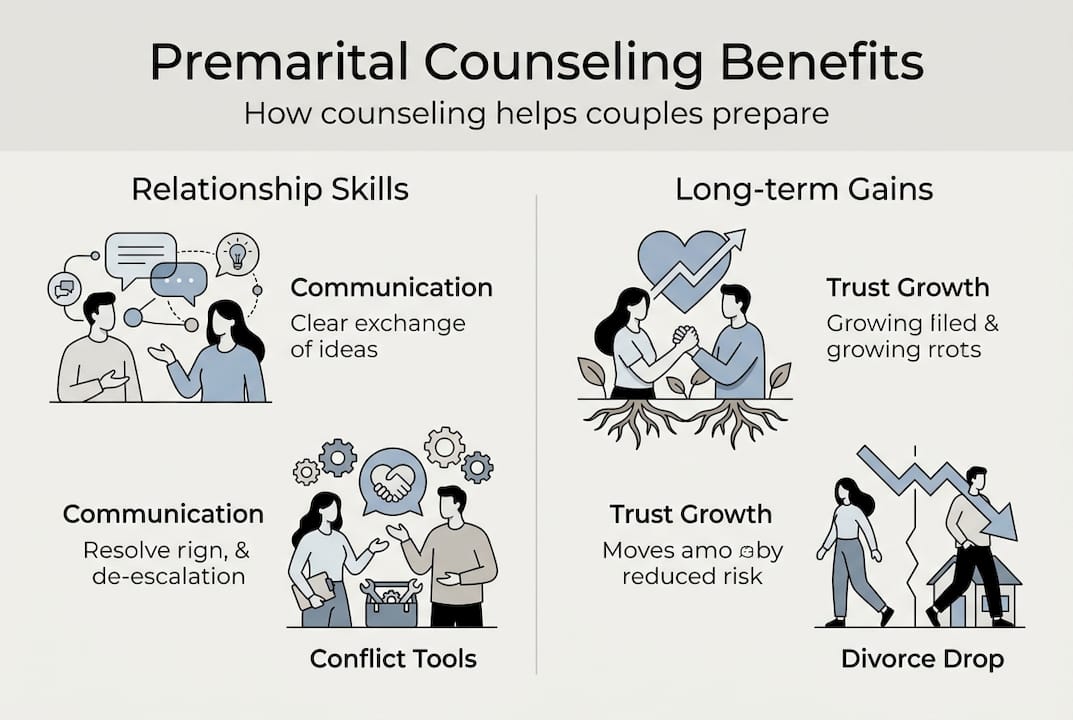
The 30% reduction in divorce risk translates to significant real-world impact. Consider that roughly half of marriages end in divorce. Premarital counseling shifts those odds substantially in your favor. This improvement stems from several factors working together.
| Outcome Measure | Research Finding | Practical Meaning |
|---|---|---|
| Divorce Reduction | 30-31% lower divorce rates | Significantly improved long-term stability |
| Prediction Accuracy | 80-90% success rate | Assessment tools reliably identify strengths and risks |
| Overall Effectiveness | Effect size 0.80 (79% improvement) | Participants substantially better off than non-participants |
| Relationship Satisfaction | Moderate to large improvements | Enhanced communication and connection quality |
The prediction accuracy of tools like PREPARE/ENRICH deserves special attention. An 80-90% success rate in forecasting marital outcomes means these assessments identify genuine risk factors and protective factors. Couples can address concerns before they escalate into serious problems. This preventative approach proves far more effective than waiting for crisis intervention.
Meta-analysis examining multiple studies reveals consistent benefits across diverse populations. The 0.80 effect size represents a large, clinically significant improvement. In practical terms, couples who complete premarital counseling report better communication, more effective conflict resolution, and greater relationship satisfaction compared to those who skip this preparation.
“The evidence is clear: premarital counseling works. Couples who invest time in structured preparation before marriage develop skills that serve them for decades. The key is finding qualified facilitators who use evidence-based methods and tailor approaches to each couple’s unique needs.”
Several factors influence counseling effectiveness. Counselor skill and training matter significantly. Licensed therapists with specialized certification in premarital programs deliver better outcomes than those without specific training. Client motivation also plays a role. Couples who actively engage with the process, complete assignments, and practice new skills see greater benefits than those who attend passively.
The timing of counseling affects results too. Starting six to twelve months before marriage allows adequate time to address issues that surface during assessment. Rushing through sessions weeks before the wedding limits opportunities for meaningful skill development. Research also suggests that while short-term satisfaction improvements are well-documented, maintaining gains requires ongoing effort. The benefits of couples counseling extend beyond premarital preparation when couples continue using learned skills throughout marriage.
Some studies indicate effects may diminish over time without reinforcement. This finding doesn’t negate premarital counseling’s value but highlights the importance of viewing it as the beginning of ongoing relationship maintenance rather than a one-time fix. Couples who periodically revisit skills learned during premarital counseling maintain stronger relationships long-term. Understanding proven benefits of seeking support helps couples recognize when to pursue additional counseling after marriage.
Challenges, edge cases, and choosing the right counseling approach
Premarital counseling isn’t appropriate for every situation. Abuse, addiction, or severe mental illness may require pausing joint counseling in favor of individual therapy, while cultural and religious differences demand tailored approaches, and high-risk couples benefit from specialized interventions identified through comprehensive assessments. Recognizing these nuances ensures couples receive appropriate support.
Certain circumstances require individual therapy before or instead of couples counseling. Active domestic violence makes joint sessions unsafe and potentially harmful. The power dynamics inherent in abusive relationships prevent honest communication during couples work. Similarly, active addiction typically needs treatment before meaningful relationship counseling can occur. Untreated severe mental health conditions may also necessitate individual stabilization first.
Cultural and religious diversity in California creates additional considerations. Intercultural couples face unique challenges navigating different family expectations, communication norms, and values. A counselor experienced in multicultural relationships can help partners honor both backgrounds while creating their own family culture. Religious differences require similar sensitivity. Interfaith couples benefit from facilitators who respect both traditions and help partners discuss how to integrate different beliefs into their marriage.
Key situations requiring specialized approaches:
- Active domestic violence or abuse patterns
- Substance use disorders needing treatment
- Severe untreated mental health conditions
- Significant cultural or religious differences between partners
- Previous divorces requiring additional processing
- Blended family complexities with children from prior relationships
Assessment tools help identify high-risk couples who need more intensive intervention. PREPARE/ENRICH, for example, flags relationships with concerning patterns in critical areas. Rather than viewing these results negatively, couples can use them as early warning systems. Addressing identified risks before marriage prevents future crises.
Choosing a qualified facilitator significantly impacts your experience and outcomes. Look for licensed therapists (LMFT, LCSW, or psychologist) with specialized training in premarital counseling methods. Certification in specific programs like PREPARE/ENRICH or Gottman Method indicates advanced expertise. Don’t hesitate to ask about training, experience with couples similar to you, and their approach to cultural sensitivity.
Pro Tip: Interview potential counselors before committing. Ask about their methodology, success rates, and how they handle situations where couples discover major incompatibilities during counseling. A skilled facilitator will have clear answers and make you feel comfortable discussing sensitive topics.
Location and format matter too. California’s size makes telehealth an attractive option for many couples. Virtual sessions eliminate travel time while maintaining counseling quality. However, some couples prefer in-person meetings for the focused environment they provide. Consider your schedules, comfort with technology, and personal preferences when choosing a format. Understanding therapist roles in supporting relationships helps you evaluate whether a particular counselor matches your needs.
Cost represents another practical consideration. Premarital counseling typically isn’t covered by insurance since it’s educational rather than treatment for a diagnosed condition. However, many therapists offer package rates for multi-session programs. The investment typically ranges from several hundred to over a thousand dollars depending on the number of sessions and assessment tools used. Given the 30% reduction in divorce risk, this represents significant value compared to potential divorce costs.
Explore expert mental health services to support your relationship
Building a strong marital foundation requires expert guidance tailored to your unique relationship. California couples preparing for marriage benefit from working with licensed therapists trained in evidence-based premarital counseling methods.
Revive Health Therapy offers comprehensive mental health services for adults throughout California, including specialized couples counseling. Our licensed therapists use proven methodologies to help engaged partners develop essential relationship skills. Whether you prefer in-person sessions in Walnut Creek or Oakland, or the convenience of telehealth marriage therapy accessible statewide, we provide flexible options that fit your schedule. We accept insurance and offer sliding-scale fees to make quality premarital counseling accessible. Contact us today to schedule your initial consultation and start building the marriage you envision.
What is premarital counseling FAQ
What topics are covered in premarital counseling?
Premarital counseling addresses communication patterns, conflict resolution strategies, financial management, intimacy expectations, family dynamics, and shared values. Sessions also explore topics like parenting philosophies, career goals, household responsibilities, and how to maintain connection during stressful periods. The specific focus depends on your assessment results and unique relationship needs.
How long does premarital counseling usually last?
Most premarital counseling programs involve six to eight sessions over several months. Some couples complete intensive weekend workshops, while others prefer weekly or biweekly meetings. The ideal timeline starts six to twelve months before your wedding, allowing adequate time to address concerns without wedding planning pressure.
Is premarital counseling required in California?
California doesn’t legally require premarital counseling to obtain a marriage license. However, many religious institutions require it before performing ceremonies. Even without a requirement, the proven benefits make it a worthwhile investment for couples committed to building a strong marriage foundation.
Can premarital counseling help if we have no current issues?
Absolutely. Premarital counseling focuses on prevention and skill building rather than problem-solving. Even couples with strong relationships discover new communication techniques, identify potential future challenges, and strengthen their connection. The goal is preparing for marriage’s inevitable stresses, not fixing existing problems.
How do we find a qualified premarital counselor in California?
Look for licensed therapists (LMFT, LCSW, psychologist) with specialized training in premarital counseling methods like PREPARE/ENRICH or Gottman Method. Ask about their certification, experience with couples similar to you, and approach to cultural sensitivity. Many therapists offer initial consultations so you can assess fit before committing to a full program.
Recommended
- Why seek couples counseling in 2026: proven benefits – ReviveHealthTherapy
- Benefits of couples counseling for lasting connection – Revive Health Therapy
- Role of therapists in marriage health: California guide – ReviveHealthTherapy
- What Is Relationship Counseling and How It Heals Couples – ReviveHealthTherapy