
Scrolling through endless options for mental health support can feel overwhelming when anxiety or depression makes everything seem harder. Telehealth is changing that experience for many California residents, bringing emotional care directly into homes with user-friendly video sessions. By offering flexible access to licensed therapists and trauma recovery tools through secure digital platforms, telehealth makes affordable psychotherapy more reachable and less daunting for those in need of ongoing support.
Table of Contents
- Telehealth In Mental Health: Core Concepts
- Key Types Of Telehealth Services Used
- How Telehealth Therapy Sessions Work
- California Laws And Privacy Protections
- Benefits And Drawbacks For Mental Health Care
- Comparing Telehealth Vs. In-Person Therapy
Key Takeaways
| Point | Details |
|---|---|
| Telehealth Enhances Access | Digital platforms eliminate geographical barriers, making mental health care more accessible, especially for rural populations. |
| Diverse Service Modalities | Various telehealth services, such as video therapy and online group sessions, cater to different patient needs. |
| Privacy Regulations are Crucial | Compliance with HIPAA and state laws ensures confidentiality and security in telehealth interactions. |
| Hybrid Models Offer Flexibility | Combining telehealth and in-person therapy can optimize patient comfort and engagement while addressing diverse therapeutic needs. |
Telehealth in Mental Health: Core Concepts
Telehealth represents a transformative approach to mental health care, leveraging digital technologies to provide remote therapeutic services. Remote psychiatric consultations have evolved dramatically, offering unprecedented flexibility and accessibility for individuals seeking mental health support.
At its core, telehealth in mental health involves delivering psychological services through digital platforms, primarily utilizing live interactive video consultations. This approach enables patients to connect with licensed clinicians from the comfort of their own environments, breaking down traditional barriers to mental health treatment. Key modalities include:
- Video conferencing therapy sessions
- Digital messaging and communication platforms
- Remote psychiatric evaluations
- Online group counseling
- Digital mental health assessments
The emergence of telehealth has been particularly significant during the COVID-19 pandemic, highlighting its potential to provide continuous care during challenging circumstances. Telepsychiatry, which dates back to the 1970s, has rapidly transformed from an experimental approach to a mainstream mental health service delivery model.
Telehealth’s primary advantage lies in its ability to democratize mental health access. By eliminating geographical constraints and reducing logistical challenges, these digital platforms can reach diverse populations, including rural communities and individuals with mobility limitations. Behavioral health services now extend to managing conditions like anxiety, depression, and post-traumatic stress disorder through comprehensive remote interventions.
Pro tip: When considering telehealth, verify the platform’s security protocols and ensure the clinician is licensed in your state to guarantee confidential and legally compliant mental health support.
Key Types of Telehealth Services Used
Telehealth mental health services have rapidly diversified, offering multiple innovative approaches to psychological care. Behavioral health organizations utilize various technological platforms to deliver comprehensive treatment options that accommodate different patient needs and preferences.
The primary types of telehealth services in mental health include:
- Individual Video Therapy: One-on-one counseling sessions conducted via secure video platforms
- Group Online Therapy: Facilitated group discussions and therapeutic interventions through digital meeting spaces
- Psychiatric Evaluations: Remote comprehensive mental health assessments
- Crisis Intervention Services: Immediate digital support for individuals experiencing acute mental health challenges
- Medication Management: Virtual consultations for prescription monitoring and adjustments
These digital service models leverage multiple communication technologies, including video conferencing, telephone consultations, and asynchronous messaging platforms. Telehealth service modalities provide flexible engagement options that can dramatically improve access to mental health resources, particularly for populations with limited physical mobility or geographical constraints.
Modern telehealth platforms prioritize patient privacy and technological security, implementing robust encryption and compliance protocols to ensure confidential communication between mental health professionals and clients. The integration of these digital services represents a significant evolution in psychological care delivery, transforming traditional treatment paradigms and expanding mental health support networks.
Pro tip: Before starting telehealth services, verify the platform’s HIPAA compliance and confirm your internet connection provides sufficient privacy and audio-visual quality for effective therapeutic communication.
How Telehealth Therapy Sessions Work
Telehealth therapy sessions represent a sophisticated digital approach to mental health care, utilizing advanced communication technologies to create meaningful therapeutic experiences. Therapy session interactions are carefully designed to replicate the intimacy and effectiveness of traditional in-person counseling through specialized digital platforms.
The typical telehealth therapy session involves several key components:
- Secure Video Platform: HIPAA-compliant video conferencing software
- Private Environment: Quiet, confidential space for both client and therapist
- Technical Setup: Reliable internet connection and compatible devices
- Communication Protocols: Adapted interaction styles for digital medium
- Consent and Privacy: Digital documentation and confidentiality agreements
Mediated therapeutic interactions require both practitioners and clients to develop unique communication strategies that accommodate technological constraints while maintaining therapeutic connection. Therapists must be adept at reading non-verbal cues through digital interfaces, adjusting their approach to ensure effective emotional support and engagement.

Successful telehealth sessions demand technical preparedness and emotional intelligence. Clients are typically advised to choose a private, well-lit space with minimal background distractions, ensure stable internet connectivity, and have necessary technological devices ready before the session begins. The goal is to create a seamless, secure, and comfortable digital therapeutic environment that supports meaningful psychological work.
Pro tip: Test your internet connection and video setup at least 15 minutes before your scheduled telehealth session to minimize potential technical disruptions and reduce pre-session anxiety.
California Laws and Privacy Protections
Telehealth mental health services in California operate under stringent legal frameworks designed to protect patient privacy, confidentiality, and personal information. HIPAA compliance and state-specific regulations form the cornerstone of these protective measures, ensuring that digital mental health interactions maintain the same rigorous standards as traditional in-person therapy.
Key legal protections for telehealth mental health services in California include:
- Patient Confidentiality: Strict regulations preventing unauthorized disclosure of personal health information
- Data Encryption: Mandated secure communication channels for digital health platforms
- Informed Consent: Detailed digital documentation outlining therapy parameters and privacy expectations
- Professional Licensing: State requirements for telehealth practitioners to maintain active, valid credentials
- Digital Security Protocols: Advanced technological safeguards protecting client information
California’s approach to telehealth privacy goes beyond federal guidelines, implementing additional layers of protection specific to mental health digital services. Mental health professionals must adhere to California Confidentiality of Medical Information Act (CMIA), which provides enhanced privacy standards beyond federal HIPAA regulations. These regulations ensure that telehealth platforms maintain the same level of confidentiality as traditional therapeutic settings.
Clients engaging in telehealth services should carefully review privacy policies, understand their rights, and verify the technological security measures implemented by their chosen mental health provider. This proactive approach helps ensure personal information remains protected throughout the digital therapeutic process.
Here’s a quick reference comparing major privacy protections for telehealth mental health services in California and at the federal level:
| Protection Area | California CMIA Standards | Federal HIPAA Standards |
|---|---|---|
| Patient Confidentiality | Enhanced restrictions on disclosure | Strong, but less specific than CMIA |
| Data Encryption | Explicit encryption required for all data | Encryption required, methods more flexible |
| Professional Licensing | Provider must be licensed in California | License in any state if allowed locally |
| Consent Requirements | Detailed digital informed consent mandated | Consent required, may be less detailed |
Pro tip: Always request and review your mental health provider’s specific privacy policy and HIPAA compliance documentation before initiating telehealth services.
Benefits and Drawbacks for Mental Health Care
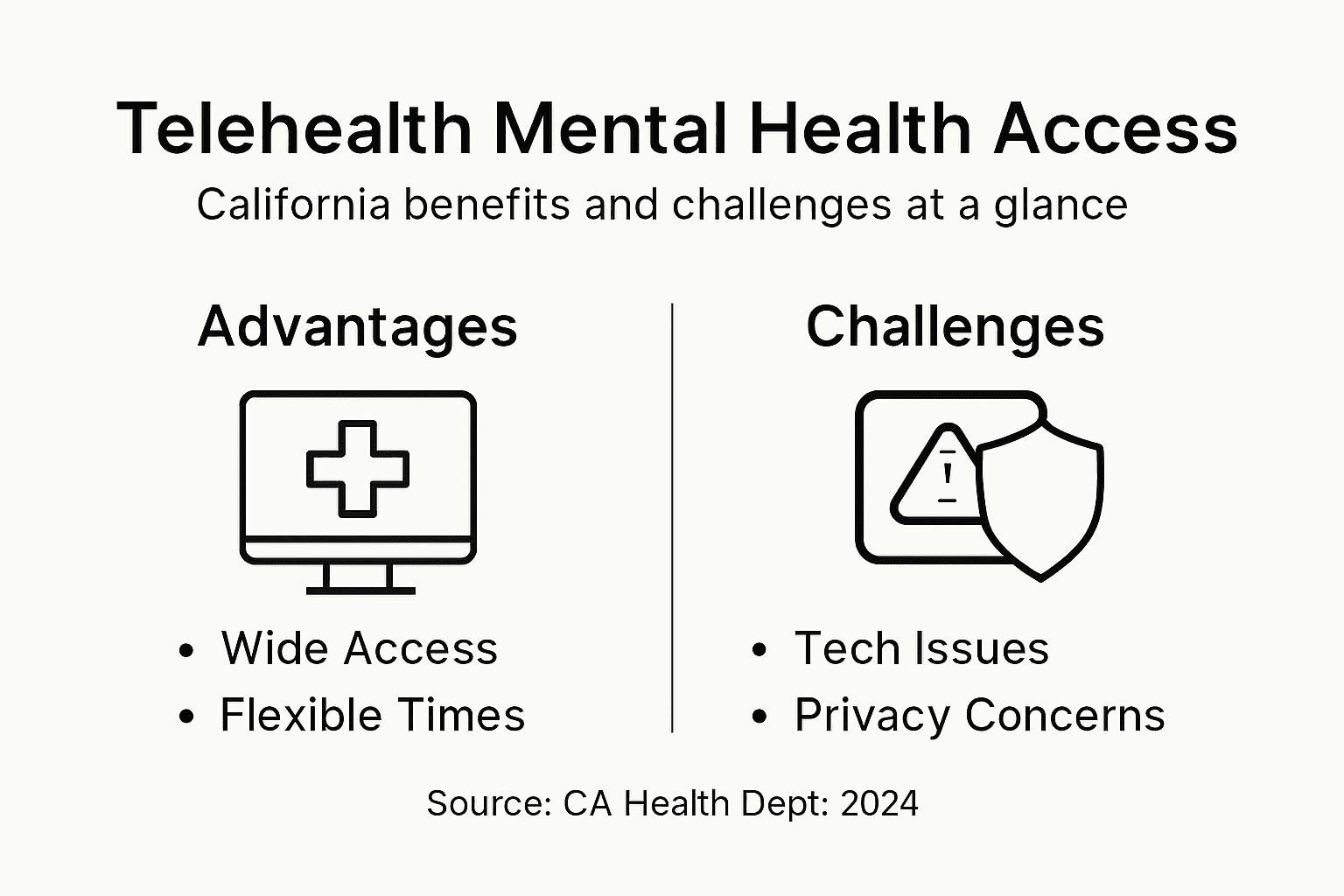
Telehealth mental health services represent a complex landscape of innovative care delivery, offering both transformative advantages and nuanced challenges for patients seeking psychological support. The digital therapeutic approach has fundamentally reshaped how mental health services are accessed and experienced in California and beyond.
Key benefits of telehealth mental health services include:
- Increased Accessibility: Eliminating geographical and transportation barriers
- Convenience: Therapy sessions from personal, comfortable environments
- Reduced Stigma: Lower psychological barriers to seeking mental health support
- Flexible Scheduling: Wider range of appointment times and formats
- Cost-Effectiveness: Potentially lower overhead costs for providers
Telehealth therapeutic interactions simultaneously present notable challenges that patients and providers must carefully navigate. Potential drawbacks involve technological limitations, reduced non-verbal communication cues, and potential disconnection from traditional therapeutic intimacy. Some individuals may find digital platforms less emotionally engaging compared to face-to-face interactions.
The effectiveness of telehealth mental health services depends significantly on individual preferences, technological comfort, and specific therapeutic needs. Hybrid models combining digital and in-person approaches are emerging as promising solutions, offering flexibility while maintaining high-quality therapeutic connections. Patients are encouraged to explore different modalities and communicate openly with their mental health providers about their comfort and engagement levels.
The following table summarizes key strengths and possible challenges of telehealth mental health care for easy comparison:
| Category | Strength Example | Challenge Example |
|---|---|---|
| Accessibility | Services reach rural communities | Digital literacy gaps limit access |
| Therapy Quality | Comparable clinical outcomes | Harder to read subtle body language |
| Scheduling | Appointments offer greater flexibility | Time zone issues can arise |
| Cost | Lower patient travel/commute expenses | Tech upgrades may add new costs |
Pro tip: Conduct a trial telehealth session to assess your personal comfort level and technological compatibility before committing to a full digital therapeutic approach.
Comparing Telehealth vs. In-Person Therapy
Comparative mental health research reveals that telehealth and traditional in-person therapy offer remarkably similar therapeutic experiences, challenging previous assumptions about digital mental health interventions. The evolving landscape of psychological support now encompasses multiple delivery models, each with distinct advantages and nuanced considerations.
Key comparative aspects between telehealth and in-person therapy include:
- Treatment Effectiveness: Statistically equivalent clinical outcomes
- Patient Satisfaction: Comparable levels of therapeutic engagement
- Accessibility: Telehealth provides broader geographic reach
- Communication Dynamics: Subtle differences in non-verbal interaction
- Personal Comfort: Varies based on individual preferences
Mental health intervention studies demonstrate that while telehealth maintains high therapeutic standards, it also presents unique challenges. Potential drawbacks include slightly higher dropout rates and reduced interpersonal connection compared to traditional face-to-face sessions. However, the flexibility and convenience of digital platforms often compensate for these minor limitations.
The most effective approach often involves a personalized, hybrid model that combines telehealth and in-person therapy based on individual needs, technological comfort, and specific mental health goals. Patients are encouraged to discuss their preferences with mental health professionals to design a tailored therapeutic strategy that maximizes engagement and supports their psychological well-being.
Pro tip: Experiment with both telehealth and in-person therapy formats to determine which approach feels most comfortable and supportive for your unique mental health journey.
Expand Your Mental Health Access with Trusted Telehealth Services in California
Telehealth offers a powerful way to break down barriers like geography and scheduling for mental health care. If you face challenges such as limited mobility, busy routines, or concerns about privacy, knowing proven methods like EMDR, CBT, and mindfulness can be delivered securely from your own home brings hope. At ReviveHealthTherapy, we specialize in trauma-informed, evidence-based psychotherapy that meets California privacy laws and fits your lifestyle. Our secure telehealth sessions provide flexibility without compromising the quality of care you deserve.

Ready to take the next step toward reliable and accessible mental health support? Explore how our services can help you gain emotional wellness with licensed therapists committed to your growth. Start today with a free 20-minute consultation by filling out this quick form. Whether you need individual, couples, or family therapy, our flexible options are designed for you. Learn more about available approaches through our Uncategorized – ReviveHealthTherapy page and begin your healing journey now. Secure your spot by visiting this link.
Frequently Asked Questions
What is telehealth in mental health?
Telehealth in mental health refers to the delivery of psychological services through digital platforms, primarily using live video consultations, to provide remote therapeutic support.
How do telehealth therapy sessions work?
Telehealth therapy sessions typically involve secure video conferencing, a private environment, and communication protocols adapted for digital interaction to ensure effective therapy.
What types of services are offered through telehealth for mental health?
Common telehealth services include individual video therapy, group online therapy, psychiatric evaluations, crisis intervention services, and medication management.
What are the benefits and drawbacks of telehealth mental health care?
Benefits of telehealth include increased accessibility, convenience, and reduced stigma, while drawbacks may include technological limitations and reduced non-verbal communication cues.
Recommended
- Why Choose Telehealth Therapy for Mental Wellness – ReviveHealthTherapy
- Why Is Therapy Accessible for Californians Today – ReviveHealthTherapy
- What Is Telehealth Therapy? Flexible Care for Californians – ReviveHealthTherapy
- Online Therapy in California | Revive Health Therapy
- The Benefits of Online Therapy – Dr. Stephen Oreski & Associates
7 Responses