
TL;DR:
- Online therapy is highly effective, producing improvements comparable to in-person treatment.
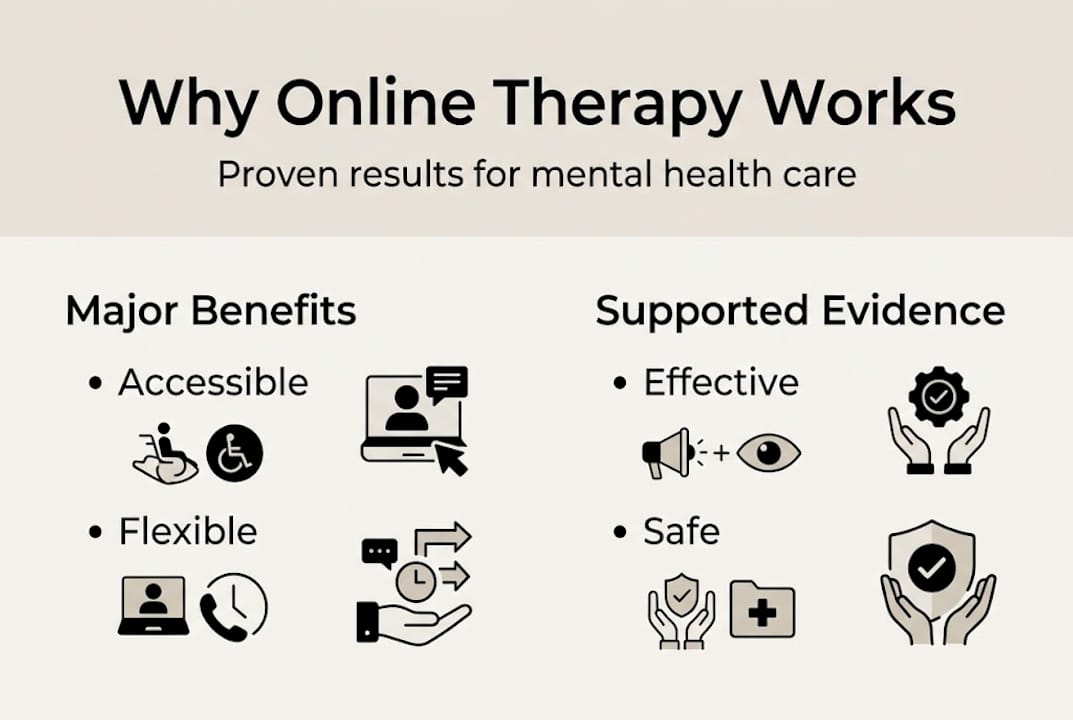
- It removes barriers like accessibility, privacy issues, and scheduling, making help more reachable.
- Digital interventions benefit mental health, trauma recovery, and relationship strengthening with sustained results.
Online therapy carries a quiet stigma: many people assume it’s a watered-down version of sitting across from a therapist in person. But the evidence says otherwise. Therapist-guided online interventions show that 38.5% of participants achieved at least 50% improvement in depression symptoms, compared to just 14.3% in usual care. If you’re in California and struggling with anxiety, depression, trauma, or relationship stress, this article breaks down exactly why online therapy works, what the research shows, and how you can use it to build real, lasting change.
Table of Contents
- What makes online therapy effective?
- Evidence for online therapy in treating anxiety and depression
- Success of online therapy for trauma and PTSD recovery
- How online therapy helps relationships and real-life connections
- Overcoming stigma and maximizing your results
- Our perspective: Online therapy’s real transformation power
- Ready to experience the benefits of online therapy?
- Frequently asked questions
Key Takeaways
| Point | Details |
|---|---|
| Online therapy works | Extensive research proves that online therapy is as effective as in-person care for many mental health challenges. |
| Science-backed recovery | Digital interventions support significant recovery from depression, anxiety, trauma, and relationship issues. |
| Accessible to Californians | Remote formats remove common barriers and make high-quality care available across California. |
| Relationships improve online | Online therapy for couples and families builds real, lasting improvements in connection and satisfaction. |
What makes online therapy effective?
The first thing most people ask is simple: can a screen really replace a therapist’s office? The answer, backed by a growing body of research, is that for most people, it doesn’t need to replace it. It just needs to work. And it does.
Online therapy removes the barriers that stop people from getting help in the first place. In California, where traffic, long work hours, and geographic spread across urban and rural areas all create friction, being able to log in from your living room is not a small thing. It’s often the difference between getting support and going without.
There are several core reasons why online therapy produces real results:
- Accessibility: You can connect with a licensed therapist from anywhere in the state, whether you’re in San Francisco or a rural county with few local providers.
- Comfort: Many clients open up faster when they’re in their own space. Familiar surroundings reduce the anxiety that sometimes comes with walking into a clinic.
- Consistency: Life gets busy. Online sessions are easier to keep, which means fewer cancellations and more progress over time.
- Privacy: Digital platforms use encrypted, HIPAA-compliant tools that protect your information as securely as any physical office.
- Flexibility: Morning, evening, or weekend slots fit around jobs, childcare, and other responsibilities.
Research confirms that telehealth therapy benefits extend beyond convenience. Therapist-guided online interventions reduce depression symptoms with effect sizes comparable to in-person treatment. That’s not a small finding.
“The therapeutic relationship, not the room, is what drives healing. Online therapy preserves that relationship while removing the obstacles that keep people from showing up.”
Pro Tip: If you’re new to online therapy, treat your first few sessions like any other appointment. Find a quiet room, use headphones, and close other tabs. Small preparation steps make a big difference in how present and focused you feel.
For Californians navigating a mental health system that can feel overwhelming, therapy accessibility in California is a real concern. Online therapy directly addresses that gap by meeting you where you are, literally.
Evidence for online therapy in treating anxiety and depression
Now that you know why online therapy works, let’s look at what the research says about specific conditions, starting with the two most common: anxiety and depression.
The data is clear. Therapist-guided online interventions for depression show significant improvement compared to usual care, with measurable reductions on both the PHQ-9 and BDI-II scales. These aren’t marginal gains. They represent real shifts in how people feel day to day.
| Outcome measure | Online therapy group | Usual care group |
|---|---|---|
| PHQ-9 score change | -2.5 (d = -0.7) | Minimal change |
| BDI-II score change | -5.3 (d = -0.8) | Minimal change |
| ≥50% symptom improvement | 38.5% | 14.3% |
For anxiety, structured online sessions using cognitive behavioral therapy (CBT) have shown sustained results. CBT teaches you to identify and challenge unhelpful thought patterns, and it translates well to a digital format because the core work happens between sessions anyway, in journaling, thought records, and behavioral experiments.
Key research takeaways for anxiety and depression:
- Online therapy produces improvement rates more than double those of standard care for depression.
- Structured, therapist-led sessions outperform self-guided apps alone.
- Digital interventions improve relationship satisfaction with sustained effects across 15 studies, showing benefits extend beyond individual mood.
- Flexibility in scheduling supports people whose anxiety or depression makes routine difficult.
- Long-term follow-up data shows improvements hold beyond the active treatment period.
One often-overlooked advantage: online therapy is particularly well-suited for people whose depression or anxiety makes leaving the house feel impossible. The format removes a major obstacle at the exact moment when motivation is lowest.
If you’re considering evidence-based depression treatments, online therapy is no longer an alternative option. For many people, it’s the most practical and effective first step. And starting online therapy is simpler than most people expect.
Success of online therapy for trauma and PTSD recovery
Having covered anxiety and depression, let’s look at online support for trauma and PTSD, an area where many people assume in-person care is essential.
Trauma-focused therapy has a reputation for being intense, which leads some people to believe it must happen face-to-face. But the evidence challenges that assumption directly. Meta-analyses confirm TF-CBT and EMDR online are effective for PTSD, with meaningful improvements in both trauma symptoms and relationship functioning.
| Therapy type | Delivery | PTSD outcome | Relationship benefit |
|---|---|---|---|
| TF-CBT | Online | Significant symptom reduction | Improved family dynamics |
| EMDR | Online | Comparable to in-person results | Reduced interpersonal conflict |
| Couples-based trauma therapy | Online | Symptom improvement | Increased satisfaction |
Pro Tip: If you’re starting trauma-focused therapy online, let your therapist know about your home environment. A therapist can help you create a grounding plan for after sessions, which is especially important when working through difficult memories remotely.
Several factors make online trauma therapy particularly effective:
- Controlled environment: You choose your space, which can feel safer than a clinical setting for trauma survivors.
- Reduced exposure anxiety: No waiting rooms, no unfamiliar faces, no commute after a heavy session.
- Continuity: Life disruptions like illness or travel don’t have to interrupt treatment.
- Integration: Processing trauma at home helps you connect insights to your daily environment immediately.
Adherence rates are also strong. Nearly 70% of participants complete online trauma-focused programs, which is a meaningful indicator of how manageable and engaging these formats are.
For Californians with trauma histories, trauma recovery therapy options delivered online can be genuinely transformative. And trauma recovery accessibility matters because trauma does not wait for a convenient appointment slot.
How online therapy helps relationships and real-life connections
With trauma recovery covered, it’s worth exploring how online therapy affects something equally important: your relationships.
Relationships are often where mental health struggles show up most visibly. Anxiety creates distance. Depression reduces connection. Trauma can fracture trust. Online therapy addresses these ripple effects directly, and the research shows it works.
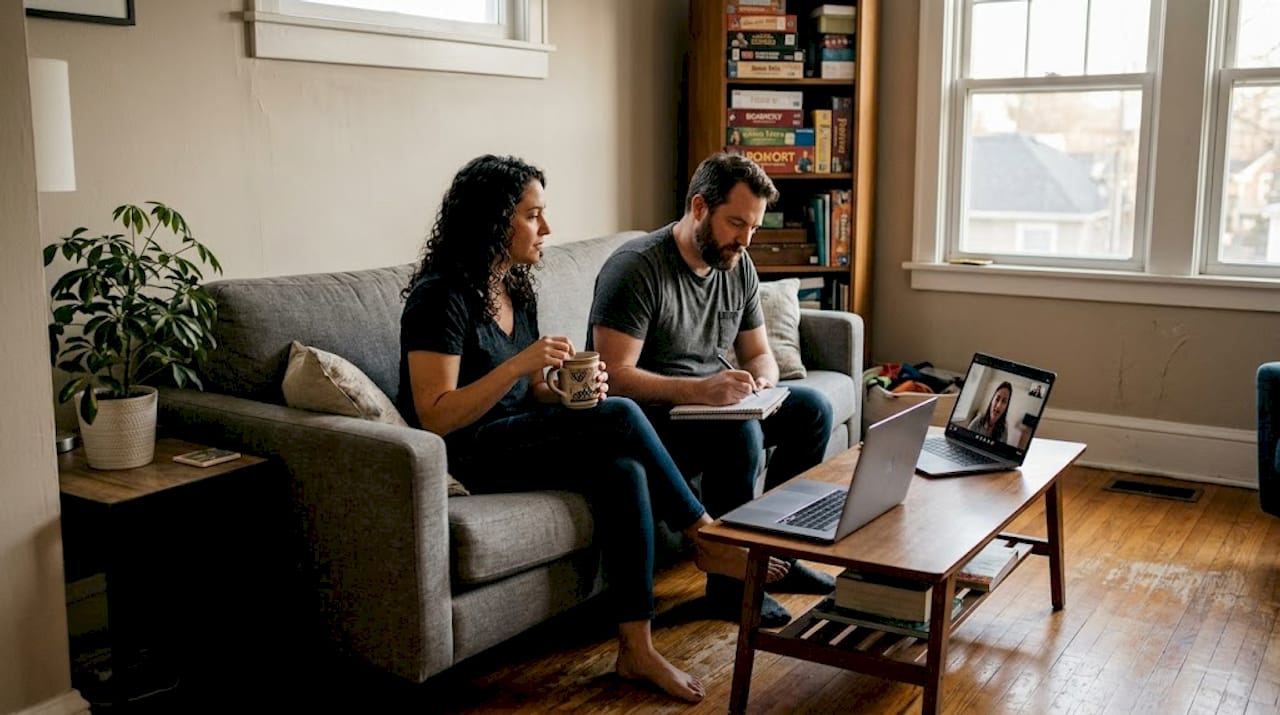
Digital interventions improve relationship satisfaction with sustained effects, drawing on data from 15 studies. That means the benefits don’t disappear when sessions end. Couples and families carry the skills they learn into their everyday interactions.
Here’s what online couples therapy typically improves:
- Communication patterns: Partners learn to express needs without blame or defensiveness.
- Emotional intimacy: Sessions create structured space to be vulnerable, which many couples rarely find on their own.
- Conflict resolution: Therapist-guided conversations teach de-escalation in real time.
- Scheduling flexibility: Both partners can join from different locations if needed, which removes a common logistical barrier.
Couples online therapies improve PTSD symptoms and relationships simultaneously, which is significant. When one partner carries trauma, it affects both people. Addressing it together, even remotely, creates shared understanding and reduces the isolation that trauma often brings.
“Healing doesn’t happen in isolation. When couples work through challenges together online, they often report feeling more connected than they expected, because the sessions become a shared ritual of showing up for each other.”
For California households managing packed schedules, telehealth marriage therapy offers a practical path to stronger relationships without the logistical headache of coordinating in-person visits. Exploring online therapy services designed for couples is a meaningful first step.
Overcoming stigma and maximizing your results
With relationship benefits addressed, let’s wrap up with practical advice for making the most of online therapy, and for getting past the doubts that hold many people back.
Stigma around therapy hasn’t disappeared, but it has shifted. More Californians are openly discussing mental health, and online therapy has played a role in normalizing that conversation. When you don’t have to walk into a visible clinic, the social barriers feel lower.
Here’s how to maximize your results once you start:
- Set clear goals early: Tell your therapist what you want to work on. Vague goals produce vague progress.
- Create a consistent space: Use the same quiet location each session. Your brain starts to associate that space with reflection and openness.
- Be honest about what’s not working: If a technique doesn’t feel right, say so. Good therapists adapt.
- Do the between-session work: Journaling, thought records, or breathing exercises between sessions accelerate progress significantly.
- Protect your privacy: Use headphones and close the door. Feeling overheard reduces what you’re willing to share.
Adherence data supports the value of sticking with it. Nearly 69% of participants complete online trauma-focused therapy programs, which is higher than many people expect. The format works because it fits into real life rather than demanding you rearrange it.
Pro Tip: If you feel skeptical after your first session, give it three. The therapeutic relationship takes time to build, and early discomfort often gives way to genuine progress once trust develops.
For anyone wondering where to begin, starting online therapy is more straightforward than it sounds. And for younger Californians, online therapy for teens offers age-appropriate support in a format that feels natural to them.
Our perspective: Online therapy’s real transformation power
Most articles about online therapy focus on what it can do. We want to talk about what it changes.
What we’ve seen, working with clients across California, is that online therapy often removes the performance anxiety that comes with sitting in a formal office. People show up as themselves, not as the version of themselves they think a therapist wants to see. That authenticity accelerates the work.
The conventional view is that online therapy is a compromise, a good-enough substitute when in-person care isn’t available. We disagree. For many clients, the telehealth therapy perspective reveals something unexpected: the flexibility and comfort of remote sessions actually deepens the therapeutic relationship rather than diluting it.
Personal transformation doesn’t require a specific room. It requires honesty, consistency, and a skilled guide. Online therapy, done well, delivers all three. The clients who commit to it, who show up prepared and stay engaged between sessions, often surprise themselves with how much ground they cover.
Ready to experience the benefits of online therapy?
The research is clear, and the path forward is more accessible than ever. Whether you’re managing anxiety, working through depression, processing trauma, or trying to strengthen your relationships, online therapy offers a proven, flexible way to get the support you deserve.
At Revive Health Therapy, we offer online therapy options in California through secure telehealth sessions available statewide. Our therapists specialize in evidence-based approaches including EMDR, CBT, and trauma-informed care, with sliding-scale fees and insurance options to keep care accessible. If you’ve been curious but hesitant, explore why try telehealth therapy and take the first step toward meaningful change today.
Frequently asked questions
Is online therapy really as effective as in-person therapy?
Yes, research shows that online therapy can be just as effective as in-person care for issues like depression, anxiety, PTSD, and relationship challenges. Therapist-guided online interventions produce clinically significant improvements comparable to traditional treatment.
Can online therapy help with trauma recovery?
Yes, approaches like TF-CBT and EMDR are proven to support trauma recovery and remain effective when delivered online. Meta-analyses confirm that these methods produce meaningful PTSD symptom reduction in digital formats.
Is online couples therapy effective for strengthening relationships?
Online couples therapy improves satisfaction and intimacy, offering sustained benefits for many relationships. Digital interventions show lasting effects on relationship quality across multiple studies.
What can I do to get the most out of online therapy sessions?
Prepare in advance, set clear goals with your therapist, and protect your privacy during sessions to maximize your results. Doing the recommended work between sessions, like journaling or practicing coping skills, also significantly accelerates your progress.
Recommended
- How to Start Online Therapy for Emotional Well-Being – ReviveHealthTherapy
- Why Choose Telehealth Therapy for Mental Wellness – ReviveHealthTherapy
- Role of psychotherapy in mental health: proven benefits 2026 – Revive Health Therapy
- Telehealth Marriage Therapy: Improving Couples’ Connections – ReviveHealthTherapy
One Response