
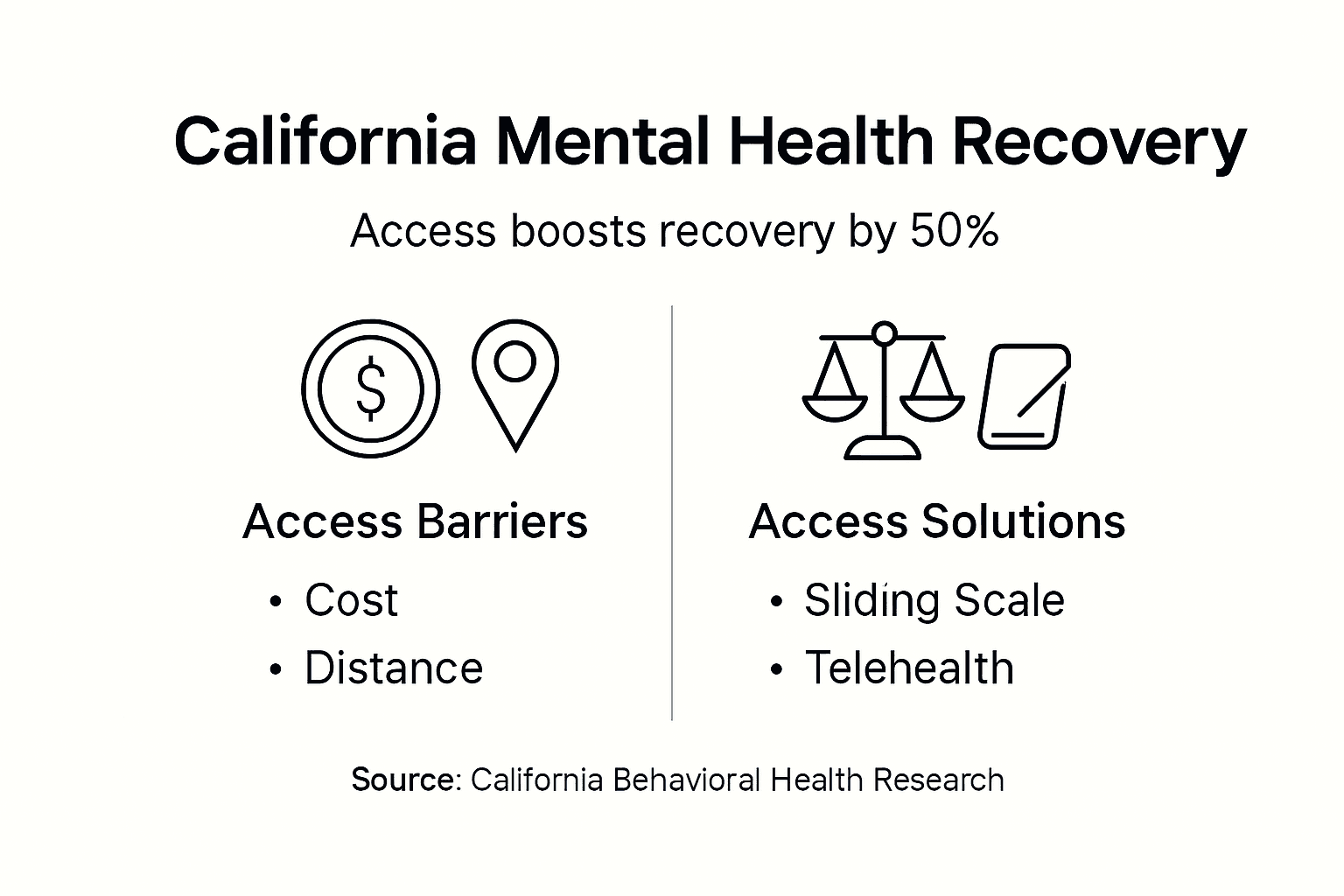
Nearly 40% of California adults report unmet mental health needs primarily due to cost barriers. This staggering figure highlights how financial obstacles prevent many individuals and families from accessing the trauma recovery and emotional health support they desperately need. Fortunately, innovations like sliding-scale fees and telehealth services are bridging these gaps, making evidence-based psychotherapy more reachable across the state. This guide explores how improving accessibility accelerates trauma recovery and strengthens emotional well-being.
Table of Contents
- Understanding Mental Health Accessibility
- The Role Of Sliding-Scale Fees In Making Therapy Affordable
- How Telehealth Expands Mental Health Access In California
- Effective Trauma-Informed Therapies And Their Accessibility
- Common Misconceptions About Mental Health Accessibility
- Practical Strategies To Improve Your Access To Mental Health Care
- Take The Next Step Toward Accessible Trauma Recovery
- Frequently Asked Questions
Key takeaways
| Point | Details |
|---|---|
| Cost barriers prevent care | Nearly 40% of Californians face financial obstacles limiting mental health access. |
| Sliding-scale fees expand reach | Income-based pricing increases therapy use by 35% among low-income clients. |
| Telehealth widens availability | Remote therapy expands access by 50% in rural and underserved communities. |
| Evidence-based therapies deliver results | EMDR and CBT reduce trauma symptoms by up to 70%. |
| Combined accessibility accelerates healing | Affordability plus convenience enables 50% faster symptom reduction. |
Understanding mental health accessibility
Mental health accessibility extends far beyond simply locating a therapist nearby. It encompasses removing financial, geographic, cultural, and stigma-related barriers that prevent timely, effective trauma care.
Research confirms that 40% of California adults experience unmet mental health needs mainly because therapy costs exceed their budgets. Even with insurance, high deductibles and copays deter many from scheduling appointments. Geographic distance compounds the problem, especially for rural residents who must travel hours to reach qualified providers.
Stigma and privacy concerns add another layer of complexity. Many people fear judgment from their community or worry about confidentiality breaches if they attend in-person sessions. Over 60% of patients cite privacy and convenience as key telehealth advantages, demonstrating how technology addresses these non-financial barriers.
Key barriers limiting mental health accessibility include:
- High therapy costs and insurance gaps
- Long travel distances to qualified providers
- Cultural and language mismatches with available therapists
- Stigma and fear of community judgment
- Limited appointment availability during work hours
Understanding the importance of affordable mental health care helps you recognize why comprehensive accessibility solutions matter. When mental health accessibility in California improves through combined financial, technological, and cultural strategies, more people receive the trauma-informed support they need. Exploring insurance and telehealth coverage in California reveals additional pathways to reduce out-of-pocket expenses.
You can learn more about current California mental health care access challenges and review telehealth benefits research to see how technology transforms care delivery. Recognizing these multifaceted barriers is the first step toward finding solutions that work for your situation.
The role of sliding-scale fees in making therapy affordable
Sliding-scale fee structures adjust therapy costs based on your income level, removing one of the most significant obstacles to mental health care. Providers evaluate your financial situation and offer reduced rates that fit your budget, ensuring cost doesn’t prevent you from accessing trauma recovery support.
This approach delivers measurable results. Sliding-scale fees increase therapy utilization by 35% among low-income patients who would otherwise skip treatment entirely. By lowering upfront financial barriers, more people schedule initial appointments and commit to ongoing therapy.
Long-term adherence improves dramatically with income-based pricing. Studies show clients report 45% higher adherence rates when using sliding-scale programs compared to standard-rate services. Financial relief reduces stress about affording each session, allowing you to focus on emotional healing rather than budget calculations.
Key benefits of sliding-scale therapy include:
- Rates adjusted to your actual income level
- Lower financial stress during treatment
- Increased likelihood of completing full therapy course
- Ability to combine with insurance for maximum savings
- Access to same quality care as full-rate clients
Pro Tip: Ask potential therapists about combining sliding-scale fees with your insurance benefits. Many providers accept both, potentially reducing your out-of-pocket costs by up to 70%.
Exploring sliding-scale therapy benefits helps you understand how this pricing model works in practice. You can learn what affordable therapy means for different income levels and discover strategies for finding sliding-scale therapists in your area.
Research on sliding-scale fees demonstrates their effectiveness in expanding access, while client adherence studies confirm improved treatment outcomes. For low-income Californians, sliding-scale options often make the difference between receiving care and going without essential mental health support.
How telehealth expands mental health access in California
Telehealth technology eliminates geographic barriers that once limited therapy access to urban centers. You can now connect with qualified trauma therapists from anywhere in California using a smartphone, tablet, or computer with internet access.

Rural communities experience the most dramatic improvements. Telehealth increased rural therapy access by 50%, giving residents options beyond the few local providers who may lack specialized trauma training. Distance no longer determines whether you receive evidence-based care.
Privacy advantages significantly reduce stigma-related barriers. Over 60% of patients value privacy and convenience as primary telehealth benefits, particularly those concerned about being seen entering a therapist’s office in small communities. Virtual sessions from home offer discretion that encourages more people to seek help.
Major telehealth advantages include:
- Eliminates travel time and transportation costs
- Provides access to specialized trauma therapists statewide
- Reduces stigma through private home-based sessions
- Maintains therapy continuity during illness or crisis
- Offers flexible scheduling outside traditional office hours
Pro Tip: Test your technology setup before your first telehealth session. Ensure your internet connection is stable, your device camera and microphone work properly, and you have a private space free from interruptions.
Discover how telehealth mental health services work in California, learn the basics of what telehealth therapy entails, and explore specific benefits of telehealth therapy for trauma recovery.
The telehealth impact during COVID-19 proved virtual therapy’s effectiveness during crises, while privacy and convenience research validates patient preferences. Some users face technology access challenges or digital literacy gaps, but most Californians now have the connectivity needed for effective virtual mental health care.
Effective trauma-informed therapies and their accessibility
Evidence-based trauma therapies deliver proven results when combined with accessible delivery methods. Understanding which approaches work best helps you make informed decisions about your mental health care.
Eye Movement Desensitization and Reprocessing (EMDR) and Cognitive Behavioral Therapy (CBT) stand out as gold-standard treatments. EMDR and CBT reduce trauma symptoms by 60-70% according to American Psychological Association guidelines. These therapies help you process traumatic memories, challenge negative thought patterns, and develop healthier coping strategies.
Accessibility improvements accelerate recovery timelines significantly. When you can afford therapy and attend sessions conveniently via telehealth, symptom reduction occurs 50% faster compared to delayed or interrupted treatment. Early intervention prevents trauma symptoms from becoming chronic conditions.
| Therapy Type | Primary Benefits | Delivery Methods | Typical Duration |
|---|---|---|---|
| EMDR | Processes traumatic memories through bilateral stimulation | In-person or telehealth | 6-12 sessions |
| CBT | Restructures negative thought patterns and behaviors | In-person or telehealth | 12-20 sessions |
| Mindfulness | Builds present-moment awareness and emotional regulation | In-person, telehealth, or group | Ongoing practice |
| Trauma-Focused CBT | Addresses trauma-specific symptoms in children and teens | In-person or telehealth | 12-16 sessions |
Trauma-informed approaches emphasize safety, trust, and empowerment throughout treatment. They recognize how trauma affects emotional regulation, relationships, and physical health. When delivered through sliding-scale fees and telehealth platforms, these effective therapies reach populations who previously faced insurmountable access barriers.
Learn about the role of trauma therapy in healing, discover methods for accessing trauma-informed therapy, and explore specialized EMDR therapy services available in California.
Review APA trauma therapy guidelines for clinical evidence and examine early intervention research showing how accessibility timing impacts outcomes. Choosing effective, accessible therapies supported by research gives you the best chance for sustainable mental wellness.
Common misconceptions about mental health accessibility
Several myths about therapy accessibility persist despite evidence to the contrary. Clearing up these misunderstandings helps you make better decisions about your mental health care.
-
Telehealth therapy is less effective than in-person sessions. Research shows telehealth delivers equivalent outcomes with 85% patient satisfaction. Virtual sessions use the same evidence-based techniques as office visits, with many clients preferring the convenience and privacy.
-
Accessibility refers only to making therapy affordable. While cost matters enormously, accessibility includes cultural and technological dimensions beyond finances. Language barriers, cultural competence, geographic distance, and stigma all affect whether you can access appropriate care.
-
Financial barriers alone explain all access problems. Stigma and cultural factors significantly impact help-seeking behavior. Even when therapy is affordable, concerns about community judgment or cultural mismatch prevent many from scheduling appointments.
-
Technology requirements make telehealth inaccessible to most people. Basic smartphone or computer access meets telehealth needs. Most Californians now have sufficient connectivity, though rural broadband gaps and digital literacy remain considerations for some populations.
-
Sliding-scale therapy means lower quality care. Providers offering income-based pricing deliver the same evidence-based therapies and professional standards as full-rate services. Payment structure doesn’t determine clinical quality.
Effective accessibility requires addressing multiple barriers simultaneously. Technology platforms reduce geographic and stigma obstacles, while culturally competent therapists who speak your language address cultural barriers. Sliding-scale fees combined with insurance acceptance tackle financial challenges.
Explore telehealth therapy benefits and address telehealth access myths with accurate information. Review telehealth efficacy research and examine the mental health accessibility framework to understand comprehensive access solutions.
Practical strategies to improve your access to mental health care
Applying accessibility knowledge requires concrete action steps. These strategies help you overcome common barriers and connect with appropriate trauma-informed care.
-
Search for sliding-scale fee therapists accepting your income level. Use online directories or call providers directly to ask about income-based pricing. Be prepared to provide documentation of your financial situation.
-
Consider telehealth options for convenience and reduced stigma. Virtual sessions eliminate travel time, expand your provider choices statewide, and offer privacy that encourages consistent attendance.
-
Verify therapists offer evidence-based trauma therapies like EMDR or CBT. Ask about their training, experience with trauma recovery, and treatment approaches during initial consultations. Specialized trauma training improves outcomes significantly.
-
Use insurance alongside sliding-scale fees to minimize costs. Many therapists accept both payment methods. Combining these options can reduce out-of-pocket costs by up to 70%, making therapy truly affordable.
-
Prioritize cultural competence and trauma-informed approaches. Seek therapists who understand your cultural background, speak your language if needed, and explicitly practice trauma-informed care. This alignment improves therapeutic relationships and treatment effectiveness.
Pro Tip: Schedule initial consultations with two or three therapists before committing. Most offer brief phone calls to discuss your needs, their approach, and practical details. This helps you find the best fit without financial commitment.
Find guidance on locating an accessible therapist, learn about using telehealth services, and discover strategies for choosing trauma therapies that match your needs.
Research confirms the sliding-scale fee benefits of combining payment options for maximum affordability. Taking these practical steps transforms accessibility from an abstract concept into concrete mental health support.
Take the next step toward accessible trauma recovery
You deserve mental health care that fits your budget, schedule, and comfort level. Revive Health Therapy provides accessible, trauma-informed psychotherapy services designed specifically for California individuals and families seeking emotional healing.

We offer sliding-scale fees that adjust to your income, ensuring cost never prevents you from receiving quality care. Our statewide telehealth services eliminate travel barriers while providing the privacy many clients prefer. You can access evidence-based EMDR therapy services and other proven trauma treatments from anywhere in California.
Our therapists combine clinical expertise with cultural competence, creating safe spaces for diverse backgrounds and experiences. Flexible scheduling accommodates work and family commitments, making consistent therapy attendance realistic for your lifestyle. Whether you need individual sessions, couples therapy, or family support, our trauma-informed approach addresses your specific emotional health needs.
Explore our telehealth mental health services to see how virtual therapy works, or review our affordable sliding-scale pricing options. Take the first step toward trauma recovery and emotional well-being today.
Frequently asked questions
What is mental health accessibility and why does it matter for trauma recovery?
Accessibility means removing barriers like cost, distance, stigma, and cultural mismatch that prevent timely, effective trauma therapy. When you can afford sessions, attend them conveniently, and work with culturally competent therapists, recovery accelerates by up to 50%. Early intervention prevents trauma symptoms from becoming chronic conditions that disrupt your relationships, work, and physical health.
How can I find affordable sliding-scale psychotherapy in California?
Search online directories for therapists offering income-based fees, or call providers directly to ask about sliding-scale options. Many accept insurance alongside reduced rates, potentially lowering your costs by 70%. Exploring finding accessible therapy resources helps you locate qualified trauma-informed therapists within your budget.
Is telehealth therapy as effective as in-person therapy for trauma?
Yes, research confirms telehealth delivers equivalent outcomes with 85% patient satisfaction rates. Virtual sessions use identical evidence-based techniques as office visits, with many clients preferring the privacy and convenience. Most trauma therapies, including EMDR and CBT, adapt effectively to telehealth platforms.
What trauma therapies work best and are accessible?
EMDR and CBT are evidence-based therapies reducing trauma symptoms by 60-70%. Both adapt well to sliding-scale fees and telehealth delivery, expanding access beyond traditional office-based care. These approaches help you process traumatic memories, challenge negative thought patterns, and develop healthier coping strategies regardless of your location or income level.
How do I overcome stigma concerns when seeking therapy?
Telehealth offers significant privacy advantages, allowing you to attend sessions from home without being seen entering a therapist’s office. Choosing culturally competent therapists who understand your background reduces judgment concerns. Learn more about telehealth therapy access and how virtual sessions protect your privacy while delivering effective trauma care.
Recommended
- Insurance & Mental Health Access: 85% CA Telehealth Coverage – ReviveHealthTherapy
- Affordable Mental Health Care – Why It Changes Lives – ReviveHealthTherapy
- Why Is Therapy Accessible for Californians Today – ReviveHealthTherapy
- Telehealth in Mental Health: Expanding Access in California – ReviveHealthTherapy
2 Responses