
Feeling overwhelmed by depression can leave you searching for answers that actually fit your life. Many adults in California know how frustrating it is when standard treatments just do not deliver lasting relief. With new insights like the discovery of distinct biological subtypes of depression at Stanford Medicine, finding precision care is more possible than ever. This guide explains how evidence-based therapies such as CBT and EMDR can offer practical, affordable solutions tailored to your unique needs.
Table of Contents
- What Depression Treatment Means Today
- Evidence-Based Approaches For Depression
- Key Methods: Cbt, Emdr, And Mindfulness
- Accessing Affordable Therapy In California
- Comparing Therapy, Medication, And Other Options
Key Takeaways
| Point | Details |
|---|---|
| Modern Treatment Approaches | Depression treatment has shifted to personalized care that addresses individual biological, psychological, and environmental factors. |
| Evidence-Based Methods | Evidence-based interventions like Cognitive Behavioral Therapy, medication, and lifestyle changes are essential for effective treatment. |
| Integrated Strategies | Combining multiple treatment approaches, such as therapy and medication, provides a holistic framework for managing depression. |
| Accessibility in California | California offers various affordable mental health resources, including sliding scale clinics and nonprofit organizations to overcome financial barriers. |
What Depression Treatment Means Today
Modern depression treatment has evolved dramatically from traditional approaches, embracing a more sophisticated, personalized model of mental health intervention. Distinct biological subtypes of depression are now being identified, moving beyond the previous one-size-fits-all strategy that often left patients struggling with ineffective treatments.
Today’s approach recognizes depression as a complex condition involving multiple biological, psychological, and environmental factors. Treatments now integrate medication, psychotherapy, lifestyle interventions, and emerging technologies like transcranial magnetic stimulation. Clinicians understand that each individual’s experience with depression is unique, requiring tailored strategies that address specific symptoms, neurological patterns, and personal history.
The contemporary landscape of depression treatment emphasizes collaborative, holistic care. This means moving beyond symptom management to understanding root causes, developing comprehensive wellness plans, and supporting patients through integrated approaches. Precision medicine techniques now allow mental health professionals to more accurately predict treatment responses, potentially reducing the challenging trial-and-error period many patients previously experienced.
Pro tip: Consider requesting a comprehensive psychological assessment that explores your specific depression subtype, as this can significantly improve treatment precision and effectiveness.
Evidence-Based Approaches for Depression
Evidence-based depression treatment represents a rigorous, scientifically validated approach to mental health care that prioritizes proven interventions with demonstrable effectiveness. Clinical practice guidelines now provide comprehensive recommendations that consider individual patient characteristics, treatment severity, and potential therapeutic outcomes.
Multiple evidence-based treatment modalities have emerged as cornerstone strategies for managing depression. These include cognitive behavioral therapy (CBT), which helps patients identify and modify negative thought patterns, pharmacological interventions targeting specific neurochemical imbalances, and increasingly, non-traditional approaches like structured exercise programs. Researchers have discovered that exercise can reduce depressive symptoms comparable to psychological therapies and medication, offering a low-cost, accessible intervention with additional health benefits.
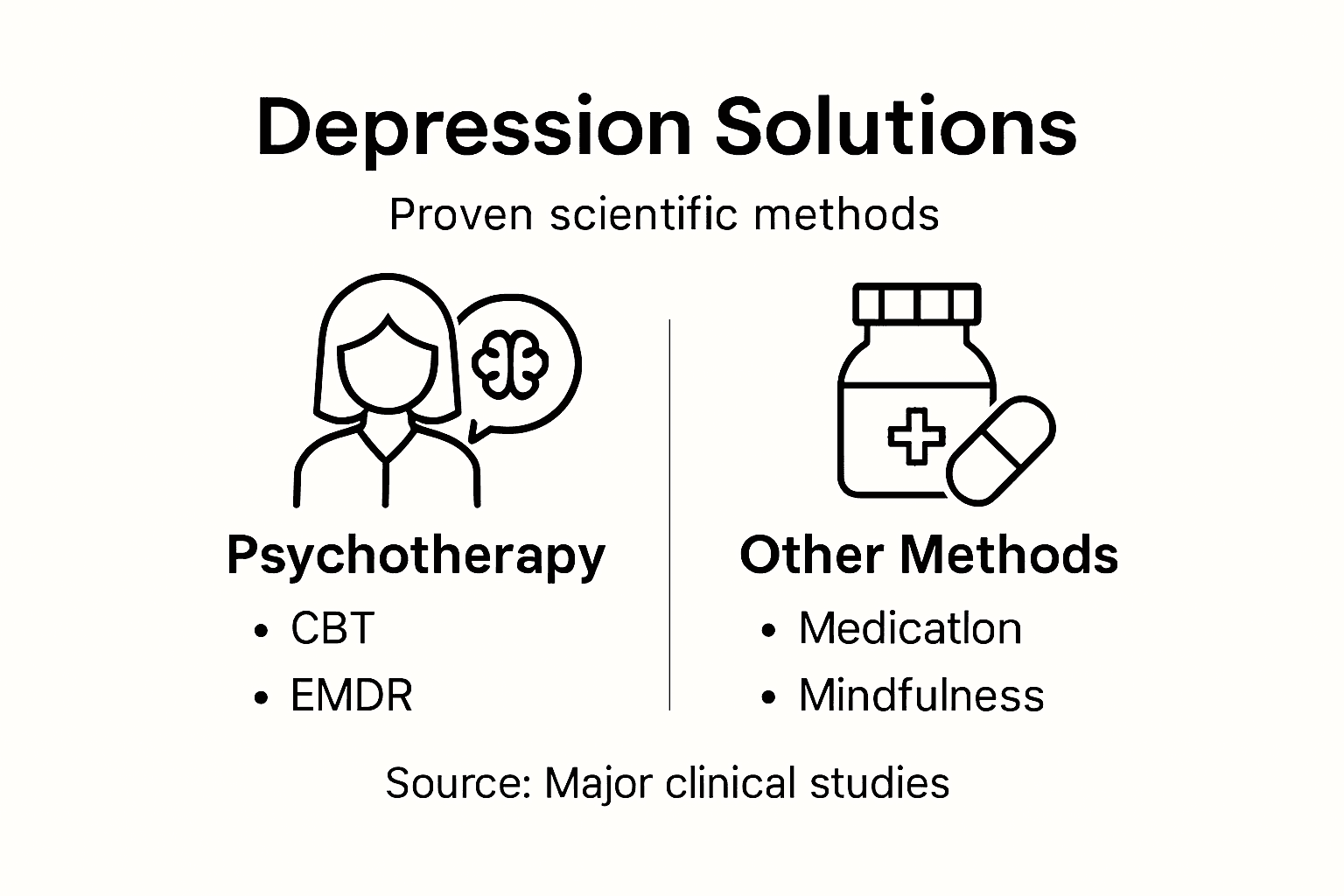
The contemporary approach emphasizes personalized treatment plans that integrate multiple interventions. Mental health professionals now recognize that depression is not a monolithic condition but a complex interaction of biological, psychological, and environmental factors. This means treatment strategies must be flexible, adaptive, and tailored to each individual’s unique constellation of symptoms, medical history, and personal circumstances.
Pro tip: Request a comprehensive mental health assessment that explores multiple treatment dimensions, ensuring a holistic and personalized approach to managing your depression.
Key Methods: CBT, EMDR, and Mindfulness
Depression treatment has evolved to embrace holistic, evidence-based approaches that address mental health through multiple therapeutic modalities. Cognitive Behavioral Therapy (CBT), Eye Movement Desensitization and Reprocessing (EMDR), and mindfulness techniques represent three powerful interventions that offer unique pathways to healing and emotional regulation.
Cognitive Behavioral Therapy focuses on identifying and restructuring negative thought patterns, helping patients recognize distorted thinking that contributes to depressive symptoms. EMDR, particularly effective for trauma-related depression, uses bilateral stimulation to process distressing memories, enabling patients to reframe and reduce emotional distress. This approach has shown remarkable potential in addressing deep-seated psychological wounds that traditional talk therapy might struggle to reach.

Mindfulness techniques complement these approaches by teaching patients to observe their thoughts and emotions without judgment, creating a space between experiencing feelings and being overwhelmed by them. Mindfulness in therapy provides practical strategies for emotional regulation, stress reduction, and developing a more compassionate relationship with one’s inner experiences. By integrating these methods, patients can develop a comprehensive toolkit for managing depression that addresses psychological, neurological, and emotional dimensions.
Pro tip: Discuss combining multiple therapeutic approaches with your mental health professional to create a personalized treatment strategy that addresses your unique emotional landscape.
Here’s a comparison of core depression treatment methods addressing symptoms, duration, and personalization:
| Approach | Key Strength | Typical Duration | Personalization Level |
|---|---|---|---|
| Psychotherapy (CBT) | Targets thought patterns | Weekly, 10-20 weeks | Highly tailored |
| EMDR | Processes trauma impact | 8+ sessions | Customized per trauma |
| Medication | Relieves symptoms fast | Ongoing, varies | Adjusted for biotypes |
| Mindfulness | Improves emotional control | Lifelong practice | Adapts to individual needs |
Accessing Affordable Therapy in California
California residents seeking mental health support have multiple pathways to accessing affordable therapy, thanks to innovative state initiatives and progressive healthcare policies. Free or low-cost treatment options are increasingly available, helping to break down financial barriers that traditionally prevented individuals from receiving essential mental health care.
State-level programs have dramatically expanded affordable mental health resources. Community health centers, sliding scale fee clinics, and nonprofit organizations now offer flexible payment structures designed to accommodate diverse income levels. Some key strategies include income-based pricing, group therapy sessions, training clinics where supervised graduate students provide services at reduced rates, and comprehensive insurance coverage that prioritizes mental health treatment.
The California Health and Human Services Department is actively working to transform mental health accessibility. Mental Health for All initiative investments are creating new treatment facilities, expanding the behavioral health workforce, and developing supportive housing programs. These efforts aim to ensure that high-quality mental health services are within reach for all Californians, regardless of their economic circumstances.
Pro tip: Contact local community health centers and ask about sliding scale fees, group therapy options, and available financial assistance programs for mental health treatment.
Explore the most accessible therapy options in California based on location, affordability, and type of session:
| Provider Type | Affordability | Session Style | Typical Locations |
|---|---|---|---|
| Community Health Center | Sliding scale | Individual/group therapy | Urban/suburban areas |
| Nonprofit Organization | Free or low-cost | Group therapy | Countywide, local programs |
| Training Clinic | Reduced rates | Supervised individual | Universities, colleges |
Comparing Therapy, Medication, and Other Options
Addressing depression requires a nuanced understanding of various treatment approaches, each offering unique benefits and potential limitations. Research consistently shows that no single method works universally, making personalized treatment plans crucial for effective mental health management.
Medication and psychotherapy represent the two primary intervention strategies, with compelling evidence supporting their individual and combined effectiveness. Antidepressant medications work by modulating brain chemistry, potentially providing rapid symptom relief, while psychotherapies like cognitive behavioral therapy address underlying thought patterns and develop long-term coping mechanisms. Treatment approaches vary based on depression severity, with mild to moderate cases potentially responding well to therapy alone, while more complex presentations might require a combination of medication and counseling.
Beyond traditional medical interventions, alternative approaches such as lifestyle modifications, exercise, mindfulness practices, and nutritional interventions can complement primary treatments. These holistic strategies support overall mental wellness by addressing physical health, stress management, and neurochemical balance. The most effective treatment plans often integrate multiple approaches, recognizing that depression is a multifaceted condition requiring comprehensive, personalized care.
Pro tip: Work closely with mental health professionals to develop a tailored treatment strategy that considers your unique symptoms, medical history, and personal preferences.
Discover Personalized Evidence-Based Depression Treatment That Works
Struggling with depression often feels overwhelming because every experience is unique. This article highlights how modern treatment embraces personalized, evidence-based solutions like CBT, EMDR, and mindfulness to address the specific subtypes and root causes of depression. If you are searching for tailored care that respects your individual symptoms and history while providing proven therapeutic methods, Uncategorized – ReviveHealthTherapy offers insightful perspectives on holistic mental health services designed to support your journey.

Take control of your mental health today with flexible therapy options in California. At ReviveHealthTherapy, we specialize in trauma-informed care delivered in-person or via secure telehealth providing affordability through sliding-scale fees and insurance acceptance. Start your path to healing now by scheduling a free 20-minute consultation with a skilled therapist who understands evidence-based depression treatment. Don’t wait to find the support you deserve—visit https://revivehealththerapy.com/fill-out-this-quick-form-for-your-free-20-min-consultation-with-a-therapist-3 and take the first step toward lasting mental wellness.
Frequently Asked Questions
What are evidence-based approaches to depression treatment?
Evidence-based approaches to depression treatment prioritize scientifically validated interventions, including cognitive behavioral therapy (CBT), medication, and non-traditional methods like exercise. These strategies are recommended based on their proven effectiveness and tailored to individual patient needs.
How does Cognitive Behavioral Therapy (CBT) help with depression?
Cognitive Behavioral Therapy (CBT) helps individuals identify and restructure negative thought patterns that contribute to depressive symptoms. By changing these patterns, patients can develop healthier coping mechanisms and improve their emotional well-being.
What role does mindfulness play in managing depression?
Mindfulness techniques help individuals observe their thoughts and emotions without judgment, allowing them to create a space between their feelings and reactions. This can enhance emotional regulation, reduce stress, and improve overall mental health.
How do I access affordable therapy options for depression?
Accessing affordable therapy can be achieved through community health centers, sliding scale fee clinics, and nonprofit organizations. These services often provide flexible payment structures based on income and may offer free or low-cost treatment options.
Recommended
- Role of Mindfulness in Therapy: Real Impact on Anxiety and Depression – ReviveHealthTherapy
- Therapy for Teens: Building Self-Growth and Resilience – ReviveHealthTherapy
- How to Find a Therapist for Accessible Trauma Care – ReviveHealthTherapy
- 7 предимства на кофеина за мозъка за по-добра концентрация – Neurofuel™️
5 Responses