
You want to help your child struggling with anxiety, depression, or trauma, but the therapy process feels like a confusing maze. You’re not alone. Many California parents feel overwhelmed by questions: What happens first? How long will it take? What should you expect? This guide breaks down the evidence-based therapy process into clear, actionable steps so you can confidently support your child’s healing journey.
Table of Contents
- Introduction To Child Therapy For Anxiety, Depression, And Trauma
- Prerequisites And Parent Preparation Before Starting Therapy
- Step-By-Step Child Therapy Process
- Common Mistakes In Child Therapy And How To Troubleshoot
- Tracking Progress And Expected Therapy Outcomes
- Alternative Therapy Approaches And Their Tradeoffs
- Access, Affordability, And Resources For California Families
- Discover Accessible, Evidence-Based Child Therapy In California
- Frequently Asked Questions
Key Takeaways
| Point | Details |
|---|---|
| Structured therapy reduces symptoms effectively | Evidence-based approaches achieve 60-70% symptom reduction in 12-16 weeks |
| Parent preparation matters | Active involvement and proper setup improve adherence and outcomes |
| Telehealth equals in-person effectiveness | California families can access quality care remotely with comparable results |
| Progress monitoring prevents dropout | Regular tracking with validated scales improves outcomes by 25% |
| Affordable options exist | Sliding-scale fees and insurance coverage make therapy accessible |
Introduction to Child Therapy for Anxiety, Depression, and Trauma
California children face significant mental health challenges. Anxiety, depression, and trauma are common mental health issues facing California children requiring early intervention. Getting help early makes a real difference.
Early intervention enhances outcomes dramatically. When you address symptoms promptly, your child develops coping skills before problems become entrenched. Therapy provides more than symptom relief. It builds resilience that carries into adulthood.
Evidence-based approaches deliver proven results:
- Cognitive Behavioral Therapy (CBT): Helps children identify negative thought patterns and replace them with healthier perspectives
- Eye Movement Desensitization and Reprocessing (EMDR): Processes traumatic memories to reduce their emotional impact
- Mindfulness techniques: Teaches present-moment awareness to manage overwhelming emotions
- Play therapy: Allows younger children to express feelings through creative activities
These methods aren’t random guesses. They’re scientifically validated approaches that work. Understanding the importance of child psychotherapy helps you commit to the process even when progress feels slow.
Pro Tip: Match the therapy approach to your child’s specific needs. CBT works well for anxiety, while EMDR often proves more effective for trauma processing.
Prerequisites and Parent Preparation Before Starting Therapy
You can’t just drop your child at therapy and hope for the best. Preparation sets the foundation for success. Parental understanding of therapy goals and preparation increases therapy adherence and success.
Start by clarifying your expectations. Therapy typically runs 12 to 16 weeks for noticeable improvement. Setting realistic timelines prevents frustration when results don’t appear overnight.
Create the right environment at home:
- Privacy: Ensure a quiet space where your child feels safe talking openly
- Technology: For telehealth, test video quality and internet stability beforehand
- Consistency: Block regular therapy times on the family calendar
- Emotional safety: Reassure your child that therapy is a judgment-free zone
Emotionally preparing your child matters just as much. Learn how to prepare your child for therapy with age-appropriate language. Tell younger kids that therapy helps them feel better about big feelings. Explain to teens that a therapist provides tools to manage stress.

Financial planning removes barriers to care. California offers multiple affordability options. Check if your insurance covers child therapy. Many plans include mental health benefits with reasonable copays. If you’re uninsured, sliding-scale fees adjust costs based on income.
Pro Tip: Keep HSA or FSA cards accessible. These accounts can cover therapy costs tax-free, reducing your out-of-pocket burden significantly.
Establish parent involvement in therapy routines early. Plan to attend some sessions, communicate regularly with the therapist, and practice skills at home between appointments.
Step-by-Step Child Therapy Process
The therapy journey follows a structured sequence. A typical child therapy process includes initial assessment, diagnosis, treatment planning, intervention sessions using CBT, EMDR, mindfulness, progress monitoring, and transition planning. Here’s what each phase looks like:
-
Initial Assessment: The therapist meets with you and your child to understand symptoms, history, and family dynamics. This usually takes one to two sessions and includes standardized questionnaires to establish baseline severity.
-
Treatment Planning: Based on assessment findings, the therapist recommends specific approaches. You’ll learn how to choose the right therapist for your child’s unique needs. Goals become concrete and measurable.
-
Intervention Sessions: Weekly or biweekly therapy begins. Your child learns and practices coping skills. CBT sessions involve identifying triggers and reframing thoughts. EMDR processes traumatic memories through bilateral stimulation. Mindfulness builds emotional awareness.
-
Progress Monitoring: Every four weeks, the therapist administers validated scales to track improvement. This data-driven approach ensures treatment stays on track. Adjustments happen if progress stalls.
-
Transition Planning: As symptoms improve, sessions gradually space out. Booster appointments help maintain gains and prevent relapse. You receive a maintenance plan for long-term success.
-
Follow-Up: Check-ins occur three and six months after formal therapy ends to ensure sustained improvement.
Research shows that mindfulness-based strategies integrated with CBT improve emotional regulation about 20% more than CBT alone. Combining approaches often yields better results than single-method treatment.
| Approach | Best For | Duration | Success Rate |
|---|---|---|---|
| CBT Alone | Anxiety, depression | 12-14 weeks | 60-65% symptom reduction |
| CBT + Mindfulness | Anxiety with emotional dysregulation | 14-16 weeks | 70-75% symptom reduction |
| EMDR | Trauma, PTSD | 8-12 weeks | 65-70% symptom reduction |
Pro Tip: Ask your therapist about the specific child therapy process steps they recommend for your child. Understanding the roadmap reduces anxiety about the unknown.
Common Mistakes in Child Therapy and How to Troubleshoot
Even well-intentioned parents make missteps that derail therapy progress. Awareness helps you avoid these pitfalls.
Expecting instant results tops the list. Therapy isn’t a quick fix. Up to 40% of premature dropout occurs due to unrealistic expectations and impatience with therapy progress. Remember that 12 to 16 weeks represents typical timelines for meaningful change.
Poor engagement undermines outcomes:
- Inconsistent attendance: Missing sessions breaks momentum and delays progress
- Homework avoidance: Skills require practice outside therapy to take root
- Minimal communication: Not updating the therapist about changes at home limits treatment effectiveness
- Dismissing concerns: Ignoring your child’s feedback about therapy fit wastes valuable time
Track progress systematically to catch problems early. If symptoms aren’t improving by week eight, speak up. Treatment adjustments might be necessary. Learn how to prevent therapy dropout by staying proactive.
“Many parents wait too long to voice concerns about stalled progress. Early communication allows therapists to pivot strategies before frustration leads to quitting.”
Failing to plan the transition phase creates another common mistake. Abruptly ending therapy increases relapse risk. Gradually spacing sessions and establishing long-term support prevents backsliding.
Pro Tip: Keep a simple log of your child’s mood and behaviors between sessions. This objective data helps you and the therapist spot patterns and adjust treatment accordingly. Set realistic expectations from day one.
Tracking Progress and Expected Therapy Outcomes
Measuring improvement removes guesswork from therapy. Validated anxiety and depression scales provide objective data every four weeks. These questionnaires track symptom frequency and intensity over time.
CBT achieves 60-70% reduction in anxiety and depression symptoms within 12-16 weeks. This benchmark helps you gauge whether your child’s treatment stays on course. Progress rarely follows a straight line. Expect some ups and downs.
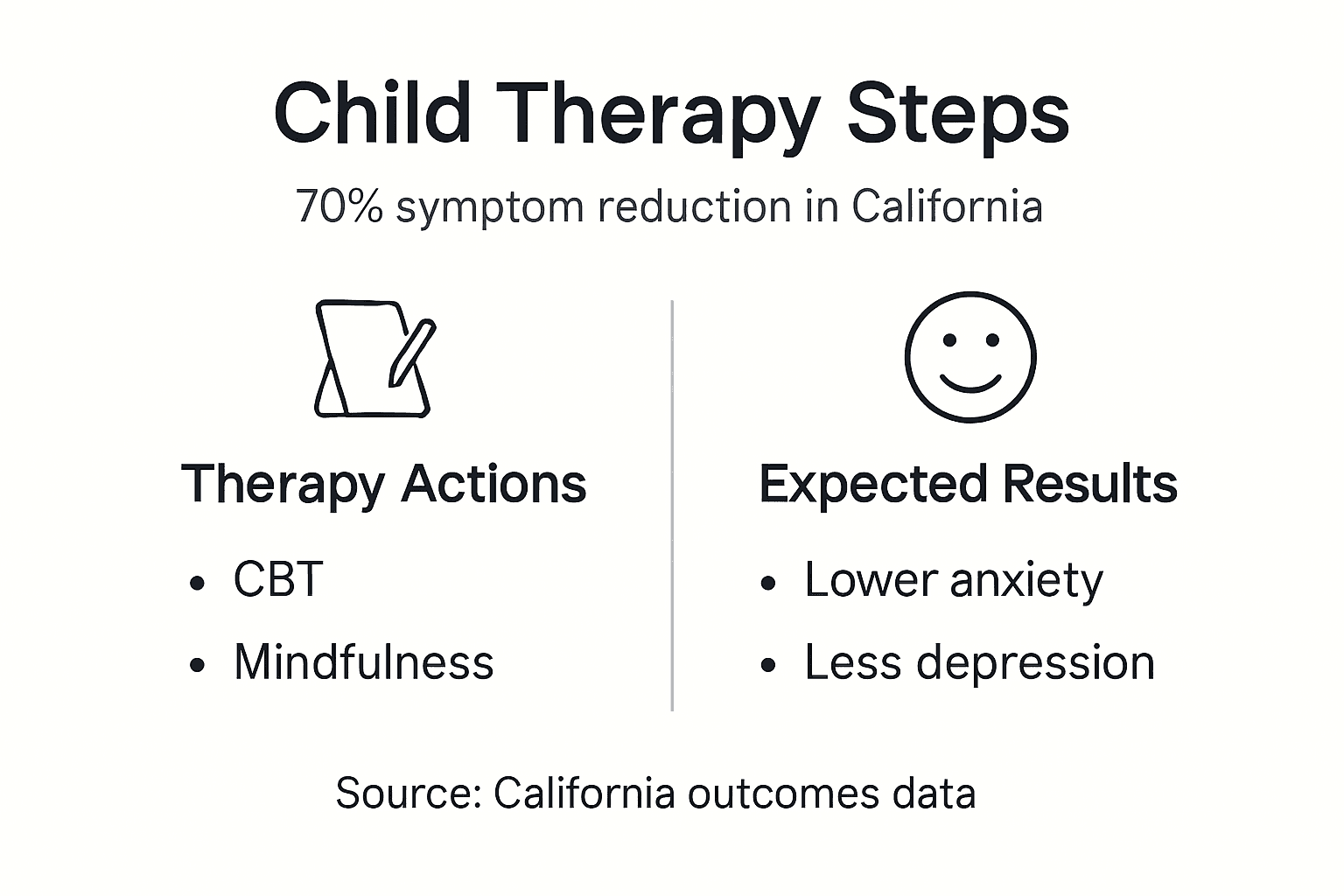
Typical improvement timelines look like this:
| Week Range | Expected Progress | What to Look For |
|---|---|---|
| Weeks 1-4 | 10-20% improvement | Child reports feeling heard, slight mood lift |
| Weeks 5-8 | 30-40% improvement | Noticeable reduction in symptom frequency |
| Weeks 9-12 | 50-60% improvement | Child uses coping skills independently |
| Weeks 13-16 | 60-70% improvement | Sustained symptom management, increased resilience |
Progress monitoring itself improves outcomes by about 25%. When therapists review data regularly, they catch plateaus quickly and modify approaches. This feedback loop keeps treatment effective.
Booster sessions provide insurance against relapse. Booster sessions reduce relapse rates by up to 50% in children with anxiety and trauma. Scheduling three to four follow-up appointments over six months maintains gains without ongoing weekly commitment.
Long-term support planning matters:
- Identify triggers: Know what situations might cause symptom resurgence
- Maintain skills: Continue practicing coping strategies learned in therapy
- Watch for warning signs: Recognize early indicators that symptoms are returning
- Have a backup plan: Know when and how to resume therapy if needed
Understand your expected therapy outcomes to stay motivated through challenging moments. Improvement takes time, but it’s measurable and real.
Alternative Therapy Approaches and Their Tradeoffs
No single therapy format works perfectly for every child. Understanding options helps you make informed choices. Telehealth child therapy is as effective as in-person for anxiety and depression and offers convenience especially for California families.
Comparing delivery methods reveals distinct advantages:
| Factor | Telehealth | In-Person |
|---|---|---|
| Effectiveness | Equal for anxiety/depression | Equal for anxiety/depression |
| Accessibility | High, statewide reach | Limited by location |
| Privacy | Excellent at home | Excellent in office |
| Best For | Busy families, rural areas | Complex trauma, younger children |
| Cost | Often lower, no travel | Variable, travel costs |
Integrating mindfulness with CBT yields superior emotional regulation compared to CBT alone. This combination approach teaches children both cognitive restructuring and body-based awareness. The two methods complement each other beautifully.
Affordability influences decisions significantly:
- Sliding-scale fees: Many California therapists adjust rates based on household income
- Insurance coverage: Most major plans cover child mental health services
- HSA/FSA funds: Use tax-advantaged accounts to pay therapy costs
- Community clinics: Lower-cost options exist through county mental health programs
Situational preferences guide format selection. Telehealth therapy options work well for families with reliable internet and private space at home. In-person therapy suits complex trauma cases where body language provides crucial diagnostic information.
Younger children often benefit from in-person play therapy. Teens with anxiety typically thrive in telehealth settings. Understand telehealth therapy benefits before deciding. You can also review telehealth effectiveness studies for detailed evidence.
Pro Tip: Try a hybrid approach. Start with in-person sessions to build rapport, then transition to telehealth for ongoing maintenance. This flexibility maximizes both connection and convenience.
Access, Affordability, and Resources for California Families
Cost concerns shouldn’t prevent your child from getting help. California offers multiple pathways to affordable care. Sliding-scale payment models and insurance, including HSA/FSA, increase therapy affordability for California families.
Many therapists adjust fees based on income. Don’t hesitate to ask about sliding scales during initial consultations. Honest conversations about budget constraints often lead to workable solutions.
Insurance coverage extends to most child mental health services:
- PPO plans: Typically cover 60-80% of therapy costs after deductible
- HMO plans: Require referrals but offer lower copays
- Medi-Cal: Provides free or low-cost coverage for eligible families
- HSA/FSA accounts: Cover therapy expenses with pre-tax dollars
Telehealth dramatically expands access across California. Rural families no longer face two-hour drives for quality care. Urban families avoid traffic and parking headaches. The flexibility helps maintain consistent attendance.
Locate affordable services through multiple channels. County mental health departments offer free assessments and referrals. University training clinics provide supervised therapy at reduced rates. Online directories filter by insurance acceptance and specialty.
Verify provider credentials before starting. California requires licensed therapists to complete specific training and supervision. Check the Board of Behavioral Sciences database to confirm active licensure. Explore therapy insurance and affordability options thoroughly.
Understanding therapy accessibility in California empowers you to find the right fit. Browse California therapy resources for comprehensive information about local and statewide options.
Discover Accessible, Evidence-Based Child Therapy in California
Your child deserves compassionate, effective care from experienced professionals who understand trauma, anxiety, and depression. Revive Health Therapy offers evidence-based approaches tailored specifically for California families. Our child therapy services combine CBT, EMDR, and mindfulness techniques to address your child’s unique needs.

We provide both in-person sessions in Walnut Creek and Oakland, plus secure telehealth appointments statewide. This flexibility ensures you can access quality care regardless of location. Our therapists specialize in anxiety, depression, and trauma recovery for children and teens. We accept most major insurance plans and offer sliding-scale fees to make therapy affordable. Explore our EMDR therapy options for trauma processing or learn more about psychotherapy benefits for your family. Contact us today to start your child’s healing journey with confidence.
Frequently Asked Questions
What is the typical duration of child therapy for anxiety or trauma?
Most children need 12 to 16 weeks of consistent therapy to achieve significant symptom reduction. Severity of symptoms and chosen approach influence exact duration. Children with mild anxiety might see improvement in 10 weeks, while complex trauma often requires 16 to 20 weeks.
How can parents best support their child during therapy?
Stay actively involved by communicating regularly with the therapist about progress and concerns. Create a supportive home environment where your child feels safe practicing new coping skills. Learn specific parental support tips to maximize therapy effectiveness.
Is telehealth therapy as effective as in-person for children?
Telehealth child therapy shows comparable effectiveness to in-person therapy for anxiety and depression. Success requires proper technology setup, reliable internet, and a private space at home. Many California families prefer telehealth for its convenience and accessibility. Discover telehealth therapy benefits for your family.
What should I do if my child’s therapy progress stalls?
Speak with the therapist immediately to discuss adjustments to the treatment approach. Progress plateaus happen naturally, but staying silent wastes valuable time. Ensure regular attendance and completion of between-session homework assignments. Review strategies for managing therapy challenges with your provider.
One Response