
TL;DR:
- Recent changes to Medi-Cal coverage in California mean adults over 21 can no longer get GLP-1 medications solely for weight loss, affecting mental health management related to obesity. FDA reviews show no increased suicide risk from GLP-1 drugs, but some evidence suggests a mild risk of depression, highlighting the importance of coordinated care. Combining therapy with medication and addressing systemic inflammation can optimize mental health outcomes during GLP-1 treatment.
If you’re taking a GLP-1 medication in California and also managing anxiety or depression, you’re not alone in wondering how these drugs affect your mental health. GLP-1 receptor agonists, originally developed for type 2 diabetes, are now among the most prescribed medications in the country, yet the conversation around their psychological effects remains muddled by fear, misinformation, and genuinely mixed research. Here’s what the evidence actually shows, what California’s recent insurance changes mean for you, and how to integrate these medications thoughtfully with mental health care.
Table of Contents
- Understanding GLP-1 medications and their approved uses
- How GLP-1 medications interact with mental health: evidence and insights
- Comparing GLP-1 medications: efficacy, side effects, and mental health considerations
- Using GLP-1 medications alongside therapy for anxiety and depression
- Why understanding the connection between GLP-1 and mental health matters beyond the science
- Getting comprehensive mental health support in California alongside GLP-1 treatment
- Frequently asked questions about GLP-1 medications and mental health
Key Takeaways
| Point | Details |
|---|---|
| State coverage restrictions | California Medi-Cal no longer covers GLP-1 drugs solely for adult weight loss, affecting affordability and access. |
| FDA safety findings | Extensive research shows no increased risk of suicidal ideation or behavior linked to GLP-1 medications. |
| Mental health monitoring | Patients on GLP-1 should watch for mood changes and coordinate care with mental health providers. |
| Therapy integration | Combining psychotherapy with GLP-1 treatment offers the best approach for managing anxiety and depression. |
| Personalized care advances | Genetic research may soon help tailor GLP-1 use to individual mental and metabolic health needs. |
Understanding GLP-1 medications and their approved uses
To better grasp how these medications might affect mental health, it’s essential first to understand their primary roles and state coverage policies.
GLP-1 stands for glucagon-like peptide-1, a hormone your gut naturally releases after eating. GLP-1 receptor agonists mimic this hormone to lower blood sugar, slow digestion, and reduce appetite. Originally developed as a GLP-1 diabetes treatment, drugs like semaglutide (Ozempic, Wegovy) and liraglutide (Victoza, Saxenda) are now widely used for obesity management and cardiovascular risk reduction.
California’s Medi-Cal program has recently made a significant policy shift that directly affects adults using GLP-1 medications for weight loss. As of January 2026, Medi-Cal no longer covers GLP-1 drugs prescribed solely for weight loss in adults over 21, though coverage continues for diabetes and certain cardiovascular indications. That’s a policy change with real financial consequences for patients who were relying on these drugs to manage weight-related conditions, including mood and anxiety that often worsen with obesity.
Here’s a quick look at what Medi-Cal currently does and doesn’t cover:
- Covered: GLP-1 medications prescribed for type 2 diabetes, cardiovascular disease risk reduction
- No longer covered: GLP-1 drugs prescribed for adult weight loss alone (as of January 1, 2026)
- Still eligible: Patients with qualifying comorbidities may appeal for medical necessity coverage
- Out-of-pocket costs: Brand-name GLP-1 drugs can run $900 to $1,400 per month without insurance
Understanding these Medi-Cal coverage changes in California before starting or continuing treatment can save you thousands and prevent disruptive gaps in care.
How GLP-1 medications interact with mental health: evidence and insights
With a clearer understanding of GLP-1’s approved uses, let’s examine what the research actually says about their effects on mood, anxiety, and depression.
The fear that GLP-1 drugs cause suicidal thoughts became a headline-grabbing concern a few years ago. The science has since answered it clearly. After reviewing 91 clinical trials involving over 2 million patients, the FDA found no increased risk of suicidal ideation or behavior with GLP-1 receptor agonists, and actually requested that the suicidal ideation warning be removed from these therapies.
That’s a meaningful clarification for anyone who delayed treatment out of that specific fear.
The picture on depression is more textured. A 2026 BMC Psychiatry meta-analysis found a mild increased risk of depression in some GLP-1 users, but the authors noted that benefits may outweigh risks when care is properly coordinated. The key phrase is coordinated care. Patients who had active mental health support alongside GLP-1 treatment tended to fare better than those relying on medication alone.
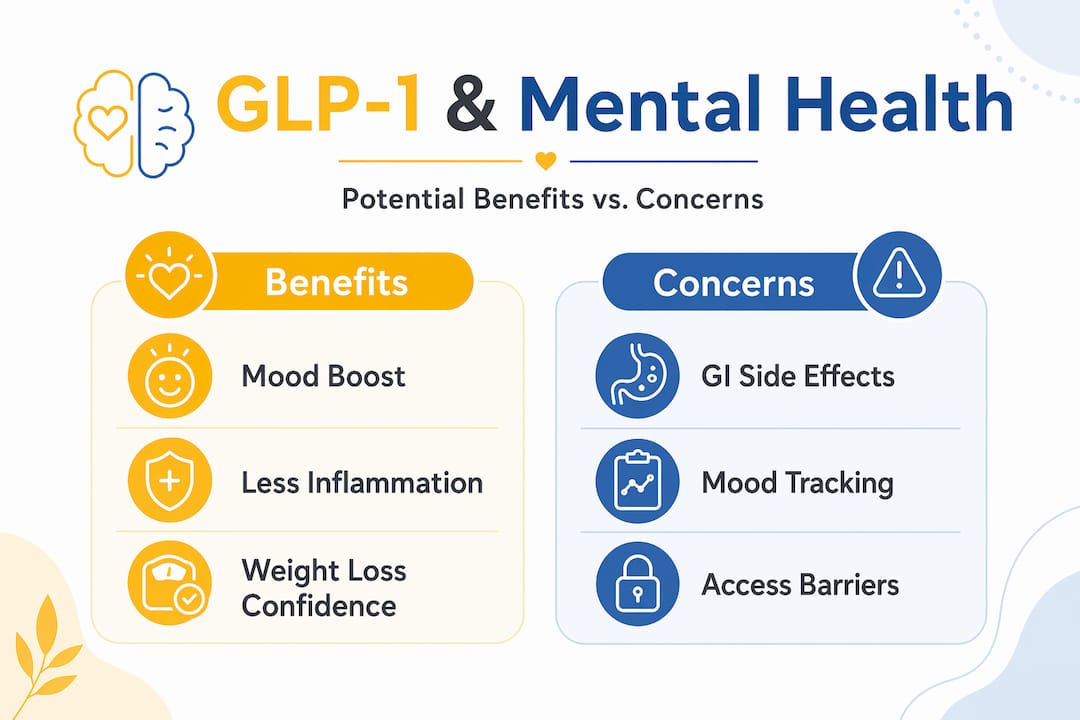
“GLP-1 medications are not antidepressants. But the metabolic and physical improvements they trigger, like reduced inflammation, weight loss, and better blood sugar control, can create conditions where mood genuinely improves.” — GLP-1 psychological benefits are likely indirect rather than the result of direct neurological action.
Here’s how the evidence stacks up across key mental health concerns:
| Mental health concern | What the evidence shows | Clinical takeaway |
|---|---|---|
| Suicidal ideation | No increased risk confirmed by FDA review | Prior warning removed; monitoring still advised |
| Depression | Mild increased risk in some analyses | Monitor mood; coordinate with mental health provider |
| Anxiety | Limited direct evidence; indirect benefits possible | Weight loss and glycemic control may reduce anxiety symptoms |
| General wellbeing | Improvements commonly reported | Likely driven by metabolic, not neurological, changes |
Pro Tip: If you have a history of depression, ask your prescribing clinician to establish a mood baseline before starting a GLP-1 medication. That way, any shifts in your emotional state can be measured against something concrete, not just a vague sense of “feeling off.”
Measuring mental health improvements with GLP-1 use matters more than most patients realize. Tracking mood with a validated tool like the PHQ-9 at each appointment gives you data that can guide treatment decisions rather than guesswork.
Comparing GLP-1 medications: efficacy, side effects, and mental health considerations
Knowing how different GLP-1 drugs vary helps you make more informed decisions alongside your care team.

Not all GLP-1 receptor agonists behave the same way. Semaglutide and liraglutide are among the most studied, with semaglutide consistently showing stronger weight loss results. Both reduce body weight primarily by targeting fat mass while preserving lean tissue to a meaningful degree, though results vary by individual.
Here’s a side-by-side comparison of the most commonly prescribed options:
| Medication | Brand name | Administration | Weight loss | GI side effects | Mental health note |
|---|---|---|---|---|---|
| Semaglutide | Ozempic / Wegovy | Weekly injection | High | Moderate | Mood improvements reported indirectly |
| Liraglutide | Victoza / Saxenda | Daily injection | Moderate | Moderate to high | Similar indirect mood benefits |
| Dulaglutide | Trulicity | Weekly injection | Moderate | Low to moderate | Less studied for mood effects |
| Tirzepatide | Mounjaro / Zepbound | Weekly injection | Very high (dual agonist) | Moderate | Emerging data; promising metabolic outcomes |
Side effects like nausea, vomiting, and gastrointestinal discomfort are common, especially in the early weeks of treatment. These symptoms are more than just physical inconveniences. Persistent nausea can disrupt sleep, reduce your appetite for nutrient-dense food, and drain your energy, all of which worsen anxiety and depression. If you’re already managing a mental health condition, this indirect drag on your mood is worth planning for.
Perhaps the most underappreciated statistic in the GLP-1 conversation: 50 to 75 percent of patients stop taking these medications within a year due to cost, side effects, or shifting treatment goals. Weight regain after stopping is well documented, and that physical rebound can trigger or intensify depression and anxiety, particularly for anyone with a complicated relationship with body image or emotional eating.
- Consider starting therapy before or at the same time as GLP-1 treatment, not as an afterthought
- Build sustainable habits around nutrition and movement that don’t depend on the medication
- Work with your provider to taper off gradually rather than stopping abruptly
- Have a clear emotional support plan for the transition period
Pro Tip: The GLP-1 side effect management and costs in California conversation is one worth having with a counselor as well as your doctor. Financial stress from high medication costs is itself a significant driver of anxiety, and having a concrete plan reduces that burden.
Using GLP-1 medications alongside therapy for anxiety and depression
Having actionable steps prepares you to engage fully in treatment. Here’s how to approach the integration practically.
Managing anxiety or depression while on a GLP-1 medication isn’t complicated, but it does require intention. Here’s a step-by-step framework that works in real life:
- Schedule a joint consultation. Bring your prescribing clinician and mental health provider into the same conversation, even if just through a shared treatment summary. Fragmented care is where things go wrong.
- Establish a mood monitoring routine. Use a symptom tracker or mood journal at the same intervals as your medication check-ins. Patterns become visible when you’re measuring consistently.
- Attend therapy regularly, not just when things get bad. Whether you’re using CBT, EMDR, or another evidence-based approach, consistency drives outcomes. GLP-1 medications don’t resolve the underlying cognitive patterns that fuel anxiety or depression.
- Prioritize lifestyle factors that amplify both treatments. Sleep, movement, and whole-food nutrition aren’t optional add-ons. They’re the environment in which both your medication and therapy can actually work.
- Appeal for Medi-Cal coverage if you have comorbid conditions. Patients with depression, cardiovascular disease, or metabolic syndrome alongside obesity may qualify for continued coverage. Ask your provider to document the medical necessity clearly.
- Know what emotional changes to watch for. Even without a direct link to suicidal ideation, early mood monitoring during GLP-1 treatment is advised, especially for anyone with a history of depression.
Access to psychotherapy benefits in California has expanded significantly through telehealth, making it easier than ever to combine in-person or virtual therapy sessions with your medical appointments, regardless of where in California you live. Comprehensive care beyond medication is consistently cited as the foundation of lasting mental health improvement, not medication alone.
Pro Tip: If cost is a barrier, ask about sliding-scale therapy fees or HSA/FSA-eligible appointments. Many California mental health providers, including telehealth practices, accept these payment forms, which can significantly reduce your out-of-pocket burden.
Why understanding the connection between GLP-1 and mental health matters beyond the science
Here’s something the headline coverage of GLP-1 medications almost never mentions: the most significant mental health benefit of these drugs may not come from the medication itself at all.
Chronic inflammation is increasingly recognized as a driver of depression and anxiety. GLP-1 receptor agonists reduce systemic inflammation and improve liver and metabolic health independently of weight loss. As Dr. Daniel Drucker notes, GLP-1 medications provide meaningful benefits to liver function and metabolic health that go far beyond the number on the scale. For mental health patients, that metabolic stabilization may be quietly reducing an inflammatory burden that has been feeding their mood symptoms for years, without anyone drawing the connection.
That’s a story worth telling, and most people miss it entirely.
What also gets missed is the policy layer. California’s Medi-Cal coverage shift isn’t just a financial inconvenience. For lower-income adults who were using GLP-1 medications to manage weight-related depression or anxiety, losing that coverage mid-treatment creates a mental health cliff. Weight regain, disrupted routines, financial stress, and loss of a treatment that was working, all at once. That’s a compounding crisis, and no one is prescribing therapy to get ahead of it.
The most durable path forward is neither medication nor therapy alone. It’s both, integrated and coordinated. GLP-1 drugs can create a metabolic window in which therapeutic work becomes more accessible. Reduced inflammation, better sleep, more energy, these are conditions in which CBT or EMDR can land more effectively. Therapy, in turn, provides the psychological scaffolding that sustains the lifestyle changes needed when the medication eventually ends.
The future looks promising for mental health access impact through precision medicine. Genetic variants in the GLP-1 receptor gene are already being studied as predictors of who will respond best to these medications, which could eventually allow for far more targeted prescribing. But that future is still emerging. Right now, the most powerful thing you can do is advocate for care that treats your mind and body as connected, because they are.
Getting comprehensive mental health support in California alongside GLP-1 treatment
If you’re navigating GLP-1 treatment while managing anxiety or depression, having a skilled therapist in your corner changes outcomes in ways medication alone cannot.

At Revive Health Therapy, we work with California adults who are managing the emotional and psychological dimensions of their health, including those navigating GLP-1 treatment. Whether you’re dealing with the anxiety that comes with body changes, the mood dips that can follow weight regain, or the stress of insurance coverage disruptions, our licensed therapists provide evidence-based support using CBT, EMDR, and mindfulness-based approaches. We offer in-person sessions in Walnut Creek and Oakland, plus secure telehealth throughout California. With sliding-scale fees and insurance accepted, including HSA/FSA plans, accessible psychotherapy in California is closer than you think.
Explore your psychotherapy options for 2026 or reach out to our team to find the right fit for where you are right now.
Frequently asked questions about GLP-1 medications and mental health
Can GLP-1 medications cause depression or suicidal thoughts?
Current FDA reviews found no increased risk of suicidal behavior with GLP-1 medications across 91 trials and over 2 million patients, though mood should still be monitored regularly during treatment, especially in those with a depression history.
Are GLP-1 medications covered by California Medi-Cal for weight loss?
As of January 1, 2026, Medi-Cal no longer covers GLP-1 drugs prescribed solely for adult weight loss, but coverage continues for diabetes, cardiovascular disease, and qualifying medical conditions where GLP-1 treatment is medically necessary.
How can I manage anxiety or depression while taking GLP-1 medication?
Coordinate with your mental health provider, attend therapy consistently, and track mood changes at regular intervals. Comprehensive care beyond medication is consistently associated with the strongest mental health outcomes for patients on GLP-1 therapy.
What should I expect if I stop GLP-1 medication?
50 to 75 percent of patients stop within a year, and weight regain is common after stopping. Having a mental and physical health plan in place before discontinuation, ideally developed with both your prescriber and therapist, is the most protective step you can take.
Are there personalized treatments based on genetics for GLP-1 suitability?
Research is advancing on genetic variants in GLP1R that predict who responds best to these medications, pointing toward future precision prescribing that could improve both metabolic and mental health outcomes for individual patients.