
TL;DR:
- Peptide wellness involves using short chains of amino acids as supplements or therapies, but most lack sufficient human clinical evidence. FDA-approved peptides like insulin and semaglutide have well-established safety and efficacy, unlike unregulated gray-market products that pose significant risks. Consulting a licensed physician and relying on regulated pharmacies are essential steps before considering peptide use for health goals.
Peptide wellness refers to the use of peptides — short chains of amino acids — as supplements or therapies aimed at improving health outcomes including recovery, anxiety reduction, and anti-aging. The industry term is peptide therapy, and it covers everything from FDA-approved medications like insulin and GLP-1 analogs to gray-market injectable compounds sold online with little regulatory oversight. If you are researching peptide wellness in 2026, the most important thing to understand upfront is this: the science is real, the marketing is ahead of it, and the risks depend almost entirely on which category of peptide you are considering.
What are peptides and how do they work in the body?

Peptides are short chains of amino acids, typically between 2 and 50 units long, that function as biological signaling molecules. Proteins are longer chains that perform structural or enzymatic roles. Peptides, by contrast, act more like messengers. They tell cells to produce hormones, trigger repair processes, regulate metabolism, and modulate immune responses.
The body produces peptides naturally. Insulin, for example, is a peptide hormone that regulates blood glucose. GLP-1 (glucagon-like peptide-1) is another endogenous peptide that controls appetite and blood sugar. These are also the basis of FDA-approved medications like semaglutide (Ozempic, Wegovy) and liraglutide. You can learn more about how GLP-1 peptides influence mental health outcomes alongside their metabolic effects.
Three categories of peptides matter for anyone exploring this space:
- Endogenous peptides: Produced naturally by the body (insulin, oxytocin, endorphins)
- Therapeutic peptides: FDA-approved drugs with clinical trial data supporting their use (semaglutide, tesamorelin)
- Wellness peptides: Compounded or gray-market compounds marketed for recovery, anti-aging, or performance, often without human trial data
Pro Tip: Before researching any specific peptide, identify which category it falls into. FDA-approved therapeutic peptides have a fundamentally different evidence base and safety profile than wellness peptides sold online.
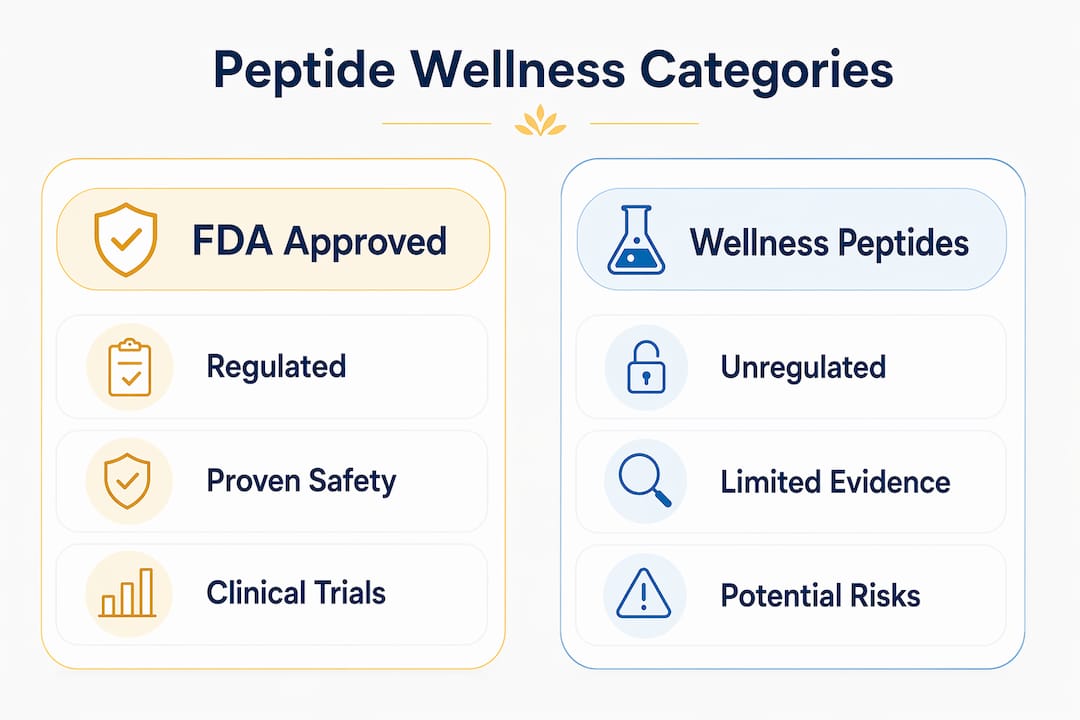
The BMJ contrasts FDA-approved peptides like insulin with unapproved wellness injections that lack clinical trials entirely. That distinction is not a technicality. It determines whether you have reliable dosing information, quality-controlled manufacturing, and any meaningful safety data at all.
What does the science actually say about peptide wellness?
The honest answer is that the evidence base for most wellness peptides is thin, especially for human applications. Designer peptides for muscle growth, skin, and longevity are largely based on animal data and lack robust human evidence. That gap between rodent studies and human clinical trials is where most of the marketing hype lives.
The most studied wellness peptide for anxiety is selank, a synthetic analog of the human protein tuftsin. A review published in MDPI found that selank showed significant anxiety reduction in patients with mild generalized anxiety disorder without producing sedative effects. That is a meaningful preliminary finding. It is also a small-scale study that researchers themselves say requires larger trials before clinical conclusions can be drawn.
BPC-157 is another widely discussed compound, promoted heavily for injury recovery and gut healing. The problem: BPC-157 has no human trials. Every piece of data on it comes from animal models. Columbia University’s medical team notes that peptides are in an infancy stage of research, with theoretical risks present and a need for cautious interpretation of anecdotal recovery reports.
Here is a summary of the current evidence landscape for commonly discussed wellness peptides:
| Peptide | Claimed benefit | Evidence level | Human trials? |
|---|---|---|---|
| Selank | Anxiety reduction | Preliminary human data | Limited, small-scale |
| BPC-157 | Recovery, gut healing | Animal data only | None |
| Ipamorelin | Growth hormone release | Some human data | Limited |
| Epithalon | Anti-aging, longevity | Animal and in vitro | Minimal |
| Semaglutide (GLP-1) | Metabolic health, weight | Robust clinical trials | Yes, FDA-approved |
The pattern is clear. The further a peptide is from FDA approval, the thinner its human evidence base. Anecdotal reports of faster recovery and reduced anxiety are common online, but reported “feels better” outcomes do not equal established clinical efficacy surpassing natural healing rates.
What are the safety risks of peptide wellness products?
Safety risks in the peptide wellness space are not theoretical. They are documented and specific. ECRI and ISMP warn that purity of gray-market peptide products can be as low as 5%, with toxic contaminants present in tested samples. That means a product labeled as BPC-157 may contain almost none of the intended compound and significant amounts of unknown substances.
The most commonly reported side effects from wellness peptides include:
- Injection site reactions (redness, swelling, pain)
- Nausea, bloating, and gastrointestinal distress
- Headaches and fatigue
- Water retention and joint discomfort with growth hormone-releasing peptides
- Potential pancreatitis risk with non-approved peptide compounds
The AMA cautions specifically about unclear dosing and pancreatitis risk with non-approved peptides. That warning matters because most people sourcing these compounds online are self-dosing based on social media protocols with no physician involvement.
Beyond immediate side effects, theoretical long-term risks include unwanted tissue proliferation and, in some cases, potential interactions with cancer pathways. These risks are not confirmed in humans, but they are plausible given how peptides interact with growth signaling systems. No established dosing or long-term safety data exist for many wellness peptides, which means self-dosing via social media information is genuinely risky, not just inadvisable.
The regulatory gap is the core problem. FDA approval ensures manufacturing oversight, lot testing, and dosing verification. Gray-market peptides have none of that. Buying a compound from an online “research chemical” supplier gives you no reliable information about what is actually in the vial.
FDA-approved peptides vs. wellness peptides: how do they compare?
Understanding the difference between these two categories is the most practical thing you can do before spending money or injecting anything.
| Category | Regulation | Clinical evidence | Quality control | Example |
|---|---|---|---|---|
| FDA-approved peptide drugs | Full FDA oversight | Robust human trials | Mandatory lot testing | Insulin, semaglutide |
| Compounded peptides | Limited oversight | Variable, often limited | Pharmacy-dependent | Tesamorelin (compounded) |
| Gray-market wellness peptides | None | Mostly animal data | None | BPC-157, TB-500 |
| Peptide supplements (oral) | Supplement rules only | Minimal | Label accuracy not verified | Collagen peptides |
FDA-approved peptide medications represent the gold standard. Insulin has decades of safety data. Semaglutide has large-scale randomized controlled trials. Compounded peptides from licensed pharmacies occupy a middle ground: they may use the same active compounds as approved drugs but are mixed in smaller batches without the same manufacturing guarantees.
Gray-market wellness peptides sit at the bottom of this hierarchy. The BMJ notes that therapeutic peptides have genuine advantages over small molecules, including high target specificity and relatively favorable safety profiles when properly manufactured. The problem is that “properly manufactured” is exactly what gray-market products cannot guarantee. For a deeper look at how peptides intersect with mental health specifically, Revivehealththerapy has published a California-focused breakdown of the current human research.
What practical steps should you take before trying peptide therapy?
If you are genuinely interested in exploring peptide therapy, the path forward requires more than reading Reddit threads and ordering from an overseas supplier. Here is what physicians and safety organizations actually recommend:
- Consult a licensed physician first. Find a doctor who specializes in endocrinology, sports medicine, or integrative medicine and has direct experience with peptide prescribing. General practitioners may not have the background to evaluate your specific situation.
- Ask specifically about FDA-approved options. If a peptide exists in an FDA-approved form, that version is the only one with verified purity and dosing. Ask whether your goal can be addressed with an approved medication before considering anything else.
- Use only regulated pharmacies. Physicians advise obtaining peptides exclusively through licensed compounding pharmacies or retail pharmacies, never from online research chemical suppliers.
- Verify marketing claims critically. If a product promises anti-aging, rapid recovery, or anxiety relief with no mention of clinical trials or FDA status, treat that as a red flag. Physicians highlight that patients should discount social media hype and prioritize medical evaluation.
- Combine with verified health practices. Nutrition, structured exercise, quality sleep, and evidence-based mental health support produce measurable outcomes. Peptides, at best, may complement these. They do not replace them.
Pro Tip: If you are exploring peptides specifically for anxiety, consider evidence-based anxiety treatments first. Therapies like CBT and EMDR have decades of human trial data behind them, something most wellness peptides cannot claim.
Key takeaways
Peptide wellness holds genuine scientific promise, but the gap between animal research and human clinical evidence is the defining challenge of the field in 2026.
| Point | Details |
|---|---|
| Know the category | FDA-approved peptides have strong evidence; gray-market wellness peptides often do not. |
| Evidence gaps are real | Most wellness peptides, including BPC-157, have no human clinical trial data at all. |
| Safety risks are documented | Gray-market peptide purity can be as low as 5%, with toxic contaminants confirmed by ECRI and ISMP. |
| Selank shows early promise | Preliminary human data supports anxiety reduction, but larger trials are still needed. |
| Physician consultation is non-negotiable | Self-dosing based on social media carries genuine health risks with no established safety baseline. |
Why I think the peptide wellness conversation needs a reset
I have watched the peptide wellness conversation accelerate dramatically over the past two years, and the pattern concerns me. Patients come in having already ordered compounds online, having already started injecting, and then asking whether it is safe. That sequence is backward.
The science on peptides is genuinely exciting. The specificity of peptide signaling, the potential for targeted tissue repair, the early anxiety data on selank — these are real reasons for optimism. What is not real is the idea that a gray-market injectable with 5% purity and zero human trial data is a wellness tool. That is an experiment you are running on yourself without a protocol.
What I find most telling is that the people most enthusiastic about peptide wellness online are often the least interested in the regulatory details. The question “Is this FDA-approved?” should be the first question anyone asks, not an afterthought. The peptide wellness market is growing faster than clinical evidence, and that gap is where people get hurt.
For anxiety and recovery specifically, I would push back on the framing that peptides are a shortcut that therapy and lifestyle cannot match. The evidence for CBT, EMDR, and structured exercise in anxiety and recovery is orders of magnitude stronger than anything in the wellness peptide literature right now. That does not mean peptides will never have a role. It means they have not earned one yet for most of the claims being made about them.
— Amy
How Revivehealththerapy supports your wellness goals

If anxiety, recovery, or overall well-being brought you to this article, there is a more evidence-backed path available to you right now. Revivehealththerapy offers licensed psychotherapy services across California, including in-person sessions in Walnut Creek and Oakland, plus secure telehealth statewide. The therapists at Revivehealththerapy use CBT, EMDR, and mindfulness-based approaches that have decades of human clinical trial data behind them. If you are weighing experimental peptide compounds against proven mental health support, psychotherapy for mental wellness is the option with the stronger evidence base. Sliding-scale fees and insurance acceptance, including HSA and FSA plans, make access realistic. Explore anxiety treatment options in California and find the support that actually has the research to back it up.
FAQ
What is peptide wellness?
Peptide wellness is the use of peptide compounds, either as supplements or injectable therapies, to support health goals like recovery, anti-aging, and anxiety reduction. The term covers both FDA-approved peptide medications and unapproved gray-market products with varying levels of evidence.
Are wellness peptides safe to use?
Most wellness peptides sold online are not FDA-approved and lack human safety evidence, with side effects including nausea, GI issues, and injection site reactions. Gray-market products carry additional risks from contamination and unreliable purity.
What peptides are actually FDA-approved?
FDA-approved peptide medications include insulin, semaglutide (Ozempic, Wegovy), liraglutide, and tesamorelin. These have robust clinical trial data and manufacturing oversight that wellness peptides sold online do not have.
Can peptides help with anxiety?
Selank is the most studied peptide for anxiety, with preliminary human data showing anxiety reduction in mild generalized anxiety disorder without sedation. Larger controlled trials are still needed before it can be recommended clinically.
Where should I get peptides if I want to try them?
Physicians and safety organizations including ECRI and ISMP recommend obtaining peptides only through licensed compounding pharmacies or retail pharmacies, after consulting a qualified physician. Never source peptides from online research chemical suppliers.