
TL;DR:
- Structured therapy follows research-backed formats to produce measurable mental health improvements.
- Each session includes planning, active techniques, and homework to reinforce progress outside therapy.
- Therapist flexibility within the structure ensures personalized care and effective healing.
Many people put off starting therapy because they picture it as open-ended talking with no clear direction. That fear is understandable, but it misses what modern, evidence-based therapy actually looks like. Structured approaches like Cognitive Behavioral Therapy (CBT), Cognitive Processing Therapy (CPT), and Dialectical Behavior Therapy (DBT) follow repeating, research-backed session formats designed to produce measurable change. Whether you are working through anxiety, depression, trauma, or relationship struggles, knowing what to expect inside a structured session can make starting feel far less daunting. This article walks you through exactly how these sessions work, what each phase looks like, and why the structure itself is part of what makes therapy effective.
Table of Contents
- Why therapy structure matters: The evidence perspective
- Understanding session flow: Inside evidence-based models
- Session components: Agenda, techniques, and between-session practice
- Therapy for trauma and relationships: Special considerations
- A therapist’s perspective: The art within the structure
- Ready to experience structured therapy in California?
- Frequently asked questions
Key Takeaways
| Point | Details |
|---|---|
| Structured therapy boosts results | Following a session agenda and evidence-based methods leads to better outcomes for anxiety, depression, trauma, and relationships. |
| Typical session framework | Sessions move from check-in, through active agenda work, to homework planning—creating change both inside and outside the office. |
| Customization for your needs | Structured therapies adapt to trauma or relationship focus and track your unique progress step by step. |
| Homework is essential | Practice between sessions is critical for lasting improvement and skill development. |
Why therapy structure matters: The evidence perspective
When therapists talk about a “structured session,” they mean something specific. Each appointment follows a predictable sequence: an agenda is set at the start, active techniques are applied in the middle, and between-session practice is assigned before you leave. This is not bureaucracy. It is a deliberate design that keeps both you and your therapist focused on your goals rather than drifting into open-ended conversation.
The research behind structured therapy is hard to ignore. Remission rates of 40 to 60% are consistently reported for CBT and CPT after 12 to 16 sessions, outcomes that are superior to both waitlist controls and pharmacotherapy alone for anxiety and trauma. That kind of result does not happen by accident. It happens because every session builds on the last, skills are practiced between appointments, and progress is tracked using measurable tools.
Three reasons structure drives better outcomes:
- Clarity: You know what you are working on and why, which reduces the anxiety that often accompanies starting therapy.
- Collaboration: Agenda-setting is a shared process. Your therapist does not dictate the session; you both shape it.
- Momentum: Homework and check-ins create continuity between sessions, so growth does not stop when you leave the office.
Exploring your therapy treatment options with this framework in mind helps you ask better questions and choose the right fit. And if you have ever wondered why some approaches outperform others, the answer often comes down to how well the method is operationalized inside each session.
“Structure in therapy is not about following a rigid script. It is about giving both the therapist and the client a shared map so neither gets lost.”
Understanding evidence-based therapy means recognizing that the session format is itself a clinical tool, not just a scheduling convenience. When sessions are consistent and purposeful, clients report feeling safer, more understood, and more motivated to do the hard work between appointments.
Understanding session flow: Inside evidence-based models
With evidence that structure matters, let’s look under the hood at what actually unfolds in a modern, structured therapy session. Different modalities organize their sessions differently, but all share a recognizable rhythm.
| Modality | Primary focus | Typical session count | Key session steps |
|---|---|---|---|
| CBT | Anxiety, depression | 12 to 20 sessions | Psychoeducation, thought records, exposure |
| CPT | Trauma (PTSD) | 12 sessions | Impact statement, Socratic questioning, stuck points |
| DBT | Emotional regulation, trauma | 6 months or longer | Diary card review, skills training, chain analysis |
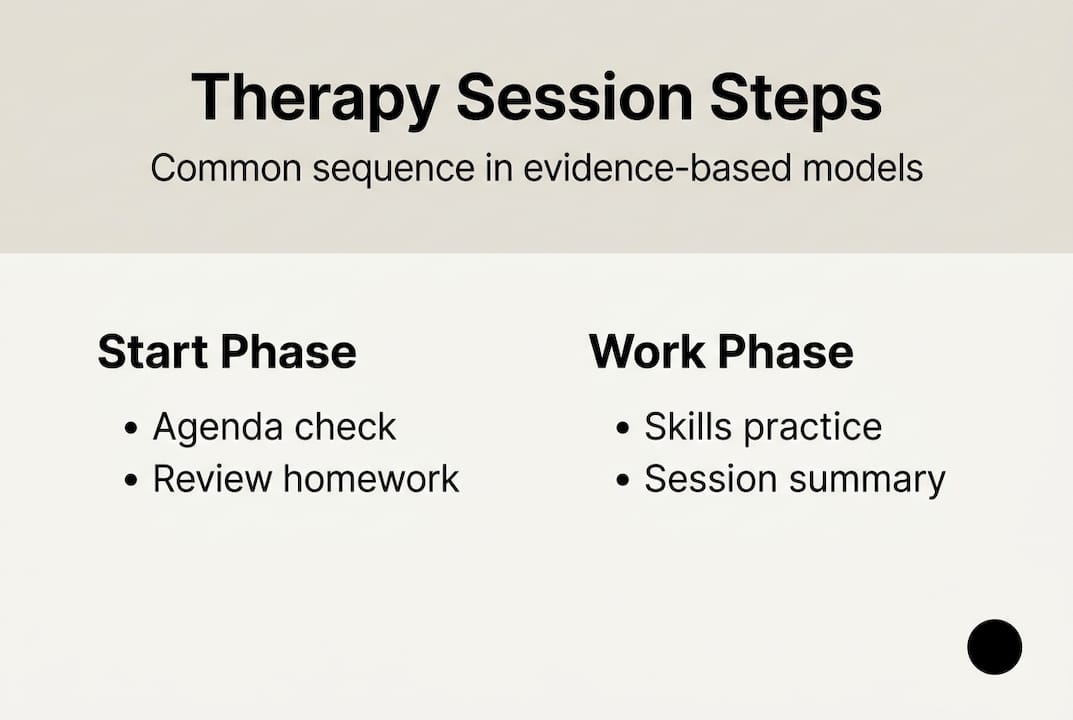
A typical structured session moves through three phases. The opening involves a brief check-in, mood rating, and agenda agreement. The middle is the active work: applying a technique like cognitive restructuring, an exposure exercise, or a skills module. The closing involves reviewing what was practiced and assigning between-session tasks.
Here is what the first three sessions often look like in CBT for therapy for anxiety:
- Session 1: Psychoeducation about the anxiety cycle and symptom mapping. You and your therapist identify your specific triggers and patterns.
- Session 2: Introduction to cognitive restructuring. You begin identifying automatic negative thoughts and learning to challenge them.
- Session 3: Early exposure work. You build a fear hierarchy and take the first small steps toward facing avoided situations.
For CPT addressing trauma, the 12-session model begins with psychoeducation about PTSD, moves into writing an impact statement about how the trauma changed your beliefs, and then uses Socratic questioning to work through “stuck points,” which are the distorted beliefs keeping you frozen. The CBT for depression path follows a similar arc but focuses on behavioral activation and challenging hopeless thinking patterns.

For DBT, the session outline typically starts with a diary card review tracking emotions and urges, followed by skills practice in areas like distress tolerance or interpersonal effectiveness.
Pro Tip: Consistency in structured therapy does not mean rigidity. A skilled therapist will adapt the session plan when something urgent comes up in your life, then return to the protocol the following week. Flexibility within structure is a feature, not a flaw.
Session components: Agenda, techniques, and between-session practice
Knowing the flow, let’s focus on what actually fills each session and why these ingredients drive results even outside the office.
Every structured session, regardless of modality, tends to include the same core ingredients:
- Check-in: A brief mood rating or symptom score to establish where you are starting today.
- Homework review: Discussing what you practiced since the last session and what you noticed.
- Agenda agreement: You and your therapist decide together what the session will focus on.
- Main intervention: The active technique, whether that is a thought record, an exposure task, or a skills exercise.
- Homework assignment: A specific between-session task tied to what you just practiced.
The between-session practice piece is often underestimated. Research consistently shows that core CBT outcomes depend on collaborative agenda-setting, active techniques, and between-session practice working together. Therapy is not something that happens only in the room. The real change occurs when you apply skills to your actual life, in real situations, with real stakes.
Therapists balance clinical structure with personalized interventions by reading what each client brings to each session. If you arrive in crisis, the agenda shifts. If you have mastered a skill faster than expected, the protocol accelerates. The structure provides the container; your therapist fills it based on your needs.
Pro Tip: Before each session, jot down one thing you want to address and one question about the homework you were assigned. This simple habit makes you an active participant rather than a passive recipient, which research links to better outcomes.
If you want to walk into your first appointment feeling prepared, reviewing how to prepare for a therapy session gives you a concrete starting point. Knowing what to bring and what to expect removes a layer of anxiety before you even sit down.
For a detailed breakdown of CBT session steps and how each technique builds on the previous one, the Sweet Institute offers a thorough clinical overview that is worth reading.
Therapy for trauma and relationships: Special considerations
Now that you have seen the core components, let’s look at how these methods shift when trauma or relationship dynamics are at the forefront.
| Approach | Session focus | Key tools | Progress measure |
|---|---|---|---|
| CPT (trauma) | Stuck points, trauma narrative | Impact statement, worksheets | PCL-5, SUDS |
| DBT (trauma/emotion) | Skills, distress tolerance | Diary cards, chain analysis | SUDS, self-report |
| Relational CBT | Communication, patterns | Behavioral experiments, role play | GAD-7, PHQ-9 |
For trauma-focused work, the session sequence builds deliberately over multiple weeks:
- Weeks 1 to 2: Safety, stabilization, and psychoeducation about trauma responses.
- Weeks 3 to 6: Trauma account work and identifying stuck points using Socratic questioning.
- Weeks 7 to 10: Challenging distorted beliefs about safety, trust, power, esteem, and intimacy.
- Weeks 11 to 12: Consolidation, relapse prevention, and planning for continued growth.
The APA guidelines for CPT confirm that homework assignments, trauma narrative work, and a focus on safety and trust themes are central to the model. When relationship concerns are layered in, relational CBT for couples or families may use a phase-based structure that first stabilizes communication before moving into deeper pattern work.
When anxiety or depression co-occurs with trauma, which is very common, therapists must adapt. The session nuance for comorbidities means tracking multiple symptom domains simultaneously, using tools like the GAD-7 for anxiety and SUDS scores for trauma distress within the same session.
Progress tracking is not optional in structured therapy. It is built into the model. Measures like the GAD-7 give both you and your therapist a concrete picture of whether the approach is working, and when to adjust. Exploring trauma recovery options and the range of trauma therapy types available in California can help you identify which structured approach fits your specific history and goals.
A therapist’s perspective: The art within the structure
Here is something most articles about therapy structure miss: the protocol is not what heals you. The relationship is. Structure creates the conditions for healing, but it is the attunement between you and your therapist that makes the techniques land.
We have seen clients arrive expecting a fixed script, almost like a classroom lesson. When they discover that their therapist is genuinely tracking their emotional state, adjusting the pace, and sometimes setting the agenda aside entirely to sit with something painful, they are often surprised. That flexibility is not a deviation from the model. It is the model working correctly.
What clinical training cannot fully teach is how to read a client’s nervous system in real time and decide whether to push forward with an exposure task or slow down and regulate first. That judgment comes from experience and genuine human connection. Structure without attunement is just paperwork.
The clients who get the most from structured therapy come prepared, ask questions about why a particular technique is being used, and treat the homework as seriously as they would a work deadline. Understanding therapy outcomes explained can help you see how each session component connects to your larger goals, making you a more engaged and effective participant in your own care.
Ready to experience structured therapy in California?
Understanding how structured therapy works is the first step. Taking action is the next one. At ReviveHealthTherapy, we offer evidence-based, structured sessions for anxiety, depression, trauma, and relationship concerns across California, both in person in Walnut Creek and Oakland and via secure telehealth statewide.
If you have been wondering why seek psychotherapy or what to expect from your first appointment, we make it easy to get clear answers before you commit. Browse our California therapy options to see which structured approach fits your needs, and when you are ready, book your first session with a licensed therapist who will build a session plan around your specific goals. Sliding-scale fees and insurance, including HSA and FSA plans, are available.
Frequently asked questions
How many sessions does structured therapy usually last?
CBT and CPT typically run 12 to 20 sessions, scheduled weekly or biweekly, though DBT programs may extend to six months or longer depending on the presenting concerns.
Do therapy session structures differ for trauma vs. anxiety?
Yes. CPT for trauma centers on trauma account writing and challenging stuck points, while CBT for anxiety focuses more heavily on thought records and graduated exposure tasks.
What happens if I miss a therapy session?
Your therapist will typically review any missed homework at the next appointment and reset the agenda to keep momentum going. Evidence-based care is designed to be flexible enough to absorb interruptions without losing progress.
How does homework between sessions help?
Between-session practice is a core driver of outcomes in CBT and CPT because it transfers skills from the therapy room into your actual daily life, which is where lasting change has to happen.
How can I track progress during therapy?
Therapists use validated tools like the GAD-7 for anxiety and SUDS scores for comorbidities to measure change session by session, giving you and your therapist concrete data to guide decisions about pace and technique.
Recommended
- Step by step therapy guide for Californians 2026 – ReviveHealthTherapy
- Therapeutic modalities explained: 35% better outcomes in 2026 – ReviveHealthTherapy
- Why evidence-based therapy matters for mental health – Revive Health Therapy
- Depression Treatment: Evidence-Based Solutions That Work – ReviveHealthTherapy
- Clinical Evidence
4 Responses