
Starting therapy feels overwhelming when you’re unsure which methods work or how to navigate the process. Many Californians struggle with anxiety, depression, trauma, or relationship challenges but don’t know where to begin. This guide provides structured, evidence-based steps using CBT, EMDR, and mindfulness to help you move from confusion to confident progress. You’ll learn preparation essentials, session structures, timelines, and how to avoid common pitfalls for measurable results.
Table of Contents
- Understanding Evidence-Based Therapy Methods
- Prerequisites: What You Need Before Starting Therapy
- Core Steps In The Therapy Process
- Common Mistakes And Troubleshooting In Therapy
- Cost And Insurance Considerations For Therapy In California
- Expected Results And Outcomes With Timeframes
- Summary And Next Steps For Starting Therapy
- Explore Therapy Services Tailored For Californians
Key takeaways
| Point | Details |
|---|---|
| Evidence-based therapies | CBT, EMDR, and mindfulness offer proven pathways with 60-70% success rates for anxiety and depression. |
| Preparation matters | Setting goals, ensuring privacy, and understanding costs improves retention and outcomes significantly. |
| Step-by-step process | Therapy includes assessment, intervention, homework practice, and progress monitoring across 8-16 weeks. |
| Avoid common mistakes | Skipping homework and expecting instant results reduce effectiveness by 30%; realistic engagement is essential. |
| Measurable timelines | Most therapies show symptom improvements within 8-16 weeks with active participation and adherence. |
Understanding evidence-based therapy methods
Evidence-based therapies provide structured, scientifically validated approaches to treating mental health challenges. Three primary methods dominate California’s therapy landscape: Cognitive Behavioral Therapy (CBT), Eye Movement Desensitization and Reprocessing (EMDR), and Mindfulness-Based Therapy.
CBT focuses on identifying and changing negative thought patterns that fuel anxiety and depression. Therapists guide you through cognitive restructuring exercises and behavioral experiments to replace distorted thinking with realistic perspectives. CBT typically shows significant improvement in anxiety symptoms within 12-16 weekly sessions, with success rates around 60-70%.
EMDR uses bilateral stimulation like eye movements to process traumatic memories and reduce their emotional intensity. This phased approach helps your brain reprocess distressing experiences into adaptive memories. EMDR proves particularly effective for therapy for anxiety success rates linked to past trauma or PTSD.
Mindfulness-Based Therapy teaches present-moment awareness and acceptance techniques to manage emotional reactivity. You learn meditation, breathing exercises, and body scan practices to interrupt anxious thought loops. Research shows mindfulness reduces anxiety and depression symptoms by 40-50% after 8 weeks of consistent practice.
California offers both in-person sessions at clinics in cities like Walnut Creek and Oakland, plus statewide telehealth access. This flexibility ensures you can access evidence-based care regardless of location or mobility constraints.
Key therapy applications include:
- Anxiety disorders: generalized anxiety, social anxiety, panic attacks
- Depression: major depressive disorder, persistent low mood, hopelessness
- Trauma recovery: PTSD, childhood trauma, acute stress reactions
- Relationship enhancement: communication skills, conflict resolution, intimacy building
For younger populations, specialized approaches like therapy for teen anxiety adapt these methods to developmental needs. Teens respond well to CBT modified with age-appropriate language and examples.
Understanding psychotherapy for anxiety solutions helps you choose the right fit. CBT works best for thought-focused challenges, EMDR targets trauma-rooted symptoms, and mindfulness addresses emotional regulation difficulties.
Prerequisites: what you need before starting therapy
Successful therapy begins before your first session. Preparation significantly impacts treatment effectiveness and reduces the 40% dropout rate associated with insufficient readiness.

Building a strong therapeutic alliance starts immediately. Your connection with your therapist predicts outcome success more than the specific technique used. Come prepared to share honestly about your struggles, even if it feels uncomfortable initially. Trust develops through consistent, authentic communication.
Setting clear personal goals focuses your therapy journey. Define what improvement looks like: reduced panic attacks, better sleep, improved communication with your partner, or feeling hopeful again. Vague goals like “feel better” make progress harder to measure. Specific targets let you and your therapist track meaningful changes.
Your environment matters, especially for telehealth sessions. Create a private, quiet space where you won’t be interrupted or overheard. Test your internet connection, camera, and microphone before your first session. Technical issues create unnecessary stress and waste valuable therapy time.
Pro Tip: Schedule your first few sessions during times when household members are away or occupied to ensure complete privacy and focus.
Understanding financial aspects prevents surprises that derail treatment. Research your insurance coverage limits, copays, and whether your chosen therapist is in-network. Many California therapists offer sliding-scale fees based on income, making therapy accessible across economic levels. HSA and FSA accounts cover therapy costs with pre-tax dollars, reducing your effective expense.
When starting therapy emotional growth is your goal, consider what emotional commitment you can sustain. Therapy requires vulnerability and discomfort as you confront difficult feelings and patterns. Acknowledging this reality upfront prepares you mentally for challenging moments.
Preparing for first therapy session involves gathering relevant information: past treatment history, current medications, significant life events, and family mental health background. Write these details down beforehand so anxiety doesn’t make you forget important context.
Commitment extends beyond attendance. Between-session homework amplifies therapy effectiveness. Plan time weekly to complete assignments like thought records, exposure exercises, or communication practice. Without this reinforcement, session gains fade quickly.
Key preparation elements:
- Emotional readiness to discuss painful topics
- Clear motivation and personal goals
- Private, distraction-free space for sessions
- Reliable technology for telehealth appointments
- Financial clarity on costs and payment options
- Time commitment for homework between sessions
The insurance impact on therapy access in California varies widely. Verify coverage details directly with your insurance provider and your therapist’s office to avoid billing surprises that might force you to discontinue treatment prematurely.
Core steps in the therapy process
Therapy follows a structured sequence regardless of modality. Understanding this framework helps you navigate each phase confidently and know what to expect.
EMDR therapy unfolds in eight distinct phases across multiple sessions:
- History taking and treatment planning where your therapist maps traumatic memories and identifies targets
- Preparation phase teaching self-calming techniques and establishing safety signals
- Assessment identifying specific memories, negative beliefs, and distress levels
- Desensitization using bilateral stimulation to reprocess traumatic material
- Installation strengthening positive beliefs to replace negative cognitions
- Body scan checking for residual physical tension or distress
- Closure ensuring you leave each session feeling stable and grounded
- Reevaluation assessing progress and identifying remaining treatment targets
EMDR therapy details show this phased approach prevents retraumatization while systematically resolving distressing memories. Sessions typically run 60-90 minutes to allow sufficient processing time.
CBT sessions follow a consistent weekly structure. Each appointment begins with a mood check and agenda setting. You review homework from the previous week, identifying successes and obstacles. The middle portion introduces new concepts or practices through guided discussion and exercises. Sessions conclude with homework assignments and summarizing key takeaways.
Typical CBT homework includes:
- Thought records tracking situations, emotions, automatic thoughts, and evidence for/against those thoughts
- Behavioral experiments testing predictions about feared situations
- Exposure hierarchies gradually confronting avoided situations or triggers
- Pleasant activity scheduling to combat depression through behavior activation
Mindfulness therapy integrates formal meditation practice with informal daily awareness. Sessions teach specific techniques like body scans, loving-kindness meditation, or mindful breathing. Between sessions, you practice these skills 20-30 minutes daily, gradually building capacity to observe thoughts and feelings without reactivity.
Pro Tip: Set phone reminders for daily mindfulness practice at consistent times to build habit momentum faster.
Telehealth therapy overview reveals important process differences. Virtual sessions eliminate commute time and allow therapy from home, but require you to create your own transition rituals before and after appointments. Some people find it harder to be vulnerable through a screen initially, though this typically resolves within 2-3 sessions.
Research confirms telehealth therapy matches in-person effectiveness for anxiety and depression treatment, with comparable patient satisfaction and 50% increased accessibility. The key advantage is convenience, particularly for rural Californians or those with mobility limitations.
The therapy session structure varies slightly by provider but maintains core elements: check-in, homework review, skill building, and planning. This predictability creates safety, letting you focus on content rather than process uncertainty.
| Therapy Type | Session Length | Homework Frequency | Key Activities | Typical Duration |
|---|---|---|---|---|
| CBT | 50-60 minutes | Weekly assignments | Thought records, behavioral experiments | 12-16 weeks |
| EMDR | 60-90 minutes | Self-calming practice | Bilateral stimulation, memory processing | 6-12 sessions |
| Mindfulness | 50-60 minutes | Daily meditation | Breath work, body scans, awareness exercises | 8 weeks |
| Couples Therapy | 60-75 minutes | Communication practice | Dialog exercises, conflict resolution | 6-12 sessions |
Common mistakes and troubleshooting in therapy
Even well-intentioned clients make predictable errors that undermine therapy effectiveness. Recognizing these patterns helps you avoid wasted time and money.
Skipping homework represents the single biggest preventable mistake. Homework completion reduces therapy effectiveness by approximately 30% when neglected. Therapy skills require practice between sessions to consolidate learning. Set specific times for homework completion and treat them as non-negotiable appointments with yourself.
Unrealistic expectations about speed and ease lead to premature dropout. You didn’t develop anxiety, depression, or relationship problems overnight, and they won’t disappear in two sessions. Therapy involves discomfort as you confront difficult emotions and change ingrained patterns. Expecting linear progress sets you up for disappointment when natural setbacks occur.
Emotional unpreparedness manifests as avoidance, cancellations, or surface-level engagement. Some clients attend sessions but withhold important information or resist vulnerability. This protective stance feels safer short-term but prevents the deep work necessary for lasting change. If you notice yourself doing this, name it directly with your therapist rather than silently struggling.
Pro Tip: Keep a therapy journal between sessions to track insights, questions, and emotional reactions you want to discuss at your next appointment.
Poor therapist fit causes treatment stalls. Not every therapist matches every client, regardless of credentials or experience. If you feel consistently misunderstood, judged, or disconnected after 3-4 sessions, raise these concerns directly. A good therapist welcomes this feedback and explores whether adjustments or a referral might serve you better.
Communication breakdowns around practical matters create unnecessary friction. Clarify billing, cancellation policies, and communication between sessions upfront. Know how to reach your therapist for urgent issues versus routine questions. Misunderstandings about these logistics cause resentment that contaminates the therapeutic relationship.
Key troubleshooting strategies:
- Use reminders and accountability partners to ensure homework completion
- Educate yourself about realistic therapy timelines for your specific concerns
- Discuss discomfort or avoidance openly rather than ghosting your therapist
- Request a consultation if you feel the therapeutic relationship isn’t clicking
- Address billing or scheduling confusion immediately before resentment builds
Therapy requires active participation and realistic engagement. Passive attendance without between-session practice or honest communication limits potential benefits significantly. Your investment of time, money, and emotional energy deserves your full commitment to the process.
Addressing therapy challenges proactively prevents dropout. Many obstacles have straightforward solutions when identified early. Financial concerns, for example, often respond to therapy affordability tips like sliding scales, insurance optimization, or spacing sessions biweekly instead of weekly once you’ve stabilized.
Cost and insurance considerations for therapy in California
Financial planning ensures therapy remains accessible throughout your treatment course. California offers multiple pathways to reduce therapy costs and maximize insurance benefits.
Sliding scale fees adjust session costs based on your income and family size. Many therapists reserve a percentage of their practice for reduced-rate clients. Eligibility typically requires documentation like pay stubs or tax returns. Don’t assume you won’t qualify; many middle-income families benefit from modest reductions that make consistent attendance feasible.
Health Savings Accounts (HSA) and Flexible Spending Accounts (FSA) provide tax-advantaged therapy payment. Contributions reduce your taxable income, effectively discounting therapy costs by your marginal tax rate. Most therapy services qualify as eligible medical expenses. Check your account guidelines and save receipts for reimbursement claims.
Insurance acceptance varies widely among California therapists. In-network providers cost significantly less out-of-pocket but may have limited availability or longer wait times. Out-of-network therapists offer more immediate access and potentially better fit, but require higher upfront payment. Some plans offer out-of-network reimbursement, refunding a portion of costs after you meet your deductible.
Pro Tip: Request a superbill from out-of-network therapists showing diagnosis and CPT codes to submit for potential insurance reimbursement.
Verifying coverage before starting prevents billing surprises. Call your insurance provider to confirm:
- Mental health benefits included in your plan
- Copay or coinsurance amounts per session
- Annual session limits or caps
- Whether your chosen therapist is in-network
- Preauthorization requirements for certain diagnoses
The insurance impact on therapy in California extends beyond finances. Insurance documentation creates a permanent mental health record that could affect life insurance applications or security clearances. Some clients prefer paying out-of-pocket for privacy, despite higher immediate costs.
Therapy accessibility California initiatives include community mental health centers offering free or very low-cost services based on income. These centers employ licensed therapists and accept Medi-Cal, though wait times can extend several weeks.
Flexible telehealth therapy reduces indirect costs like commute time, parking, and childcare. These savings often offset slightly higher session fees for out-of-network telehealth providers, making them cost-competitive with in-person options.
Discussing costs openly with your therapist builds financial transparency. Ask about:
- Standard session fees and payment expectations
- Sliding scale availability and application process
- Insurance billing practices and claim submission
- Cancellation policy and fees for missed appointments
- Payment plans for clients facing temporary financial hardship
Many therapists work collaboratively on financial challenges rather than immediately terminating care. Proactive communication about money concerns leads to creative solutions that keep therapy affordable and accessible.
Expected results and outcomes with timeframes
Realistic expectations about therapy timelines and outcomes help you stay committed through difficult phases and recognize meaningful progress.
CBT demonstrates robust evidence for anxiety treatment. The 12-16 week timeline yields 60-70% symptom improvement for most clients with generalized anxiety, social anxiety, or panic disorder. Weekly sessions allow consistent skill building and homework review. You should notice subtle changes in thought patterns within 4-6 weeks, with more substantial anxiety reduction by session 10.
Mindfulness-based therapy requires consistent practice to rewire habitual reactivity. Studies show 8 weeks with 2-3 sessions weekly produces 40-50% symptom reduction for depression and anxiety. Daily home practice amplifies these benefits. Initial meditation sessions feel awkward or boring, but capacity for present-moment awareness grows steadily with repetition.
Couples therapy timelines depend on relationship distress severity and both partners’ engagement. Research indicates 6-12 sessions increase relationship satisfaction by 35-45% for couples using CBT or emotionally focused therapy approaches. Early sessions often feel tense as conflicts surface, but communication skills typically improve noticeably by session 4-5.
| Therapy Type | Typical Duration | Session Frequency | Expected Improvement | Measurement |
|---|---|---|---|---|
| CBT for Anxiety | 12-16 weeks | Weekly | 60-70% symptom reduction | GAD-7, BAI scores |
| Mindfulness | 8 weeks | 2-3x weekly plus daily practice | 40-50% symptom reduction | PHQ-9, PSS scores |
| EMDR for Trauma | 6-12 sessions | Weekly or biweekly | Significant distress reduction | SUD, VOC scales |
| Couples Therapy | 6-12 sessions | Weekly or biweekly | 35-45% satisfaction increase | DAS, CSI-16 scores |
Therapy outcomes for benefits of psychotherapy extend beyond symptom reduction to improved functioning, relationships, and quality of life. Track multiple outcome dimensions rather than focusing solely on symptom checklists. Better sleep, increased social engagement, improved work performance, and enhanced emotional regulation all represent meaningful progress.
Trauma therapy effectiveness varies based on trauma type and complexity. Single-incident trauma often resolves faster than chronic childhood trauma. EMDR can produce dramatic shifts within 3-6 sessions for discrete traumatic memories, while complex PTSD may require 6-12 months of integrated treatment.
Celebrate incremental improvements rather than waiting for complete symptom resolution. Progress rarely follows a smooth upward trajectory. You’ll experience plateaus, temporary regressions, and sudden breakthroughs. This variability is normal, not a sign of treatment failure.
Set personal benchmarks aligned with your goals:
- Reduced panic attack frequency or intensity
- Ability to attend social events previously avoided
- Improved sleep quality and duration
- Decreased rumination or intrusive thoughts
- Enhanced emotional awareness and regulation
- Better communication and conflict resolution in relationships
Tracking these specific indicators helps you recognize change even when overall distress feels slow to shift. Many clients underestimate their progress because they adjust expectations as they improve, forgetting how difficult simple tasks felt initially.
Summary and next steps for starting therapy
You now have a comprehensive roadmap for navigating evidence-based therapy in California. Review these essential elements before taking action.
Preparation determines therapy success as much as the method chosen. Ensure you’ve clarified your motivation and goals, created a private space for sessions, understood insurance and cost options, and committed to homework completion between appointments. These prerequisites directly impact treatment outcomes and retention rates.
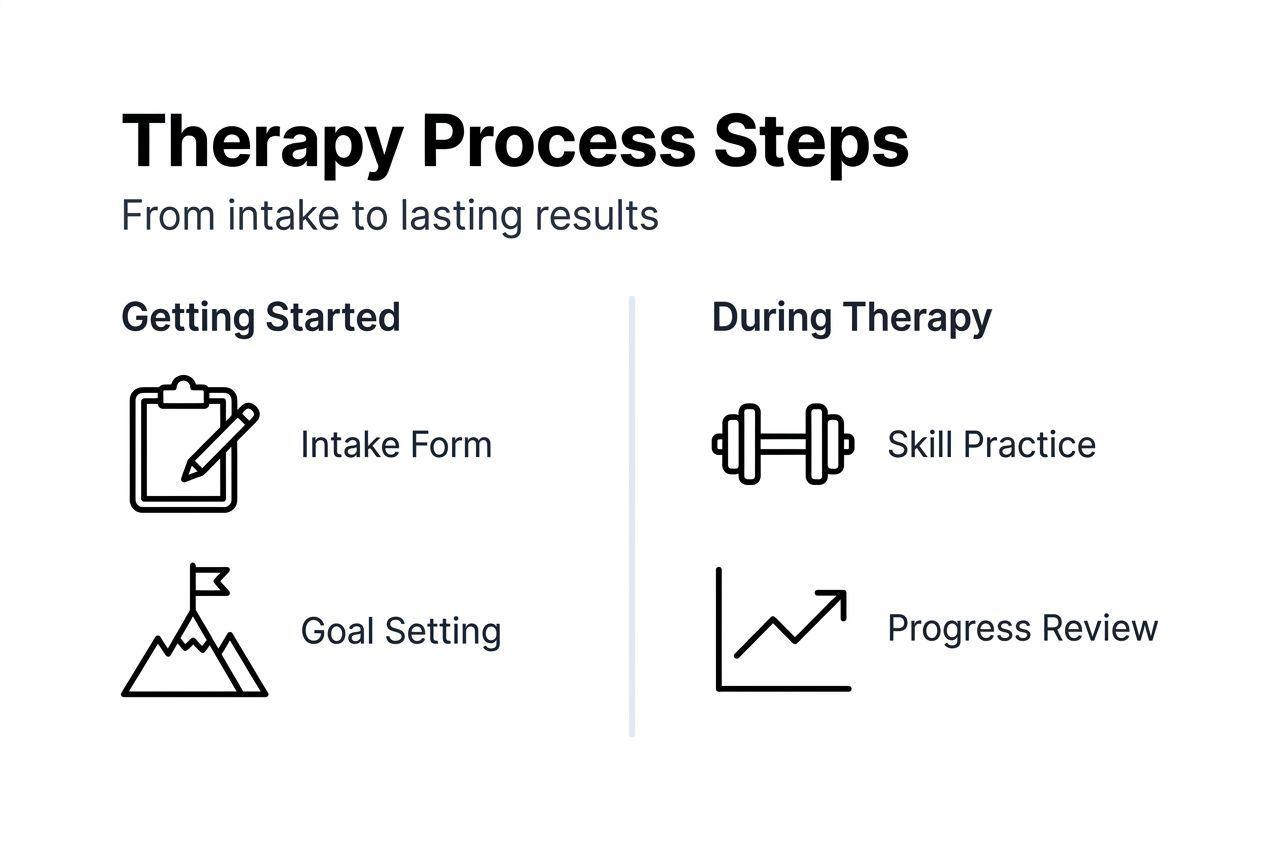
The core therapy process follows predictable phases: initial assessment establishing baseline symptoms and treatment targets, intervention teaching skills and processing difficult material, homework practice consolidating new patterns, and progress monitoring adjusting approaches based on outcomes. Whether you choose CBT, EMDR, or mindfulness, this basic structure remains consistent.
Active participation amplifies results. Complete assignments between sessions, communicate openly with your therapist about challenges or concerns, and maintain realistic expectations about timelines and discomfort. Passive attendance provides limited benefit compared to engaged, vulnerable participation in the therapeutic process.
Reaching out to qualified providers takes courage, but delaying treatment prolongs suffering unnecessarily. California offers extensive therapy resources through starting therapy emotional growth programs, specialized trauma services, and accessible telehealth options statewide.
Immediate next steps:
- Identify 2-3 potential therapists whose approaches match your needs
- Verify insurance coverage or explore sliding-scale options
- Schedule initial consultations to assess fit and ask questions
- Prepare a brief summary of your concerns and goals to share
- Mark therapy appointments and homework time in your calendar
Finding accessible trauma care becomes simpler when you understand what to look for and what questions to ask. Trust your instincts about therapist fit while giving the relationship 3-4 sessions to develop before making final judgments.
Your mental health deserves the same attention and investment you give physical health. Starting therapy represents a commitment to yourself and your future wellbeing. Take the first step today by scheduling that initial consultation.
Explore therapy services tailored for Californians
If you’re ready to move from understanding therapy to experiencing its benefits, Revive Health Therapy offers evidence-based treatment designed for California residents. Our clinicians specialize in anxiety, trauma recovery, and relationship enhancement using proven methods like EMDR and CBT.

We provide both in-person sessions in Walnut Creek and Oakland, plus secure telehealth appointments accessible statewide. This flexibility ensures you can access quality care regardless of location or schedule constraints. Our sliding-scale fees and insurance acceptance make treatment affordable across income levels.
Explore how why seek psychotherapy at Revive Health Therapy addresses your specific mental health goals. Our EMDR therapy services provide specialized trauma processing, while our online therapy in California brings expert care directly to your home. Scheduling a consultation early clarifies your needs and begins your therapy journey with confidence and clarity.
FAQ
Is therapy effective for treating anxiety and depression?
Yes, evidence-based therapies like CBT and mindfulness demonstrate 60-70% symptom improvement within 8-16 weeks for most clients. Effectiveness depends heavily on active participation, homework completion, and realistic expectations about timelines. Research consistently shows therapy outperforms medication alone for long-term anxiety and depression management.
How do I prepare for my first therapy session?
Set clear, specific goals focusing on what you want to change or improve. Ensure you have a private, quiet space and test your technology if using telehealth. Gather relevant information about your mental health history, current medications, and significant life events. Be emotionally prepared to share vulnerably about your struggles, even if it feels uncomfortable initially.
What are common therapy mistakes and how can I avoid them?
Skipping homework assignments and expecting instant results represent the most damaging mistakes, reducing effectiveness by approximately 30%. Maintain realistic timelines understanding therapy requires weeks or months of consistent work. Communicate openly with your therapist about challenges, discomfort, or disconnection rather than avoiding issues or silently dropping out. Use reminders, accountability partners, and therapy journals to stay engaged between sessions.
Can insurance cover therapy costs in California?
Most insurance plans include mental health benefits, though coverage details vary significantly. Many California therapists accept insurance and offer sliding-scale fees based on income for those without adequate coverage. HSAs and FSAs provide tax-advantaged payment options that effectively discount therapy costs. Verify your specific coverage, copays, and session limits directly with your insurance provider before starting treatment to avoid billing surprises.
4 Responses