
TL;DR:
- Peptides are short amino acid chains that may influence bodily receptors but lack sufficient evidence for mental health treatments. Most marketed peptides are unregulated, experimental, and carry significant safety and efficacy risks. Proven therapies like psychotherapy and FDA-approved medications remain the safest, most effective options for anxiety, depression, and trauma.
If you’ve been researching treatments for anxiety, trauma, or depression in California, you’ve probably encountered peptides — pitched online as injectable solutions for everything from mood to memory. The marketing is compelling, the science sounds legitimate, and the promise of a biological shortcut to healing feels understandable when you’re struggling. But most of what’s being sold doesn’t match what’s actually been studied. This guide cuts through the noise to show you exactly where peptide research stands, what the real risks are, and how peptides fit (or don’t) into a mental health care plan grounded in evidence.
Table of Contents
- Understanding peptides: biology and common misconceptions
- Peptides in mental health: evidence and limitations
- Challenges and risks of peptide therapies for mental health
- How peptides fit into mental health care and trauma recovery in California
- A critical view on peptides for mental health support in California
- Finding safe, evidence-based mental health support in California
- Frequently asked questions
Key Takeaways
| Point | Details |
|---|---|
| Peptides are complex molecules | They are short amino acid chains with diverse functions, not a single type of treatment. |
| Limited clinical evidence | Peptides for mental health lack consistent human trials and are mostly experimental. |
| Safety concerns exist | Many marketed peptides have unverified purity and unknown side effects. |
| Psychotherapy remains foundational | Evidence-based therapy is the proven approach for anxiety, depression, and trauma. |
| Consult healthcare professionals | Discuss peptides and mental health options with licensed providers to ensure safety. |
Understanding peptides: biology and common misconceptions
To appreciate what peptides actually do, start with the basics. Peptides are short chains of amino acids, typically between 2 and 50 units long, that act by binding to specific receptors in the body to trigger cellular pathways. Think of them as molecular keys that fit particular locks. Your body already makes thousands of them naturally. Insulin is a peptide. So is oxytocin, the so-called “bonding hormone.” So are many of the signaling molecules your brain uses every minute.
The problem is that “peptide” has become a wellness buzzword, and the connection between naturally occurring peptides in your body and synthetic peptides sold in vials online is thinner than most marketing suggests. Online marketed peptides often differ drastically in evidence and regulation compared to biological peptides your body produces. The fact that a molecule is a peptide doesn’t make it safe, effective, or even what the label claims it to be.
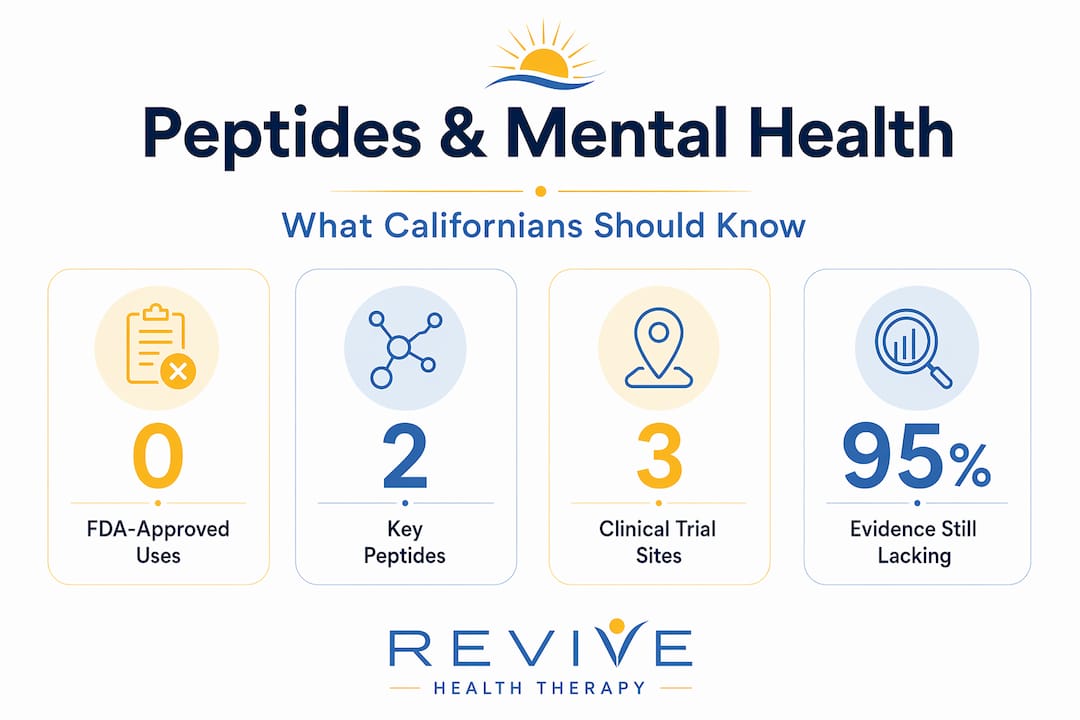
Most marketed peptides are injected rather than taken orally because the digestive system breaks amino acid chains apart before they can reach the bloodstream intact. That’s not a minor detail. Injecting an unverified compound carries a different risk profile than swallowing a supplement. Yet many people exploring mental health self-care ideas stumble onto peptide protocols without understanding that distinction.
Common misconceptions about peptides in mental health:
- Peptides labeled “natural” are automatically safe or well-studied
- Injectable peptides work the same way as FDA-approved drugs in the same chemical family
- A peptide that works in animal studies will predictably work in humans
- Newer peptides have undergone the same testing as medications like insulin or GLP-1 drugs
- Buying peptides from a wellness clinic guarantees quality or regulatory oversight
Pro Tip: Before considering any peptide protocol, ask specifically for human randomized controlled trial data, not just mechanistic studies or animal research. That one question will eliminate most of what’s being marketed right now.
Understanding what peptides are biologically also means recognizing what they are not — established treatments. The role of psychotherapy in mental health is supported by decades of clinical trial data. The evidence base for most wellness peptides is nowhere close.
Peptides in mental health: evidence and limitations
With a clearer biological picture, the next step is looking honestly at what the science actually shows for anxiety, depression, and trauma.
Neuropeptide Y (NPY) has attracted a lot of attention because animal studies suggest it plays a role in stress resilience and mood regulation. But peripheral NPY levels do not significantly differ between people with major depressive disorder and healthy controls, which signals that the clinical picture for NPY as a depression treatment is far murkier than the headlines suggest. Animal findings rarely translate cleanly to human therapeutic use, and NPY is a prime example of that gap.
Oxytocin is another frequently discussed candidate. It influences social bonding, stress responses, and emotional regulation, which makes it a logical candidate for PTSD and trauma work. A VA-funded clinical trial in San Diego is currently examining intranasal oxytocin as an augmentation to couples therapy for veterans with PTSD. That research is meaningful and worth watching. But “under investigation” is not the same as “proven effective.” The trial is still running. The results aren’t in. Conclusions would be premature.
Here’s a useful snapshot of where specific peptides currently stand for mental health applications:
| Peptide | Condition of interest | Current evidence level | Human trials? |
|---|---|---|---|
| Oxytocin | PTSD, social anxiety | Preliminary | Yes, ongoing |
| Neuropeptide Y | Depression, stress | Inconsistent, largely animal | Limited |
| BPC-157 | General wellness, mood | Very early, mostly animal | Minimal |
| Selank | Anxiety | Small Russian studies | Very limited |
| DSIP | Sleep, mood | Outdated, inconclusive | Rarely |
The contrast with FDA-approved treatments is stark. Injectable peptides often lack clear guidelines, dosing protocols, and established safety profiles unlike approved treatments such as insulin or GLP-1 medications, both of which required years of rigorous human trial data before reaching patients.
What current science tells us:
- No peptide has FDA approval specifically for anxiety, depression, or PTSD
- Most promising findings come from small samples or animal models
- Augmentation research (pairing peptides with therapy) is more scientifically grounded than standalone use
- Evidence gaps are widest for dose, route, and long-term effects in psychiatric populations
Pro Tip: Research around psychotherapy in trauma recovery consistently shows strong outcomes with approaches like EMDR and CBT. Those aren’t in competition with emerging peptide research, but they are a far more reliable starting point today.
If you’re looking to manage anxiety with proven therapies, the evidence hierarchy matters enormously. Preliminary science, however promising, is not a reason to self-administer experimental compounds.
Challenges and risks of peptide therapies for mental health
Understanding the science and its limitations makes the safety and regulatory picture clearer, and it isn’t reassuring.
Many peptide products are sold on what practitioners call the “gray market,” meaning without FDA approval, without manufacturing oversight, and without verified purity. You have no reliable way to confirm that what’s in a vial matches what the label says. Contamination, incorrect concentration, and unknown additives are all real possibilities.
“There is minimal evidence on side effects or long-term risks of many newer injectable peptides marketed for wellness or mental health.” — American Medical Association
The side effects that have been reported with various peptide injections include skin reactions at the injection site, fatigue, headaches, nausea, and gastrointestinal distress. Those are the documented ones. For many newer compounds, the side effect profile simply doesn’t exist yet because the human studies haven’t been done. That’s not a regulatory technicality. That’s a genuine unknown you’d be taking on personally.
Key risks to understand before considering any peptide therapy:
- Contamination risk: Gray market products lack manufacturing quality standards
- Unknown dosing: No established safe or effective dose exists for most psychiatric applications
- Cellular pathway risks: Some peptides stimulate growth pathways, which raises theoretical tumor concerns with long-term use
- Drug interactions: Effects on other medications you take are largely unstudied in psychiatric contexts
- No recourse: Without FDA oversight, there is limited accountability if harm occurs
Before considering any peptide protocol, check: does human RCT evidence exist for this specific peptide, at this specific dose, via this route, for the mental health outcome you’re targeting? If the honest answer is no, that’s critical information.
Many people exploring mental health self-care are doing so because conventional care feels hard to access or hasn’t worked. That’s completely understandable. But the answer to gaps in care isn’t unregulated biologics. The better path involves understanding the difference between wellness medication vs therapy so you can make choices grounded in what’s actually been tested.
How peptides fit into mental health care and trauma recovery in California
Knowing peptides’ experimental status, the practical question is how they realistically slot into a broader mental health care approach, especially here in California where wellness trends move fast and options are plentiful.

The honest answer: peptides are best understood as a research frontier, not a treatment category. Clinical trials are investigating peptide augmentation of psychotherapy, such as intranasal oxytocin paired with couples therapy for veterans with PTSD in San Diego, which tells us something important. Even researchers who believe in peptide potential are testing them alongside established therapy, not as replacements.
Here’s how peptide-based approaches compare to established treatments:
| Approach | Evidence base | Regulatory status | Availability in California |
|---|---|---|---|
| CBT for anxiety/depression | Strong, decades of RCTs | Standard of care | Widely available |
| EMDR for PTSD | Strong, well-validated | Standard of care | Widely available |
| FDA-approved medications | Rigorous clinical trials | FDA-approved | Prescribed by doctors |
| Intranasal oxytocin | Early, trial phase | Investigational | Research settings only |
| Gray market peptides | Minimal to none | Not FDA-approved | Wellness clinics, online |
A practical order of priorities for mental health care in California:
- Start with evidence-based trauma recovery therapy that has established clinical track records, such as EMDR, CBT, or mindfulness-based approaches
- Work with a licensed provider to assess whether FDA-approved medications are appropriate for your situation, understanding the tradeoffs involved in medication versus therapy
- Stay informed about peptide research, particularly augmentation studies, without acting on preliminary findings
- If you’re drawn to peptides, discuss them openly with your physician and ask for the specific human trial data supporting the proposed use
- Rely on the proven psychotherapy benefits that decades of research confirm, rather than trading known effectiveness for experimental unknowns
California has some of the most accessible mental health resources in the country, including telehealth coverage, sliding-scale clinics, and insurance-reimbursable therapy. Starting there isn’t settling. It’s being strategic about your health.
A critical view on peptides for mental health support in California
Here’s the uncomfortable truth that most wellness content around peptides won’t tell you: the gap between what’s being sold and what’s been proven is enormous, and that gap is being filled by marketing, not medicine.
California is a particularly active market for wellness trends, and peptides are no exception. The framing you’ll encounter, that these are “biologically identical” to what your body makes, that pharmaceutical resistance is suppressing the real cures, that forward-thinking clinics know what mainstream medicine doesn’t, is persuasive. It’s also frequently misleading.
Using peptides without human RCT evidence for the specific dose, route, and mental health outcomes you’re targeting is speculative and potentially unsafe. That’s not a conservative position. It’s the position of researchers actively studying these compounds.
What concerns us most at Revive Health Therapy is the pattern we see where people in genuine pain, people carrying trauma, managing anxiety, or living with depression, reach for experimental treatments because the proven ones feel out of reach or haven’t clicked yet. The answer is almost never an unregulated injectable. The answer is usually a better fit in therapy, a more skilled provider, or a combination approach that keeps the evidence base front and center.
Understanding the importance of evidence-based therapy isn’t about being closed to new treatments. It’s about protecting yourself from real harm while the science catches up to the marketing. Regulatory oversight exists because people were harmed before it did. That history matters.
If you’re exploring peptides because conventional care has let you down, bring that conversation to a licensed provider. That conversation is worth having. The injectable order isn’t.
Finding safe, evidence-based mental health support in California
If this article has made one thing clear, it’s that the most reliable path forward for anxiety, trauma, and depression isn’t found in a vial ordered online. It’s found in approaches with decades of rigorous evidence behind them, delivered by trained, licensed providers who know your full picture.

At Revive Health Therapy, we offer trauma-informed psychotherapy in Walnut Creek and Oakland, as well as secure telehealth sessions available across California. Whether you’re dealing with PTSD, anxiety, depression, or complex emotional challenges, our therapists use proven methodologies including EMDR, CBT, and mindfulness-based care to build a treatment plan that fits your life. We accept insurance, HSA/FSA plans, and offer sliding-scale fees because access to quality care shouldn’t depend on your zip code or income. If you’re ready to take a step toward safe, trusted mental health support, explore our evidence-based trauma recovery options or connect with a therapist by finding the right match for your needs today.
Frequently asked questions
Are peptides approved treatments for anxiety or depression?
Currently, no peptides are FDA-approved specifically for anxiety or depression. Many marketed peptides lack rigorous human trial evidence, making them experimental rather than established treatments.
What peptides are being studied for trauma recovery?
Oxytocin is the most actively researched candidate, with a VA-funded trial in San Diego examining its use as an intranasal adjunct to couples therapy for veterans with PTSD. It is not yet a standard treatment.
Are injectable peptides safe to use for mental health at home?
Most injectable peptides marketed online are not FDA-approved and carry real contamination and safety risks. Gray market peptide products lack verified purity and manufacturing oversight, so consulting a doctor before any use is essential.
How do peptides compare to psychotherapy for mental health?
Psychotherapy, including CBT and EMDR, has a well-established evidence base and is a first-line treatment for anxiety, depression, and trauma. Peptides remain experimental and are not currently a substitute for proven therapeutic approaches.
What should I ask my doctor about peptides and mental health?
Ask whether human clinical trials exist for the specific peptide, dose, and route being proposed for your condition, what side effects are documented, and how it interacts with other treatments you’re already using.
Recommended
- 7 Essential Mental Health Tips 2026 for Californians – ReviveHealthTherapy
- Practical mental health coping tips for Californians – Revive Health Therapy
- Mental health tips for families in California 2026 – ReviveHealthTherapy
- Why mental health accessibility in California boosts recovery 50% – ReviveHealthTherapy