
TL;DR:
- Active participation in therapy, including honest communication and consistent effort, drives meaningful change. The strength of the therapeutic alliance predicts success more than specific techniques used. Preparing, engaging honestly during sessions, and following up outside therapy sessions are essential for effective progress.
Active participation in therapy, not passive attendance, is what drives real change. Research confirms that therapeutic alliance is the strongest predictor of successful outcomes, outweighing the specific method your therapist uses. Knowing how to get the most from therapy sessions means preparing before you walk in, engaging honestly during the hour, and doing meaningful reflection between appointments. This guide covers the practical strategies that make therapy work, from building trust with your therapist to sustaining momentum outside the room.
Why the therapeutic alliance is the foundation of therapy success
The therapeutic alliance is the working relationship between you and your therapist. It includes three core elements: collaboration on goals, a sense of trust, and genuine empathy on both sides. Studies confirm this alliance predicts positive outcomes more reliably than any specific technique, whether that is CBT, EMDR, or mindfulness-based therapy. That finding shifts responsibility partly onto you. The therapist brings skill; you bring honesty and effort.
Building a strong alliance starts with transparency. Tell your therapist when something feels off, when a topic feels too raw to touch, or when you are not sure a particular approach is helping. Therapists welcome feedback because it lets them recalibrate goals and adjust the treatment plan. Silence about what is not working is one of the most common ways people stall in therapy.
“Therapy is collaborative. Clients exploring their internal world freely is more important than receiving instructions.”
Three behaviors consistently strengthen the alliance:
- Be honest about discomfort. If a session topic makes you want to shut down, say so. That reaction is data.
- Show up consistently. Trust builds through repeated contact. Sporadic attendance breaks the rhythm.
- Give direct feedback. Tell your therapist what landed and what did not after each session.
Revivehealththerapy structures every client relationship around this collaborative model, using evidence-based approaches like EMDR and CBT within a framework of mutual respect and transparency.
How to prepare for therapy sessions before you arrive
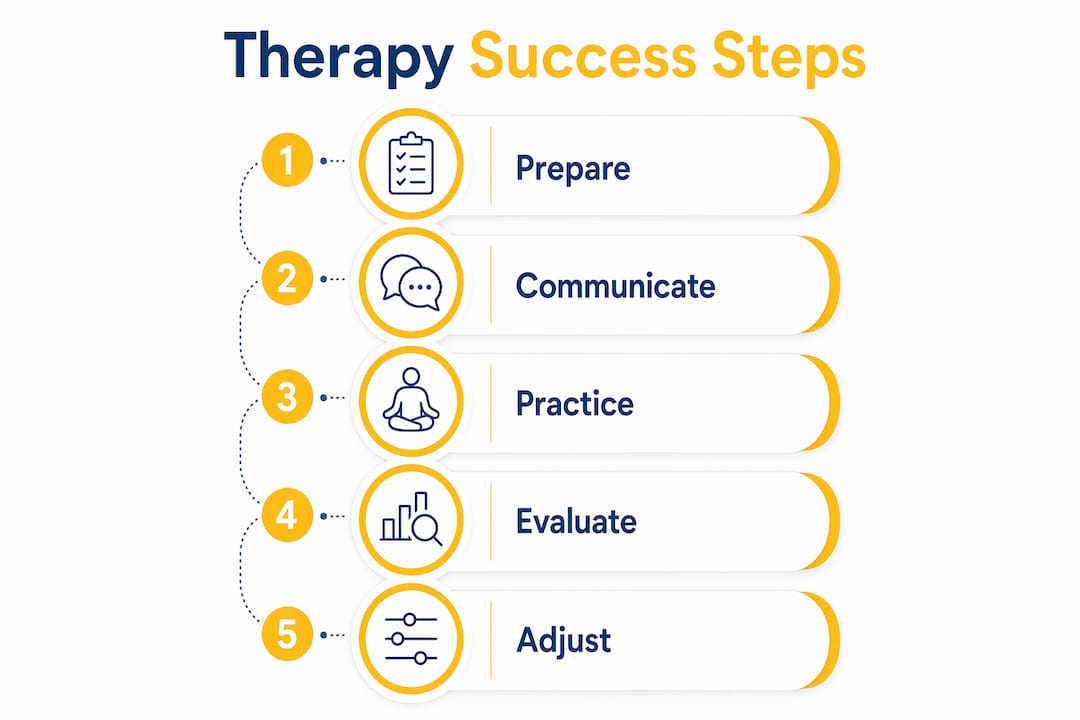
Preparation is the most underused tool in therapy. Most people walk into sessions without a clear idea of what they want to address, which means the first 10 minutes get spent figuring that out.

Schedule 15–30 minutes of buffer time before each session. Use that window to jot down what has been on your mind since the last appointment. You do not need a polished summary. A few bullet points about recurring thoughts, a difficult conversation, or a pattern you noticed in your behavior is enough to give the session direction.
Follow these steps to prepare effectively:
- Write down two or three topics you want to cover. Rank them by urgency so you address the most pressing one first.
- Note any emotional shifts from the past week. Anger, numbness, or unexpected sadness all carry information worth exploring.
- Review your last session notes briefly. This keeps the thread of your work continuous rather than starting fresh each time.
- Set up your environment. For telehealth sessions, find a private, quiet space where you will not be interrupted. For in-person sessions, plan your commute so you arrive calm, not rushed.
- Set one session goal. It can be as simple as “I want to understand why I react this way to criticism.” A focused intention gives the session shape.
Pro Tip: Keep a small notebook or a notes app dedicated to therapy. Write in it whenever something significant happens during the week, not just the night before your session. You will arrive with richer material and waste less time trying to reconstruct what happened.
Revivehealththerapy’s first session preparation guide walks through this process in detail for anyone approaching therapy for the first time.
What does effective communication look like during a session?
Honest, unfiltered communication during sessions is the single biggest driver of breakthroughs. Clients often hide thoughts they fear will sound irrational, embarrassing, or too dark. That filtering is exactly what slows progress. Your therapist has heard it before. More importantly, the thoughts you most want to hide are usually the ones most worth examining.
Effective in-session communication means:
- Say the uncomfortable thing first. If something has been nagging at you but feels too awkward to raise, lead with it. Avoidance in therapy costs you time and money.
- Describe feelings, not just events. “My boss criticized me” is a fact. “I felt humiliated and then furious at myself for caring” is therapy material.
- Ask questions. Therapy is not a one-way assessment. Ask your therapist to explain their reasoning, suggest a different angle, or revisit something from a prior session.
- Report on the therapy itself. If an approach feels wrong for you, say so directly. High-quality therapists treat that feedback as useful information, not criticism.
Pro Tip: If you freeze up at the start of a session and cannot remember what you wanted to say, tell your therapist exactly that. Drawing a blank is not failure. Therapists use that moment as a diagnostic tool to help you reconstruct the emotional arc of your week.
Effective communication also applies to how you talk about the therapy relationship itself. If you feel misunderstood, unheard, or like sessions are not moving forward, that conversation belongs in the room. Avoiding it only deepens the problem. For practices focused on growing their ability to reach clients who need this kind of guidance, therapist SEO resources offer frameworks for connecting honest communication principles to client outreach.
How to maximize therapy benefits between sessions
Progress in therapy does not pause when the session ends. Consistent engagement outside sessions drives lasting change more than in-session effort alone. The work you do between appointments is where insights become habits.
Follow this between-session routine to sustain momentum:
- Capture one key thread immediately after each session. Write down the single most important insight or question that came up. Do not wait until the next day.
- Review that note before your next appointment. This keeps the narrative of your therapy continuous and prevents you from losing ground.
- Notice patterns in daily life. If your therapist pointed out a recurring behavior, watch for it during the week. Write down when it shows up and what triggered it.
- Complete any assigned homework. Behavioral experiments, journaling prompts, and mindfulness practices assigned by your therapist are not optional extras. They are where the real work happens.
| Between-session practice | Why it works |
|---|---|
| Writing one key insight after each session | Anchors learning before memory fades |
| Reviewing notes before the next appointment | Maintains continuity and session focus |
| Tracking behavioral patterns during the week | Generates real-world data for your therapist |
| Completing assigned homework or experiments | Transfers insight into lived behavior change |
Revivehealththerapy therapists routinely assign between-session practices tailored to each person’s goals, whether that involves mindfulness exercises, CBT thought records, or structured journaling.
Common challenges that stall therapy progress
Even motivated people hit walls in therapy. Knowing the most common obstacles lets you address them before they derail your progress.
Irregular attendance is the most damaging pattern. Skipping or sporadic sessions break continuity and force you to spend time rebuilding context instead of moving forward. Treat therapy appointments with the same commitment you give a medical appointment.
Unrealistic expectations about pace cause many people to quit too early. Therapy duration varies significantly by issue. A focused problem like public speaking anxiety may resolve in a handful of sessions. Deep-rooted patterns tied to anxiety, depression, or trauma often require 10 or more sessions before meaningful shifts occur. Setting a fixed end date too early can cut the process short before real change takes hold.
Resistance and discomfort are normal, not signs that therapy is failing. When a session feels particularly hard, that often signals you are close to something important. The discomfort is the work.
“The most productive therapy sessions are often the ones that feel the most uncomfortable in the moment.”
If you feel stuck, raise it directly with your therapist. Ask whether a different approach, such as shifting from talk therapy to EMDR or incorporating mindfulness techniques, might serve you better. A good therapist will welcome that conversation rather than defend the current method.
Key Takeaways
Active preparation, honest communication, and consistent between-session practice are the three factors that determine how much you gain from therapy.
| Point | Details |
|---|---|
| Therapeutic alliance predicts outcomes | Build trust and give honest feedback; the relationship matters more than the method. |
| Prepare with intention | Write down topics and review prior notes before each session to maximize focus. |
| Communicate without filtering | Share uncomfortable thoughts openly; hiding them slows progress and costs time. |
| Work between sessions | Capture key insights after each session and complete assigned practices consistently. |
| Manage expectations on pace | Deep issues take time; irregular attendance and premature end dates limit results. |
What I have learned from watching people do therapy well and poorly
After years of working in mental health, the clearest pattern I see is this: the people who get the most from therapy are not the ones who are most articulate or most self-aware when they start. They are the ones who show up consistently, say the hard thing out loud, and treat the work between sessions as seriously as the sessions themselves.
The fear of being judged in therapy is real and almost universal. But I have never seen a therapist respond to a client’s raw honesty with anything other than curiosity and care. The judgment people fear is almost always their own. Saying the uncomfortable thing out loud to another person, in a safe space, is often the moment the weight of it starts to lift.
Patience with the process is not passive. It means trusting that small, consistent efforts compound over time. A single session rarely changes everything. A year of honest, prepared, consistent engagement very often does. If you are considering evidence-based psychotherapy and wondering whether it is worth the investment, the answer depends almost entirely on how actively you engage with it.
— Amy
Revivehealththerapy: personalized support for your mental health goals
Revivehealththerapy offers evidence-based psychotherapy for adults, children, teens, couples, and families across California, with in-person sessions in Walnut Creek and Oakland and secure telehealth available statewide.
Whether you are working through anxiety, depression, trauma, or relationship challenges, Revivehealththerapy’s clinicians use proven approaches including EMDR, CBT, and mindfulness within a trauma-informed framework. Sliding-scale fees and insurance acceptance, including HSA/FSA plans, make care accessible at a range of income levels. Explore adult mental health services or reach out to schedule a consultation and discuss your therapy goals with a clinician who will meet you where you are.
FAQ
What is the therapeutic alliance and why does it matter?
The therapeutic alliance is the collaborative relationship between client and therapist, built on trust, shared goals, and empathy. Research identifies it as the strongest predictor of positive therapy outcomes, more important than the specific method used.
How do I prepare for a therapy session effectively?
Write down two or three topics to address, note any emotional shifts from the past week, and review notes from your last session. Scheduling 15–30 minutes of buffer time before the session helps you arrive focused rather than rushed.
How many therapy sessions does it take to see results?
Focused issues may resolve in a few sessions, while conditions like anxiety, depression, or trauma often require 10 or more sessions before significant change occurs. Setting a rigid end date too early can limit results for deeper patterns.
What should I do if therapy does not feel like it is working?
Raise the concern directly with your therapist. High-quality therapists welcome feedback and use it to adjust goals or try a different approach, such as shifting from talk therapy to EMDR or incorporating mindfulness techniques.
How important is between-session work for therapy progress?
Between-session engagement, including capturing insights, tracking patterns, and completing assigned practices, drives lasting change more than in-session effort alone. Consistent follow-through between appointments is what converts insight into real behavioral change.
One Response