
TL;DR:
- Mindfulness helps manage anxiety by paying non-judgmental attention to present thoughts and sensations.
- A daily practice of 10-15 minutes, following core steps, can significantly reduce anxiety symptoms over time.
- Personalizing mindfulness routines and seeking professional support enhances long-term effectiveness.
Anxiety doesn’t just live in your head. It tightens your chest during a work meeting, shortens your breath on the freeway, and keeps your mind racing at 2 a.m. when you should be asleep. For millions of Californians managing high-pressure lives, anxiety can feel like a constant background hum that never fully quiets. The good news is that mindfulness, when practiced with intention and structure, offers real, measurable relief. This guide walks you through a practical, evidence-based mindfulness workflow, from setup to troubleshooting, so you can build a practice that actually sticks.
Table of Contents
- What to know before you start
- Step-by-step mindfulness workflow for anxiety
- Personalizing your workflow for lasting results
- Measuring your results and knowing what’s next
- Our perspective: What truly works in mindfulness for anxiety
- Connect with professional support in California
- Frequently asked questions
Key Takeaways
| Point | Details |
|---|---|
| Start with basics | Gather a quiet space, simple timer, and an open mindset before practicing mindfulness for anxiety. |
| Follow clear steps | Use proven routines like breath anchoring, body scan, and non-judgmental awareness for best results. |
| Personalize for you | Adapt mindfulness techniques and workflow length to fit your needs—consistency is key. |
| Measure progress | Track small changes each week and know when to seek extra support if anxiety remains. |
| Combine with therapy | Mindfulness works best alongside evidence-based therapy for lasting anxiety relief. |
What to know before you start
Mindfulness for anxiety is not about emptying your mind or forcing yourself to feel calm. It means paying deliberate attention to the present moment, including your thoughts, sensations, and emotions, without judging them. That distinction matters. Anxiety thrives on “what if” thinking and avoidance. Mindfulness interrupts that loop by training your brain to observe rather than react.
Research backs this up. Mindfulness-Based Cognitive Therapy (MBCT) is an 8-week structured program with strong evidence for reducing anxiety and preventing relapse. And while shorter sessions are a great starting point, a 2025 MBSR Teaching Guide notes that daily practice of at least 45 minutes yields the most benefit for those following a full protocol. You don’t need to start there, but it helps to know where the ceiling is.
Understanding how mindfulness eases anxiety through the nervous system gives you a clearer picture of why this works, not just that it does. The mindfulness in therapy impact goes even further when combined with professional guidance.
Before you begin, gather what you need:
| Tool | Required | Optional |
|---|---|---|
| Quiet space (5–10 min) | Yes | Noise-canceling headphones |
| Timer or phone | Yes | Dedicated meditation app |
| Journal or notes app | Recommended | Guided audio sessions |
| Comfortable seating | Yes | Cushion or yoga mat |
Most people benefit from mindfulness, but if you carry significant trauma, certain body-based practices can feel overwhelming at first. That’s normal, and it’s a signal to go slowly or work with a therapist. Supporting emotional well-being with mindfulness is most effective when the approach matches your personal history.
Who benefits most: Adults with generalized anxiety, social anxiety, or stress-related symptoms. Teens and young adults under academic or social pressure. Anyone who wants a practical, non-medication tool in their toolkit.
Edge cases to watch: Those with PTSD or complex trauma may need a trauma-sensitive adaptation. People with active psychosis or severe dissociation should consult a clinician before starting.
Pro Tip: Start with just 5 to 10 minutes per day. Consistency matters far more than session length when you’re building a new habit.
Step-by-step mindfulness workflow for anxiety
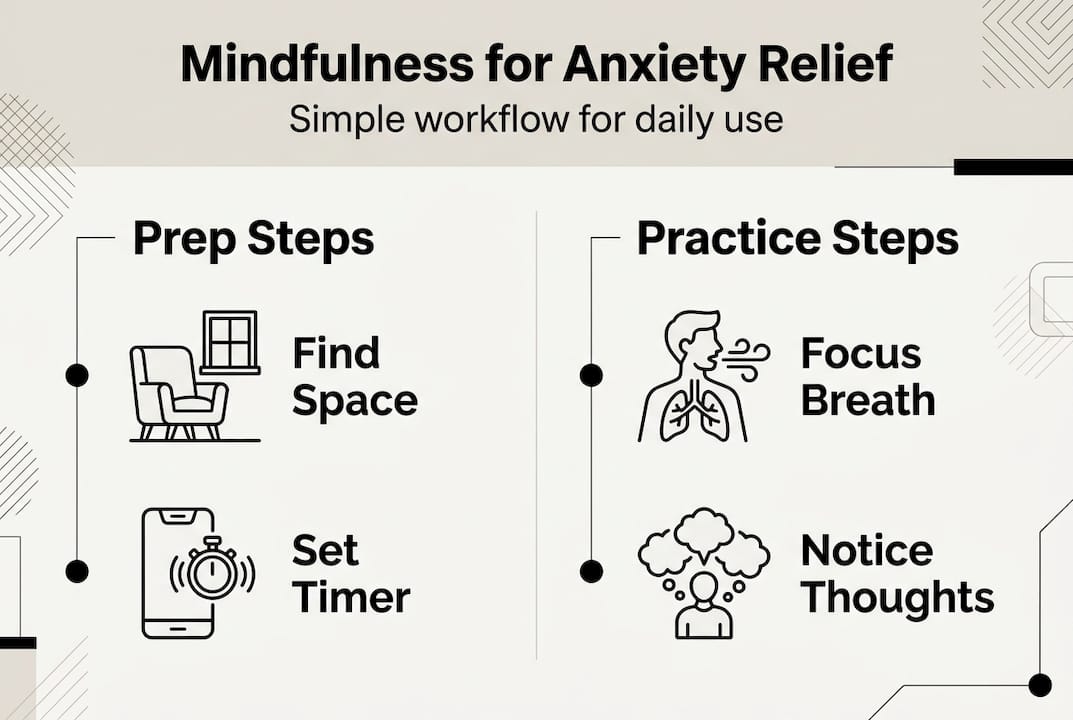
With your space and tools ready, here is the core workflow. This sequence draws from both MBSR and MBCT protocols and is designed to be practical for daily life, not just a meditation retreat.
Mindfulness-based interventions like MBSR reduce perceived stress with a standardized mean difference of -0.53, which is a clinically meaningful result. The core workflow follows five essential moves: anchor attention, body scan, non-judgment, explore sensations, and build tolerance.
-
Anchor your attention. Sit comfortably and close your eyes. Focus on your breath. Notice the inhale, the brief pause, the exhale. You’re not trying to control your breathing, just observing it. If your mind wanders (it will), gently return to the breath. This is the anchor.
-
Scan your body. Slowly move your awareness from your feet upward. Notice tension, warmth, tightness, or numbness without trying to fix anything. The body scan builds awareness of where anxiety lives physically, often the jaw, shoulders, or chest.
-
Observe without judgment. When anxious thoughts arise, label them simply. “Worry.” “Planning.” “Fear.” Then let them pass like clouds. You’re not suppressing them. You’re watching them move through without grabbing on.
-
Explore gently. If a sensation or emotion feels strong, move toward it with curiosity instead of pulling away. Ask: “Where do I feel this in my body? What shape does it have?” This builds tolerance over time.
-
Close and reflect. Spend one minute at the end noting what you noticed. A journal entry, even two sentences, anchors the session and tracks your progress.
“The most effective mindfulness is consistent, not perfect.”
For technique variety, try 4-7-8 breathing (inhale 4 counts, hold 7, exhale 8) to activate the parasympathetic nervous system quickly. Or use the 5-4-3-2-1 grounding technique (name 5 things you see, 4 you hear, 3 you can touch, 2 you smell, 1 you taste) to interrupt a spiral. Both fit easily into a well-being workflow you can use anywhere.
For those following a full MBSR or MBCT protocol, sessions run 45 minutes. For daily maintenance, 10 to 15 minutes is enough to see results. Explore manage anxiety proven therapies for how mindfulness fits alongside other approaches, and check out self-care ideas for anxiety to round out your routine.
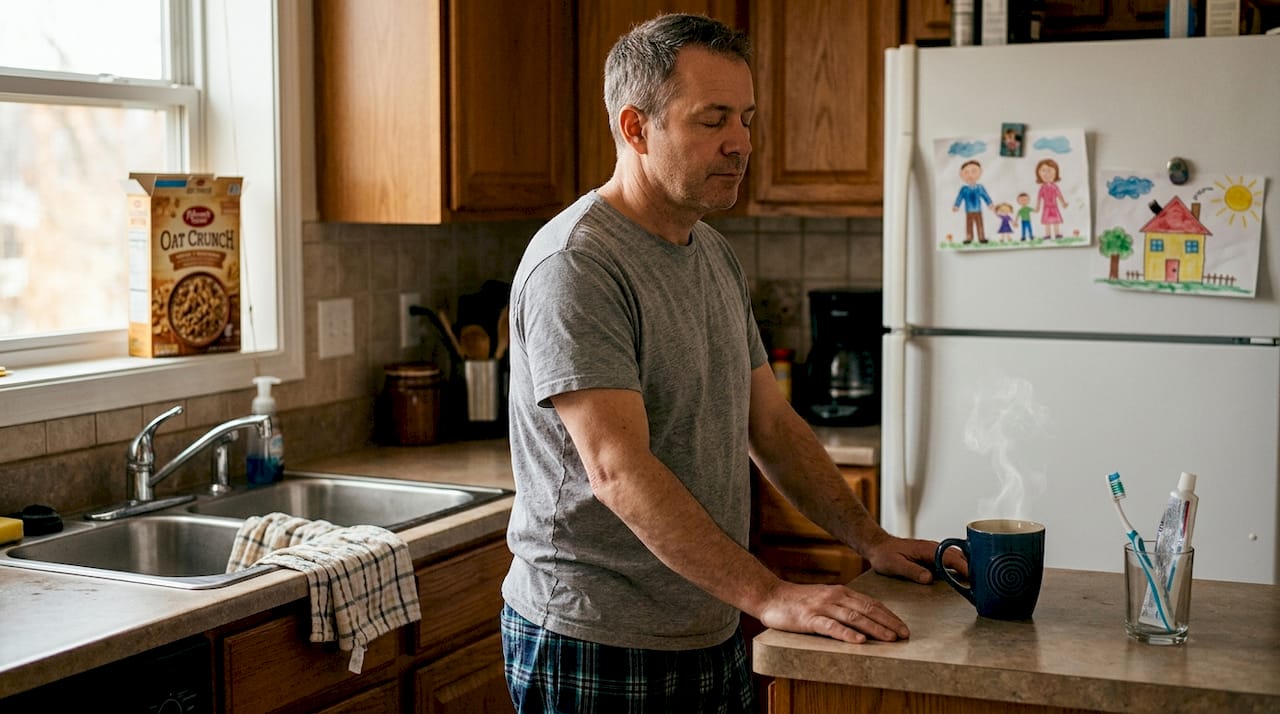
Pro Tip: Pair your session with a daily cue, like morning coffee or brushing your teeth, so it becomes automatic rather than something you have to remember.
Personalizing your workflow for lasting results
The core steps work. But what keeps people practicing long-term is a workflow that fits their real life, not a generic template. Personalization is where good intentions become lasting habits.
Research shows that trauma history moderates effectiveness, with MBCT showing more pronounced benefits for generalized anxiety disorder in people with a history of childhood emotional abuse. That means your past shapes how you respond, and adjusting your approach is not weakness. It’s smart practice. At the same time, some studies found no anxiety relief for certain groups, including those with long-COVID or when using passive tools like smartwatches without active engagement.
Here’s a comparison to help you choose the right format:
| Approach | Best for | Limitations |
|---|---|---|
| Solo app-based practice | Flexible schedules, mild anxiety | Low accountability, easy to skip |
| Guided group sessions | Community support, motivation | Fixed schedule, less personalized |
| Therapist-led mindfulness | Trauma history, complex anxiety | Requires access and cost investment |
| Self-paced audio programs | Beginners, low-pressure start | No real-time feedback |
Exploring mindfulness therapy techniques can help you identify which format matches your needs. If you’re unsure which approach fits your anxiety pattern, reviewing types of therapy for anxiety gives a broader picture.
Common mistakes to avoid:
- Expecting anxiety to disappear after one or two sessions
- Judging yourself for having thoughts during meditation
- Skipping days and then abandoning the practice entirely
- Choosing a technique that feels too intense too soon
Use a mental wellness checklist to track your consistency and flag when something isn’t working. A simple habit tracker or a buddy who checks in weekly can double your follow-through rate.
Red flags: seek support if you notice:
- Anxiety significantly worsening after sessions
- Flashbacks or dissociation triggered by body-based practices
- Feeling more isolated or hopeless over time
- Inability to function at work, school, or in relationships
Measuring your results and knowing what’s next
Progress in mindfulness is subtle at first. You won’t wake up one morning anxiety-free. Instead, you’ll notice smaller things: a moment of calm in traffic, a faster recovery after a stressful call, sleeping through the night once or twice a week. These are real signals.
Mindfulness-based interventions are effective for most anxiety presentations, but they are not universal. They work best as part of a broader approach that may include psychotherapy for anxiety, lifestyle changes, and sometimes medication.
Here’s what the research-supported timeline looks like:
| Timeframe | Common milestones |
|---|---|
| 2 weeks | Improved sleep, slight reduction in reactivity |
| 4 weeks | Fewer anxious spirals, better focus |
| 8 weeks | Measurable reduction in anxiety symptoms (MBCT/MBSR protocol complete) |
The stress reduction effect of mindfulness carries a standardized mean difference of -0.53, which is comparable to many first-line treatments for mild to moderate anxiety. That’s not a small number.
Simple self-check questions to ask weekly:
- Am I practicing at least 5 days per week?
- Do I notice moments of calm that weren’t there before?
- Are my anxious thoughts less sticky or easier to let go?
- Is my sleep, appetite, or focus improving?
- Am I avoiding situations less than I was a month ago?
If you’re not seeing any shift after four to six weeks of consistent practice, that’s valuable information too. It may mean your anxiety needs more targeted support. Reviewing mental wellness strategies like journaling alongside mindfulness can accelerate results. And if symptoms are persistent or worsening, connecting with a licensed therapist is the clearest next step.
Our perspective: What truly works in mindfulness for anxiety
Here’s what we’ve seen working with anxious clients across California: the people who benefit most from mindfulness are not the ones who meditate perfectly. They’re the ones who show up imperfectly, every single day.
Most guides sell mindfulness as a standalone solution. We see it differently. Mindfulness is a powerful tool, but it works best when it’s woven into a broader care plan. For someone with a trauma history, jumping straight into body scans can feel destabilizing. For someone with severe GAD, solo practice without professional feedback can reinforce avoidance patterns rather than break them.
What most articles miss is this: struggling with mindfulness is not a personal failure. It’s often a signal that you need more support, not less. The mindfulness in therapy context gives your practice structure, accountability, and a skilled guide when things get hard.
Small steps, done consistently, genuinely reshape the anxious brain. But you don’t have to do it alone.
Connect with professional support in California
Building a mindfulness workflow on your own is a meaningful first step. But sometimes anxiety runs deeper than a daily practice can reach on its own.
At Revive Health Therapy, we offer trauma-informed therapy that integrates mindfulness with evidence-based approaches like EMDR and CBT, designed for people who want real, lasting change. Whether you’re in Walnut Creek, Oakland, or anywhere in California through telehealth, our therapists understand anxiety from the inside out. Explore your options through psychotherapy in California or take the first step and talk to a therapist today. Sliding-scale fees and insurance options make care accessible, wherever you are in your journey.
Frequently asked questions
How long does it take for mindfulness to reduce anxiety?
Many people notice reduced anxiety within 2 to 8 weeks of consistent daily practice. An 8-week daily practice is the standard timeframe for observable changes in structured MBCT programs.
Can mindfulness replace medication or therapy for anxiety?
Mindfulness is effective for many people but works best alongside therapy and medical guidance. Research confirms that mindfulness as an adjunct to therapy produces stronger, more lasting outcomes than solo practice alone.
Are there situations where mindfulness does not help anxiety?
Yes. Some groups, including those with long-COVID or significant trauma history, may find mindfulness less effective without additional clinical support tailored to their needs.
What is a simple mindfulness exercise for anxiety?
Try 4-7-8 breathing or the 5-4-3-2-1 grounding technique to anchor attention quickly. Both are practical techniques you can use anywhere, anytime anxiety starts to spike.
Recommended
- How mindfulness eases anxiety: Evidence-based strategies – Revive Health Therapy
- What is mindfulness therapy? Techniques and access in CA – Revive Health Therapy
- Mental health self-care ideas for anxiety and depression – Revive Health Therapy
- Manage anxiety with proven therapies in California 2026 – Revive Health Therapy
- Build your emotional well-being workflow for clarity
- How to prepare for therapy for anxiety and depression
2 Responses